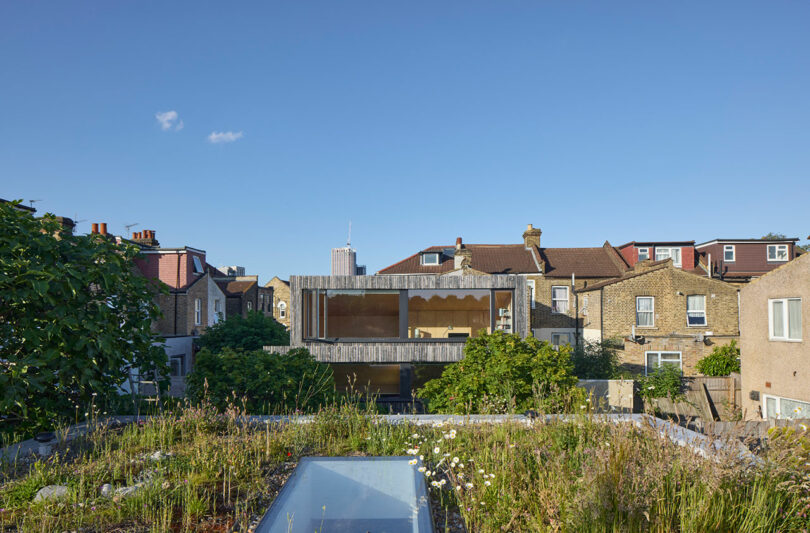
For years, the derelict MOT garage at the end of a narrow East London alley was nothing more than a neighborhood eyesore—a relic of an oil-stained industrial past. Today, it stands as a testament to "urban alchemy," a 1,453-square-foot sanctuary that captures the very essence of sustainable modern living. This transformation, known as the Catching Sun House by Studioshaw, serves as a masterclass for anyone looking to reclaim forgotten urban footprints. To convert an MOT garage into a modern home, the secret lies in a biophilic layout that incorporates internal courtyards and maximizes natural light through strategic skylights, all while utilizing a material palette of timber, concrete, and aluminum to marry industrial heritage with residential warmth.
Sustainable strategies for such conversions must go beyond the surface. Achieving a high-performance home in a former garage requires passive solar orientation, leveraging the thermal mass of exposed materials, and the integration of high-efficiency systems like Air Source Heat Pumps (ASHP) and Whole-House Heat Recovery Ventilation (MVHR) to minimize energy consumption. However, the path from "greasy workshop" to "green oasis" is rarely linear; it involves navigating dense legal frameworks, including—in the case of the Catching Sun House—negotiating 27 separate party wall agreements to secure the development of its secluded site.
Section 1: The Design Blueprint—Biophilic Meets Industrial
Designing for 2026 and beyond requires a shift from "adding green" to "building within nature." In the context of a landlocked urban garage, this means blurring the boundaries between indoor and outdoor spaces. The biophilic approach isn't just about aesthetics; it’s about psychological well-being and environmental performance. By carving out internal courtyards from the original industrial footprint, architects can introduce "microclimates" that provide natural cooling and ventilation.
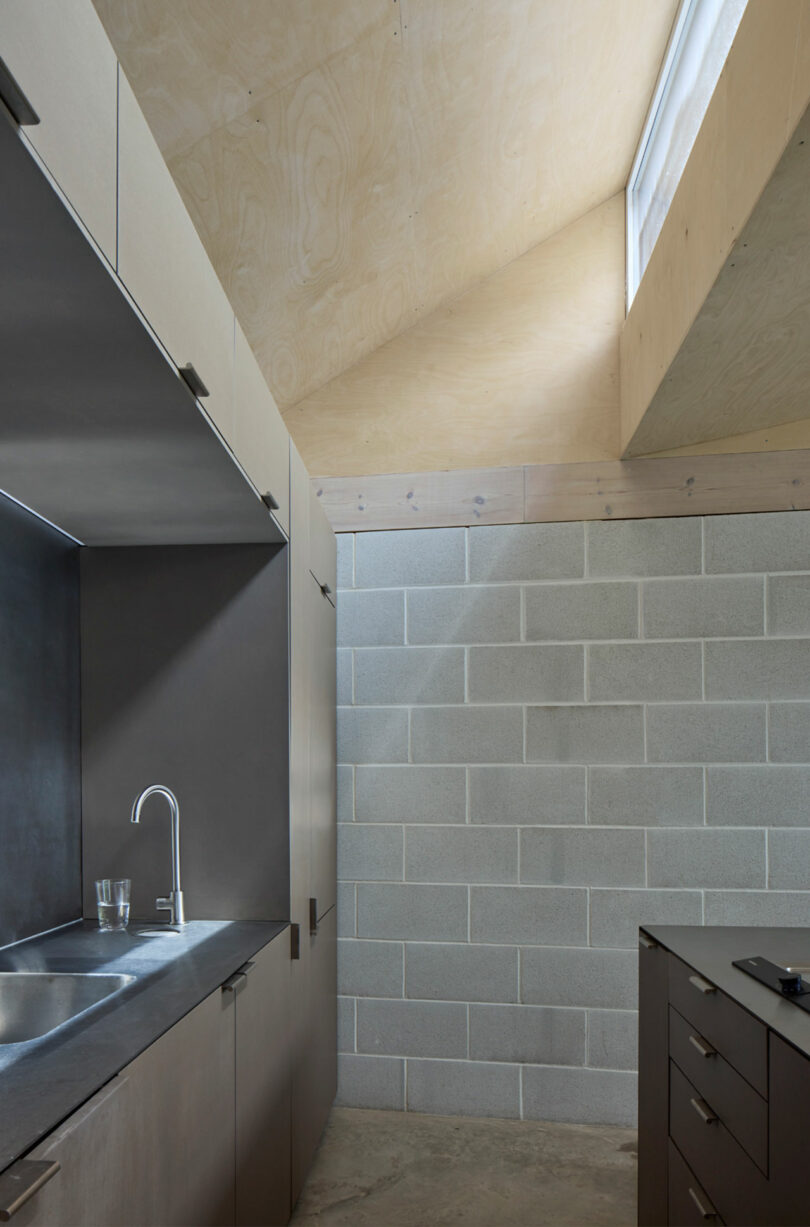
The material selection for these projects has evolved. We are moving away from purely decorative finishes toward a "honesty of materials" philosophy.
- Timber: Used for structural elements and ceilings to introduce warmth and carbon sequestration.
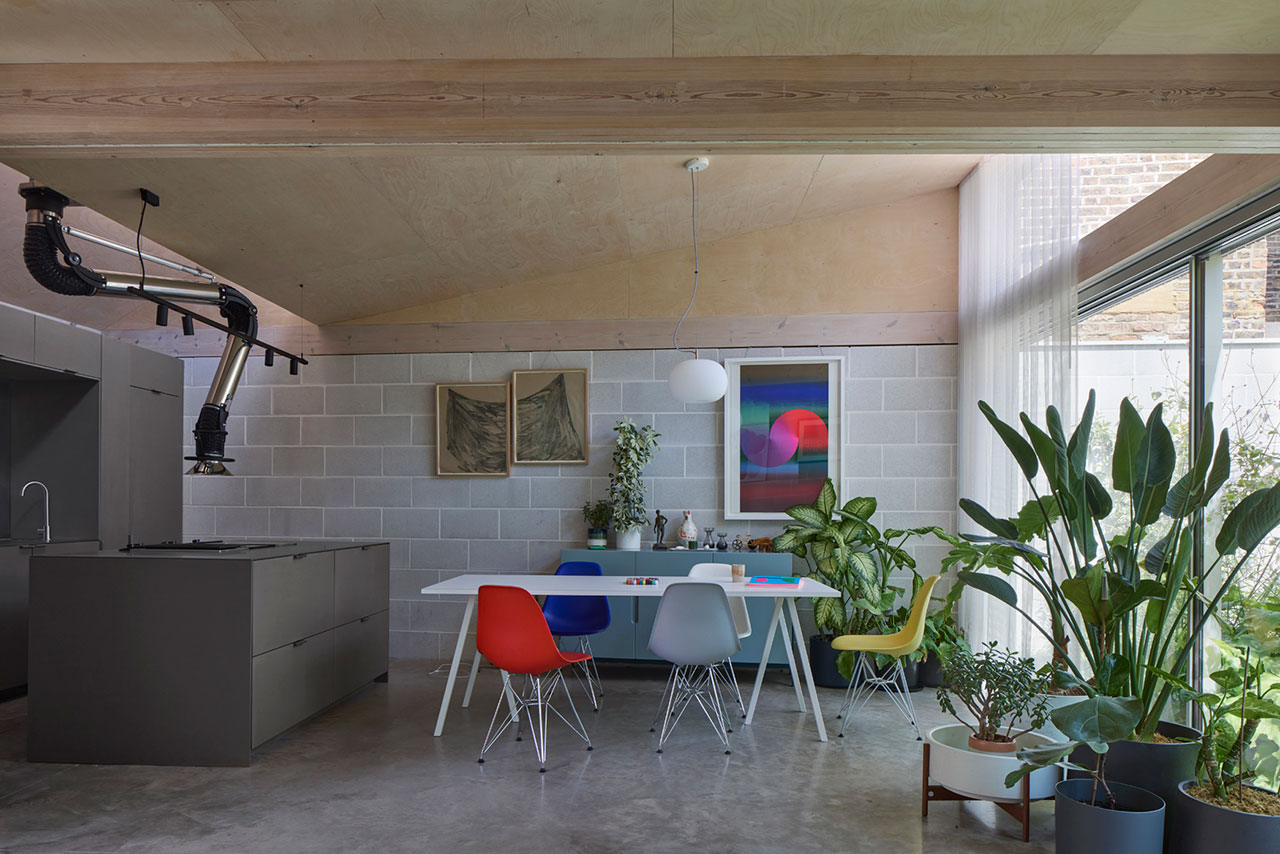
- Exposed Concrete Blocks: These provide essential thermal mass, absorbing heat during the day and releasing it at night.
- Anodized Aluminum: Offers a sleek, durable exterior finish that reflects light into narrow alleyways.
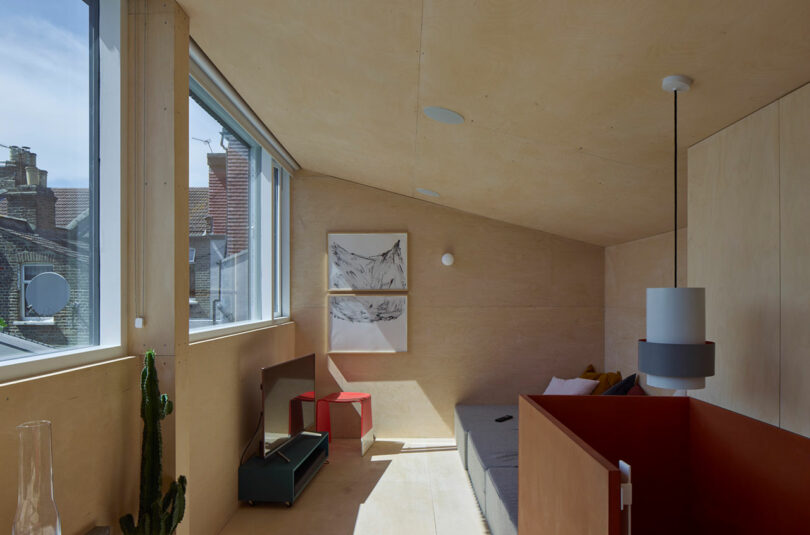
Framing views becomes a critical exercise in a restricted plot. Rather than looking out at neighboring brick walls, the design should focus upward and inward. Large, high-performance skylights and floor-to-ceiling glass corridors turn the sky and internal gardens into the primary "artwork" of the home, ensuring that even the most enclosed site feels expansive.
Section 2: Case Study—Studioshaw’s 'Catching Sun House'
The Catching Sun House is a definitive example of how to reimagine a 1,453-square-foot former MOT garage. Located in a tight East London site, the project faced the classic urban challenge: how to bring light into a deep, single-story plan surrounded by taller buildings. Studioshaw’s solution was the 'Triple Courtyard' strategy.
The floor plan is organized around three distinct outdoor pockets, each serving a specific environmental and social purpose:
- The Winter Sun Courtyard: Positioned to catch the low-angled southern sun, providing heat and light during the coldest months.
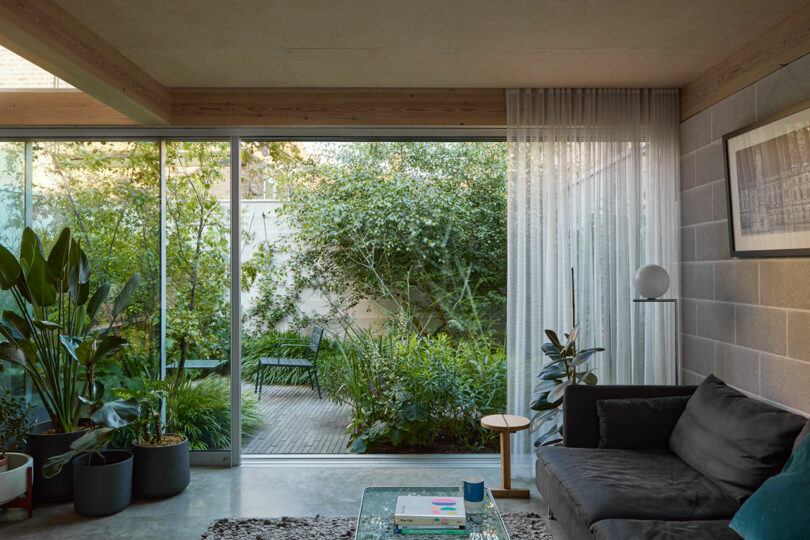
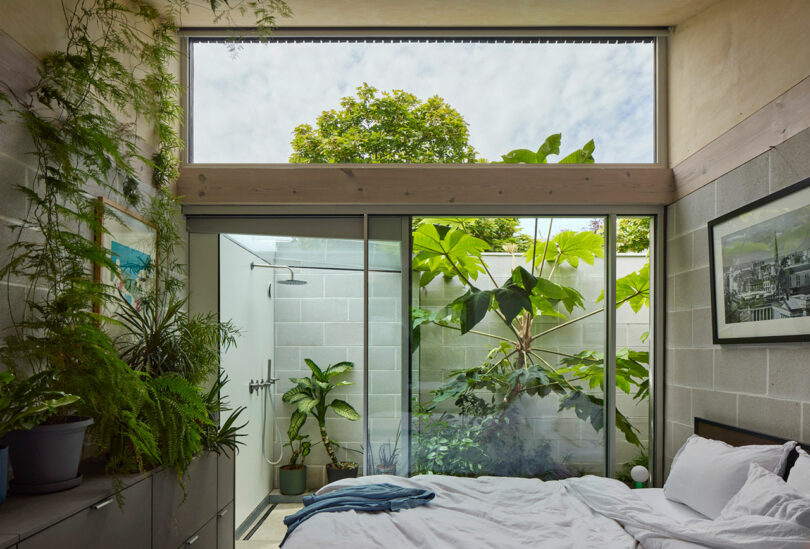
- The Biodiversity Courtyard: A lush, planted space designed in collaboration with landscape designers like Charlie Hawkes, bringing local flora into the heart of the living area.
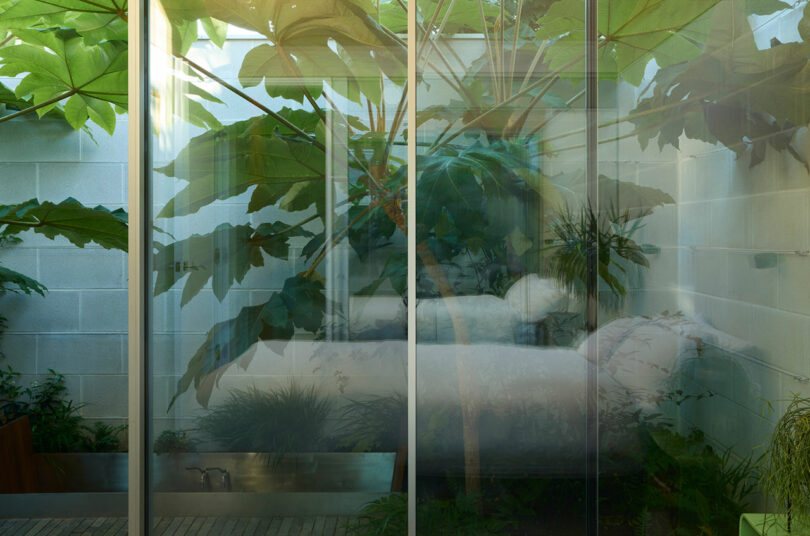
- The Transitional Corridor: A glass-walled garden walkway that connects the private bedrooms to the social living spaces, ensuring every movement through the house involves a connection with nature.
This project demonstrates that even a restricted industrial plot can support a complex ecosystem. By breaking the mass of the building into smaller volumes separated by gardens, the architects ensured that every room has dual-aspect light and natural cross-ventilation, drastically reducing the need for artificial lighting and mechanical cooling.
Section 3: The Mechanical Core—Sustainable Systems for 2026
As an editor focused on energy efficiency, I cannot overstate the importance of the "invisible" architecture—the mechanical systems that make an industrial shell habitable. Converting a drafty, uninsulated garage into a high-performance home requires a "fabric-first" approach.
| System | Role in Garage Conversion | Sustainability Benefit |
|---|---|---|
| Air Source Heat Pump (ASHP) | Replaces gas boilers for heating and hot water. | Carbon-neutral heating when paired with green energy. |
| MVHR System | Recovers heat from extracted air to warm incoming fresh air. | Maintains air quality while preventing heat loss. |
| Thermal Mass (Concrete) | Absorbs solar gain from large glass areas. | Stabilizes internal temperatures, reducing HVAC load. |
| High-Performance Glazing | Triple-glazed units with low-E coatings. | Minimizes heat transfer while maximizing natural light. |
The Catching Sun House utilizes these systems to ensure year-round comfort. In an industrial shell, insulation is the greatest challenge. By lining the original walls with high-density wood fiber insulation or recycled mineral wool, you can create a thermal envelope that rivals modern new builds. The implementation of an MVHR system is particularly crucial in urban London, as it filters out particulates and noise from the city while ensuring the airtight home remains fresh.
Section 4: Navigating the Legal and Logistical Maze
The most daunting aspect of the MOT garage conversion isn't the construction; it's the bureaucracy. Urban density creates a web of overlapping rights and restrictions. The Catching Sun House required the negotiation of 27 separate party wall agreements. This is a staggering number for a single-family home, reflecting the complexity of building on a site shared by dozens of neighbors.
Pro-Tip: The Party Wall Strategy When dealing with multiple neighbors, hire a dedicated Party Wall Surveyor early in the design phase. Presenting neighbors with high-quality 3D renders of how the project will improve their outlook—for example, by replacing a derelict roof with a green sedum roof—can significantly ease negotiations.
Beyond party walls, successful urban infill often requires creative land management:
- Land Swaps: Negotiating with neighbors to trade small slivers of land can help "square off" a jagged industrial plot, maximizing usable garden space.
- Easements and Rights-of-Way: Many old garages have historic access rights for vehicles that must be legally extinguished or renegotiated for residential use.
- Change of Use: Navigating the transition from Class B (Industrial) to Class C3 (Residential) requires a compelling argument to local councils regarding the "enhancement of the local character" and the provision of sustainable housing.
Section 5: Interior Styling—Intentionality and Authenticity
Interior design in a garage conversion should be "material-led." When the architecture itself is this strong, there is no need for excessive decoration. The goal is to balance the "Raw" (industrial heritage) with the "Refined" (domestic comfort).
Polished vs. Raw Finishes
- Raw: Leave the structural concrete blocks visible. Their texture and grey tones provide a neutral, sophisticated backdrop that changes throughout the day as sunlight hits it.
- Refined: Use plush textiles—linen curtains, wool rugs, and velvet upholstery—to soften the hard edges of the stone and steel.
Technology should be seamless and invisible. In a sustainable home, voice-controlled lighting systems can be hidden within vintage-style industrial fixtures, allowing you to manage energy consumption with ease while maintaining the aesthetic integrity of the space. The result is a home that feels "intentional"—every material has a purpose, and every view is curated.
FAQ
1. Is it more expensive to convert a garage than to build from scratch? Often, yes. While you save on some structural costs, the complexity of insulating an old shell, remediating industrial land (dealing with oil/chemical spills), and navigating legal agreements in dense areas can drive costs up. However, the value added by creating a unique, architectural home in a prime urban location often far outweighs the initial investment.
2. How do you handle the lack of windows in an MOT garage? Since garages are often landlocked by other buildings, windows in walls are rarely an option. The solution is "top-down" lighting. Large, automated skylights and internal courtyards are essential. They bring light into the center of the plan, which is often brighter than traditional window-lit rooms.
3. What is the most important sustainable feature for a garage conversion? Thermal mass and insulation. Industrial buildings were never meant to hold heat. By adding high-performance insulation and using materials like concrete for the floors or walls to store heat (thermal mass), you create a stable internal temperature that requires very little energy to maintain.
The Lucas Reed Perspective: A Final Word
The conversion of the Catching Sun House proves that our cities are full of "hidden land." By looking at a derelict MOT garage not as a problem, but as a footprint for potential, we can create homes that are more sustainable, more private, and more beautiful than standard new-build developments. The future of urban living isn't just about building more; it’s about building smarter within the spaces we already have. If you’re ready to take on the challenge, remember: focus on the light, respect the materials, and never underestimate the power of a well-negotiated party wall agreement.