Quick Facts: MAX Zone Foshan
| Feature | Specification / Detail |
|---|---|
| Location | Foshan, Guangdong Province, China |
| Design Firm | Ippolito Fleitz Group – Identity Architects |
| Core Philosophy | 'Jù' (Gathering) & Human-Centricity |
| Primary Amenities | Professional sports souterrain, climbing walls, banquet halls, AI-integrated focus zones |
| Key Aesthetic | High-contrast chromatic palettes (Deep Blue & Vibrant Orange) |
| Future Outlook | Prototyping the "Performance Partner" office model for 2026 |
For decades, Foshan has been recognized as the "factory of the world"—a rhythmic landscape of smart manufacturing and industrial prowess. But as we approach 2026, a new silhouette is rising above the assembly lines. It isn’t just another tech park; it is a profound reimagining of how humans coexist with industry. Step into the MAX Zone, a visionary project by the Ippolito Fleitz Group that asks a critical question: In an era of remote work and rampant automation, what can the physical office offer that the home cannot?
The Core Vision: Foshan’s MAX Zone is a next-generation technology park designed by Ippolito Fleitz Group that redefines human-centric workspaces by blending smart manufacturing with traditional Chinese heritage and Feng Shui principles. It marks a shift from "space follows work" to "office follows the worker," positioning the physical environment as a vital tool for mental and physical performance.
The Architecture of 'Jù': Blending Smart Manufacturing with Human Connection
Architecture is often seen as static, but at MAX Zone, it feels fluid. The design team at Ippolito Fleitz Group leaned heavily into the local Lingnan culture, specifically the concept of Jù (Gathering). In a digital age where "gathering" often happens through a 13-inch screen, the MAX Zone uses physical space to pull people back together.
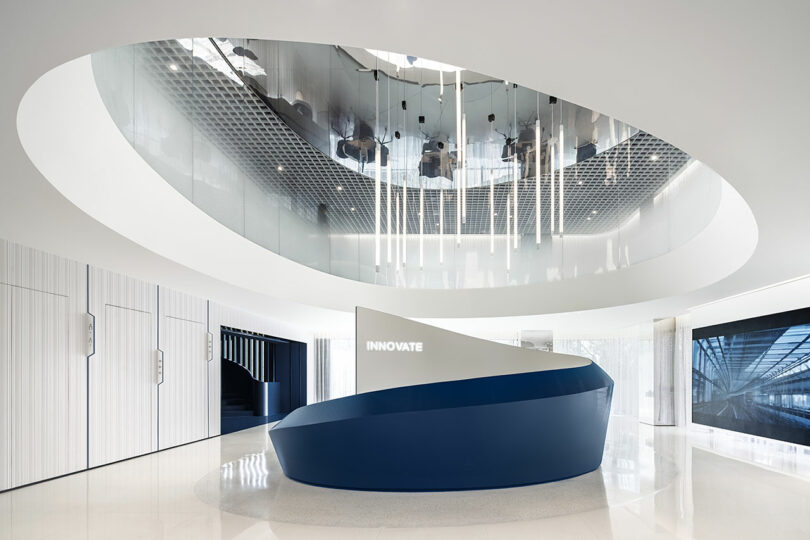
The entry sequence is a masterclass in balancing tradition with high-tech futurism. You aren't greeted by cold, sterile corridors. Instead, you encounter water curtains that nod to Foshan’s river heritage, intricate porcelain-inspired textures, and abstracted dragon motifs that weave through the ceiling. This isn't just decoration; it’s an application of Feng Shui—optimizing the "flow" of energy (and people) to ensure that the workspace feels intuitive rather than imposing.
The workspace is structured around what I call the 4 C’s of MAX Zone:
- Concentration: Secluded acoustic pods that allow for deep, uninterrupted work.
- Communication: Open-plan lounges designed with the warmth of a residential living room.
- Collaboration: Interactive "war rooms" equipped with the latest spatial computing tools.
- Contemplation: Biophilic gardens and water features designed to lower cortisol levels.
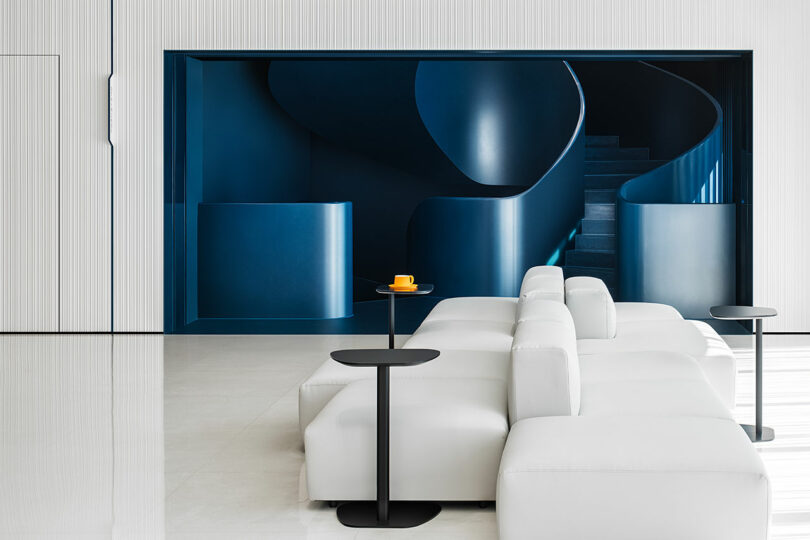
Earning the Commute: Hospitality as the New Office Anchor
To get employees back into the office in 2026, the space must "earn the commute." It has to provide experiences that the home office—no matter how ergonomic—simply cannot match. This is where MAX Zone shifts from a workplace to a "destination."
The design treats employees like guests in a high-end boutique hotel. Nowhere is this more evident than in the "Souterrain"—a sprawling lower-level complex dedicated entirely to the human spirit.
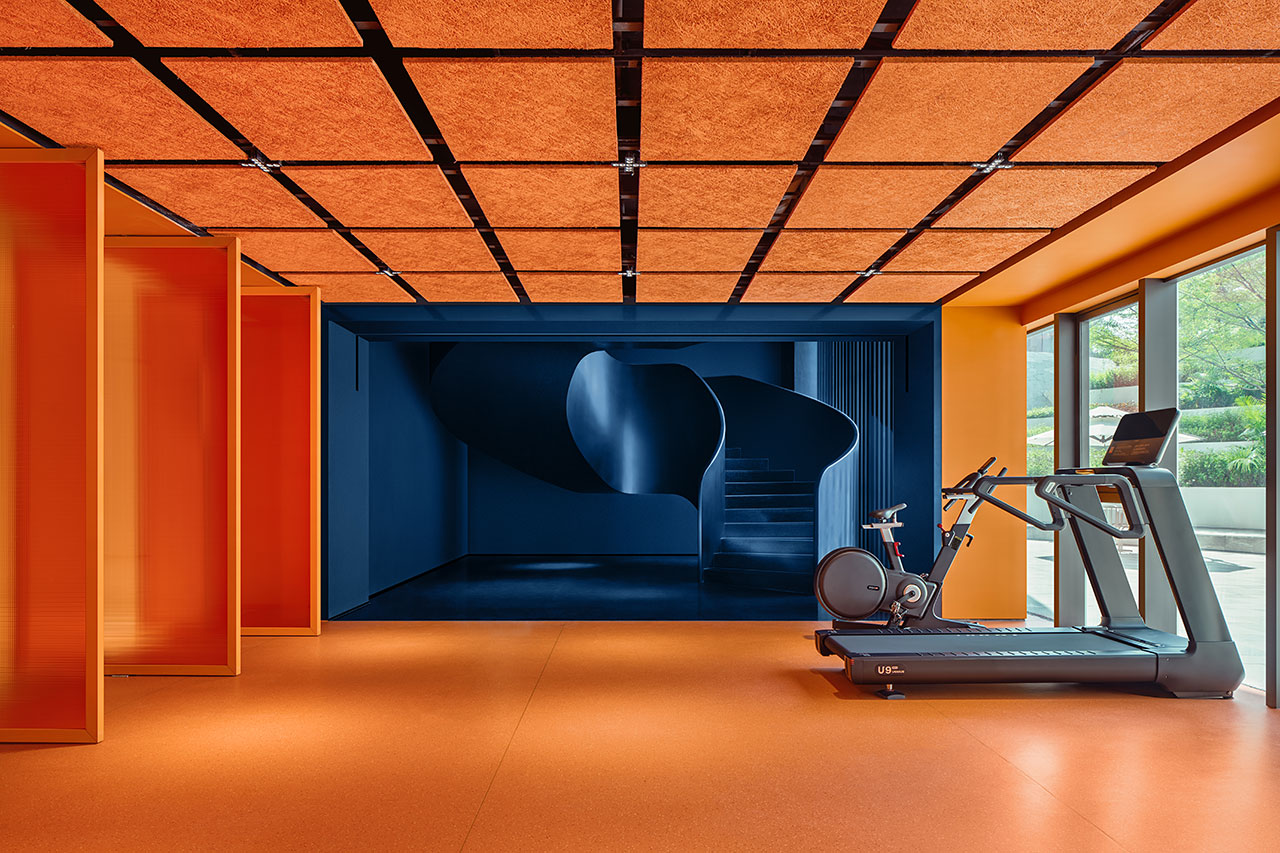
Redefining Wellness: The workspace prioritizes employee well-being through 'hospitality-driven' amenities, including a souterrain with basketball courts, climbing walls, a gym, and dedicated banquet spaces for social connection. It acknowledges that a worker’s physical health is the primary engine of corporate innovation.
Statistical data suggests that this isn't just a luxury—it's a requirement. According to 2026 workplace trends, 66% of employees now view the physical office primarily as a destination for collaboration and social connection. If the office is just a place with a desk, they’ll stay home. If it’s a place where they can hit a climbing wall with their team or host a professional banquet in a stunning, orange-hued event space, they’ll show up.
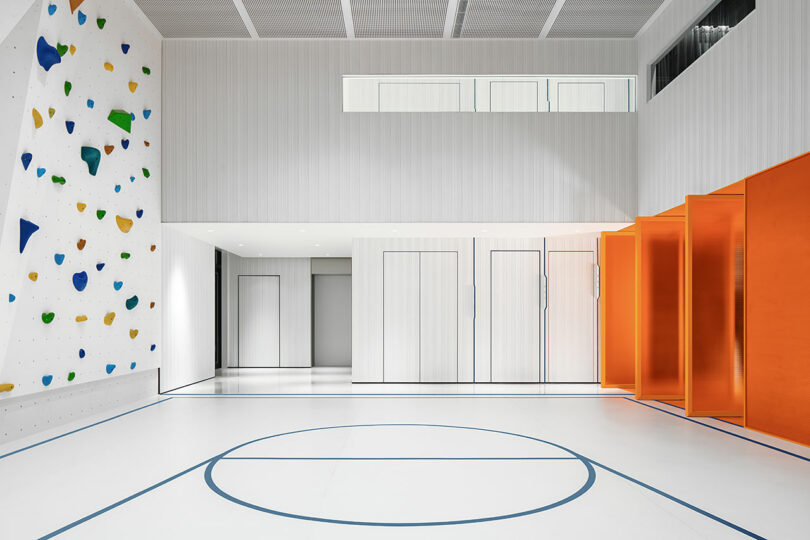
The use of color here is intentional and "chromatic." While the focus zones utilize calming deep blues and natural wood, the social and active zones explode with energetic oranges and yellows. It’s a psychological cue: "You are now in a space for movement and connection." By integrating professional-grade gyms and bars, MAX Zone becomes a "Third Space"—the perfect middle ground between the intensity of the manufacturing floor and the total relaxation of home.
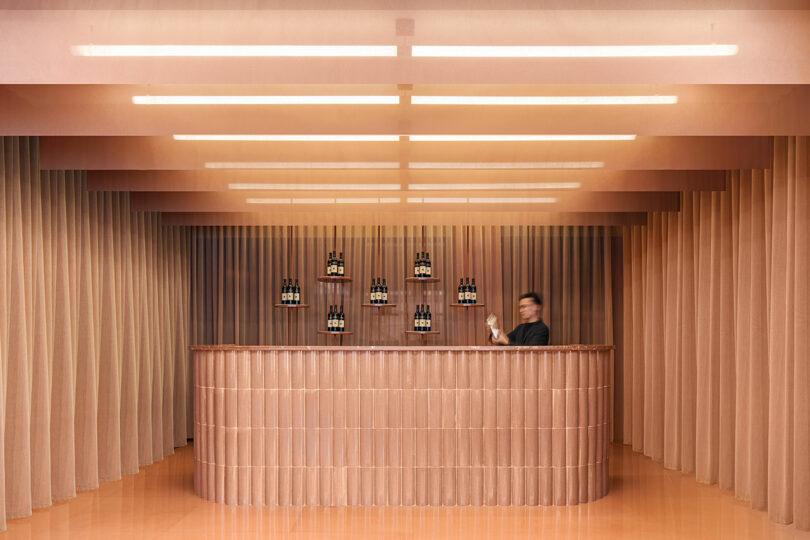
The 2026 Performance Partner: Biophilia, AI, and Agile Design
As we look toward the 2026 horizon, the most successful offices will stop being passive containers and start being "Performance Partners." In the MAX Zone, this means the building itself helps you do your job better.
The 2026 Shift: By 2026, leading workspaces like MAX Zone will function as 'performance partners,' integrating AI as a seamless assistant while utilizing flexible, modular layouts to prioritize human needs over automation.
This partnership is rooted in the "Quiet Revolution." After a decade of noisy, distracting open-plan offices, the pendulum has swung back. The 2026 design standard, pioneered here, favors enclosed focus pods and acoustic sanctuary zones. It’s about giving the worker back their agency—the power to choose the right environment for the task at hand.
Furthermore, the integration of nature—biophilia—is no longer an afterthought. It is a core business strategy. Integrating biophilic design elements in the workplace can boost employee wellbeing by 15%, productivity by 6%, and creativity by up to 15%. At MAX Zone, this manifests as internal vertical gardens and natural light optimization that follows the circadian rhythm of the employees.
| Feature | Out (Pre-2024) | In (2026 Blueprint) |
|---|---|---|
| Desk Layout | Fixed rows/cubicles | Modular, "plug-and-play" zones |
| Noise Level | Open-plan "buzz" | Acoustic sanctuaries & focus pods |
| Tech Integration | Manual booking systems | AI-driven environmental curation |
| Employee Perk | Free coffee & snacks | Professional gyms & wellness centers |
| Nature | Potted plants | Full-scale biophilic integration |
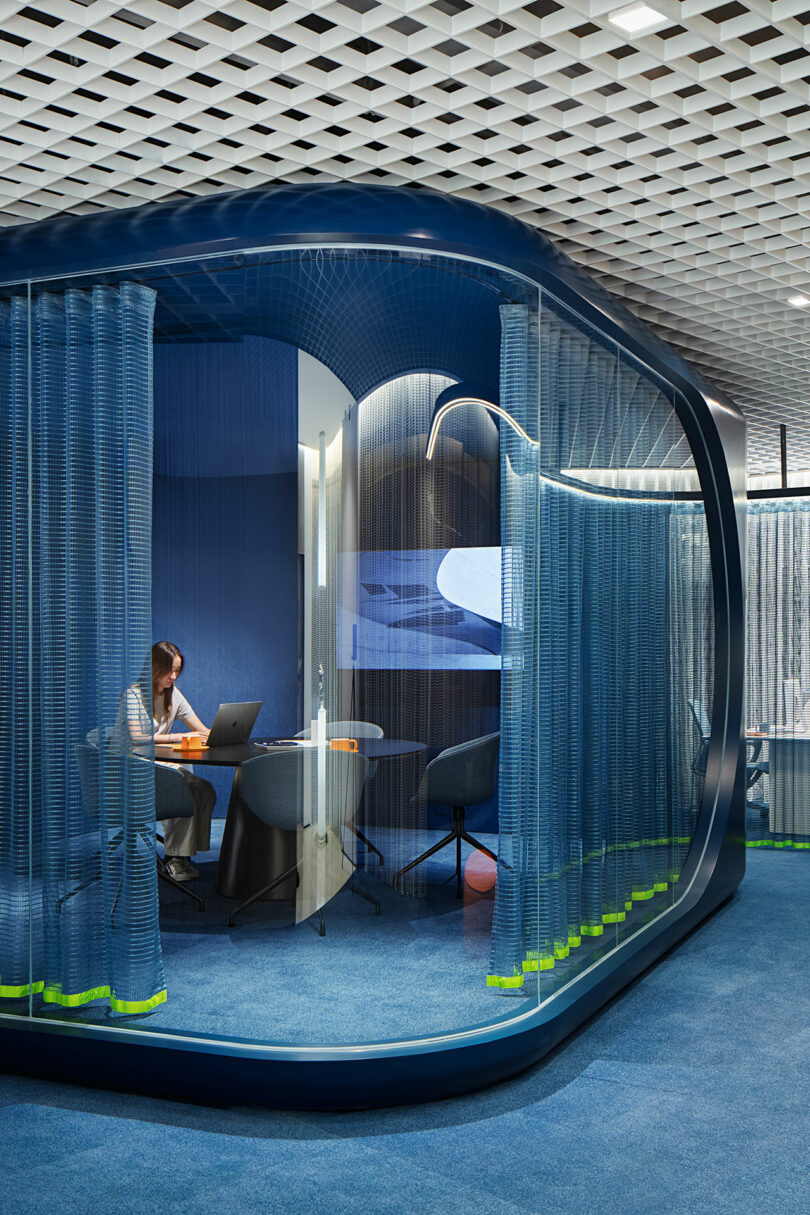
Intelligent Environments: AI as an Environmental Curator
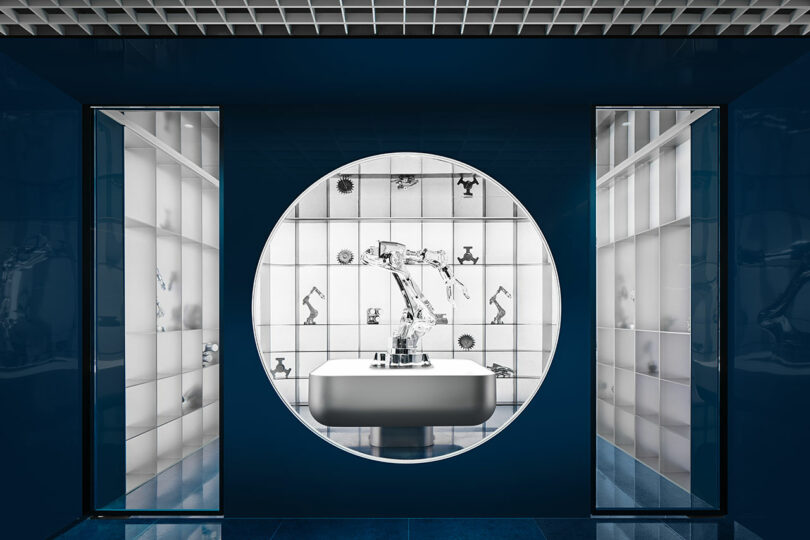
In the MAX Zone, technology is ubiquitous but invisible. We are moving away from "using" AI to "working with" AI. The building functions as a living organism. Sensor-rich environments adjust lighting, airflow, and even ambient sound masking based on the number of people in a room and the nature of their work.
If the sensors detect a high-intensity brainstorming session, the air temperature might drop slightly and the lighting shift to a cooler, focus-inducing spectrum. Conversely, in the "escape rooms"—tech-light zones designed for mental decompression—the AI scales back, silencing notifications and softening the environment to allow the human brain to reset. This is the hallmark of a smart manufacturing workplace: the tech is advanced, but the experience is profoundly human.
Sustainability and Equity: Building for a Lasting Culture
Finally, the MAX Zone addresses the two most critical pillars of modern corporate responsibility: Sustainability and Equity.
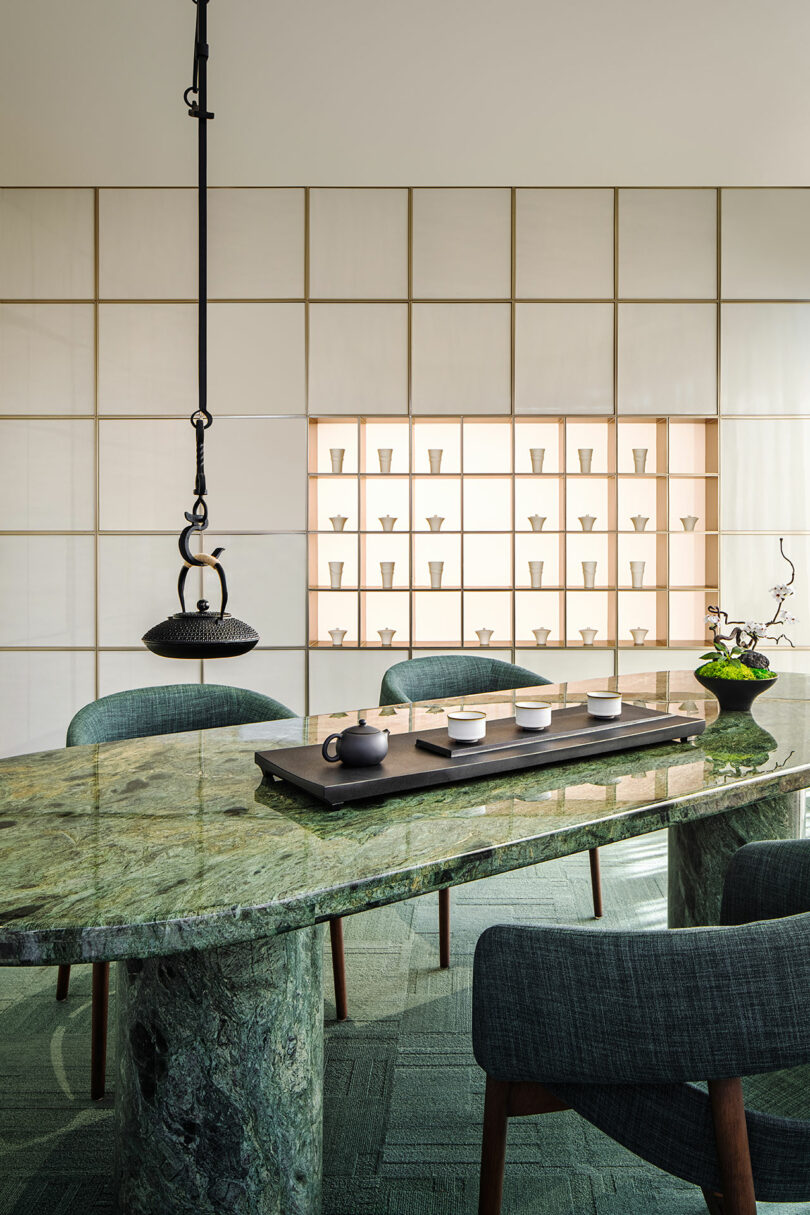
In terms of sustainability, the project avoids the "disposable" feel of many tech parks. By using low-carbon materials, mass timber elements, and durable regional stones like green marble, Ippolito Fleitz Group has created a space that is built to last. These materials don't just reduce the carbon footprint; they provide a tactile, grounded feeling that synthetic materials lack.
Equity in design is the "secret sauce" of MAX Zone. Often, high-end amenities are reserved for the C-suite. Here, the layout is democratized. Whether you are a technician from the smart manufacturing floor or a senior software architect, you share the same high-quality communal dining areas, the same gym, and the same biophilic lounges. This spatial equity fosters a sense of shared mission that is vital for a thriving corporate culture.
As we stand on the cusp of 2026, Foshan’s MAX Zone serves as more than just an office; it is a manifesto. it proves that when we design for the "Gathering" of people rather than just the "housing" of workers, we create environments where both humans and businesses can truly flourish.
FAQ
Q: How does the MAX Zone balance traditional Feng Shui with a high-tech manufacturing environment? A: The design uses architectural flow and natural elements (like water curtains and specific color palettes) to guide movement and energy, ensuring the high-tech elements feel harmonious and grounded rather than overwhelming.
Q: Why is the "Souterrain" (lower level) so important to the MAX Zone’s success? A: It acts as the "heart" of the hospitality experience. By placing high-energy activities like basketball and climbing below the main work floors, it provides a dedicated space for physical release and social bonding without disrupting the focus required in the offices above.
Q: What makes the MAX Zone a "Performance Partner" for 2026? A: It goes beyond being a passive space. Through AI-driven environmental adjustments, acoustic focus pods, and biophilic design, the building actively works to reduce employee stress and enhance cognitive function.