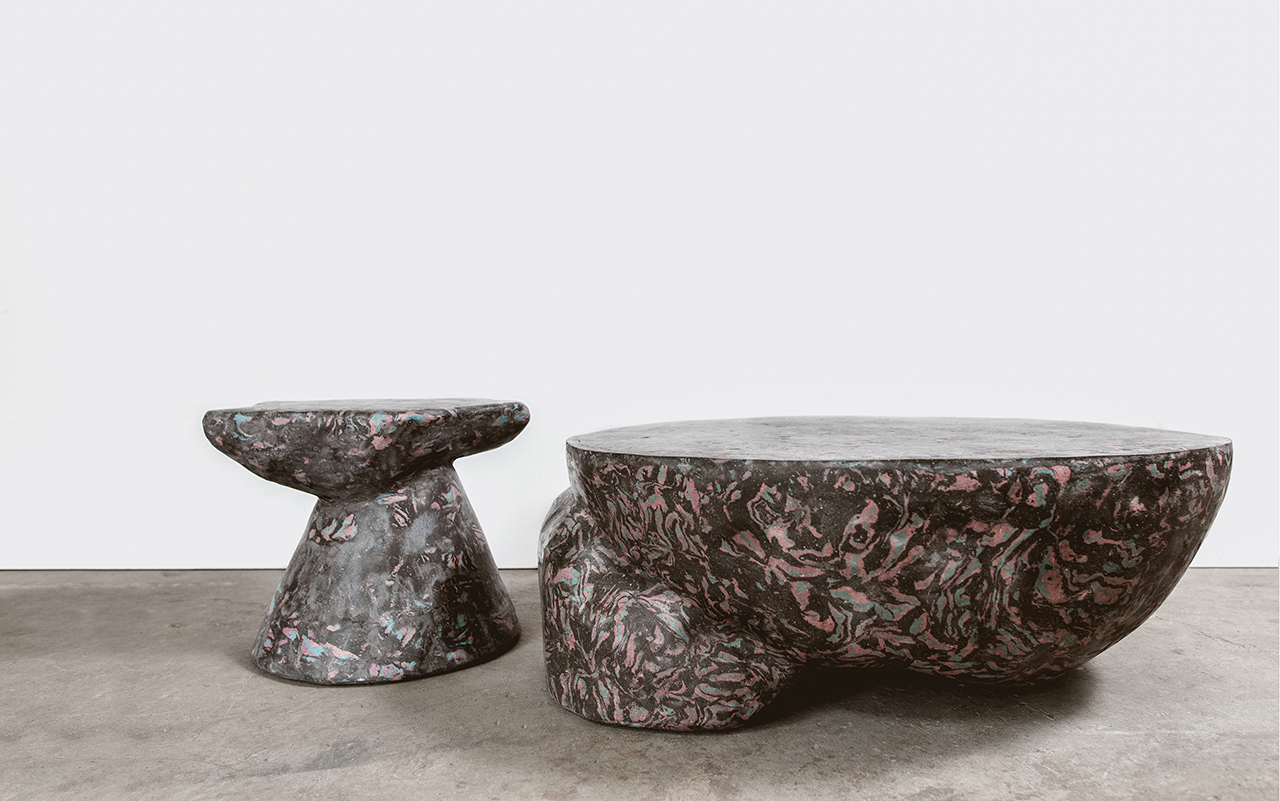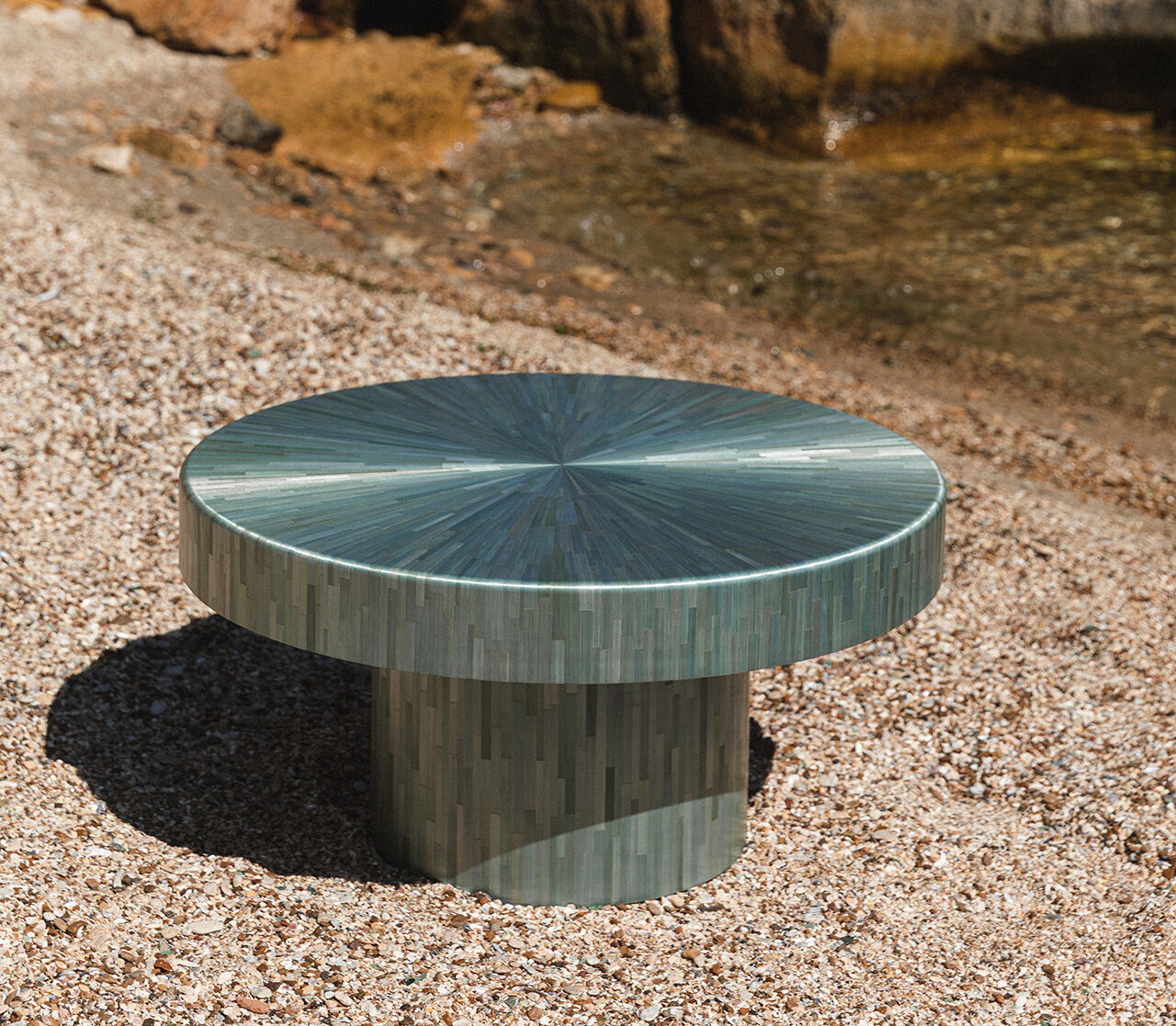
What hyper-minimalist forms lack in ornamentation, they often amplify in color, texture, and materiality. As we move into 2026, the design world is witnessing a profound shift from the "sterile minimalism" of the past decade toward what I call "Warm, Sculptural Minimalism"—an aesthetic that prioritizes the soul of the object over mere absence of clutter. At the heart of this movement stands the Seahorse Table by Katerina Bulgakova.
The Seahorse Coffee Table is considered a minimalist icon because it replaces traditional ornamentation with complex texture and materiality, specifically utilizing the ancient technique of straw marquetry to create a sunburst pattern that mimics iridescent fish scales. It is not just a piece of furniture; it is a bridge between functional utility and spatial poetry. By utilizing hand-harvested rye straw from Western Ukraine, Bulgakova has created a zero-plastic, organic masterpiece that feels as much like a relic of the natural world as it does a contemporary sculpture.
The Alchemy of Material: Ukrainian Rye Straw
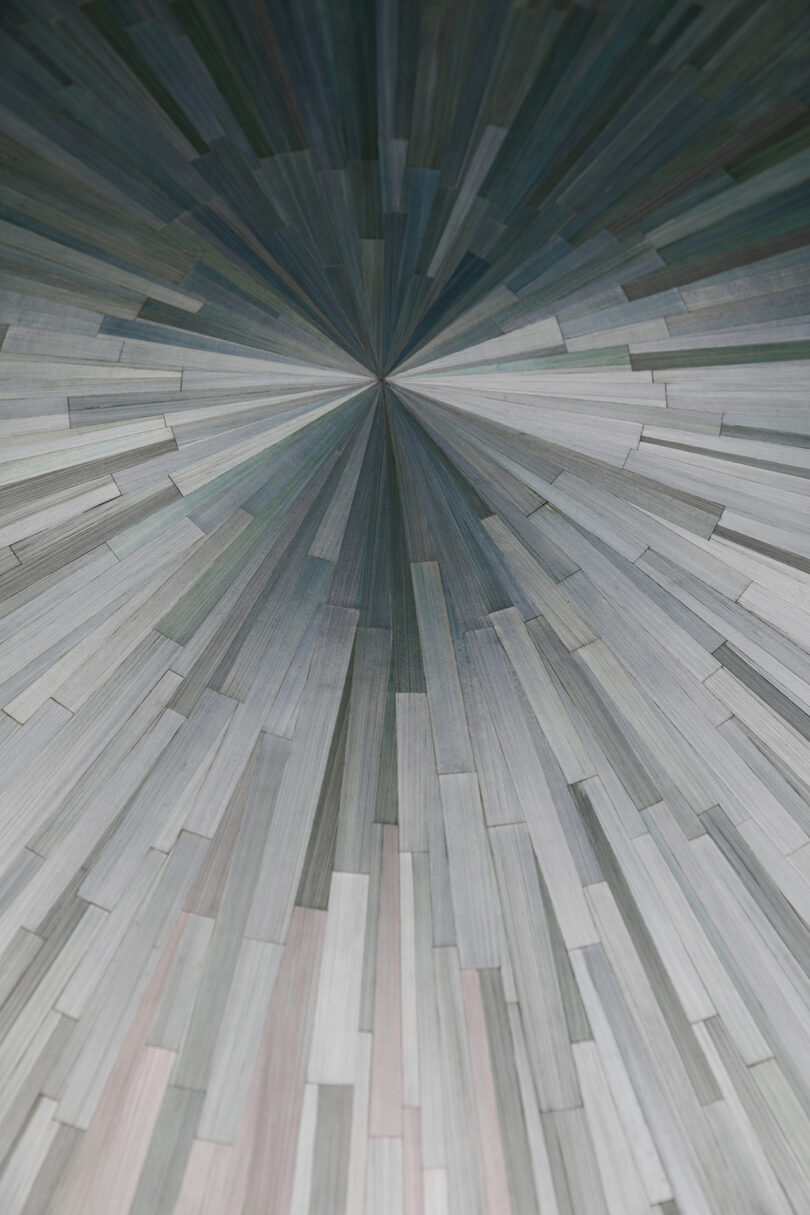
In the upper echelon of luxury design, "Material Honesty" has become the ultimate currency. The Seahorse Table excels here, grounding its high-concept form in the humble, earthy reality of Western Ukrainian rye straw. This isn't a synthetic veneer or a clever laminate; it is 100% hand-harvested organic material, processed with a level of care that borders on the ritualistic.
The journey of the straw is as fascinating as the final product:
- Harvesting: Every stalk of rye is selected by hand in the fields of Western Ukraine, ensuring the integrity of the fibers.
- Preparation: The straw is dried, cleaned, and hand-dyed using organic pigments that allow the natural sheen of the silica—the straw's outer "skin"—to remain visible.
- Flattening: Each individual strand is split and flattened by hand, transforming a round stalk into a thin, shimmering ribbon of natural gold.
This process ensures a 100% organic surface, free from the plastics and synthetic resins that often plague modern "minimalist" furniture. In a 2026 interior, where air quality and ecological footprints are as important as aesthetics, this commitment to sustainable luxury is what separates a seasonal trend from a lasting icon.
Mastering the Sunburst: 80 Hours of Meticulous Labor
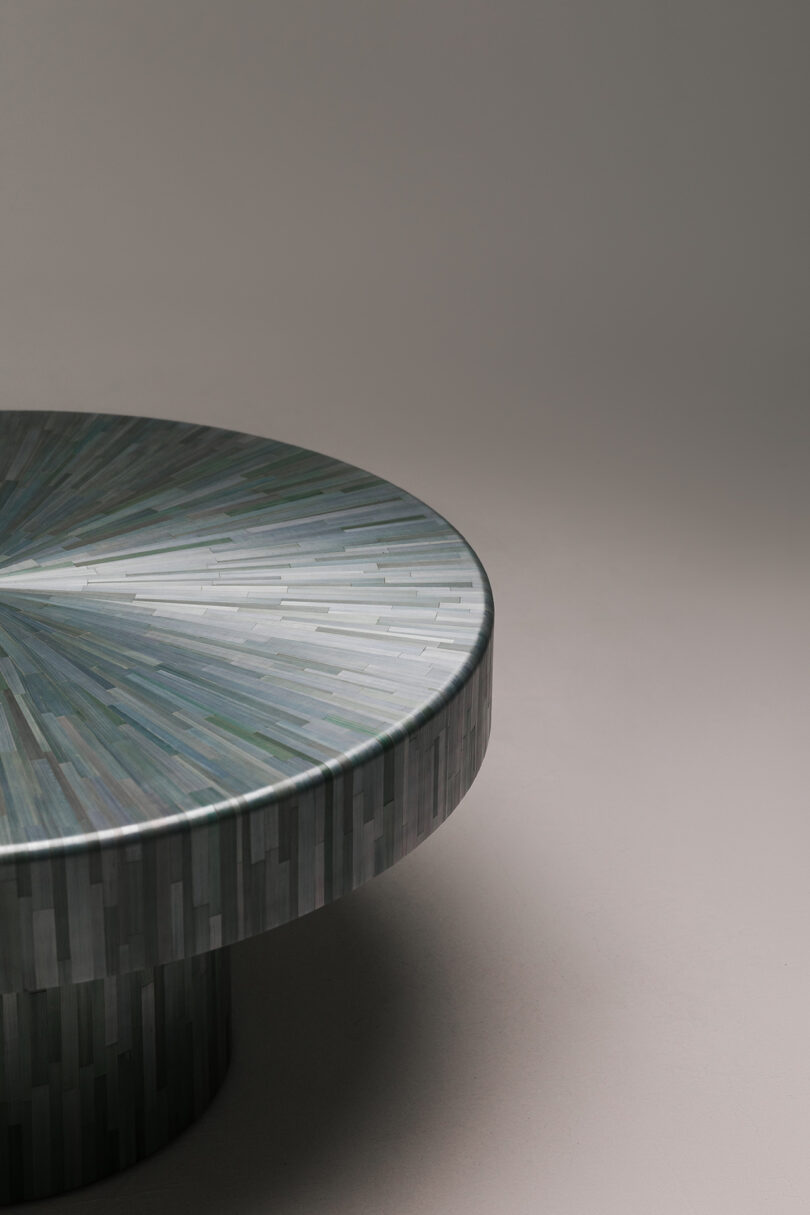
When you stand over the Seahorse Table, the light doesn't just reflect; it dances. This is the magic of straw marquetry—an exacting craft that involves the manual application of straw strands to a substrate. Katerina Bulgakova’s team utilizes a radial sunburst pattern that requires between 50 to 80 hours of manual labor per piece.
"This meticulous rendering takes the piece to the next level, the upper echelon of detail. It is three-dimensional poetry where the material dictates the rhythm of the light." — Ivy Chen
The labor is not just about time; it is about precision. Each strand of straw must be aligned to the millimeter to ensure the seamless application around the table’s cylindrical base. Unlike high-gloss lacquer, which creates a flat, mirror-like reflection, the straw’s natural satin finish creates depth. It produces a "halo of color" that shifts as you move around the room, mimicking the iridescent scales of a seahorse or the gentle ripple of water in a sunlit pond.
| Feature | Specification |
|---|---|
| Material | 100% Sustainably Harvested Ukrainian Rye Straw |
| Technique | Hand-applied Straw Marquetry |
| Labor Intensity | 50 - 80 Hours per piece |
| Finish | Natural Satin (Silica-based sheen) |
| Eco-Profile | Zero-plastic, Hand-dyed, Organic |
Sculptural Form: Evoking the Fluidity of Water
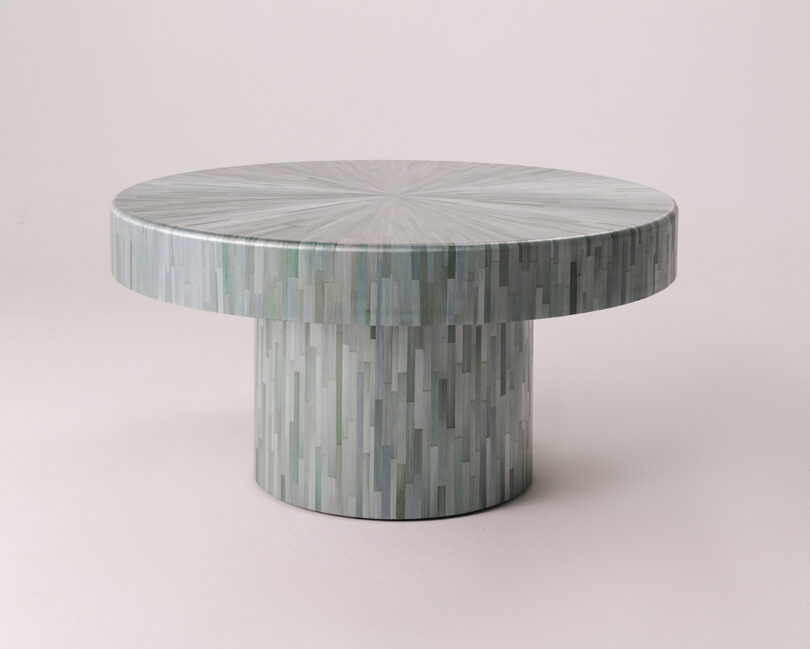
The silhouette of the Seahorse Table is a masterclass in "Soft Architecture." It consists of a robust cylindrical base supporting a thick, substantial top slab. There is a sense of "solidness and dimension" here that anchors a room, yet the table never feels heavy. This is due to its curved lines and the "liquid-like" effect of the marquetry.
Bulgakova’s design philosophy draws heavily from the fluidity of water. The table doesn't just sit in a space; it flows within it. The neuroarchitecture behind this design—the way our brains respond to curved silhouettes—prompts a sense of calm and safety. In the 2026 design landscape, where we seek "Coastal Sanctuaries" even in the heart of the city, this organic rhythm is essential.
Styling the Seahorse Table: From Coastal Sanctuaries to Formal Salons
As an editor, I look for pieces that offer versatility without sacrificing their identity. The Seahorse Table is a chameleon of high-end design. It feels equally at home in a glass-walled gallery as it does in a curated, minimalist outdoor living room (under cover, of course).
The Iridescent Centerpiece
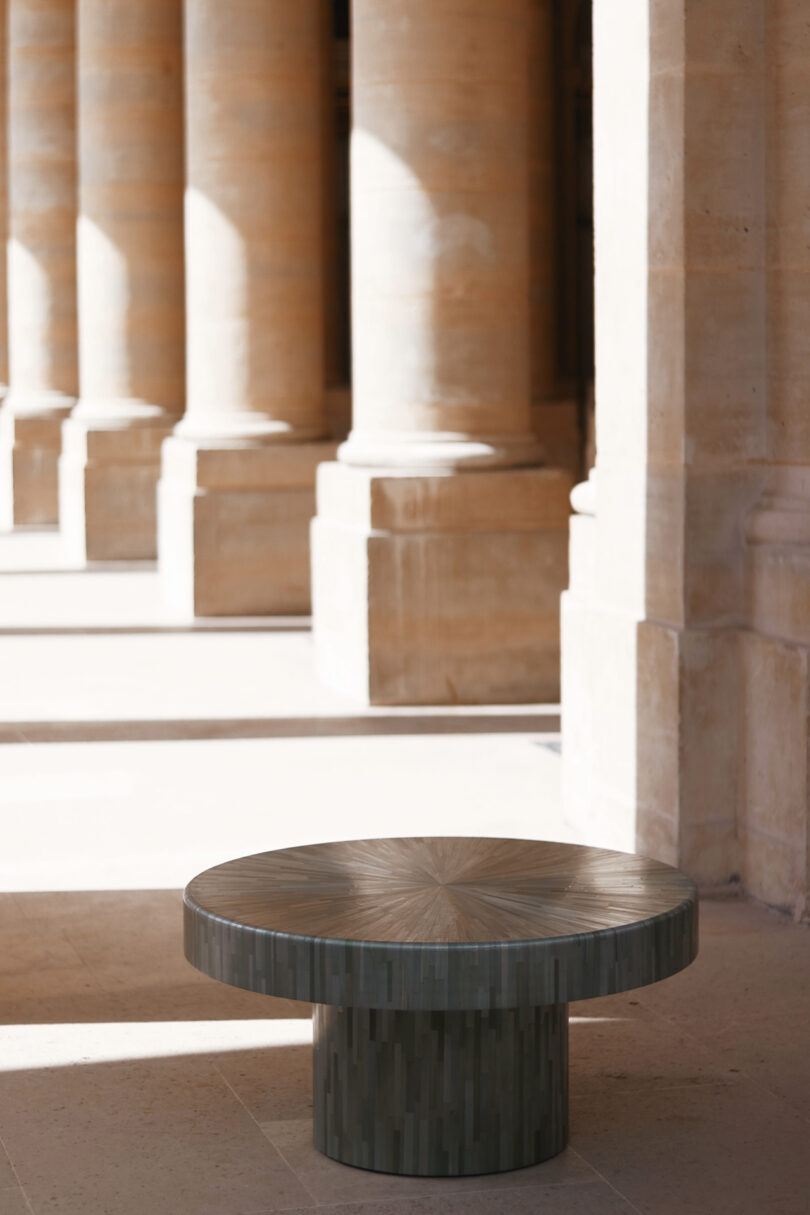
In a sun-drenched formal living room, the Seahorse Table acts as a natural light catcher. To create an "elegant tablescape," I recommend keeping accessories minimal. A single, heavy glass vase or a few sculptural ceramic pieces will allow the radial pattern of the straw to remain the protagonist.
Pairing with 2026 Trends
To truly elevate the space, pair the Seahorse Table with other textures that celebrate "Warm Minimalism":
- Bouclé and Wool: The soft, matte texture of a bouclé sofa provides a perfect counterpoint to the shimmering, linear grain of the straw.
- Premium Oak: Incorporating raw or white-oiled oak furniture nearby reinforces the connection to natural materials.
- Ambient Statement Lighting: Use low-slung, warm-toned lighting to accentuate the grain of the straw during evening hours, turning the table into a glowing ember of light.
Coastal Minimalism
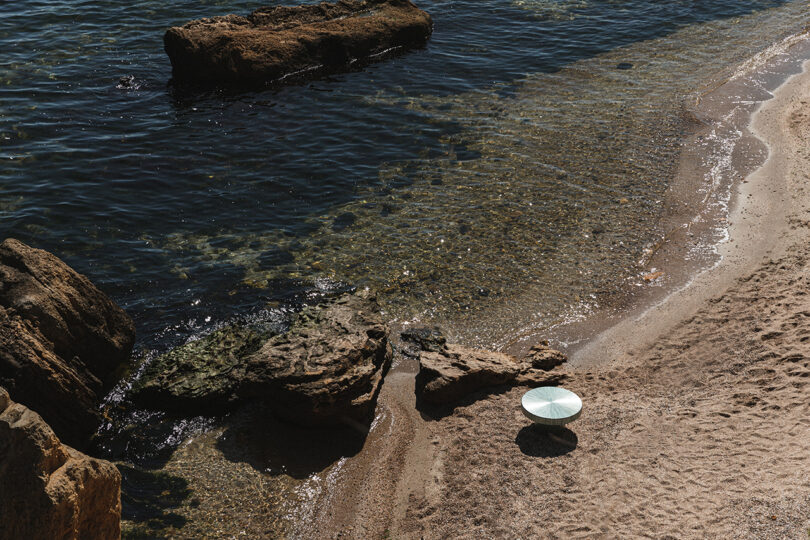
For coastal homes, the Seahorse Table is the ultimate nod to the environment. It bridges the gap between the raw beauty of the shoreline and the refined luxury of modern interiors. Its texture mimics the rhythm of the tides, making it an organic extension of the view outside the window.
Conclusion: Investing in Heirloom Quality
In an era of "fast furniture" and fleeting digital trends, the Seahorse Table represents a return to the heirloom. Its value lies not just in its iconic shape, but in the 80 hours of human touch embedded in its surface. Katerina Bulgakova has managed to capture the essence of sustainable luxury—a piece that respects the earth, honors ancient craftsmanship, and looks forward to the future of minimalist aesthetics.
For the collector who values "intentional living," this table is more than a surface; it is a conversation between the hand of the artisan and the eye of the inhabitant. It is, quite simply, the new icon for 2026.
FAQ
1. Is the straw surface of the Seahorse Table durable? Yes. While straw may seem delicate, the natural silica in the rye straw acts as a protective shield. Once flattened and applied to the substrate with a satin finish, the surface is surprisingly resilient. However, like any piece of fine marquetry, it should be treated with care and kept away from standing water or extreme heat.
2. Can the table be used in outdoor settings? The Seahorse Table is ideal for "minimalist outdoor spaces" that are protected from the elements, such as covered verandas or sunrooms. Because it is a 100% organic surface, prolonged exposure to direct rain or harsh weather is not recommended.
3. Does the color of the straw fade over time? Bulgakova uses high-quality, organic dyes. When combined with the natural sheen of the straw, the color is remarkably stable. Like all natural wood and fiber products, it may develop a slight, beautiful patina over years of exposure to sunlight, which many collectors believe adds to its "material honesty" and character.