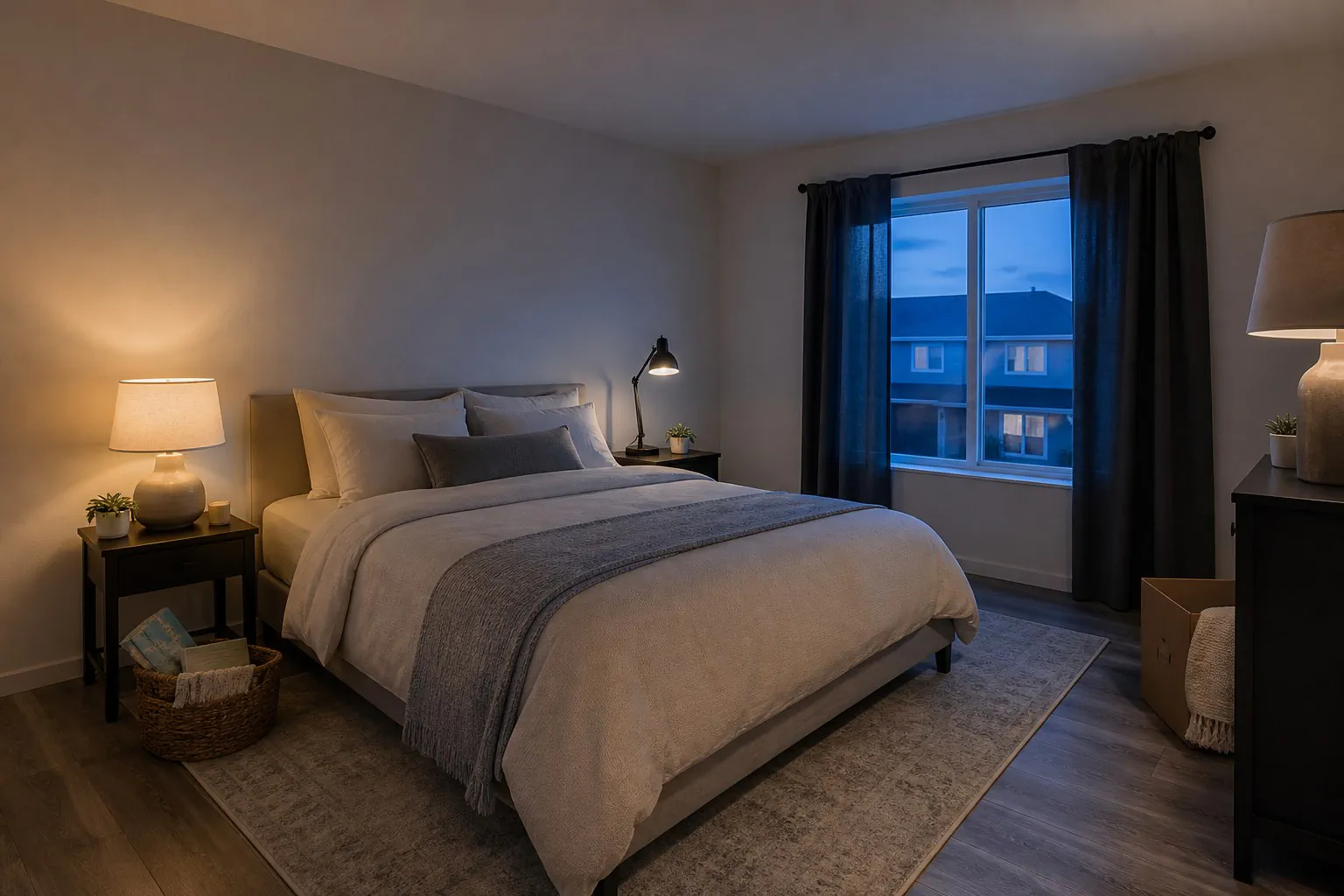
What bedroom design choices do experts recommend for sleeping better in a new home?
A practical guide to the furniture, lighting, and storage decisions that designers and sleep specialists say make a new bedroom feel restful from the first night.
In a new bedroom, anchor the bed against a solid wall with a clear sightline to the door, use warm layered lighting instead of overhead fixtures, banish visible clutter with a place for every item, and move phones, chargers, and work gear out of the room. Treat the bedroom as a single-purpose sleep space rather than a multi-use room.
Setting up a new bedroom is one of the rare chances to design a room around sleep rather than around leftovers from the rest of the house. Designers and sleep specialists describe a calm, well-organized bedroom as a way to train your brain to associate the space with rest. The choices that matter most are the same ones that shape how the room feels the moment you walk in: where the bed sits, how the room is lit at night, and how much visible clutter competes for your attention.
Start with the bed placement, not the decor
Designers commonly place the bed against a solid wall, with a clear view of the door but not directly in line with it. That layout, sometimes called the command position, lets you see who is entering without being in the path of the door. Most experts also recommend avoiding placing the bed directly under a window, where drafts, streetlight, and early-morning sun are harder to control.
Bed placement checklist for a new bedroom
✓
Anchor the headboard against a solid wall
A solid wall behind you gives a sense of support and reduces noise from the other side.
✓
Keep a clear sightline to the door
You should see the entry without the foot of the bed pointing straight at it.
✓
Avoid placing the bed directly under a window
Glass surfaces leak sound, let in streetlight, and pull in early sun that can shorten sleep.
✓
Allow walking room on both sides
You should be able to pass the bed without turning sideways. Tight clearances make the room feel cramped to the body.
✓
Match nightstands on each side if space allows
Symmetry feels calm and gives each person a place for a lamp, water, and a book.
Layer the lighting for wind-down, not wake-up
Overhead ceiling lights tell your brain that daytime is still going. In a bedroom built for sleep, designers rely on warm bedside lamps as the main evening light source, with overhead fixtures reserved for dressing and tidying. Warm bulbs rated at 2700K or lower produce a softer pool of light that signals the day is closing. Layered lighting also lets each partner read or get ready without flooding the room in bright light.
Build a four-layer lighting plan for the bedroom
01
Bedside task lamps
Place matching warm-bulb lamps on each nightstand for reading and the last hour of the day.
02
Wall sconces or picture lights
Add a low, indirect source if the room feels dim after dark, or to highlight one calm piece of art.
03
Dresser-area lighting
Provide a focused source across the room so you can dress without turning on the overhead light.
04
Overhead light on a dimmer
Keep one ceiling fixture for cleaning and morning routines, but on a dimmer so it is rarely used at full brightness.
Treat storage as a sleep feature, not an afterthought
Visible clutter quietly keeps the brain alert, even after you have turned the lights off. Sleep specialists describe a messy bedroom as a low-level reminder of unfinished tasks, which can lengthen the time it takes to fall asleep. The fix is not minimalist styling; it is making sure every common item has a designated home so nightstands and dressers do not become catchalls.
Storage moves that reduce bedroom clutter
Choose a nightstand with at least one drawer, not just an open shelf, so the surface can stay clear.
Add a small chest or dresser to absorb items you actually use in the room, instead of stacking them on top of furniture.
Place the dresser on the wall opposite the bed, where it can anchor a single piece of calming art above it.
Use under-bed containers for off-season clothing so the floor stays visually quiet.
Pick a hamper with a lid so laundry does not become another visual task list at the end of the day.
Remove the electronics that keep your brain on call
Phones, tablets, and laptops bring their own light, sound, and mental load. Designers and clinicians agree that the bedroom works best when it is psychologically reserved for sleep, not for work, scrolling, or news. If a television stays in the room, hiding it inside a cabinet when it is off keeps a dark screen from competing with the rest of the room at night.
Calm-bedroom rules vs. common workarounds
Choice
Calm-bedroom approach
Common workaround
Phone at night
Charge in another room
Charging on the nightstand
Television
Stored in a closed cabinet
Mounted on the main wall
Work materials
Moved out of the bedroom
Stacked on the dresser
Lighting after sunset
Warm bedside lamps only
Overhead ceiling fixture
Nightstand surface
One drawer, clear top
Open shelf holding multiple items
Color, sound, and temperature as finishing touches
Once the bed, lighting, storage, and electronics are handled, a few finishing choices make the room feel settled. Neutral or muted wall colors and one calming piece of art above the dresser give the eye a place to rest. A comfortable thermostat setting and a way to muffle outside noise, such as heavy curtains, a rug, or a white-noise source, reduce the small disruptions that fragment sleep.
SUMMARY
The bottom line
In a new home, build the bedroom around sleep by placing the bed against a solid wall with a clear view of the door, replacing overhead light with warm bedside lamps, giving every item a storage home so surfaces stay clear, and moving phones, chargers, and work gear out of the room. Layer in muted color, soft sound control, and a comfortable thermostat and the room will feel restful from the first night.
Common questions
Before you move on
Where should the bed go in a new bedroom?+
Anchor the headboard against a solid wall, keep a clear sightline to the door, and avoid placing the bed directly under a window. Allow walking room on both sides and add matching nightstands when the space allows.
What color temperature of bulb is best for a bedroom?+
Use warm bulbs labeled 2700K or lower in bedside lamps. Reserve overhead fixtures on a dimmer for dressing and tidying, and avoid bright overhead light in the hour before sleep.
Should the television stay in the bedroom?+
If a television must stay in the room, store it inside a closed cabinet when it is off. A dark screen across the room is a low-level stimulant that can make the space feel less restful.
How do I reduce bedroom clutter without becoming a minimalist?+
Choose nightstands with drawers, add a small chest or dresser for the items you actually use in the room, and give every common object a designated home so surfaces can stay clear.