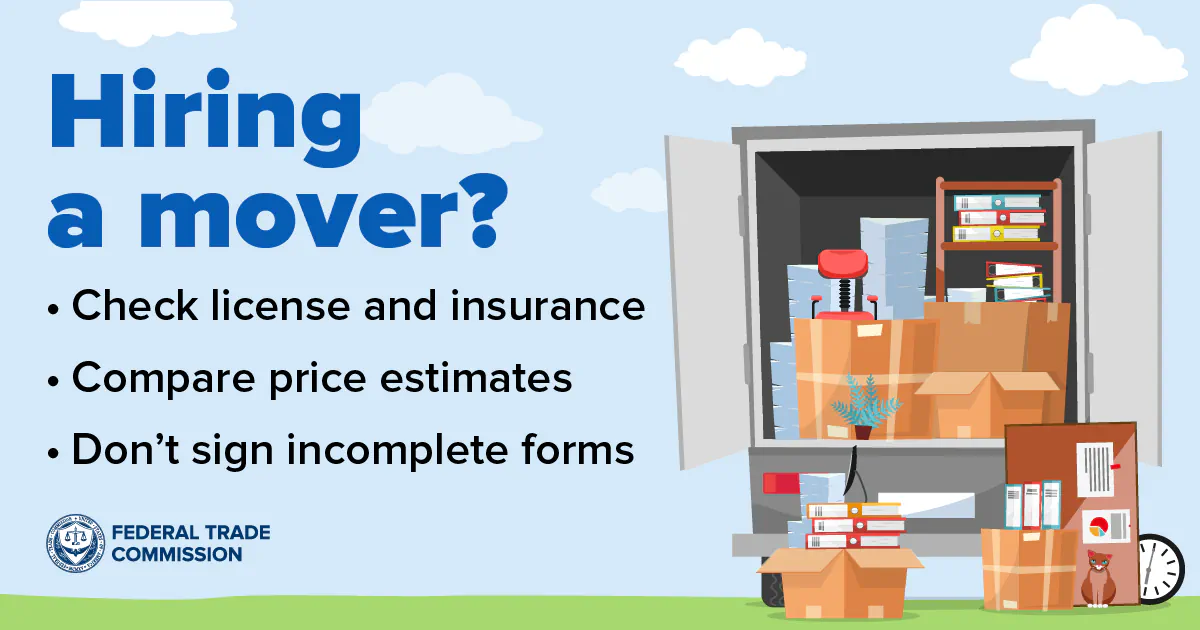
For an interstate move, match the company name on your estimate to its FMCSA record, confirm that it is authorized to carry household goods, and note whether you are dealing with a carrier or a broker. Then compare complete written estimates, keep every field filled in, and pause if the company demands cash or a large advance payment.
Build a one-page evidence pack before comparing prices
A polished website and a friendly salesperson do not prove that the company named on your quote will move your belongings. Start a simple evidence pack for every candidate. Save the written estimate, the legal business name, physical address, phone number, USDOT number when the move crosses state lines, and the name of the person who prepared the quote. This turns a vague sales conversation into facts you can compare.
The evidence to collect from each company
✓
Exact legal identity
Copy the company name and address exactly as they appear on the estimate. A brand name alone is not enough.
✓
Role in your move
Ask whether the company is the carrier that owns or operates the truck, or a broker arranging another company to do the work.
✓
Registration or state license
For interstate moves, record the USDOT number and check federal authority. For an in-state move, identify the regulator and license required in that state.
✓
Complete written estimate
Keep the inventory, services, dates, access conditions, valuation choice, possible surcharges and payment schedule together.
✓
Complaint pattern
Search the legal company name, phone number and address with terms such as complaint or scam. Look for repeated conduct, not one isolated rating.
Run the federal record check in ten minutes
From quote to verified identity
01
Search the number and the company name
Use the federal mover search for an interstate move. Searching both ways helps catch a quote that borrows a number belonging to a similarly named business.
02
Match the identity fields
Compare the legal name, headquarters location, phone number and USDOT number against the estimate and the company website. Stop if the identities cannot be reconciled.
03
Confirm what the business is authorized to do
Look for active authority to transport household goods. A broker may legally arrange a move, but it is not the same party as the carrier that will handle the shipment.
04
Read complaints as a pattern
Complaint counts need context, but repeated allegations about price increases, missing delivery, withheld belongings or identity changes deserve a direct written explanation.
05
Save the result
Export a PDF or take a dated screenshot. Keep it with the estimate so you can show exactly what you relied on when choosing the company.
Do not stop at the first search result. Open the company record and compare it line by line with your paperwork. If the salesperson says a different company will appear on moving day, ask for that carrier's legal name and record before you agree to the job.
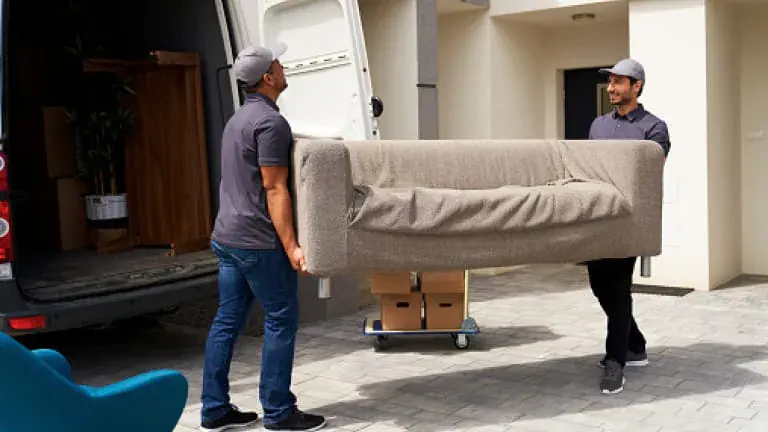
The people and truck at the door should match the company and responsibilities documented before moving day.
Compare estimates by what can change, not by the headline price
Questions that make three quotes comparable
Quote detail
What to compare
What needs an answer in writing
Shipment and services
Inventory, packing, loading, storage, delivery and specialty items
What happens if the inventory or access conditions change?
Price basis
Estimate type, included labor, travel, fuel, stairs, elevators and waiting time
Which charges can be added and who authorizes them?
Dates
Pickup window, delivery window and storage handoffs
Is the date guaranteed, estimated or dependent on another carrier?
Loss and damage
Valuation option, deductibles, exclusions and claim deadlines
What document proves the option you selected?
Payment
Deposit, installments, accepted methods and final-payment trigger
Is any money due before the written estimate and identity checks are complete?
The lowest quote is not automatically the safest choice. A useful comparison exposes uncertainty: which work is included, which assumptions could change, and which company is responsible at each handoff. If one estimate cannot answer those questions, it is not yet comparable with the others.
Know when to pause the booking
Red flags that require a stop, not a discount
The company will not provide a written estimate or says the final price will be decided only after loading.
Important prices, dates, services or signatures are blank when you are asked to sign.
The legal name, address or registration information cannot be matched across the quote, website and official record.
The salesperson demands cash or a large advance payment and pressures you to act before completing the checks.
The company cannot clearly tell you whether it is a broker or the carrier that will arrive on moving day.
A surprise company or unmarked rental truck appears, and the crew cannot show how it connects to your signed agreement.
SUMMARY
The bottom line
Before paying a deposit, you should be able to prove who is selling the move, who will carry the shipment, what each quote includes, what may change, and how the company is authorized to operate. If those facts do not fit on one evidence page, the booking is not ready to sign.
Common questions
Before you move on
Does a USDOT number prove that a mover is trustworthy?+
No. It is a starting point for verification. Match the number to the legal identity and check whether the company has active household-goods authority and the correct business role.
Is every moving deposit a scam?+
No, but a demand for cash or a large advance payment is an official warning sign. Understand the amount, refund terms, payment method and company identity before paying anything.
What if I am moving only within one state?+
Federal interstate authority may not apply. Check the licensing and complaint resources of the state transportation, utilities or consumer-protection agency that regulates household-goods movers.
Why does it matter whether the company is a broker or a carrier?+
A broker arranges the move while a carrier transports the shipment. Knowing the role tells you who controls the truck, who is responsible for performance and whose credentials must be checked.