What order should I set up the bedroom, bathroom, and kitchen so my family can sleep, shower, and eat during the first week in a new home?
Most families do not need a fully unpacked house in week one. They need a working order: sleep first, then shower, then simple meals, with charged devices ready by morning.
Before the movers leave, stage a small first-night box with bedding, towels, toiletries, phone chargers, water, snacks, and valuables. Then unpack in this order: bedroom, bathroom, kitchen basics. Set a power strip on the nightstand so phones and laptops charge overnight. Defer décor, storage, and deep organizing to week two.
Once the last box lands in the hallway, the goal is not to unpack the house. The goal is to make the home usable fast enough that the family can sleep, wash, eat, and charge devices without digging through ten cartons. The way to do that is to narrow the first week to a short list of priority rooms and a small set of essential items in each, while the rest of the boxes stay stacked where they are.
Step 1: Build a first-night box before the movers arrive
The first thing to unpack is usually not a full room. It is a small, separate container that the household can reach for within the first few hours. Important documents, keys, and valuables should ride in their own bag so they do not get lost in the wider pile. A clear label on the outside, plus a bright color or ribbon, keeps it visible in a sea of brown boxes.
What goes in the first-night box
Bedding for each family member: sheets, pillows, a blanket or comforter
One towel and basic toiletries per person
Phone and laptop chargers, plus at least one power strip
A change of clothes for the next day
Toilet paper, hand soap, and a few cleaning wipes
Water bottles and non-perishable snacks
A small tool kit: box cutter, screwdriver, tape, scissors
Trash bags and paper towels
Pet food, leash, and crate if the household has animals
Medications and a small first-aid kit
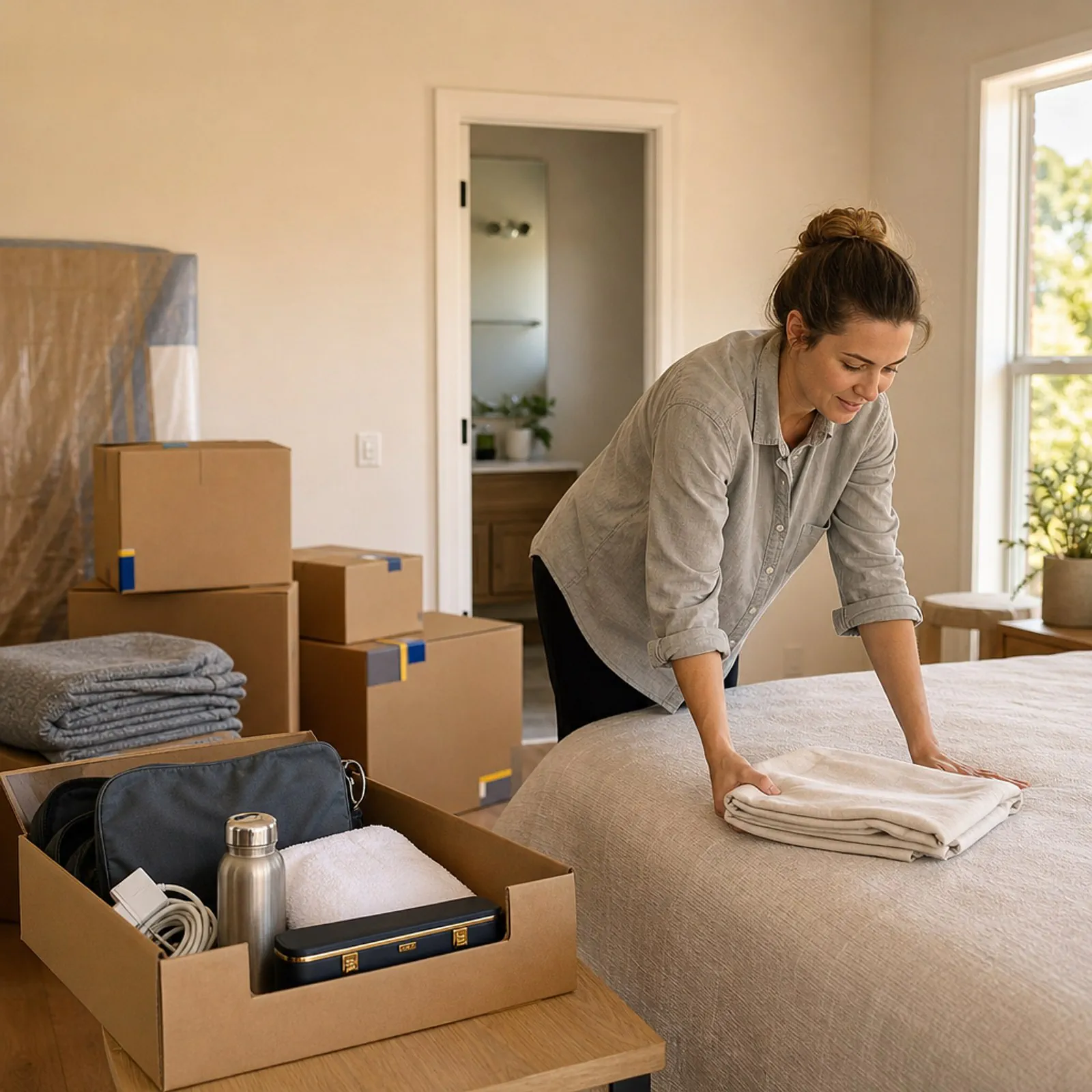
A first-night box with bedding, towel, and charger is what makes the first hours in a new home manageable.
Step 2: Unpack the bedroom, then the bathroom, then the kitchen
The first-week room sequence
01
Bedroom first
Make the bed before anything else. A made bed buys the family a real night's rest, which makes every other box easier the next day. If children are part of the move, set up their sleeping space before the master. Hang a curtain or shade, drop a lamp on the nightstand, and place a power strip within reach so phones, watches, and e-readers charge overnight.
02
Bathroom second
A bathroom becomes usable in minutes, not hours. Hang the shower curtain, drop in a bath mat, and set out towels, toilet paper, hand soap, and the daily toiletries. Skip organizers, drawer dividers, and pretty storage for now; those belong in week two when the rest of the house is calm.
03
Kitchen third, kept simple
Do not unpack the whole kitchen on day one. Pull out only what supports water, coffee, and a few easy meals: mugs, glasses, a couple of plates and forks, a knife and cutting board, one pot, one pan, a kettle or coffee maker, dish soap, and a sponge. Leave specialty cookware, bakeware, and small appliances in their boxes until the basics are settled.
04
Charging and paperwork alongside the bedroom
Pair a power strip and a small basket for keys, mail, and chargers with the bedroom setup. Plug in phones the first night so alarms, two-factor codes, and family group chats are ready in the morning. Keep the lease, insurance documents, and a pen in the same basket so they do not end up under a stack of boxes.
Grouping boxes by room at the door keeps the first unpacking pass narrow.
What can wait until week two
Defer these until the core rooms are running
Décor, picture hanging, and wall art
Bookshelves, file cabinets, and storage bins
Guest-room setup if it is not needed right away
Specialty kitchen gear, small appliances, and pantry organizing
Linen closet sorting beyond one working shelf
Garage, attic, basement, and outdoor storage
Deep cleaning beyond a quick wipe-down of the priority rooms
When the order needs to bend
The bedroom-bathroom-kitchen sequence is the default, not a rule. A family with a baby may set up the nursery first. Someone caring for an older relative may put that room at the top of the list. A home with only one bathroom may push the bathroom ahead of the master bedroom on day one. The principle stays the same: solve the next problem first, and keep the rest of the house closed until the priority rooms are quiet.
First-week setup checklist
✓
First-night box staged before the truck arrives
Bedding, towels, toiletries, chargers, water, snacks, tools, and valuables in a separate, clearly labeled container.
✓
Bedroom usable by the first night
Beds made, shades or curtains down, lamp on the nightstand, power strip plugged in, phones charging.
✓
Bathroom usable in minutes, not hours
Shower curtain hung, towels out, toilet paper and soap stocked, daily toiletries in reach.
✓
Kitchen limited to coffee, water, and one simple meal
Mugs, glasses, plates, forks, a knife, cutting board, one pot, one pan, kettle or coffee maker, dish soap, sponge.
✓
Charging station set up in the bedroom
One power strip with room for phones, watches, e-readers, and one laptop.
✓
Boxes labeled by room and priority
Short contents notes on each label so the first pass does not turn into a five-box search for one towel.
✓
A 'gaps' note started on the phone
Every missing item goes on one running list for a single batch-buy trip later in the week.
SUMMARY
The bottom line
Treat week one as a setup, not a setup-and-finish. Build a first-night box, then unpack in the order of need: sleep, shower, simple food, charging. Save the rest of the house for week two, when the family is rested and the priority rooms are running on routine.
Common questions
Before you move on
How long does it usually take to set up the priority rooms?+
Most families can make the bedroom, bathroom, and a small slice of the kitchen usable within the first evening and the next morning. A full unpack usually takes a few weekends, especially in a larger home with more storage.
Should I unpack the kitchen or the bathroom first?+
Bathroom, in most cases. A usable bathroom takes only a handful of items, and the whole family needs it within hours. The kitchen can stay minimal until day two, once everyone has slept and showered.
What if my movers unpacked everything for me?+
Treat the placed boxes in the priority rooms the same way: open the bedroom, bathroom, and a small kitchen box first, and leave the rest stacked where they are. Trying to put everything away in the first 24 hours usually creates more clutter, not less.