How do humidity and temperature affect prefinished hardwood flooring installation?
A practical guide to acclimating prefinished hardwood, keeping rooms in the right climate range, and avoiding seasonal gaps and cupping before the first board is nailed or glued.
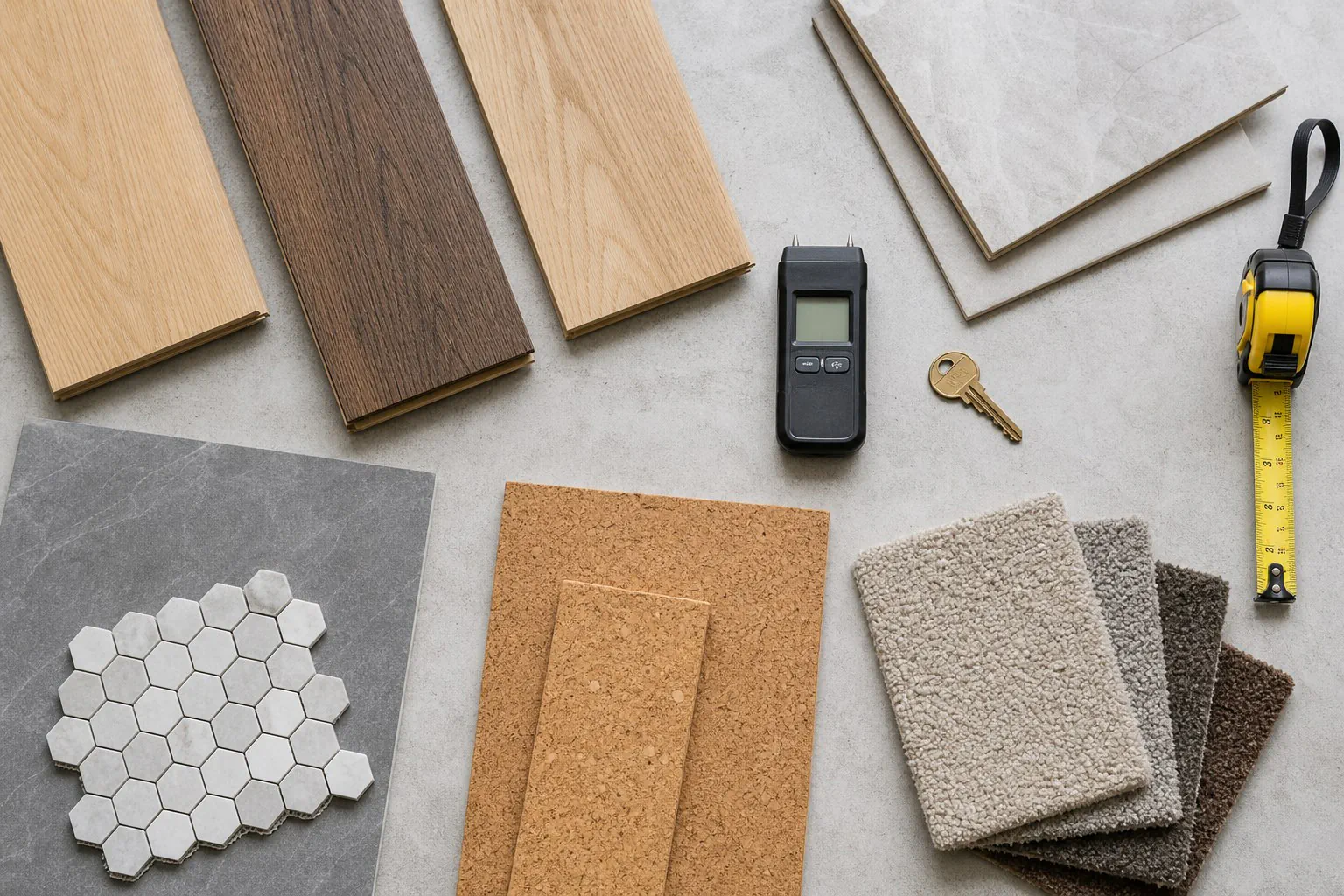
Wood expands in humid air and shrinks in dry air, so the room you install prefinished hardwood in needs to be between 60–80°F with 30–50% relative humidity, and the planks need to sit in that room for at least a week before installation. Get those two things wrong and you'll see cupping, crowning, or gaps between boards even on a factory-finished product.
Prefinished hardwood looks like a set-it-and-forget-it product: the color, stain, and protective coats are baked on at the factory, so you skip the dust and odor of on-site sanding. But the wood under that finish still behaves like wood. It absorbs moisture in summer, releases it in winter, and moves with every shift in your home's climate. If the room and the planks aren't in the right condition on installation day, the floor moves anyway — and the damage shows up as cupping, crowning, gapping, or squeaks within the first season.
The climate window installers aim for
The accepted target for prefinished solid hardwood is 60–80°F with 30–50% relative humidity in the room where the floor will live. That range covers most US homes in normal use. It also lines up with what most flooring manufacturers put in their installation guidelines, so staying inside it keeps the warranty on solid footing.
Acclimation, week by week
Acclimation is the step that prevents most climate-related callbacks. The goal is to get the moisture content of the boards to match the moisture content of the air in your home before they get nailed or glued down. Skipping it is the single most common reason prefinished floors develop gaps in January or cupping in August.
A typical acclimation window
- Get the home to living conditions
Run the HVAC so the room sits at 60–80°F and 30–50% relative humidity. The heating or cooling system has to be operating, not just installed — wood acclimates to whatever air is actually in the room.
- Bring boxes into the room
Stack the unopened cartons in the middle of the installation area, not against exterior walls or in a garage. Spacing stacks a few inches apart lets air move around them.
- Let the wood equalize
Leave the boxes flat and unopened for at least a week. A moisture meter reading on a few boards should match the room's humidity before you start laying planks.
- Install, then keep the climate steady
Once the floor is down, hold the room inside the same 60–80°F / 30–50% RH range year-round. Big swings after installation cause the same problems as bad acclimation.
What happens when climate goes wrong
Common problems and what usually causes them
| Symptom | What the climate was doing | Most common cause |
|---|---|---|
| Cupping (edges of boards curl up) | Humidity too high during or after install | Boards installed too wet, or home humidity rose above 50% |
| Crowning (centers of boards rise above edges) | Moisture applied on top of cupped boards | Sanding a cupped floor before it dries out |
| Gaps between boards in winter | Indoor RH dropped below 30% | Wood shrank because the heat was on and humidity wasn't added |
| Squeaks and movement | Boards were still moving after install | Insufficient acclimation or subfloor not acclimated to the same conditions |
| Finish checking (small cracks in the factory coat) | Boards went from cool storage to a hot, dry room | Planks were installed before equalizing |
Prep checklist before the first board goes down
Climate and site readiness
- Confirm HVAC is running
The system needs to be on, not just installed. Portable heaters and window units don't keep the whole room at a stable humidity.
- Measure humidity at the subfloor level
A hygrometer on the wall tells you the room air; a moisture meter on the plywood tells you the wood. Both numbers matter.
- Stack cartons in the installation room
Keep boards away from exterior walls, direct sunlight, and any source of moisture like a basement hatch or fresh drywall.
- Plan for a 7-day acclimation window
Three days is sometimes enough, but a full week covers humid regions and newly dried-in construction.
- Decide how to hold humidity in winter
Whole-home humidifiers are the cleanest solution. Aiming for 35% RH through the heating season prevents winter gapping.
- Choose solid vs. engineered based on climate swings
If the room sees big seasonal swings, large west-facing windows, or sits over a crawlspace, engineered prefinished is the safer bet.
How prefinished compares to other wood floors in this climate
Prefinished solid hardwood gives you the longest possible lifespan and can be refinished multiple times, but it's the least tolerant of climate swings. Engineered prefinished wood trades some refinishing cycles for a more dimensionally stable core that holds up better through humid summers and dry winters. Unfinished site-finished oak is the most forgiving on a flat subfloor — because the finish is applied after acclimation, every board is sealed on all sides at once — but it adds days of sanding and finishing work to the project.
SUMMARY
The bottom line
Prefinished hardwood installs faster than site-finished floors, but it isn't climate-proof. Hold the room at 60–80°F and 30–50% relative humidity before, during, and after installation, and let the cartons sit in that room for at least a week. If your home swings harder than that — coastal humidity, mountain winters, west-facing sun, a basement subfloor — switch to engineered prefinished planks so the core absorbs the movement instead of the top layer of solid wood.
Common questions
Before you move on
How long should prefinished hardwood acclimate before installation?+
At least 3 days, and a full 7 days in most US homes. The room needs to be at living conditions (60–80°F, 30–50% RH) with the HVAC running while the cartons sit there unopened.
Can I install prefinished hardwood in a bathroom?+
Prefinished solid hardwood is not recommended for full bathrooms because of repeated humidity spikes from showers. Engineered prefinished wood with a stable plywood core is a more realistic choice if you want the look; otherwise, porcelain tile or luxury vinyl handles moisture better.
Do I need a humidifier in winter?+
If your indoor relative humidity drops below 30% during the heating season, yes. Winter is when solid prefinished floors develop the most visible gaps, and a whole-home humidifier set around 35% RH is the simplest way to prevent them.
Does federal interstate moving rule (the FMCSA 'Your Rights and Responsibilities When You Move' booklet and 110% / released-value vs. full-value protection rules) apply to my situation?+
No — the FMCSA brochure and the federal released-value vs. full-value protection rules govern interstate household goods carriers regulated by the U.S. DOT. A local flooring project inside one state, with material delivered by a building-supply retailer and installed by a contractor, is not an interstate household-goods move and is not covered by that booklet. For an in-state installation you'll work with your state's contractor licensing rules, local permitting, and the flooring manufacturer's warranty terms instead. Federal rules only attach if the materials themselves are shipped across state lines by a registered motor carrier as part of a household-goods move — a different scenario entirely.