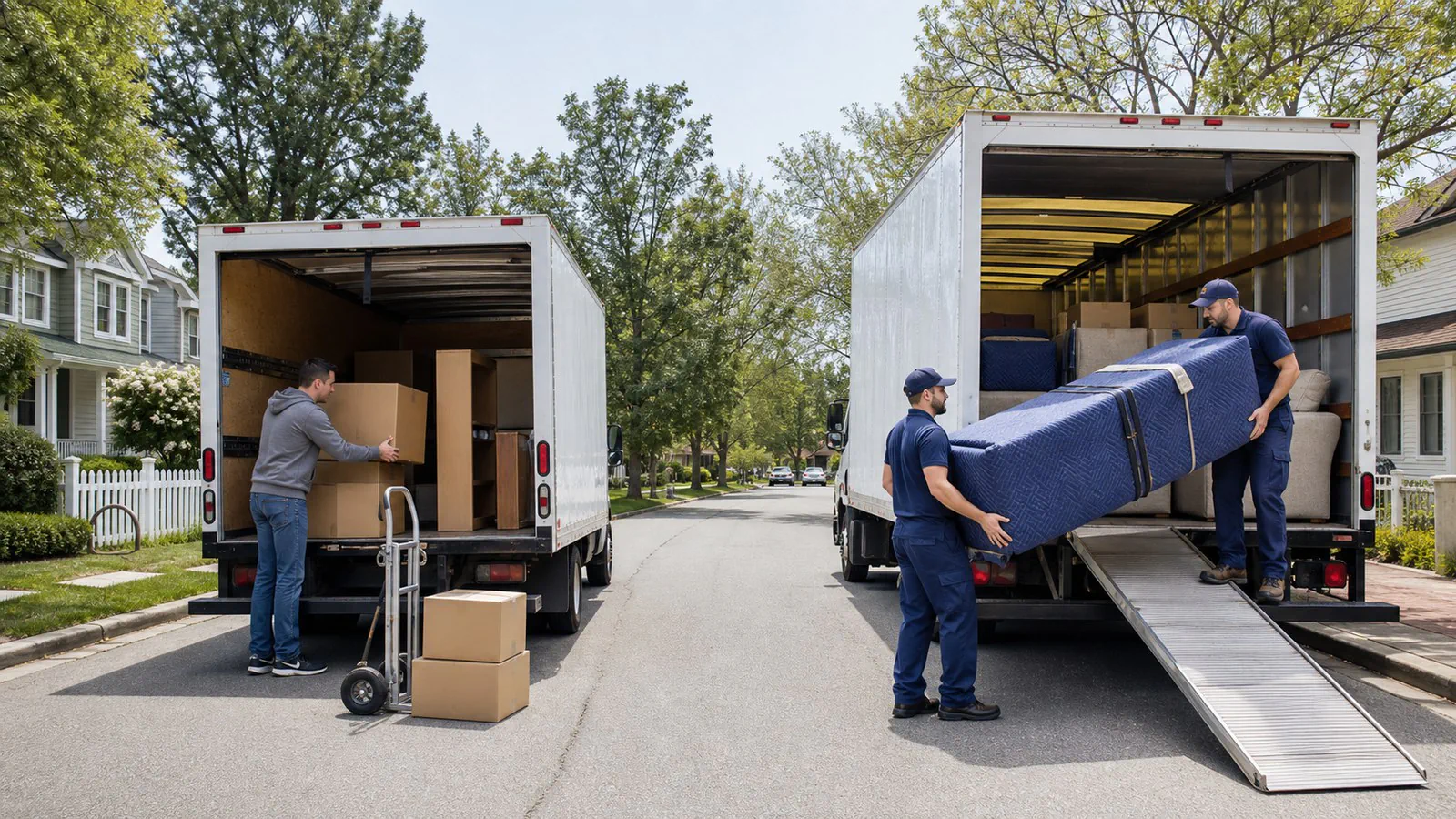
How do DIY truck rental moves compare in price to full-service movers?
Side-by-side cost ranges for DIY truck rentals and full-service movers, the hidden fees that flip the math, and a decision shortcut for studios through cross-country moves.
A DIY truck rental is usually the cheapest way to move a small load a short distance, but the gap closes fast on long-distance and large moves once fuel, mileage, equipment, and your time are counted. Full-service movers cost more upfront, yet often deliver better value for 3+ bedrooms, fragile items, tight timelines, or anything over a few hundred miles.
If your priority is the lowest possible invoice, a rental truck almost always wins for a studio or one-bedroom moving across town. If your priority is the lowest possible strain on your body and your calendar, a full-service crew usually wins for anything larger or farther. The interesting part is the middle ground, where a few hundred dollars in hidden costs can flip the answer.
The realistic price ranges
Use these bands as a planning baseline. Real quotes swing with season, region, fuel prices, and how much help you bring to a rental.
Truck rental vs. full-service movers at a glance
Move type
Truck rental (DIY)
Full-service movers
Studio or 1-bedroom, local
$90–$250
$360–$850
2-bedroom, local
$180–$350
$700–$1,600
3-bedroom, local
$250–$450+
$1,100–$2,600+
1–2 bedrooms, ~500 miles
$700–$1,500
$2,500–$5,000
3–4 bedrooms, ~1,000–1,500 miles
$1,200–$2,500
$5,000–$9,000+
Cross-country, 2,000–2,800 miles
$1,500–$3,500
$7,500–$15,000+
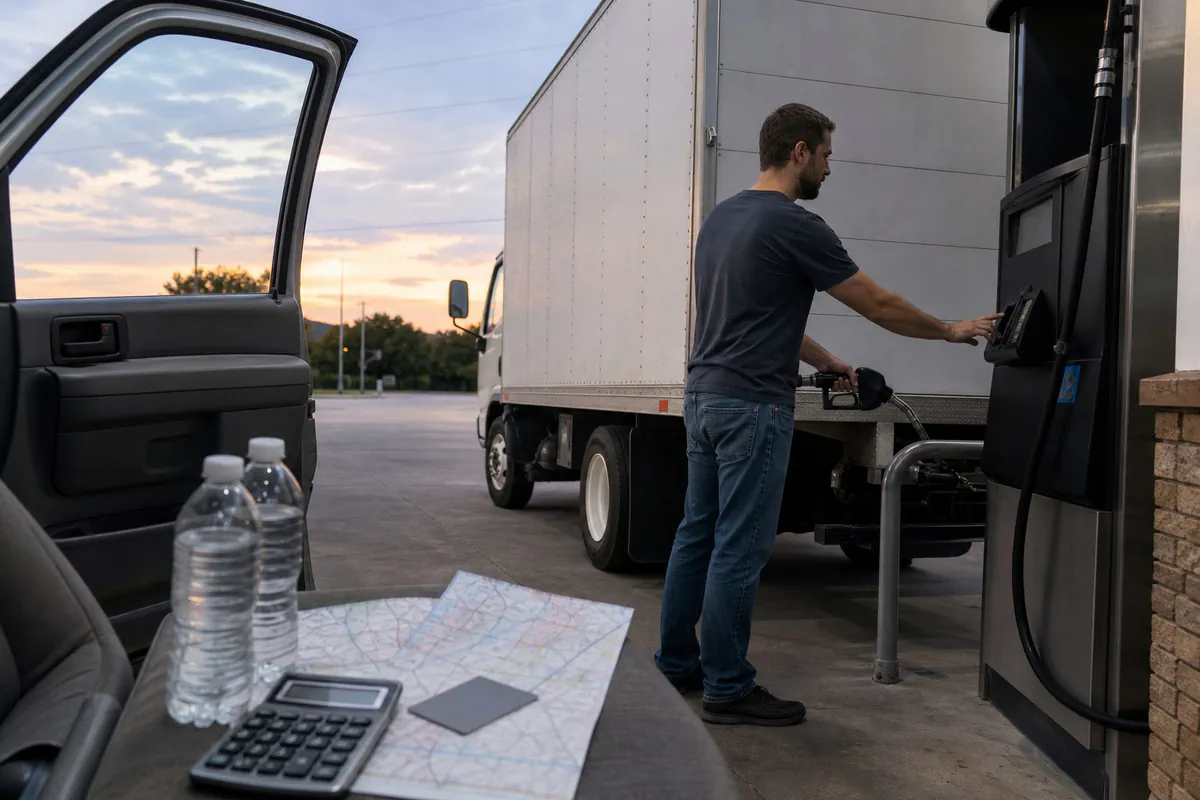
Fuel at 8–12 mpg turns a one-way rental into a four-figure line item on long routes, so it belongs in the same column as the truck fee.
The hidden costs that move the needle
Base rates are the smallest part of a real moving budget. The extras below are what turn a $150 rental into a $700 rental, or a $2,000 mover quote into a $3,200 invoice.
Line items to add to your DIY estimate
✓
Mileage and one-way fees
Local rentals often charge $0.70–$2.00 per mile; one-way rentals use flat tiers. Confirm what is included before you book.
✓
Fuel
Loaded rental trucks average 8–12 mpg. A 1,000-mile leg is roughly $300–$500 in fuel at today's prices.
✓
Insurance and damage waivers
LDW/CDW covers the truck. Supplemental liability, personal accident, and cargo coverage for your belongings are usually extra.
✓
Equipment rental
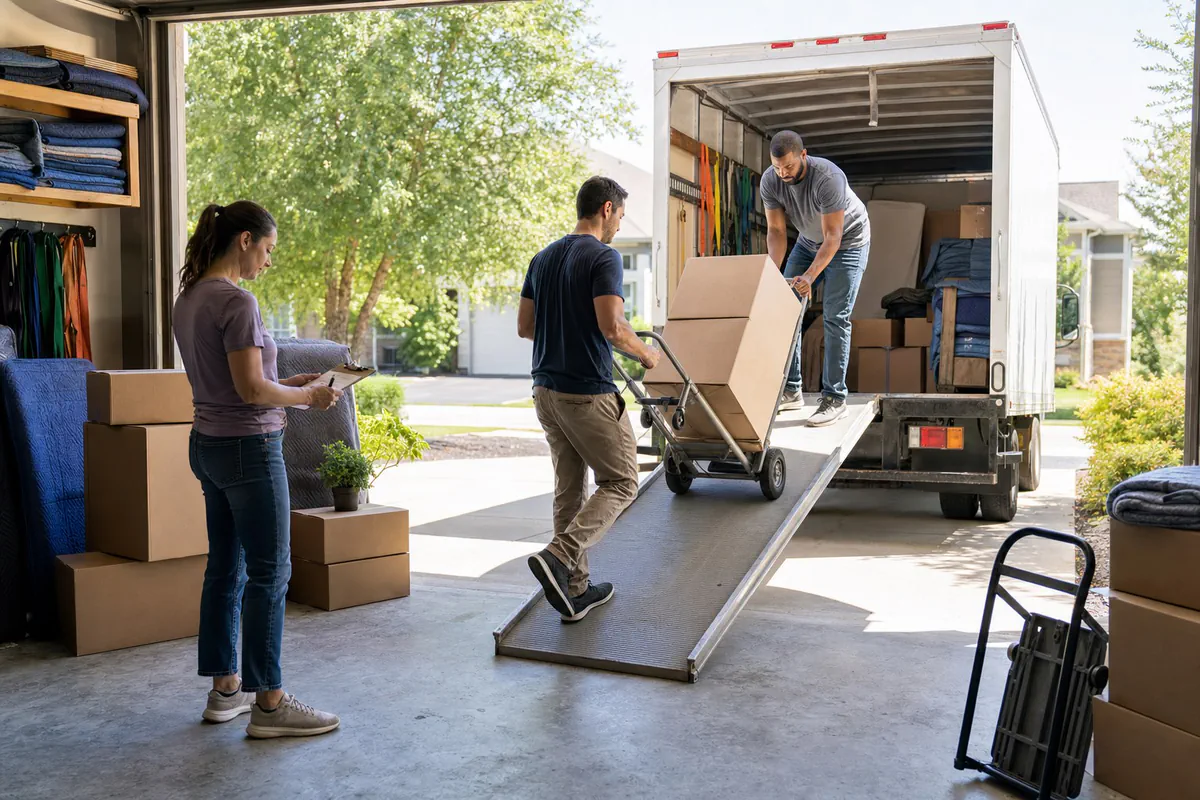
Dollies, ramps, moving blankets, and furniture pads are typically not included and can add $40–$150.
✓
Moving supplies
Boxes, tape, mattress bags, and bins commonly run $75–$300 for a full household.
✓
Tolls, parking, and permits
Urban moves often require street-use permits, loading zone reservations, or both. Build in a 10% buffer for surprises.
✓
Lodging and meals
A 1,000+ mile move adds a night or two of hotel stays to a DIY budget that simply does not exist with door-to-door movers.
✓
Labor-only help
Hiring two pros for 2–4 hours at each end typically runs $200–$500, and it is what closes the physical-effort gap with full service.
Where DIY actually wins
Rent a truck when the following all apply
You are moving under 50 miles and can stage a single load.
You have a studio, one-bedroom, or dorm-sized inventory.
Friends or family can commit a half-day for loading and unloading.
You are comfortable driving and parking a large vehicle, including in tight urban streets.
Your timeline is flexible enough to avoid peak pricing on weekends and month-end.
Two reliable helpers are usually the difference between a four-hour rental day and a two-day rental.
Where full-service earns its price
Hire movers when any of these are true
You are moving 3+ bedrooms, or you own antiques, pianos, safes, or fragile collections.
Your move is over 500 miles, especially across state lines where logistics and liability rules matter.
You have a tight closing window with no slack for a truck breakdown or a flat tire.
You cannot safely lift heavy items, or you do not have reliable help.
Your building requires a certificate of insurance, freight elevator reservation, or loading dock booking that a crew can coordinate for you.
Build your real budget
A 15-minute cost worksheet
01
Lock the move spec
Note home size, exact mileage, inventory weight if known, and the day of week. These four inputs drive 80% of the variance between quotes.
02
Pull two truck quotes and two mover quotes
Use the same date, pickup, and drop-off addresses for every estimate. Ask each company for a line-item, not a ballpark.
03
Add the DIY extras
Calculate fuel at 10 mpg, mileage or one-way fees, supplies, equipment, and a 10% buffer. Add $300–$600 if you are hiring labor-only help.
04
Add the mover accessorials
Ask about shuttle fees, stair or long-carry charges, packing, storage, and valuation upgrades. Each one changes the total.
05
Decide on value, not just price
Score each option on time cost, physical risk, and schedule flexibility. Multiply your hours by a rate you would pay yourself and include that on the DIY side.
Quick answers
DIY vs. full-service at a glance
Factor
Truck rental
Full-service movers
Upfront cost
Lower for small and local moves
Higher, but bundles labor
Effort
High, you handle all of it
Low, crew does the heavy work
Best fit
Studios, 1–2 bedrooms, under ~100 miles
3+ bedrooms, long distance, tight schedules
Driving required
Yes
Usually no
Belongings coverage
Your responsibility unless you add cargo insurance
Basic liability included; full-value available
Scheduling flexibility
High
Moderate, route and window driven
SUMMARY
The bottom line
A rental truck is the cheapest option for small, local moves where you have help and a flexible schedule. Full-service movers are worth the premium for 3+ bedrooms, fragile or heavy items, moves over 500 miles, and any timeline that cannot absorb a flat tire or a missed elevator reservation. Before you decide, price both options with the same dates and addresses, add every line item on each side, and value your own time. The right answer is whichever option delivers the best balance of real cost, time, and peace of mind for your specific move.
Common questions
Before you move on
Is a rental truck always cheaper than hiring movers?+
No. Rentals usually win for studios and one-bedrooms under about 100 miles, but the gap shrinks once you add fuel, mileage, equipment, supplies, and labor help. For 3+ bedrooms or moves over 500 miles, full-service movers often come out ahead once your time and risk are priced in.
What hidden fees hit a DIY move the hardest?+
Fuel, mileage or one-way fees, insurance and damage waivers, equipment rental, moving supplies, tolls and parking permits, and any labor you hire. On long routes, lodging and meals can add several hundred dollars that are easy to forget.
How can I make a DIY move cheaper without losing help?+
Move midweek and midmonth, return the truck with a full tank from a cheaper station outside the city, buy used boxes or rent plastic bins, and book a two-person labor crew for just the loading and unloading windows. Adding $300–$500 of labor is usually cheaper than a second truck day.
Do the same federal rules apply to an in-state move?+
Not necessarily. The federal FMCSA rules that govern interstate household goods shipments, including written estimates, the bill of lading, and full-value protection, apply when your move crosses state lines. An in-state move is regulated by your state's rules, which vary widely and often do not require a mover to be licensed or to offer the same protections. Ask whether your shipment is intrastate and what state-level coverage applies before you sign.