Does my current homeowners or renters insurance cover my belongings while they are being moved?
Your home or renters policy can follow your stuff onto the truck, but the protection is narrower than you think — and the cheapest mover option barely covers anything.
Yes, most US homeowners and renters policies extend personal property coverage to your belongings while they are in transit or in temporary storage, but only against a short list of named perils such as theft, fire, and vandalism. Damage caused by the physical act of moving — a dropped TV, a snapped sofa leg, a cracked frame — is usually excluded, and the dollar limit for items away from your residence is often a fraction of your in-home coverage. If your move crosses state lines, federal rules force the carrier to offer Full Value Protection, but for an in-state move that requirement does not apply, so the cheapest 'released value' coverage is usually the default whether you asked for it or not.
Your home or renters policy is built around the four walls of your residence, so once a box leaves the house the same protection does not automatically switch on. Most US policies do extend personal property coverage to belongings in transit and in temporary storage, but only against named perils such as theft, fire, and vandalism. A television that disappears from the back of the truck is likely a covered claim. A television that the mover drops is generally not, because the loss came from the physical handling of the move rather than a peril listed in your policy.
Homeowners, renters, and condo policies all operate under the same general framework once your belongings leave the residence. The National Association of Insurance Commissioners describes the protection as 'limited,' and any claim still has to clear your deductible before it pays a dollar.
The off-premises limit is where most people get burned
Even when your policy does cover belongings away from home, the dollar cap is often much lower than the in-home limit. A common structure is 10 percent of personal property coverage, and many insurers set a hard floor such as $1,000. A $75,000 contents policy can translate to as little as $7,500 of off-premises coverage, which is rarely enough to replace a full household that is sitting on a truck or in a storage unit. Some insurers, including Liberty Mutual, extend the full personal property limit to items in a formal storage unit, but the same breakage exclusions still apply.
Who is doing the moving changes the answer
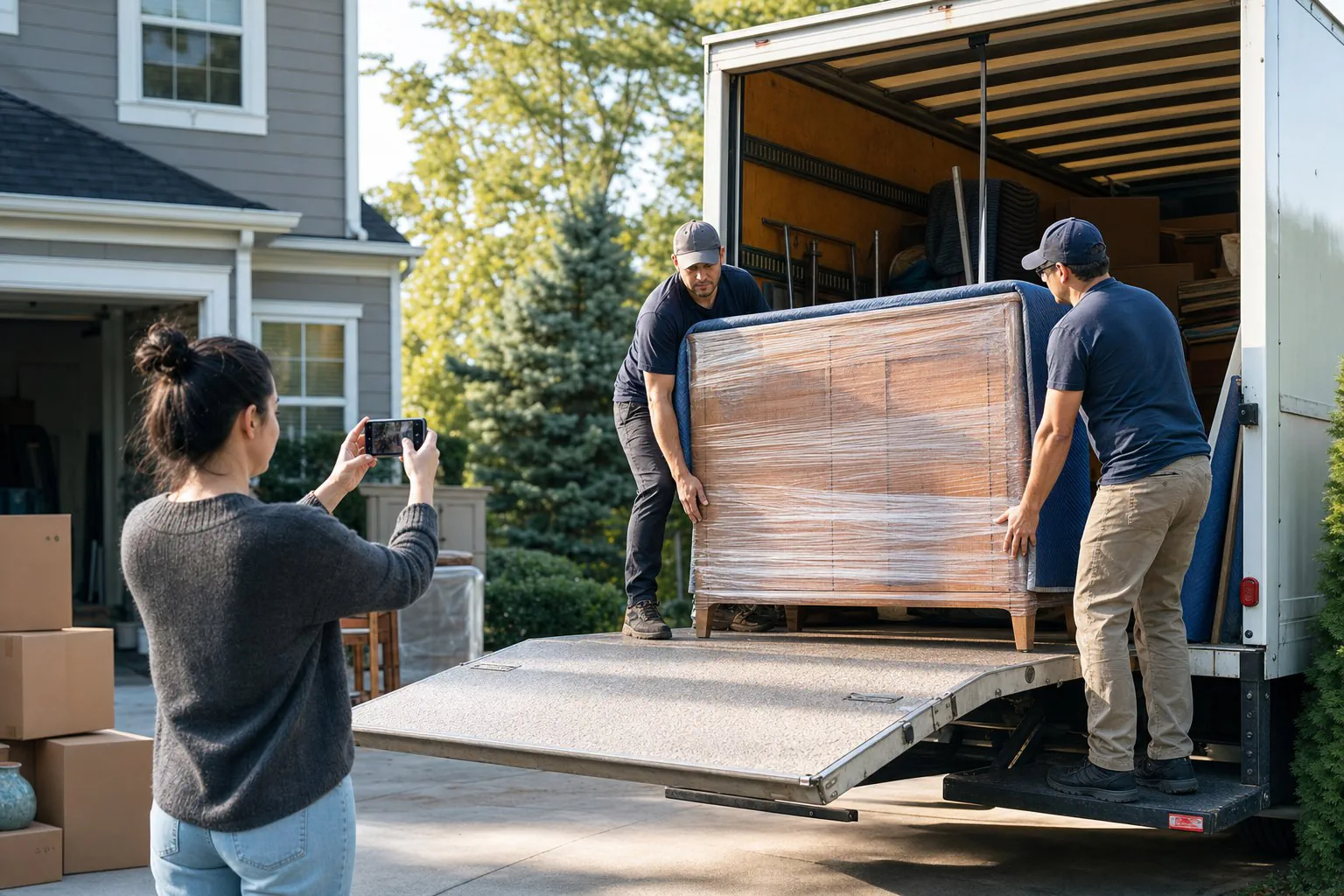
If you hire a professional household goods carrier, the mover offers a separate layer of liability coverage that is not insurance and is not regulated by state insurance departments. If you move yourself in a rental truck, your home or auto policy usually offers only thin protection, and your personal auto policy may not even cover a rented box truck depending on its size. Rental truck companies sell their own optional cargo coverage, which is a separate purchase from anything your home policy provides.
Two tiers of mover liability for interstate moves
Tier
What the mover pays
Typical cost
Released Value Protection (default)
60 cents per pound per article, regardless of what the item is actually worth
No extra charge
Full Value Protection
Replacement value of lost or damaged goods; the mover must repair, replace, or pay current market value
Extra fee, often subject to a deductible
For interstate moves, federal rules from the Federal Motor Carrier Safety Administration require the carrier to offer both tiers, and Full Value Protection is the default unless you specifically opt out in writing. Items worth more than $100 per pound — jewelry, furs, fine china, high-end electronics — must be listed on a special declaration form or the carrier's liability for any one of them can be capped at $100 per pound even under Full Value Protection.
High-value items need a separate conversation
Standard home and renters policies impose sublimits on categories like jewelry, artwork, collectibles, and electronics, and the caps are often low enough that a single piece can exceed the limit on its own. Most insurers solve this with a scheduled personal property endorsement, sometimes called a floater, which lists a specific item for its appraised value and typically follows it anywhere — including onto the moving truck.
Common categories that hit sublimits fastest
Jewelry and watches
Fine art and original framed pieces
Collectibles such as coins, stamps, or trading cards
High-end cameras, lenses, and musical instruments
Laptops and other electronics above the per-item cap
Cash and gift cards, which are commonly excluded altogether
Three ways to fill the gaps
Coverage options worth pricing
Trip transit insurance — a short-term policy written for the duration of the move. It can be structured for the full value of your shipment or as excess coverage over the mover's liability. It typically covers theft, disappearance, and fire, but usually excludes breakage and flooding.
Third-party moving insurance — purchased separately from the mover or your home insurer. It tends to be broader than the mover's liability and may include events outside the mover's control, such as natural disasters. Costs run roughly 1 percent of the total move cost, often with a deductible of $500 to $1,000.
A scheduled personal property endorsement — a permanent change to your home or renters policy that lists specific high-value items for their appraised value and follows them everywhere, including during moves.
A short checklist before moving day
01
Pull out your declarations page
Find the personal property limit, then identify the off-premises cap and the storage-unit treatment. Write down your deductible so you know what you would pay out of pocket on any claim.
02
Inventory and value the shipment
Photograph or video every room, group items by category, and flag anything that could exceed a sublimit or that is worth more than $100 per pound.
03
Decide between DIY and professional
If you hire a carrier, ask whether your move is interstate or intrastate and which tier of liability applies. If you rent a truck, ask the rental company about cargo coverage and confirm that your auto policy does not exclude the vehicle you are renting.
04
Add or buy what is missing
Schedule high-value items on your home policy, or buy a short-term transit or third-party moving policy for the gap. Do this before the truck is loaded, not after.
SUMMARY
The bottom line
Treat your home or renters policy as a thin backstop for catastrophic, named-peril losses during the move, not as a replacement for proper moving coverage. Confirm the off-premises cap and storage treatment in your own policy, decide which tier of mover liability applies to your shipment (remembering that federal two-tier rules may not apply to an in-state move), and add a scheduled endorsement or a short-term transit policy for anything that would hurt to lose.
Common questions
Before you move on
Is damage caused by movers generally covered by my home or renters policy?+
No. Damage that happens during the physical act of moving — a dropped lamp, a snapped sofa leg, a cracked frame — usually falls outside the named perils covered by a standard policy. That is exactly the kind of loss the mover's liability coverage or a separate moving insurance policy is meant to handle.
Is Full Value Protection automatically included on my move?+
Only if the move is interstate and falls under federal FMCSA rules. In that case Full Value Protection is the default unless you specifically opt out in writing. For purely intrastate moves, state rules vary and many carriers default to the cheaper 60-cents-per-pound option, so ask in writing before signing the bill of lading.
Do I need to list expensive items separately?+
Yes, in two ways. For high-value items under your home or renters policy, you typically need a scheduled personal property endorsement to raise the cap above the standard sublimit. For interstate moves, items worth more than $100 per pound must be declared on the carrier's high-value inventory form, or the carrier's liability for any single such item can be capped at $100 per pound even under Full Value Protection.