What everyday items make a small home look most cluttered?
Before buying a single bin, walk through your space and look for the repeat offenders that visually overwhelm a small home. Organizers point to the same handful of everyday items every time.
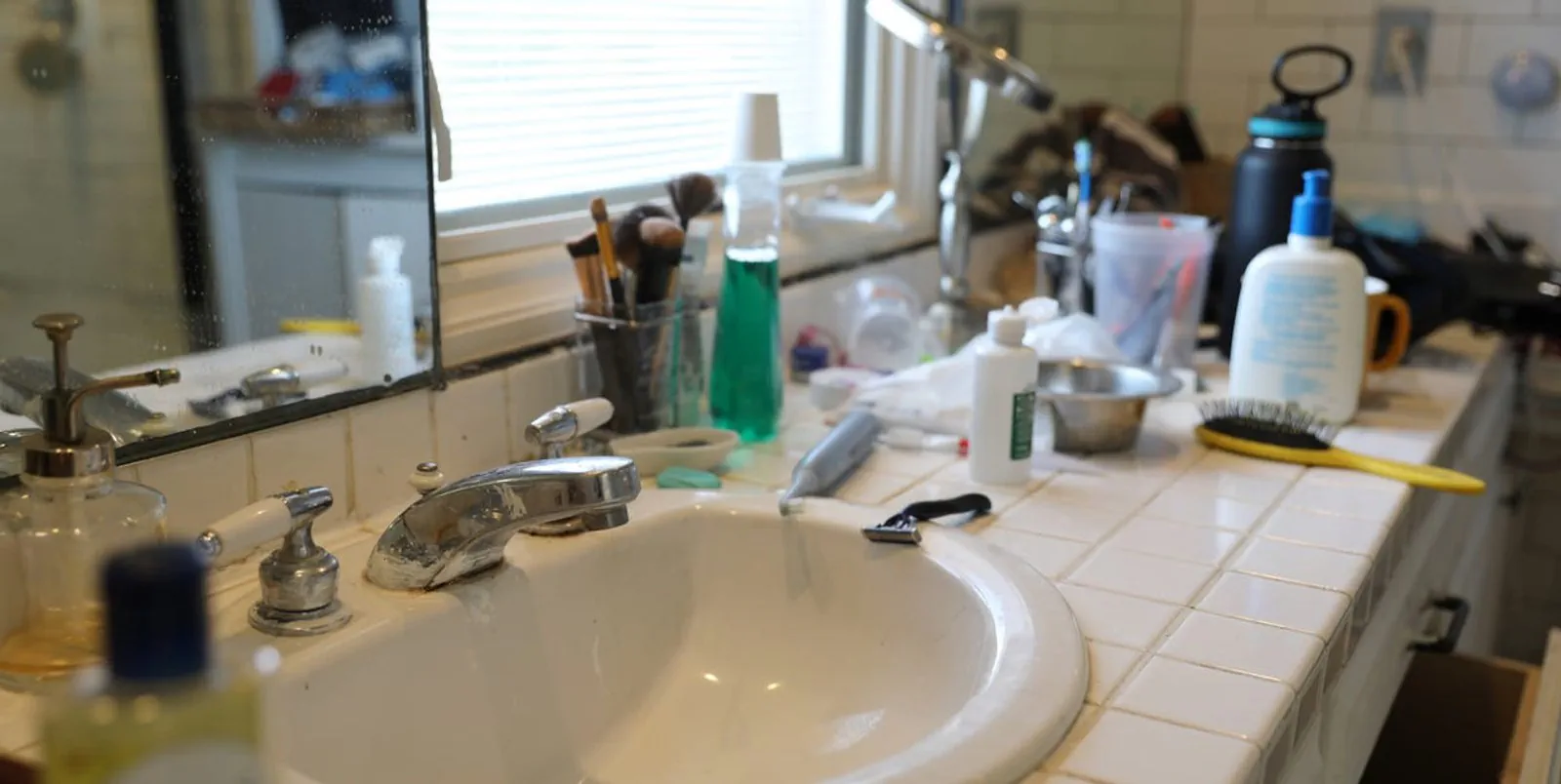
The items that make a small home look most cluttered are usually ordinary things that pile up on flat surfaces and the floor: clothing and shoe piles, loose trash mixed in with everything else, mail and other counter clutter, a vanity covered in toiletries, stacks of papers or laundry, a chaotic entryway drop zone, rarely used appliances left out, and anything that drifts into rooms you don't actually use.
Most clutter in a small home isn't a storage problem. It's a pattern problem: the same ordinary items keep landing on the same flat surfaces and the floor. Professional organizers consistently point to that pattern, and it's worth spotting before you spend money on bins, baskets, or new furniture.
The eight clutter patterns that shrink a small home
Each of these is something almost every household accumulates, and each one has a clear visual cost. Look for the ones that match what you actually see at home.
Clothing and shoe piles
Heaped clothes on a closet shelf and shoes piled by the entryway are an instant visual mess. The eye reads a pile as chaos even when each item is technically clean. Folding neatly and using shelf dividers or a simple closet shoe rack, plus a small basket by the door, contains the pile so it stops reading as clutter.
Trash mixed into living spaces
Junk mail, snack wrappers, and broken toys tend to get set down wherever you happen to be standing. Once trash is mixed in with everything else, a room looks cluttered even when it's tidy. A quick pass with a trash bag is often the fastest way to reclaim visual space before tackling anything else.
Surface clutter on counters and tables
Mail piling on a kitchen counter, shoes collecting near entryways, and the in-between items that get set down but never put away are the everyday version of clutter. When every surface is covered, the eye has nowhere to rest and the room feels chaotic even if it was just cleaned. Clear zones, containers that fit the space, and obvious homes for frequently used items are the fix.
A bathroom vanity overrun with toiletries
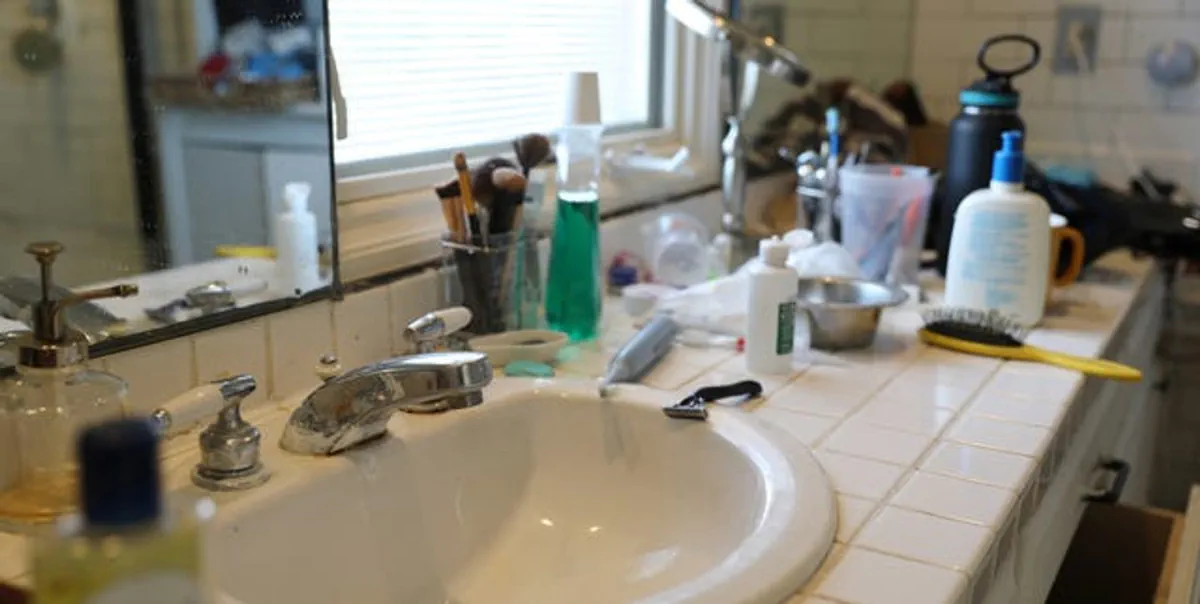
A vanity covered in bottles instantly cancels out any calm bathroom aesthetic. Drawer storage, a small tray, a Lazy Susan, or a tiered riser contains everyday items, while tossing anything expired or unused reclaims the counter.
Too many "organized" piles
Stacks of laundry, paperwork, or to-do piles feel productive, but several of them around a house look like a mess. Each pile needs a designated home: a magazine holder or tray for papers to sort, a basket for laundry waiting to be put away, and a bag for donations.
An entryway without a drop-zone system
Without a system, the entryway becomes a single dumping ground for keys, mail, packages, and pocket contents, and the volume overwhelms a small space. Giving each category its own zone, including a spot for things emptied from pockets and purses, keeps the entryway from becoming the most cluttered spot in the home.
Items that don't earn their visible spot
Keeping things out for convenience often turns into permanent surface clutter. A stand mixer used a few times a year doesn't need to live on the counter; a daily-use blender probably does. The test is simple: an item earns a visible spot only if it's used frequently enough to justify the visual space it takes.
Rooms that don't match how you actually live
A formal dining room that never hosts dinners, or a family room designed for looks instead of function, becomes the place where overflow ends up. Either change how the room is used so it fits your real routines, or adjust the furniture, like swapping a large lamp for a smaller one, so the surfaces you do need stay clear.
What the clutter actually is, and where it goes
| Pattern | What it looks like | Where it belongs instead |
|---|---|---|
| Clothing and shoe piles | Heaped on shelves or by the door | Folded with dividers; shoes on a rack or in a basket |
| Mixed-in trash | Wrappers and junk mail on surfaces | A trash bin within arm's reach |
| Surface clutter | Counters covered in mail and odds and ends | Clear zones with containers that fit |
| Vanity overrun | Toiletries spread across the sink | Drawers, trays, or tiered risers |
| Organized piles | Laundry and paperwork stacks everywhere | One tray per category in a fixed spot |
| Drop zone chaos | Entryway buried in stuff | Designated zones for papers, packages, pockets |
| Rarely used items out | Appliances parked on counters | Stored unless used daily |
| Misused rooms | Dining room becomes a storage dump | Repurpose or right-size the furniture |
A short audit you can do this week
Spot the patterns first
- Walk each room and photograph the surfaces
Photos catch the clutter your eyes have started ignoring, especially on kitchen counters and the entryway table.
- Circle the three spots that fill up fastest
Those are your real problem areas; anything you buy should be aimed at them.
- Pull trash first, in every room
A single trash pass removes visual noise faster than any organizer.
- Check what's on the floor
Clothing, toys, and stray items on the floor shrink a small home more than almost anything else.
- Apply the "used this week?" test to visible items
If something on a counter wasn't touched in the last seven days, it probably belongs in a cabinet.
SUMMARY
The bottom line
Small homes don't look cluttered because they lack organizers. They look cluttered because the same everyday items, from clothing and shoes to mail, toiletries, and rarely used appliances, keep landing on flat surfaces and the floor. Notice those patterns first, give each category a clear home, and only then decide which containers are actually worth buying.
Common questions
Before you move on
What single item makes a small home look most cluttered?+
Organizers consistently point to surface clutter, especially mail, odds and ends, and kitchen counter items, because it removes every place for the eye to rest.
Should I buy organizers before I declutter?+
No. Audit first. Organizers recommend removing trash, editing what you keep, and only then choosing containers that fit the space and the items that genuinely need a home.
How do I keep an entryway from becoming a dumping ground?+
Create a separate zone for each category that tends to pile up there: papers, packages, and pocket contents. A small tray or basket per category is usually enough to keep the entryway readable.
Why does my home look messy even after I clean?+
Cleaning removes dirt, but visual clutter comes from too many items on visible surfaces. A room can be perfectly clean and still feel chaotic if counters, floors, and vanities are covered.