How do I build a moving budget before I ask movers for quotes?
A working moving budget starts with a realistic range, separates fixed costs from variable ones, and sets aside a contingency before you ever call a mover. Here's the order to build it in.
Build a moving budget in four steps: (1) set a target range based on move size and distance, (2) list fixed costs you control, (3) list variable costs that quotes will fill in, and (4) reserve a 10–15% contingency. Then collect at least three comparable quotes against that range so you can compare like-for-like instead of chasing the lowest number.
A moving budget is a planning range, not a guess. The point is to know what you can spend, what every line item is for, and how much room you have for surprises before you start calling movers. Movers who book up fastest in peak season (May through September) tend to be the ones who prepped their budget weeks earlier, so doing this work upfront is what gets you a good slot at a fair price.
The earliest budget work happens while you're still surrounded by the boxes you haven't packed yet — which is exactly when you should be pricing everything.
Step 1: Set a target range, not a single number
Start with a ballpark for your move size and distance so you know whether quotes you're collecting are reasonable. A two-bedroom local move typically runs around $300–$900 for professional labor, while moves across state lines usually run into the thousands. Renters and homeowners should anchor their range to move distance, home size, and whether they want full-service or hybrid help (you pack, movers drive).
Step 2: Lock in the fixed costs you control
Fixed costs are the ones that don't change much no matter which mover you pick. Add them up first so the variable costs have a smaller target to land in.
Fixed costs to add to the budget
✓
Security deposits and overlap rent
If your new place requires a deposit or your move-in date overlaps with your last month's rent, that cash is part of the moving budget, not a separate one.
✓
Packing supplies
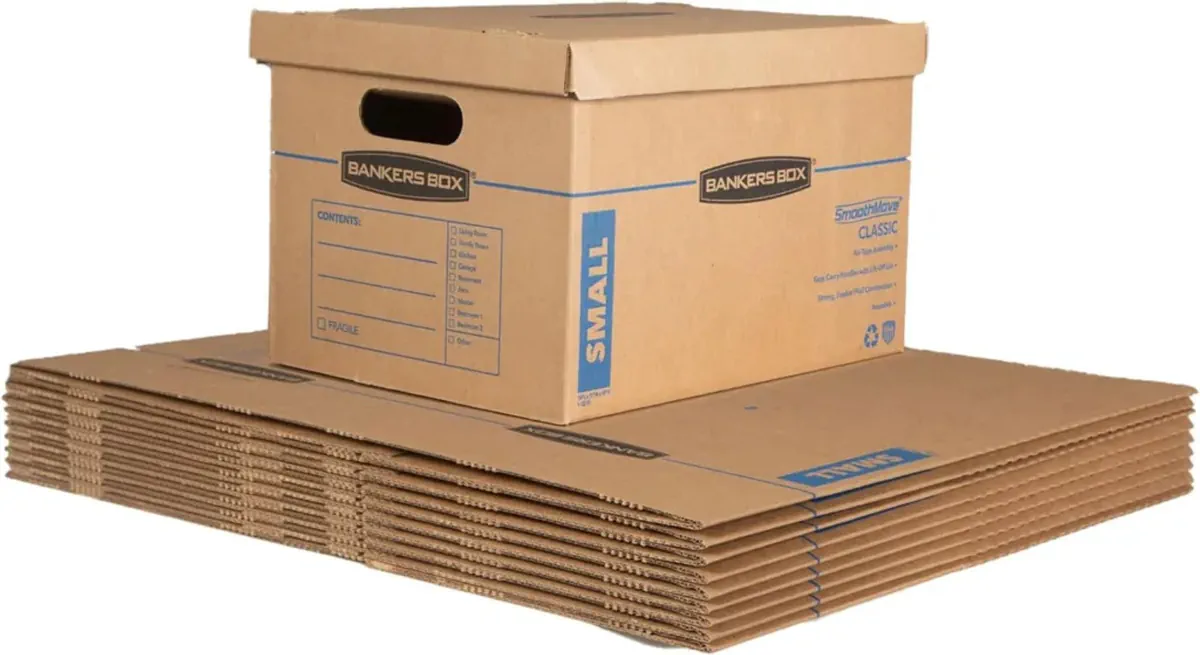
Boxes, tape, bubble wrap, and packing paper. Bankers Box–style boxes that assemble without tape store flat and survive multiple moves.
✓
Mail forwarding
USPS Change of Address forwards mail for a small identity-verification fee, so this line is usually small but it is still a line.
✓
Utility setup and transfer fees
Connection or transfer fees from electric, gas, water, and internet providers, especially if a technician installation is required.
✓
Insurance review
Check whether your homeowner's or renter's insurance covers belongings in transit. If it doesn't, a separate moving coverage plan is a fixed cost to budget for.
Box and supply costs are fixed enough to estimate before you ever call a mover, which keeps the variable line from absorbing them by accident.
Step 3: Scope the variable costs quotes will fill in
Variable costs depend on what movers actually find when they look at your home. Build a room-by-room inventory and measure large items so you can give every mover the same information. Whatever you tell one company, tell the others — that's the only way to compare quotes fairly.
Variables to pre-decide
Labor hours or move type: full-service, hybrid, or DIY truck rental.
Stairs, elevators, long carries, and tight parking that drive surcharges.
Special items: pianos, safes, antiques, gym equipment, and oversized furniture.
Storage: short-term storage if move-in and move-out dates don't line up.
Vehicle shipping: a separate quote if a car or motorcycle is moving with you.
Step 4: Reserve a contingency before you commit
How to collect quotes that actually compare
Getting three comparable quotes
01
Send the same inventory to every mover
Same room list, same item counts, same access notes, same move date. If a mover gets a different picture than the others, the quote won't be comparable.
02
Ask for the same scope on each quote
Choose whether you want full service, packing help only, or labor-only loading, and ask every company to price that exact scope. Mixing scopes is the most common reason quotes look wildly different.
03
Read what the estimate actually is
For interstate moves, ask whether the estimate is binding or non-binding and what the carrier's coverage terms are. For in-state moves, ask whether the quote is flat-rate, hourly, or a 'not to exceed' figure, since those structures behave very differently.
04
Compare the deposit terms
Some national movers require no deposit, others require a percentage up front. Factor that into cash flow, not just price.
Local vs. interstate moves: what changes in the budget
Factor
In-state move
Interstate move
Federal interstate rules
Generally do not apply
Apply; written estimate required
Typical pricing structure
Hourly or flat-rate, set by state rules
Binding or non-binding estimate under federal rules
Baseline cost for a 2-bedroom home
Roughly $300–$900 in labor
Several thousand dollars and up
Coverage default
Varies by state and mover
Released-value coverage is the federal default; full-value available for a fee
Where to verify rules
State attorney general or consumer protection office
U.S. DOT federal mover registry and FMCSA resources
Putting the budget in one place
Keep your move binder or folder — physical or digital — so every quote, receipt, and contract lives in the same place. Mark dates on a single calendar: packing days, loading day, utility cutovers, and the day the internet gets installed. A budget is only useful if you can see it adding up against the actual numbers as they come in.
SUMMARY
The bottom line
Build the budget before you call movers: set a target range, lock in fixed costs you control, pre-scope the variables quotes will fill in, and reserve a 10–15% contingency. Send the same inventory and scope to at least three movers, and remember that federal interstate rules only fully apply when you cross state lines — in-state moves run on your state's rules, so check those before you sign anything.
Common questions
Before you move on
How much should I budget for a local move?+
For a two-bedroom apartment, budget roughly $300–$900 for professional labor, plus packing supplies, deposits, and a 10–15% contingency on top of the total.
Do federal interstate moving rules apply to my in-state move?+
No. Federal interstate regulations, including the requirement for a written estimate and binding or non-binding pricing, apply when your move crosses state lines. In-state moves are governed by your state and local consumer protection rules, which can be very different.
How many quotes should I get?+
At least three, and they should be priced against the same inventory and the same scope of service so the numbers are actually comparable.
What costs do movers' quotes usually not include?+
Packing supplies, tips, storage if dates don't line up, insurance upgrades, and charges for stairs, long carries, or specialty items like pianos. Build those into your variable and contingency lines before you sign.