Our Top Picks
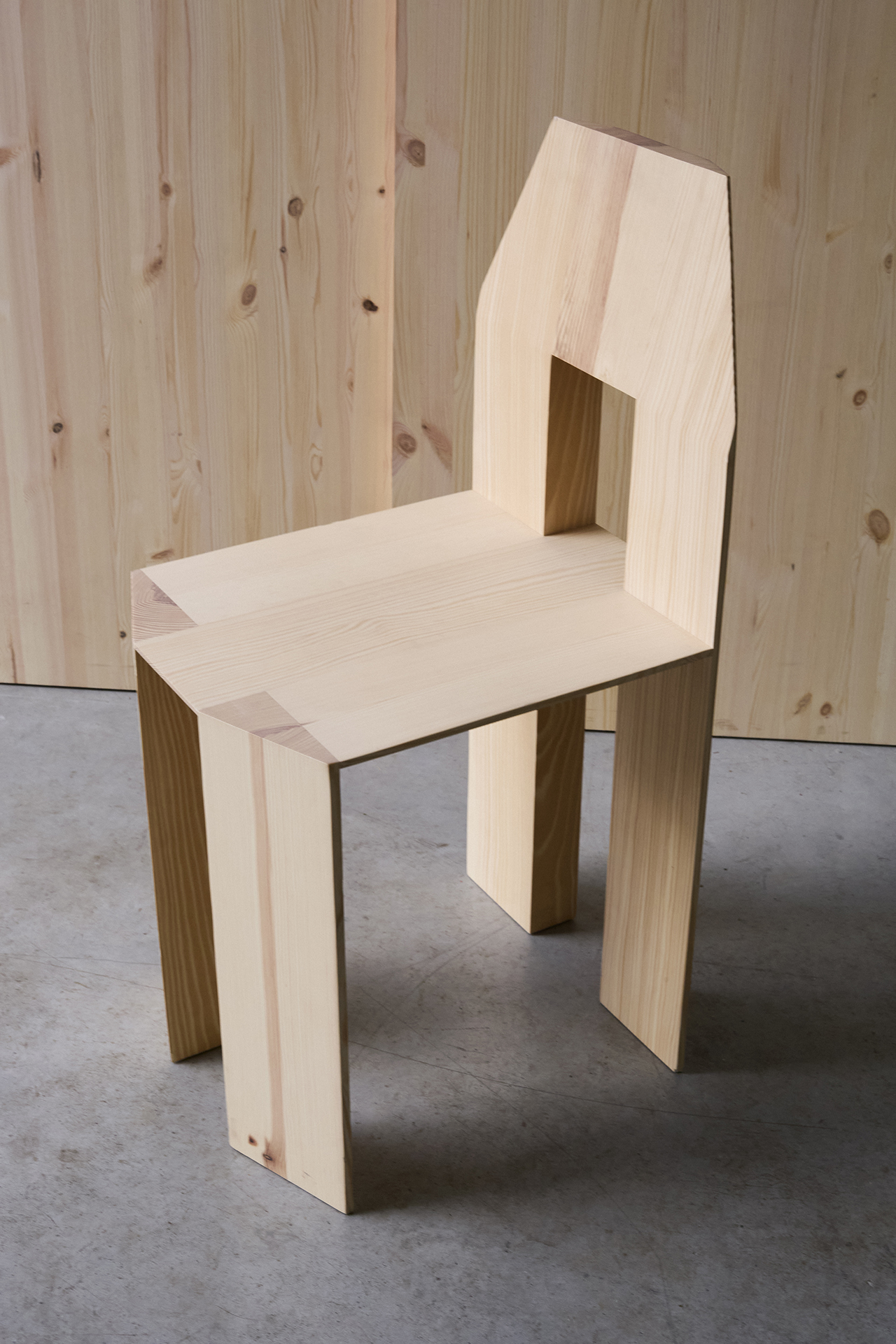
The Max Lamb Min Chair is a masterful transition from a three-day performance art project to a permanent, production-ready icon of modern seating. At a max lamb min chair price of $899, it offers collectors a piece of functional sculpture that balances raw industrial logic with the warmth of natural timber.
Max Lamb's Min Chair for Hem is more than furniture; it is a lesson in material honesty. Designed with revolutionary diagonal cuts to reduce waste, this solid pinewood piece brings museum-grade design to the modern home while retailing for approximately $899 USD.
There is a specific kind of beauty in objects that tell you exactly how they were made. In a world saturated with smoothed-over plastics and hidden fasteners, the work of British designer Max Lamb stands as a refreshing rebellion. His latest release, the Min Chair created for the Swedish brand Hem, is perhaps the ultimate expression of this philosophy. By stripping away everything that isn't strictly necessary, Lamb has created a piece that feels both ancient and radically futuristic.
The chair is a direct evolution of his previous projects, most notably the Economy Chair. While that earlier work was a study in speed and improvisation, the Min Chair represents a refined, industrial version of those same core ideas. It utilizes solid pinewood in its most humble form, transforming standard construction beams into a seat that commands attention. In my years as an editor, I have rarely seen a piece that manages to be so intellectually rigorous while remaining perfectly suited for a relaxed, modern living room.
The Geometry of Efficiency: How the Min Chair is Made
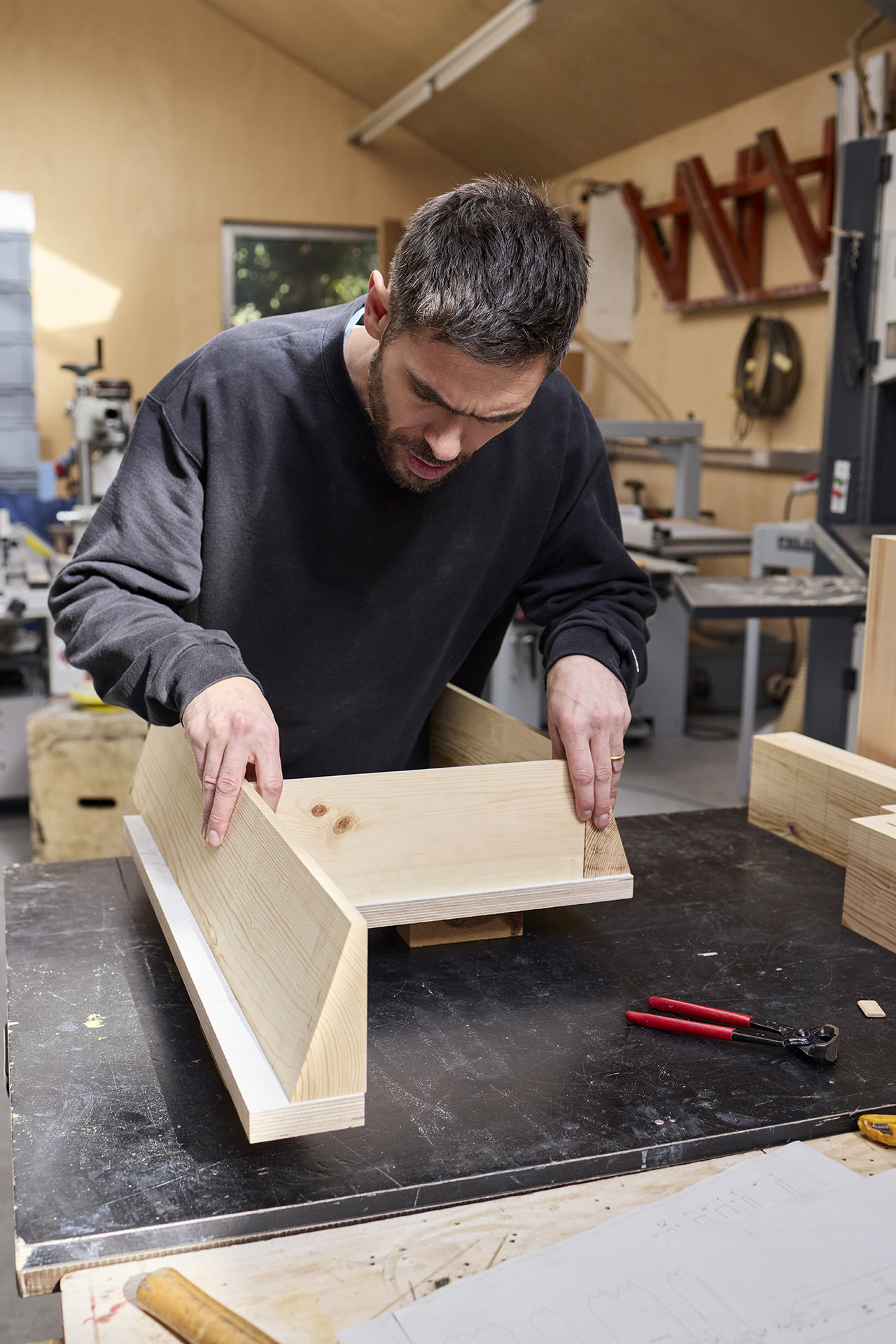
To understand the beauty of the Min Chair, you have to look at how it is sliced. Most furniture design starts with a shape and then figures out how to cut the wood to fit it, often resulting in significant off-cuts and discarded material. Lamb flips this script entirely. The design is dictated by the dimensions of the timber itself, specifically focusing on a near-zero waste manufacturing process.
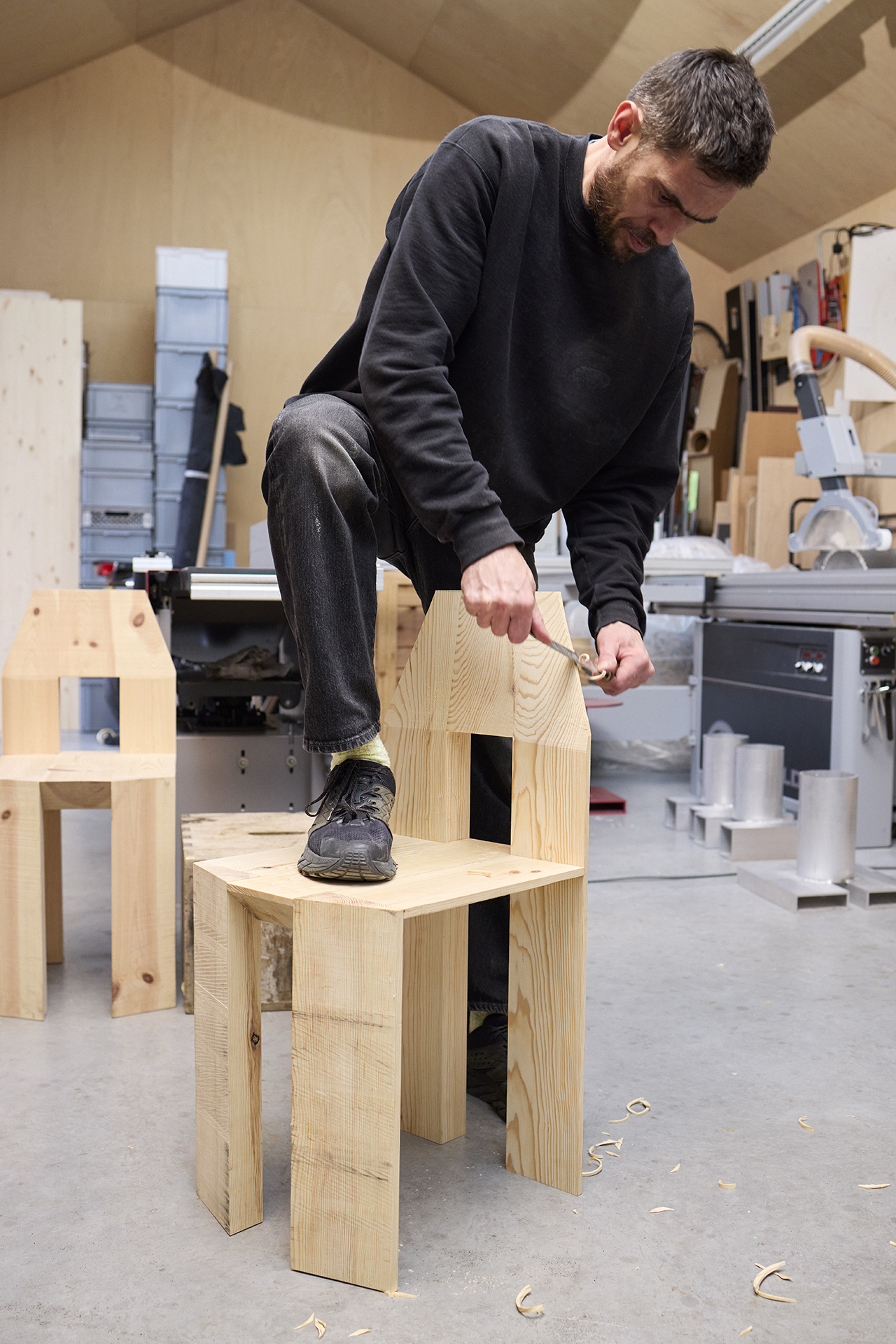
The central innovation is a diagonal cut through a single timber dimension. This geometric cleverness allows for two legs to be produced from the same volume of wood that would typically yield only one in a traditional workshop. By applying this structural logic, Lamb achieves a 50% material reduction compared to standard methods. It is a stunning example of max lamb sustainable design principles in action. The chair isn't trying to be "green" through fancy additives; it is sustainable because it is mathematically efficient.
Each component is a modular assembly of these angular beams. There are no hidden joints or complicated veneers here. What you see is exactly what you get: solid pinewood joined with such precision that the structural integrity becomes the only decoration the chair needs. This manufacturing restraint is what separates a generic wooden chair from a piece of max lamb furniture. When you sit in it, you are sitting on a series of solved problems.
From Economy to Min: A Design Evolution
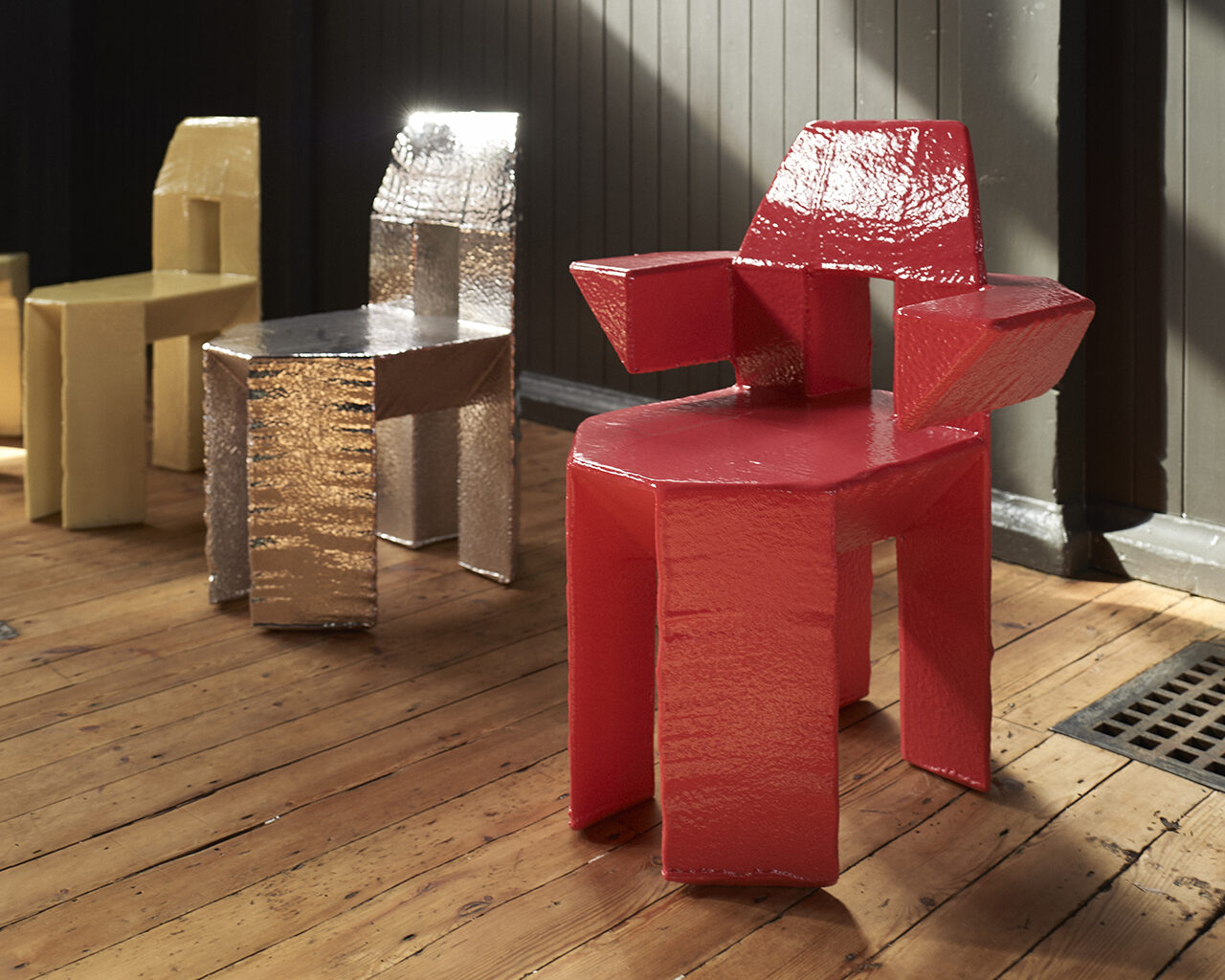
The journey of this chair began not in a factory, but in a three-day marathon session in 2020. Working out of his studio—a grand 1884 church hall in London—Max Lamb performed a series of "exercises in seating." During this event, he hand-fabricated 60 unique chairs from 540 individual parts in just 72 hours. This project, known as the Economy Chair, explored the limits of human labor and material utility.
The transition from the raw Economy Chair to the production-ready Min Chair required a delicate touch. While Hem is known for its high-tech Swedish design sensibility, they were careful to preserve the "self-build" logic of Lamb's original prototypes. The resulting design maintains that sense of urgency and directness. It reflects the values of the Arts and Crafts movement—honesty of materials and the visibility of the maker's hand—but translated for a global audience through serial production.
The Min Chair is the third major collaboration between the designer and Hem, following the iconic Last Stool and the massive Max Table. Each of these pieces shares a common DNA: they celebrate the inherent properties of their materials, whether that is spun metal or heavy timber. The Min Chair handles the hem min chair dimensions with a grace that hides its durability, proving that minimal design can still offer maximum character.
Natural Utility: Styling the Max Lamb Collection
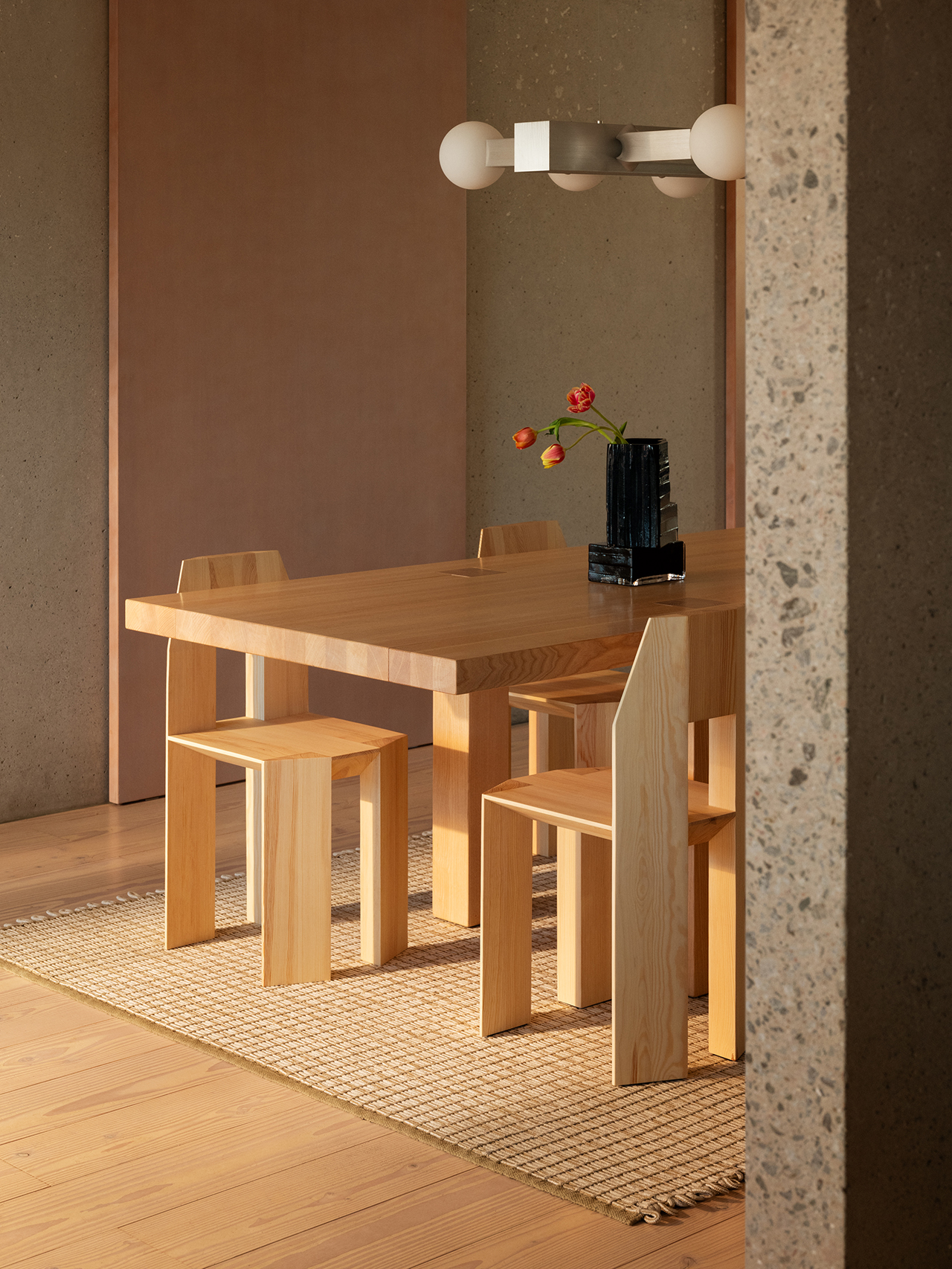
As an editor, I often look at how a single piece of furniture changes the "gravity" of a room. Wooden furniture, particularly in solid pinewood, has a way of grounding a space that metals and plastics simply cannot. The Min Chair serves as an extension of the floor, its wide base and sturdy beams making it feel like a permanent architectural fixture rather than a temporary accessory.
When it comes to max lamb pine furniture styling, the key is to embrace the contrast between the chairs' rigid geometry and softer interior elements. Consider the following styling tips:
- Layer Textures: Pair the raw wood of the chair with a high-pile wool rug or a linen throw. The juxtaposition of the sharp angular cuts with soft textiles emphasizes the chair's sculptural quality.
- Create a Dialogue: The Min Chair looks exceptional when grouped with the max lamb stool or placed around the max lamb table. This creates a cohesive material narrative in a dining room or workspace.
- Let It Breathe: Because this is a piece of functional sculpture, it doesn't need to be crowded. In small spaces, using one Min Chair as a corner accent or a desk chair allows its silhouette to shine.
- Lighting Matters: Use directional lighting to highlight the grain of the wood and the shadow lines created by the diagonal cuts. This draws the eye to the structural logic of the piece.
By bringing this piece into your home, you aren't just buying a place to sit. You are investing in a lineage of British craftsmanship that values the source material as much as the final form. The $899 USD price tag reflects the quality of the solid timber and the intellectual property of one of the most important designers of our generation.
Dimensions and Specifications Table
| Feature | Specification |
|---|---|
| Designer | Max Lamb |
| Manufacturer | Hem |
| Material | Solid Pinewood |
| Price | $899 USD / €799 EUR |
| Origin Design | Economy Chair (2020) |
| Construction | Modular assembly with diagonal cuts |
| Sustainability | Near-zero waste manufacturing |
Whether you are a long-time follower of exercises in seating max lamb or a newcomer to the world of high-end design, the Min Chair is a definitive piece. it captures the essence of what modern living should be: thoughtful, efficient, and deeply connected to the natural world.
FAQ
What is Max Lamb known for?
Max Lamb is widely recognized for his hands-on, process-driven approach to furniture design. He is famous for rejecting over-embellishment in favor of exploring the physical properties of materials like stone, wood, and metal. His work often blurs the line between industrial design and fine art, focusing on how objects are extracted, cut, and assembled.
Where is Max Lamb based?
Max Lamb is based in London, where he operates out of a converted 1884 church hall that serves as both his studio and workshop. This historic space allows him to conduct large-scale experiments and "performances" in manufacturing, such as the three-day marathon that birthed the original series of chairs that led to the Min Chair.
What is the process of Max Lamb?
The process of Max Lamb involves a deep dive into "material honesty." He often begins by studying a raw material in its natural or industrial bulk form and then develops a series of rules or constraints on how to cut or shape it with minimal waste. Whether he is carving chairs out of solid blocks of stone or using modular pinewood beams, his process is always visible in the final product's structural logic.
Where can I see Max Lamb's work?
Max Lamb's work is included in the permanent collections of major institutions such as the Art Institute of Chicago and the Victoria and Albert Museum in London. For those looking to incorporate his designs into their daily lives, his collaborations with Hem allow his furniture to be purchased and used in domestic settings globally.