What are the biggest home design trends for 2026 and how is AI influencing home design choices?
Homes in 2026 are pulling away from white walls and screen-driven life in favor of warmth, ornament, and tactile materials, while designers wrestle with where AI actually belongs in the process.
The biggest 2026 home design trends are warmer and darker interiors, the return of ornament and tactile facades, midcentury influences softened with rich color, and a deeper commitment to circular and second-life design. AI is reshaping the design process, but most practitioners treat it as a supporting tool rather than a substitute for judgment, and many describe the home itself as a refuge from screen life.
If you map what designers are calling out for 2026, a single tension runs through almost every forecast: the more that artificial intelligence shows up in daily life, the more the home is being asked to feel human. The dominant direction is not more tech in the walls; it is warmer rooms, more expressive surfaces, and buildings designed to be touched, lived in, and eventually taken apart and reused. AI is changing how designers work, but the spaces they are making are pointedly not designed by algorithms.
The 2026 conversation among architects and designers is less about gadget-filled houses and more about richer, more tactile rooms.
The 2026 direction: homes as counterweights to screen life
Several designers interviewed about 2026 describe the same underlying current: interiors that encourage people to connect with each other rather than with screens. That has practical consequences in material and layout choices. When a room is meant to slow you down, the surfaces, lighting, and color all change. The result is an emerging default that feels closer to a classic library or a candlelit dining room than to a tech showroom.
Color and material: moving past white and minimalism
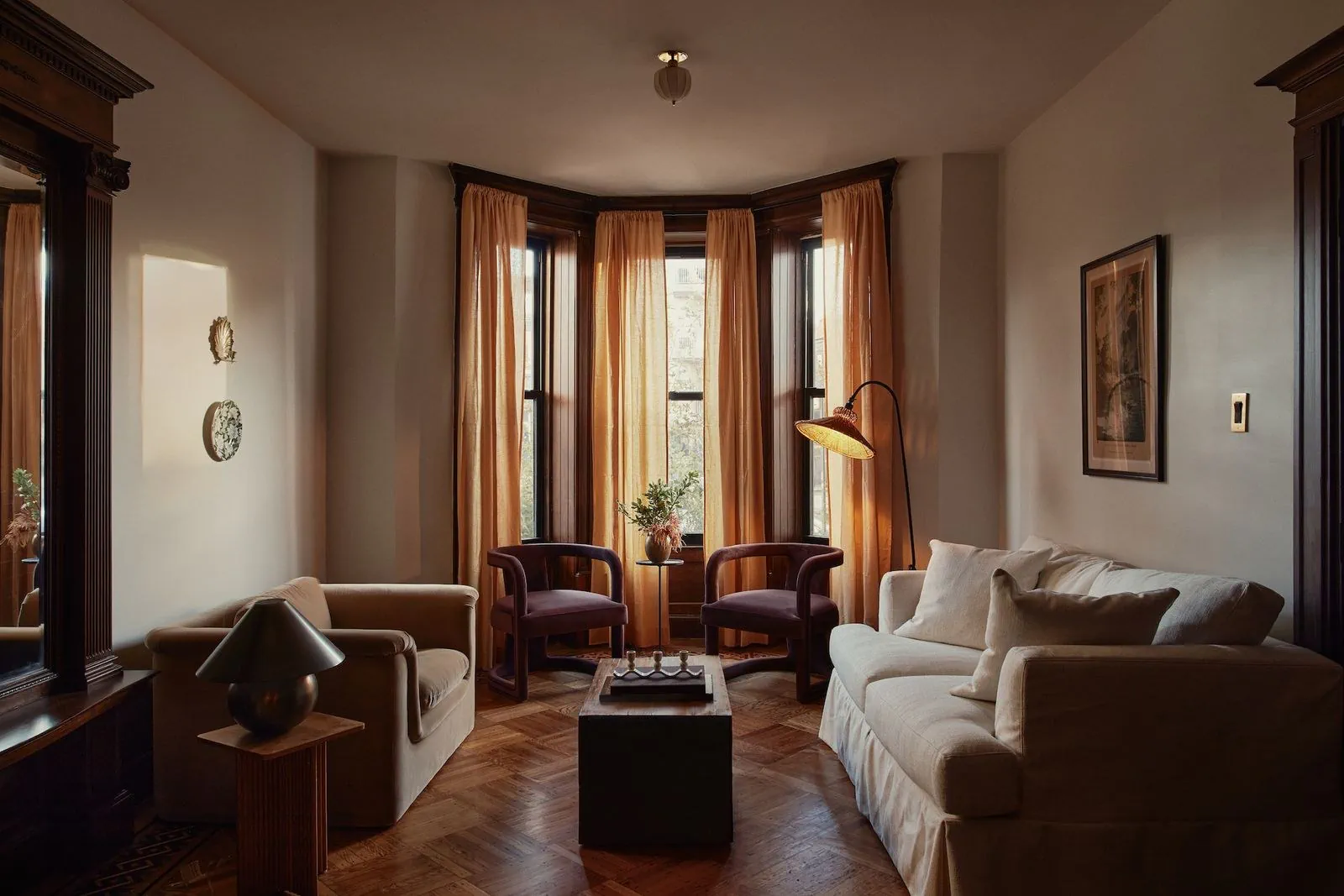
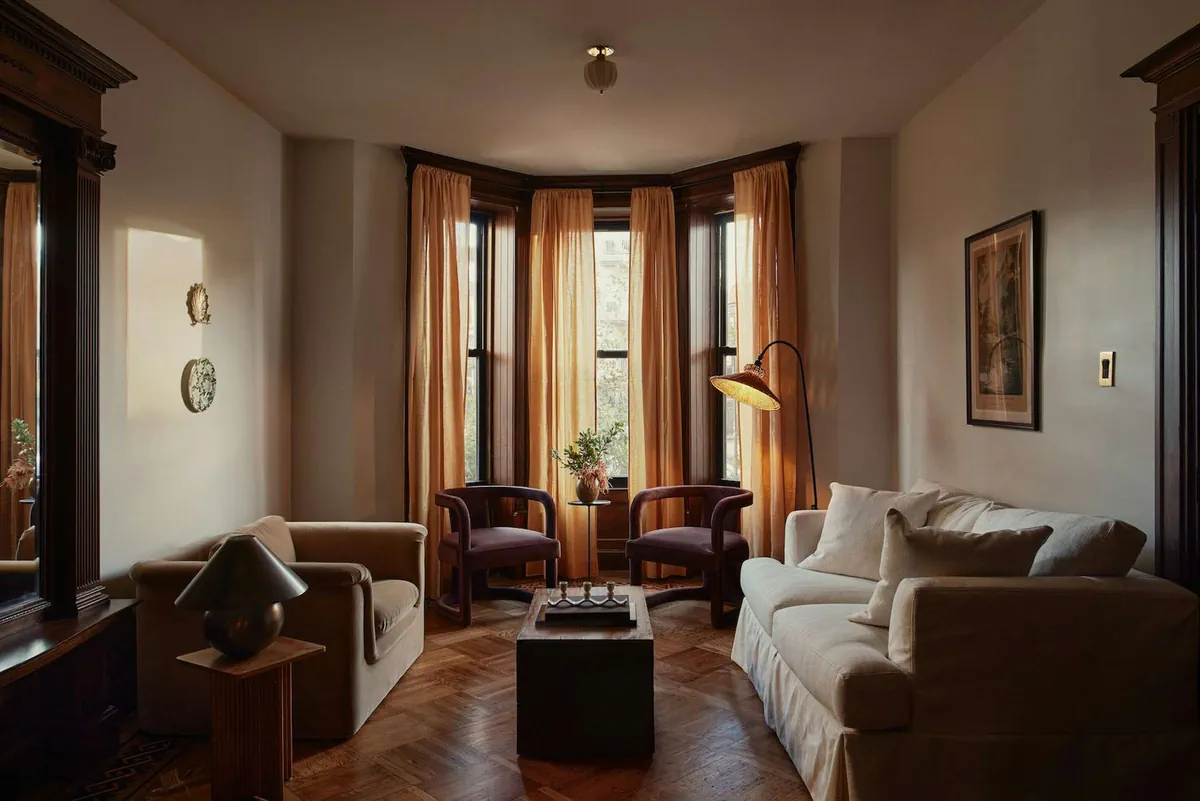
The clearest visual break with the previous decade is the move away from all-white, ultra-minimal interiors. Even Pantone's 2026 color of the year, Cloud Dancer, is being read less as an invitation to paint everything white and more as a soft neutral to balance against deeper tones. Designers are talking about moody palettes: warm browns, terracottas, deep greens, saturated yellows, and reds that give a room atmosphere rather than brightness.
What is replacing the all-white look
Layered, moody palettes with very little white on the walls
Midcentury influences, but warmer and more saturated than the bleached Scandinavian version of recent years
Rooms that are allowed to be dim, with lighting designed to flatter darker surfaces
Ornament and tactility are back
After years of restraint, ornament is returning to facades and interiors alike. London architect Mike McMahon points to sculpted brickwork and patterned walls as part of a renewed appetite for surfaces that engage the senses, citing his own work on a fluted brick facade for a Notting Hill studio project. The instinct is the same whether the building is historic or new: architecture should reward close looking, not just a glance from the street.
Where AI fits, and where it does not
AI is no longer a curiosity in the design world. It is showing up in concept renderings, material research, code compliance checks, and consumer tools that let homeowners preview a new garden layout or kitchen in seconds. Designers are using it, and clients are bringing AI-generated images to early meetings. But there is a strong undercurrent of caution about how it is being used, and an even stronger current of designers who believe the home itself should be a place that pushes back against screen culture.
In practice, the most useful AI applications right now are narrow. Landscape design tools can help a homeowner test layouts before committing to plantings. Generative rendering can speed up the early conversation between a client and a designer. Compliance and energy modeling software is becoming faster and more accurate. None of these replaces the decisions that shape whether a home feels right to live in.
Designing for a first life and a second life
Sustainability has shifted from a general aspiration to a more specific question: what happens to this building, this material, and this object when the first use is over. Several designers are now sketching projects with disassembly in mind, choosing bricks made mostly from construction waste, designing temporary installations that can be donated rather than dumped, and selecting finishes that can be reused or returned to the manufacturer.
For homeowners, this trend is starting to show up in product choices you can actually make: recycled-content masonry, reclaimed wood, fixtures from manufacturers with take-back programs, and modular kitchen and storage systems that can move with you.
What this means if you are planning a home or renovation
A practical read-through of the 2026 trends
✓
Pick one room to go dark and moody
A dining room, study, or bedroom is a low-risk place to try deeper color, warm lighting, and tactile materials before committing the whole house.
✓
Audit the surfaces you actually touch
Door handles, stair treads, kitchen islands, and bathroom walls are the places where texture and weight do the most work. Choose materials that age visibly rather than perfectly.
✓
Use AI for early options, not final decisions
Generative tools are good for testing layouts, palettes, and landscaping ideas quickly. Reserve the final material and layout calls for in-person samples and a designer or architect you trust.
✓
Ask where every material is going at end of life
For anything structural or hard to replace, prefer products with a documented take-back, recycled content, or a known reuse market.
✓
Treat the home as a screen refuge, on purpose
Plan for places to put phones away: a real entry bench, a reading nook without a TV, a dining table sized for conversation rather than laptops.
How AI is actually changing the design process
Where AI is genuinely useful versus where it falls short
Useful right now
Not yet reliable
Generating early concept options and mood imagery
Producing a final, buildable design without human editing
Checking code, energy performance, and daylighting
Choosing materials based on feel or context
Producing landscape and renovation previews for clients
Replacing the designer's judgment on proportion and flow
Speeding up drawing, specification, and quantity takeoffs
Capturing the cultural and personal meaning a home should hold
SUMMARY
The bottom line
The 2026 design direction is a deliberate turn away from the all-white, screen-saturated home. The strongest signals are warmer and darker palettes, the return of ornament and tactile facades, and a serious commitment to designing buildings and objects that can be reused. AI is reshaping how designers work, but the consensus among practitioners is that it belongs in the studio as a tool, and the home itself should be the place you put the tools down.
Common questions
Before you move on
Are white walls and minimalist interiors really going away?+
They are being dialed back, not erased. Many designers expect a more layered, warmer look to dominate new work in 2026, with white used as a balancing neutral rather than the headline color. Expect moodier palettes, richer wood tones, and finishes chosen for how they feel to the hand.
How is AI actually being used in home design today?+
Mostly in the early stages: concept renderings, layout options, landscape previews, and code or energy checks. It is showing up in consumer tools that let homeowners test ideas before talking to a designer. It is not yet trusted to make final material, layout, or detailing decisions.
What does 'second-life design' mean for a homeowner?+
It is the idea that a home, a wall, or even a brick should be designed knowing it will eventually be taken apart. In practice that means choosing products with recycled content, take-back programs, or strong reuse markets, and avoiding finishes that are difficult or impossible to recycle at the end of their life.