What tools should a new homeowner buy first based on their DIY experience level?
A practical starter tool plan organized by experience level, with the first power tool to buy, the hand tools you actually use weekly, and the upgrades worth making once you've outgrown the basics.
Beginners should start with a small set of hand tools (hammer, screwdriver set, tape measure, level, utility knife, pliers, adjustable wrench) plus one cordless drill/driver on a battery platform they can grow into. Intermediate DIYers should add a circular saw, jigsaw, impact driver, and a stud finder, then build out plumbing tools. Advanced DIYers can invest in specialty power tools (oscillating multitool, reciprocating saw, orbital sander, cut-off grinder) and a larger storage setup.
The right starter kit depends less on square footage than on how comfortable you are picking up a tool. The strongest approach is to match purchases to your current experience, buy one good cordless drill on a battery platform you can expand, and only add specialty power tools once you've actually run into a project that needs them. The plan below is organized in three tiers so you can stop where your confidence stops.
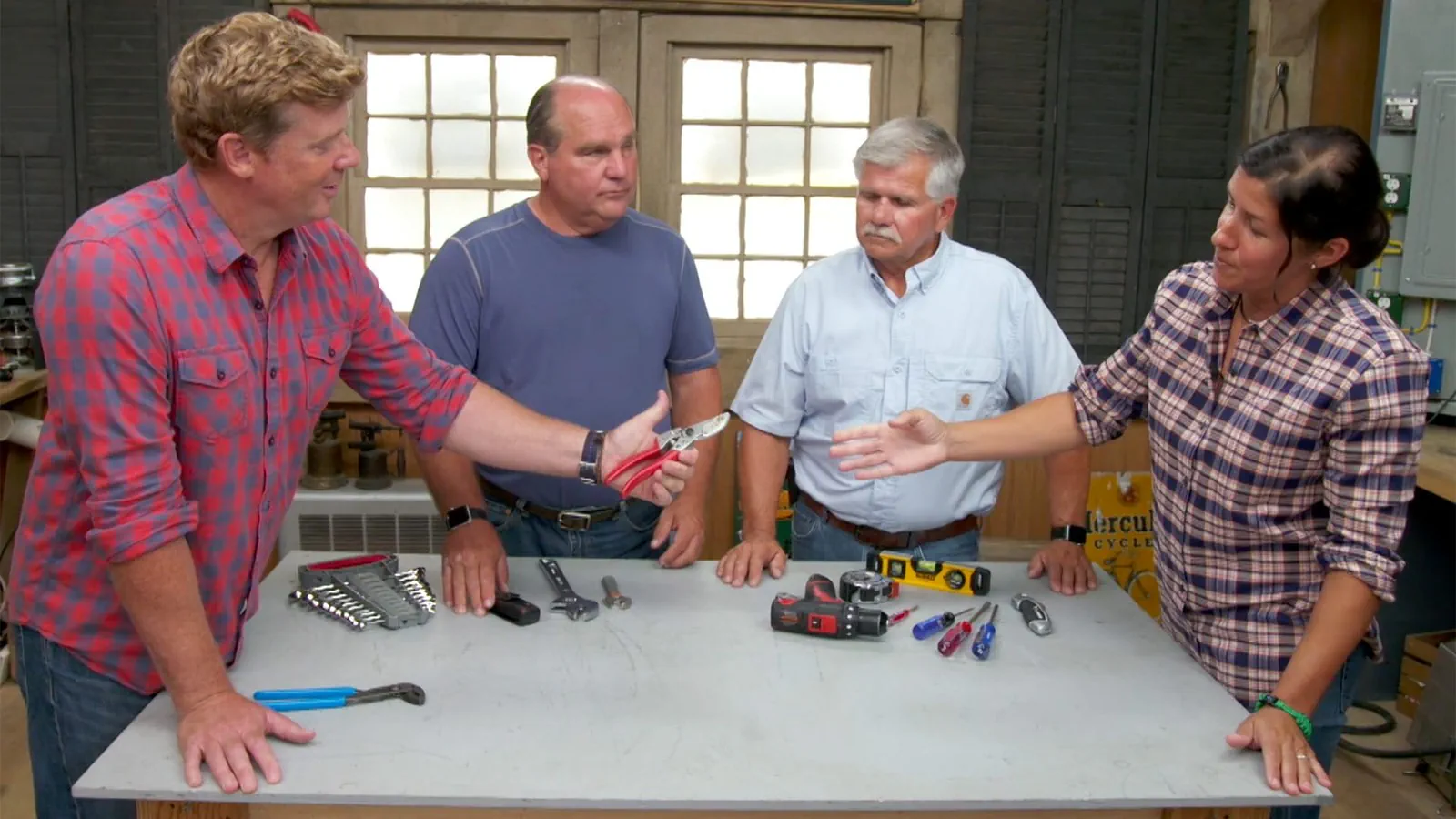
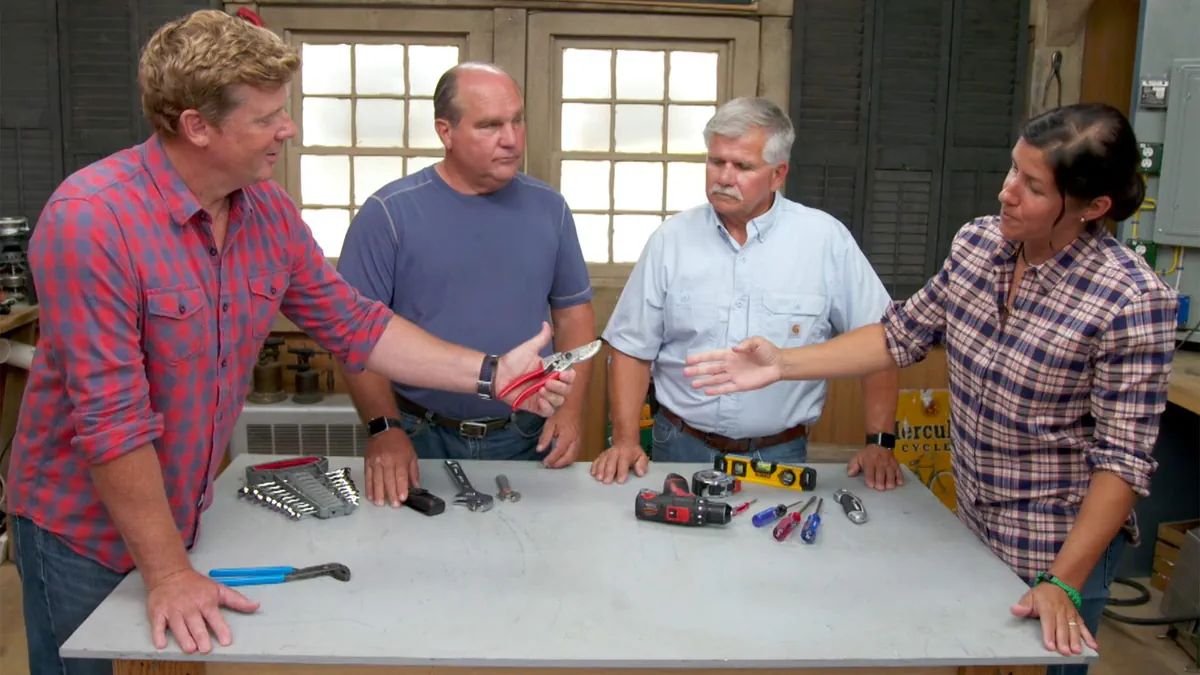
A basic homeowner tool kit: hammer, screwdrivers, tape measure, level, utility knife, pliers, and a cordless drill/driver cover most beginner projects.
Start by matching tools to your skill level
Before buying anything, think about who's actually using the tools and what you're likely to tackle in the first year. Common first-year projects include assembling furniture, hanging pictures and shelves, basic plumbing repairs, minor electrical work, and routine yard maintenance. A beginner doesn't need the same kit as someone who already knows their way around a miter saw.
Tier 1: Beginner (first six months in the house)
If you've never owned a home before, start small. A handful of hand tools plus one good cordless drill/driver will cover roughly 80% of what comes up. Keep the kit lean so you actually know where everything is.
Beginner starter kit
✓
Cordless drill/driver with one battery
The single most useful power tool for a new homeowner. Use it as both a drill and a screwdriver. Get a second battery later if you find yourself waiting on charges.
✓
Hammer
For picture hanging, light demolition, and the occasional nail that needs setting. A 16-ounce claw hammer is the standard pick.
✓
Screwdriver set (or multi-bit screwdriver)
Phillips and flathead in several sizes, including small precision drivers for outlet covers and electronics. A multi-bit screwdriver with interchangeable heads covers most needs in less space.
✓
Tape measure, at least 16 feet
Used for furniture measurements, shelf placement, and just about every project. Longer is fine; 16 feet handles most household tasks.
✓
Level (torpedo size is fine)
Avoid the cheapest options, which are often inaccurate. A torpedo level fits in a drawer and works for shelves, pictures, and appliance leveling.
✓
Utility knife with retractable blade
Opening boxes, scoring drywall, trimming carpet. Pick one with a lock, a safety guard, and blades you can change without a screwdriver.
✓
Pliers set (start with slip-joint and needle-nose)
Slip-joint for general gripping, needle-nose for tight spots. Add linesman's pliers if you plan to do any electrical work.
✓
Adjustable wrench (one or two sizes)
Covers most plumbing repairs and furniture assembly without committing to a full wrench set.
✓
Plunger with a flange
A flanged plunger works on both toilets and flat drains like a kitchen sink. A standard cup plunger only works on flat surfaces.
✓
Stud finder
The difference between a shelf that holds and one that pulls out of the wall. Magnetic stud finders are cheap and reliable.
Tier 2: Intermediate (comfortable with basic repairs)
Once you've hung a few shelves, fixed a running toilet, and assembled furniture without reading the instructions, you're ready to add tools that open up bigger projects: building a deck, replacing a faucet, or refinishing a piece of furniture. The goal at this level is to stop renting tools and to handle most household repairs without calling a pro.
Intermediate upgrades to add
Circular saw for straight cuts in lumber, plywood, and subfloor work
Jigsaw for curves, cutouts, and detail cuts in wood, metal, or plastic
Impact driver for long screws, deck screws, and lag bolts (much easier on your wrist than a drill/driver)
Power sander (random orbital) for refinishing furniture and prepping walls for paint
Wet/dry vacuum for cleanup after sawing, sanding, or drywall work
Box wrench set so you always have the right size for plumbing and assembly
Plumber's pliers (channel-lock) for under-sink and drain work
Multitool (Leatherman-style) for everyday quick fixes; keep it in a kitchen drawer or on your keychain
Tier 3: Advanced (taking on projects, not just repairs)
At this level you're remodeling rooms, building built-ins, or doing serious yard work. The focus shifts from filling gaps in the kit to buying better versions of tools you already use, plus specialty tools that pay for themselves on multi-day projects.
Advanced additions worth the investment
Oscillating multitool for trim removal, undercutting door jambs, and detail sanding
Reciprocating saw for demolition, pruning thick branches, and rough cuts
Cut-off grinder for metal, tile, and masonry work
Orbital sander upgrade (larger pad, dust collection) for furniture refinishing
Lawn mower matched to your yard size (cordless if you want low maintenance)
Heavy-duty pruners for woody shrubs and perennials
Roller cabinet or wall-mounted pegboard for a growing collection
Quality hand planes, chisels, and a miter box if you're doing trim work
Add specialty hand tools for trim, plumbing, or electrical work
Storage
Hard-sided toolbox or soft tool bag
Add a small rolling cart or pegboard
Roller cabinet, wall-mounted racks, or full workbench
Painting supplies
One brush, one roller, painter's tape, drop cloth
Full brush set, multiple roller covers, paint tray with liners
Add extension pole, sprayer for large rooms
Yard tools
Pruners, hose, rake, shovel
Add lawn mower matched to yard size
Cordless mower, trimmer, blower on the same battery platform
Approximate budget (entry-level brands)
$150–$300
$400–$800
$800–$1,500+
Storage and organization
Tools you can't find don't get used. Most beginners do fine with a hard-sided toolbox in a closet or a soft-sided tool bag they carry to projects. Once you own more than a drill and a handful of hand tools, a pegboard in the garage or a small rolling cart saves time on every project.
Storage options by collection size
Small kit (beginner): hard-sided toolbox or soft tool bag
Growing kit (intermediate): pegboard in the garage, plus a small rolling cart
Large kit (advanced): roller cabinet with locking drawers, wall-mounted racks, and a dedicated workbench
Painting supplies, even if you don't paint yet
Touch-ups always come up. A small painting kit (angled brush for trim, roller for walls, painter's tape, drop cloth) covers most scuffs and full-room refreshes without a separate trip to the store.
SUMMARY
The bottom line
Start with a cordless drill/driver on a battery platform you can grow into, plus a tight set of hand tools (hammer, screwdrivers, tape measure, level, utility knife, pliers, adjustable wrench, plunger, stud finder). Add a circular saw, jigsaw, and impact driver once you've outgrown beginner projects. Reserve specialty power tools (oscillating multitool, reciprocating saw, orbital sander) for when a real project demands them. Tag the main water shutoff valve before you need it, and stop buying tools you don't have a project for.
Common questions
Before you move on
What is the very first power tool a new homeowner should buy?+
A cordless drill/driver. It works as both a drill and a screwdriver, and choosing a battery platform now means every future tool you buy can share batteries.
How much should a new homeowner spend on a starter tool kit?+
For a beginner, a solid starter kit with one cordless drill and the essential hand tools typically runs $150–$300 with entry-level brands. Plan to spend more as you take on bigger projects.
Should I buy a tool set or individual tools?+
A hand tool set is a good way to cover basics quickly and cheaply, but a few quality individual tools usually outlast a full set of cheap ones. For power tools, a combo kit on a single battery platform is almost always the better value.
When should I upgrade from beginner to intermediate tools?+
When you start running into projects the beginner kit can't handle: cutting lumber, replacing a faucet, refinishing furniture, or building anything larger than a shelf. That's the signal to add a circular saw, jigsaw, and impact driver.
Do I need a stud finder?+
For mounting shelves, TVs, or anything heavy, yes. Magnetic stud finders are inexpensive and reliable, and they prevent the most common DIY wall-mounting mistake.