What equipment and checklist do I need to plan a DIY move by myself?
A solo move runs on a short list of well-chosen gear, a realistic timeline, and one protection rule that shifts once you stay in-state. Here's the equipment, the countdown, and the comparison that picks the right DIY option.
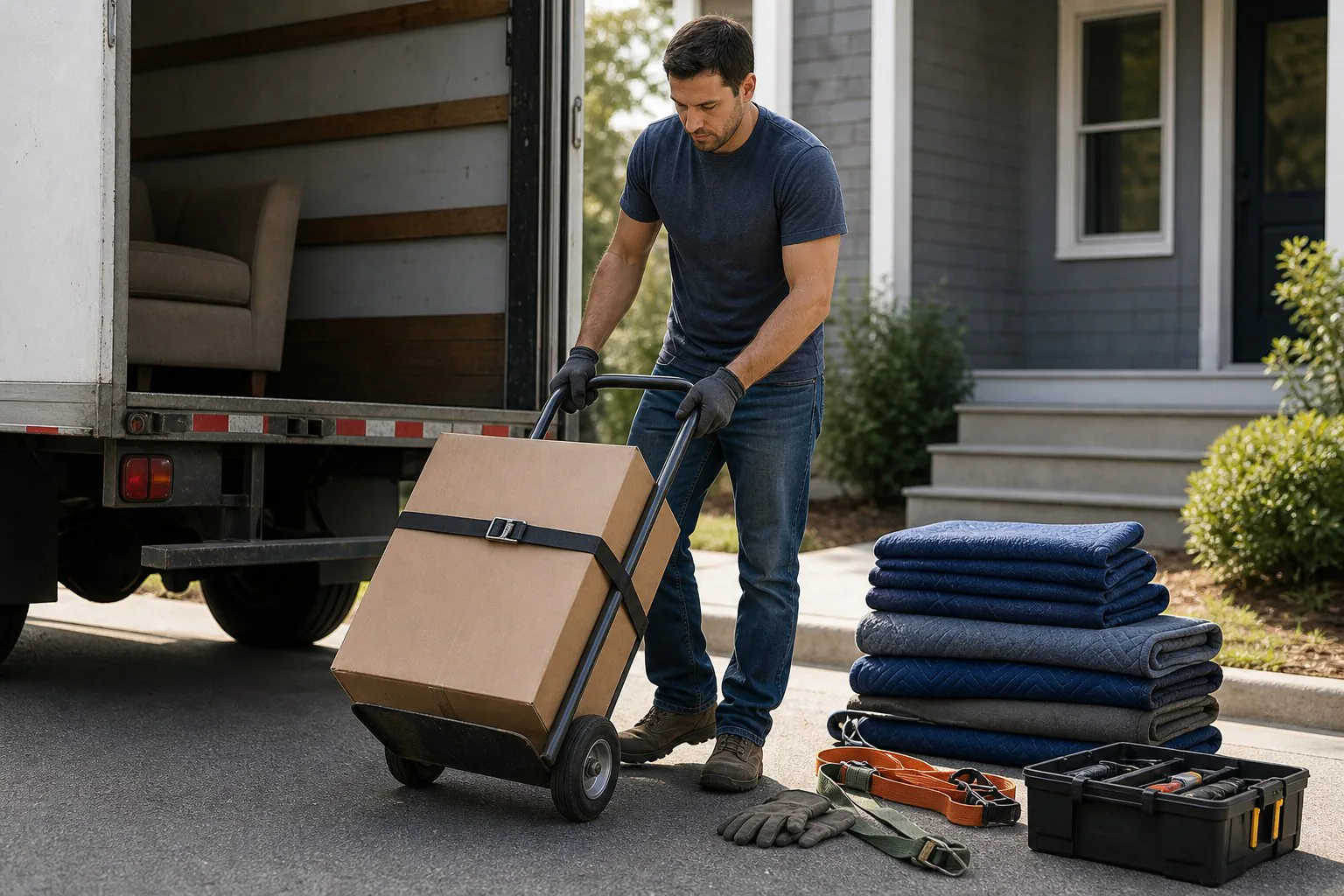
For a solo DIY move, the gear that actually carries the day is a hand truck or appliance dolly, ratchet straps, a loading ramp, moving blankets, and a correctly sized rental truck — supported by a packing kit and furniture sliders. An eight-week checklist plus a couple of hours of hired loading labor on each end is enough to cover most moves. If your move starts and ends in the same state, the federal FMCSA household-goods protections that apply to interstate moves generally do not apply, and your safeguards come from state regulators and the rental or service contract instead.
A solo move doesn't have to feel improvised, but it does hinge on a short list of gear and a short list of decisions made weeks before the truck pulls up. Most of the chaos that derails do-it-yourself moves comes from two predictable places: showing up without the right hand tools for loading, and assuming the consumer protections that apply to interstate moves will still be in place on an in-state run. Sort those two things out and the rest of the move is mostly endurance and patience.
The equipment that actually earns its keep
Rental trucks handle the transport, but they do not load themselves. The items below are the ones that show up on every credible solo-move checklist — not because they are fancy, but because they are the difference between a five-hour move and a fifteen-hour move.
Solo move equipment
- Hand truck or appliance dolly
A two-wheel hand truck covers stacked boxes; a four-wheel appliance dolly is worth the small rental fee for washers, dressers, and any single piece over 150 pounds.
- Ratchet straps and tie-downs
At least four ratchet straps rated for the truck's cargo weight. Rope and bungee cords stretch and shift; ratchet straps don't.
- Loading ramp
Most rental trucks include a built-in ramp, but a separate aluminum ramp is useful for curbs, stoops, and portable containers with a raised deck.
- Moving blankets and furniture pads
Wrap wood tops, glass, and any piece with a finish. Household linens and newspaper don't protect corners in transit.
- Packing supplies
Boxes in three sizes, more packing tape than you think, a box cutter with spare blades, and a permanent marker for labeling by room.
- Furniture sliders
Plastic discs that go under couch and table legs so you can push heavy pieces across hard floors without scraping them — and often without a helper.
- Basic tool kit
Screwdriver, Allen keys, and a small socket set for bed frames, table legs, and shelving that should come apart before they move.
An eight-week solo timeline
Solo move countdown
- Pick the DIY option
Decide between truck rental only, truck plus hourly labor, or a portable container. Build a realistic inventory list — count boxes, note the largest pieces, and measure anything that might not fit through a door.
- Reserve the truck and the help
Book the truck for a specific pickup and drop-off window. If you're hiring labor for loading only, book it now — same-day labor is the part that disappears first in busy months.
- Pack the non-essentials
Books, décor, off-season clothes, and the guest room go first. Label every box by destination room. Disassemble anything that won't fit through a doorway assembled.
- Pack the daily-use rooms
Kitchen, bathroom, and the "first night" bag. Confirm utility transfers, forward mail, and arrange a place for pets and kids to be during the load and unload.
- Load in order, drive slower than feels right
Heaviest items first against the cab wall, boxes on top, strap every two feet. Keep the load centered and below posted bridge clearances.
Driving and loading without a crew
Driving solo is the easier half of the day if you respect the vehicle. Rental box trucks handle differently than a car — wider turning radius, longer braking distance, and a higher center of gravity that punishes sudden lane changes. Drive slower than feels necessary, leave real following distance, and skip parking garages with low clearance. Many solo movers underestimate the truck's height until a fast-food drive-through reminds them.
Loading without four people is the harder half. The reliable workaround is to load in a deliberate order — heaviest and densest items against the front wall of the cargo area, lighter and crushable boxes on top and toward the back — and to use the truck's built-in tie-down rails every couple of feet. If the budget can stretch to two hours of hired labor for the truck-to-door handoff on each end, that is almost always the best money in the entire move.
How the three main DIY options compare
DIY move options at a glance
| Option | You handle | They handle | Best for |
|---|---|---|---|
| Truck rental only | Packing, loading, driving, unloading | Just the truck | Small studios, flexible schedules, tightest budget — starting in the tens of dollars per day for the truck alone |
| Truck plus hourly labor | Packing and driving | Loading and unloading the truck | Solo movers who can drive but need muscle for the heavy pieces on each end |
| Portable container | Packing and loading the container at your pace | Drop-off, transport, and pickup at the new address | Moves spread over several days, narrow streets, or destinations with limited parking |
SUMMARY
The bottom line
A solo DIY move is more of a gear problem than a muscle problem. A hand truck, ratchet straps, a ramp, blankets, and a written eight-week timeline will carry about 90% of the difficulty. Spend your money on two hours of loading help at each end rather than on a larger truck, and remember that staying in-state shifts your safety net from the federal household-goods handbook to your state regulator and the rental contract you sign on pickup day.
Common questions
Before you move on
Do I need a commercial license to drive a rental box truck?+
Most rental box trucks under 26,000 pounds GVWR can be driven with a standard driver's license. Confirm the specific truck's weight rating with the rental company and check your state's rules before pickup.
How do I know whether my move is interstate or in-state?+
It's interstate if it crosses a state line, even briefly. Federal FMCSA household-goods rules apply to interstate household goods carriers. A rental truck by itself is not a household goods carrier, so those federal protections don't govern your truck rental either way — but the moment you hire a company to transport your goods across state lines, the federal rules apply to that carrier.
What's the single thing solo movers skip that causes the most damage?+
Tie-downs. Rope, bungee cords, and leaning on the truck's bulkhead aren't enough. Ratchet straps, used every two feet along the load, are what keep a stack of boxes from becoming a rewrite of your inventory list at the destination.