How can I plan and stay organized for a move I am handling completely on my own?
A practical solo move plan covering budget, timeline, supplies, heavy lifting, and the first-night setup, with clear notes on which federal interstate rules apply and which do not.
Treat a solo move like a small project: set a budget, build a backward-planned timeline, declutter first, gather supplies early, book hourly help for the heavy pieces, and unpack essentials first at the new place. Use a portable container if you want to load on your own schedule and skip driving a rental truck. Federal interstate moving rules cover hired carriers crossing state lines, not your own self-driven truck or container you load yourself.
Start with a budget and a backward-planned timeline
A solo move succeeds or fails before moving day, in the planning phase. Two documents drive everything else: a realistic budget and a schedule that works backward from your move-in date. With no crew to absorb surprises, you need time to make decisions and a clear list of what you are paying for.
Build the moving budget first
✓
Packing supplies
Boxes in several sizes, heavy-duty tape, bubble or packing paper, stretch plastic wrap, permanent markers, furniture sliders, and a dolly or hand truck.
✓
Transportation
A rental truck you drive yourself, or a portable container that a company delivers, transports, and stores while you load and unload on your own schedule.
✓
Coverage
Optional valuation or insurance for your belongings, since a DIY move typically does not include carrier liability.
✓
Hourly labor
Budget for at least a few hours of paid help for the heaviest items, even if you do everything else yourself.
✓
Storage buffer
Short- or long-term storage in case your move-in date slips or you need time to unpack.
Work backward from move-in day
Decide on your moving method
Compare driving a rental truck yourself versus a portable container you load at your pace. Pick the option that matches your timeline, budget, and how much stuff you have.
Declutter aggressively. Sell, donate, or recycle anything you would not want to lift twice. Fewer items means fewer boxes, fewer trips, and a faster unpack.
Gather supplies and start packing
Order or pick up boxes and wrap, then begin with rooms you use least. Label every box by room and priority: open first, open later.
Confirm logistics
Book hourly labor for move day, arrange utility transfers, update your address, and confirm container delivery or truck pickup times in writing.
Pack essentials last, load with a plan
Keep an essentials bag separate. Load heavy items low and toward the front of the truck or container, with lighter boxes on top.
Set up safety and basics
Check locks, lighting, smoke and CO detectors, and unpack the essentials box before anything else.
Pick the moving method that fits a one-person operation
Three options cover almost every solo move: full-service movers, a rental truck you drive, or a portable container you load yourself. Each trades money for your time and effort in a different way, and your timeline usually decides which one makes sense.
Solo-move options at a glance
Option
You drive?
You load?
Best when
Full-service movers
No
No
Budget is flexible and you want to hand off nearly everything.
Rental truck
Yes
Yes
You are comfortable driving a large vehicle and want the lowest cost.
Portable container
No
Yes, on your schedule
You want loading flexibility, optional storage, and no long drive in a rental truck.
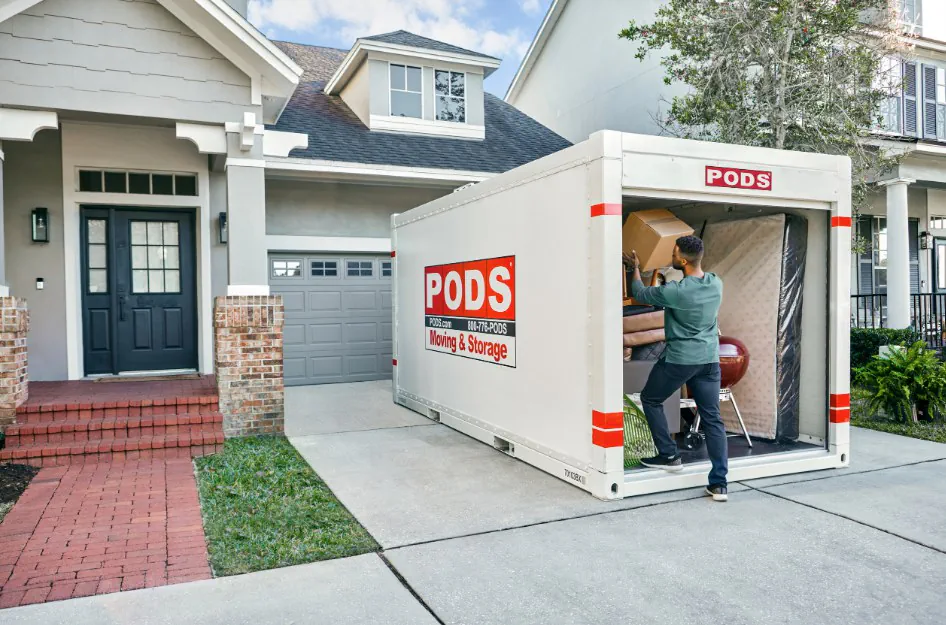
For most solo movers, the portable-container model is the easiest fit: the container is dropped off at your current home, you load it over several days at your own pace, and the company hauls it to your new address. One month of storage is typically included, which gives you breathing room if your move-in date slips.
A solo renter loading a portable container at his own pace illustrates the self-service model that suits a one-person move.
Pack so your back and your boxes both survive
Packing is where a solo move quietly falls apart if you rush it. Spread the work over a week or more, keep boxes light, and protect both your belongings and your body. Most injuries on a solo move happen during lifting, not driving.
Safe and efficient packing habits
Start with rooms you use least so daily life stays normal while you pack.
Distribute weight evenly and keep boxes under what you can comfortably carry down stairs.
Label every box by room and by priority: open first, open later, storage.
Wrap dresser contents in plastic wrap, slide the drawers back into the dresser for the move, and unpack them at the other end.
Use furniture sliders on heavy pieces, especially in tight hallways, apartments, or rooms with limited maneuvering room.
Bend at the knees, keep loads close to your body, and take real breaks between heavy lifts.
Get help for the heavy pieces, even on a DIY move
Moving by yourself does not mean doing every task alone. The smartest solo movers hire a few hours of labor for the parts that actually require two people: large furniture, appliances, stairs, and tight doorways. You keep control of the plan and the packing while offloading the highest-injury-risk work.
Where hourly help pays for itself
Lifting and carrying large furniture and appliances.
Navigating stairs, narrow hallways, and tight corners.
Loading and unloading the truck or container safely.
Wrapping and protecting bulky items you cannot handle alone.
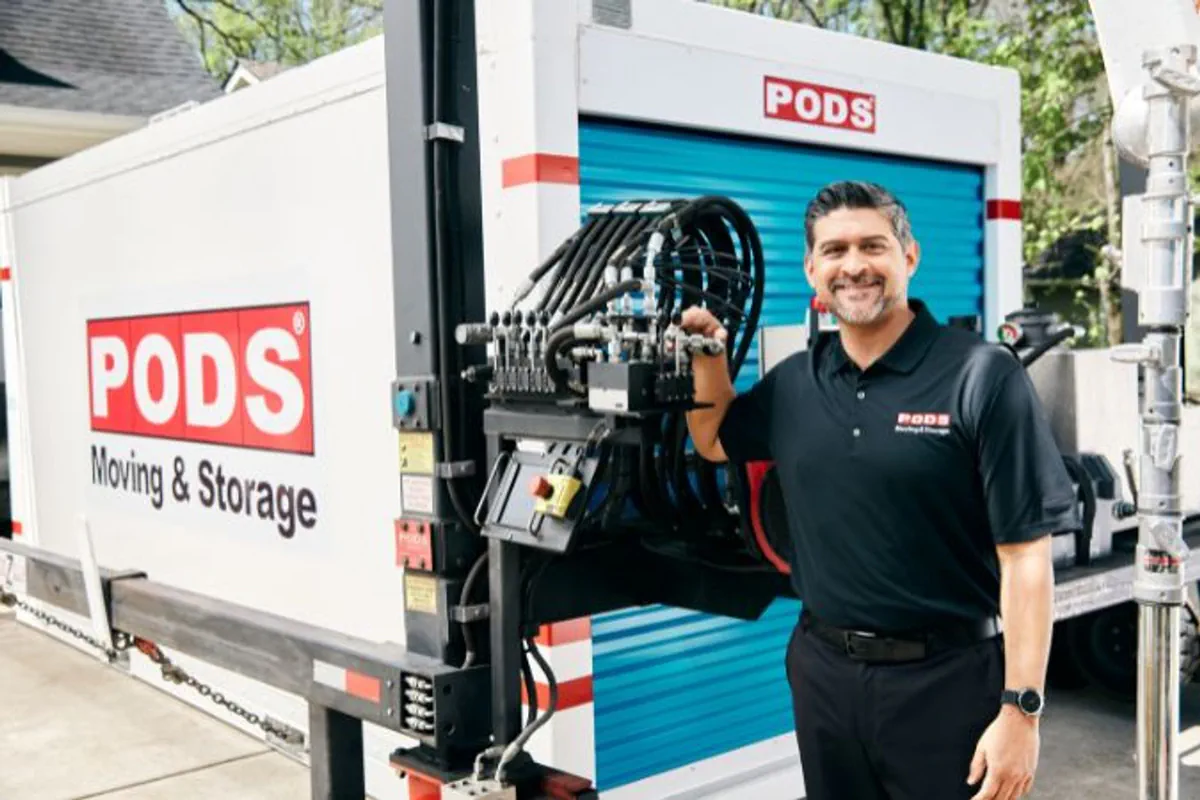
A container being staged for transport shows the handoff point where the company takes over driving and you stop doing the heavy work.
Settle in on day one with an essentials box and a safety pass
The first night in a new place sets the tone for the whole unpacking. Do a quick safety walk-through, set up the basics, and unpack a single essentials box before touching anything else. You will sleep better and unpack faster.
First-night essentials box
✓
Clothing and toiletries
Two days of clothes, towels, and basic hygiene items so you are not digging through sealed boxes at bedtime.
✓
Important documents
ID, lease or closing papers, insurance cards, and any records you cannot easily replace.
✓
Chargers and electronics
Phone and laptop chargers, plus any device you need for work the next morning.
✓
Basic kitchen and bathroom supplies
A few plates, mugs, utensils, a pot, coffee or tea, soap, and toilet paper.
✓
Bed setup
Sheets, pillows, and a blanket packed separately so the bed is the first thing made.
Quick safety pass on arrival
Test every lock on doors and windows before bringing boxes inside.
Confirm lighting works in entryways, hallways, and the bedroom.
Check smoke and carbon-monoxide detectors and replace batteries if needed.
Introduce yourself to a neighbor or building manager so you have a contact nearby.
Stock basic groceries and household supplies so you are not running errands on move-in night.
Which federal rules actually apply to a solo move
Most readers assume federal moving regulations cover every move. They do not. The main federal framework is the Federal Motor Carrier Safety Administration's rules for interstate household goods carriers, and it applies to companies that transport your belongings across state lines for hire. It does not cover every situation, and the boundaries matter when you are planning a DIY move.
When federal interstate rules apply
You hire an interstate mover or an interstate container carrier to transport your belongings across state lines.
The carrier provides the truck, driver, and transportation as part of the service, even if you do the packing.
When federal interstate rules likely do not apply
You rent a truck and drive it yourself, with or without a friend helping.
You hire hourly labor only for loading and unloading, with no interstate transportation involved.
Your move is entirely within one state and uses only intrastate providers.
You ship your own belongings using parcel or freight services you arrange yourself.
A solo mover planning a route to his new home illustrates the self-driven phase where federal interstate carrier rules do not apply.
SUMMARY
The bottom line
A solo move is a project, not a single event. Plan the budget and timeline first, declutter hard, pack slowly and safely, hire a few hours of labor for the truly heavy pieces, and use a portable container if you want loading flexibility without driving a rental truck. On move day, do a safety pass and unpack an essentials box before anything else. And remember that federal interstate moving rules only apply when a hired carrier transports your belongings across state lines, so for a self-driven truck or an in-state move, check your state's rules instead.
Common questions
Before you move on
Do federal moving rules apply to a DIY solo move?+
Usually not. The federal household-goods rules cover hired interstate carriers transporting your belongings across state lines. If you drive a rental truck yourself, hire only hourly labor, or stay within one state, those federal rules likely do not apply and your state's regulations are what matter.
What is the single biggest planning mistake in a solo move?+
Underestimating how long packing takes. Most people budget a weekend and end up packing for two or three weeks. Building a backward-planned timeline and starting with low-priority rooms is the simplest fix.
Is a portable container or a rental truck better for one person?+
A portable container is usually easier because you load at your own pace over several days and the company handles driving. A rental truck costs less but requires you to drive a large vehicle, often in one or two long days, which is the hardest part of a solo move for most people.
How much hourly help should a solo mover budget for?+
Plan for at least two to four hours of paid help on move day, focused on the heaviest items and any stairs or tight spaces. That small budget usually prevents the back injuries and damaged furniture that derail a one-person move.