How can I help my dog or cat settle into our new home after moving?
Set up one quiet, scent-familiar room before the truck arrives, transport the pet away from the movers, and keep their old feeding, walking, and play routines intact for the first few weeks.
Give a dog or cat one quiet room on arrival day with their bed, food, water, and litter tray, and keep their feeding, walking, and play routines as close to normal as possible for the first two to four weeks while they learn that the new place is home.
Moving is loud, doorways keep opening and closing, and suddenly the dog's water bowl is in a different spot. Animals read the world through scent and routine, so the most helpful thing you can do is shrink the chaos into something predictable. That means planning the move around the pet, not the other way around, and giving them a few weeks of normalcy on the other side.
Before moving day: vet, records, and a scent-familiar go-bag
Two to four weeks out
✓
Book a vet check-up
Confirm vaccinations are current and ask for copies of the medical record to hand to the new vet.
✓
Verify the microchip
Make sure the registry has your current phone number; you'll update the address once you're settled.
✓
Find a vet near the new address
Look up practices, ask for recommendations in a local group, and register the pet early so you're not scrambling if something goes wrong on day one.
✓
Pack a separate go-bag
Bed, favorite toy, enough food for a week, medications, and an unwashed t-shirt or blanket with your scent on it.
✓
Get the cat used to the carrier
Leave it open in the living room with a treat inside for a week before moving day so it isn't a stranger when you need it.
Moving day: keep the pet away from the truck
Have a trusted family member or a dedicated pet transport service move the dog or cat separately from the main shipment. Cats ride in a secured carrier, dogs in a crash-tested harness or travel crate, and nobody shares the cab with the movers. The point isn't the drive itself; it's removing the animal from hours of opening doors, bumping furniture, and stranger voices.
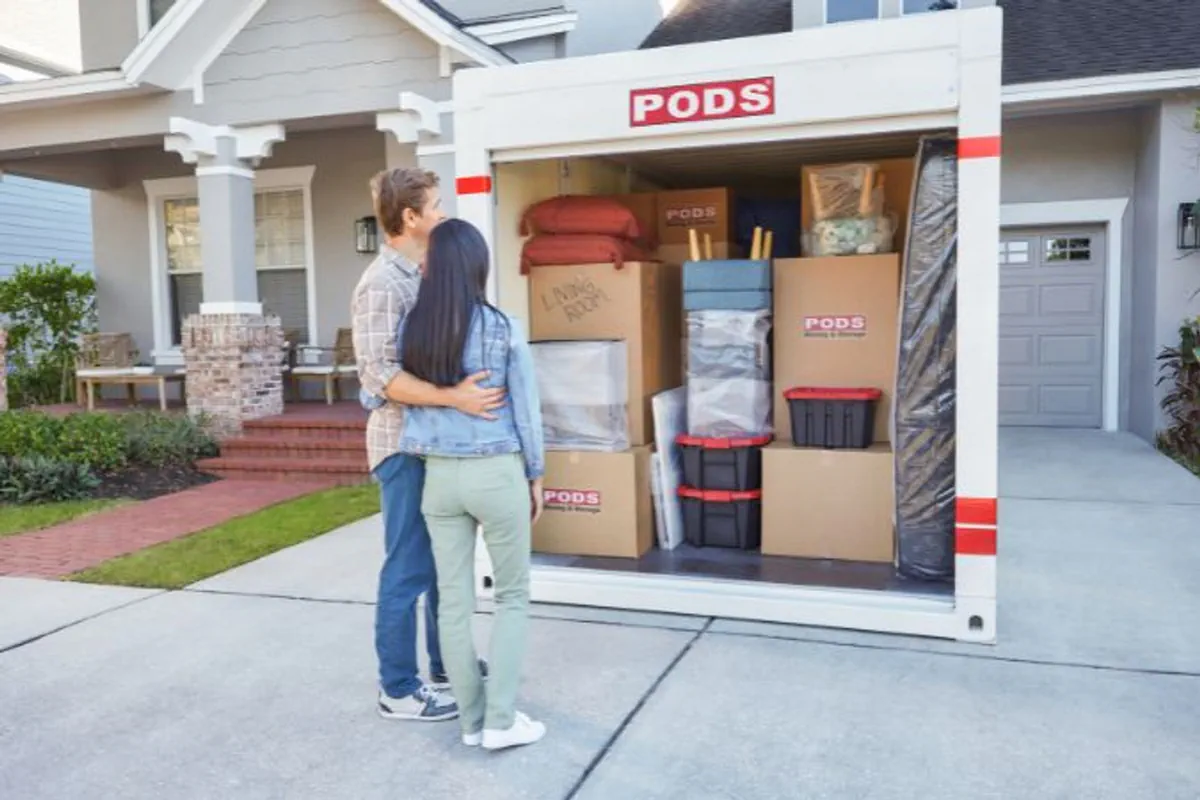
The view from the driveway is busy, but the pet's day is calmer when they ride separately from the moving truck.
The first 24 hours: one quiet room
Before you unpack a single box, set up one quiet room — a spare bedroom, a utility room, or a corner of the living area with a baby gate across the doorway. Put down their bed, water, food, the litter tray if you have a cat, and a couple of familiar items. Close the door. This is their base camp while boxes come in and furniture finds its spot, and it doubles as a no-escape zone when the front door swings open every ten minutes.
A safe room gives the pet one familiar place to retreat while the rest of the house comes together around them.
The first two weeks: routine, then slow exploration
A two-week ramp-up
Quiet room, normal feeding time
No tours. Just their bed, their bowl, their usual schedule.
Leashed room-by-room tours
Open the safe-room door and let them follow you into one new room at a time, on a lead for dogs.
Supervised access expands
Most of the house is reachable. Dogs go back to their normal walk times and routes where possible.
Comfortable inside, still inside
Most pets are visibly relaxed. Cats should still be indoors only at this point.
First outdoor access
Cats begin short, supervised garden trips; dogs add new walking routes one at a time.
Dogs versus cats: a few different rules
Dogs
First garden visits on a lead, walking the fence line to spot gaps before going off-lead.
ID tag with the new address or a working phone number on the collar from day one.
Keep the old walk times for at least a month; swap in new routes gradually.
Watch for noise reactivity in the new neighborhood — construction, traffic patterns, other dogs.
Cats
Stay indoors for at least two weeks, often longer if the cat is shy or older.
Block cat flaps, chimneys, and any gaps in the wall where a cat could squeeze into the cavity.
First outdoor trips on a harness and lead, with a familiar person, for a few minutes at a time.
Hiding, going off food, or toileting outside the litter tray in the first weeks is common and usually temporary.
Reassurance matters more than speed; a calm voice and a familiar hand on the first few nights go further than any gadget.
After the dust settles: records, security, and enrichment
Once the boxes are gone
✓
Update the microchip
New address on file with the registry. Many registries let you do this online in a few minutes.
✓
Transfer insurance and vet registration
Update the policy address and register with the new practice so records follow the pet.
✓
Recheck the perimeter
Walk the fence line every few weeks; new gaps appear as fences settle and gardens fill in.
✓
Add enrichment
A new puzzle feeder, a second scratching post, or a 'sniff walk' for the dog gives the brain something to do while the senses catch up.
✓
Watch behavior for a month
Hiding, appetite dips, or accidents usually fade on their own. Call the vet if they last more than a few weeks or get worse.
SUMMARY
The bottom line
Most dogs settle in a few days; most cats take two to four weeks, and a few animals take a couple of months. The pattern that works in nearly every case is the same: a scent-familiar go-bag, separate transport on moving day, one quiet safe room on arrival, and then a slow, supervised expansion of their world. The pet doesn't need a faster timeline; they need a steadier one.
Common questions
Before you move on
How long does it take a pet to adjust to a new home?+
Most dogs are visibly settled within a few days to two weeks. Most cats need two to four weeks indoors before they're ready for outside access, and a few shy or older animals take a couple of months. Holding routines steady — feeding times, walk times, the same bed, the same voice — is what shortens that window.
Should I let my cat outside right after moving?+
No. Keep cats indoors for at least two weeks, and longer if they're still nervous, so they identify the new house as home before they start marking territory outside. The first outdoor trips should be short, supervised, and on a harness and lead, ideally with a meal or treat waiting back inside so the new house becomes the place good things come from.