What are the best ways to prepare children for a move and help them settle in?
A practical, family-first playbook for moving day and the weeks after, from telling the kids early to unpacking the right rooms first and keeping pets and routines intact.
Tell children early in age-appropriate language, give them real roles in the move, and on arrival set up their rooms first while keeping routines steady. For pets, prepare a familiar-scent go-bag, arrange a vet check-up beforehand, and create a quiet safe room at the new house before letting them explore.
A family move works best when the kids are informed, involved, and reassured at every step, and when the pets arrive into a space that already feels familiar. Two priorities carry most of the weight: tell the children early in language they can absorb, and on moving day set up their rooms before any other room in the new house. Keep feeding, nap, and bedtime routines as close to the old schedule as possible — predictability is the single biggest stress reducer for both two-year-olds and tabby cats.
Sitting down together to talk through the move gives children a clear, honest explanation they can process.
Before moving day: prepare the kids, the pets, and the paperwork
For the children
Break the news as soon as plans are final, then keep updating them as details change.
Invite them into age-appropriate decisions — house tours from photos, paint colors, what goes in the backpack versus the truck.
Build a kid-sized checklist of what they will pack, what stays with them, and how to label their boxes.
If the move is job-related, ask whether the relocation package can include a family recon trip so the kids meet the new town before the truck does.
Plan a goodbye ritual for the old house — a last visit to a favorite park or a photo in front of the front door — so the farewell has a shape.
For the pets
Book a pre-move vet visit to update vaccinations, copy medical records, and confirm microchip details are current.
Research a veterinary practice near the new postcode before you arrive.
Pack a pet go-bag with favorite food, medication, a worn blanket, and a familiar toy so the first hours smell like home.
Decide who will transport each animal — ideally a trusted family member or a dedicated pet service — so pets stay clear of the moving truck and the front-door chaos.
On moving day: roles, order of operations, and a calm arrival
A family-friendly moving day
Kids unpack their own boxes first
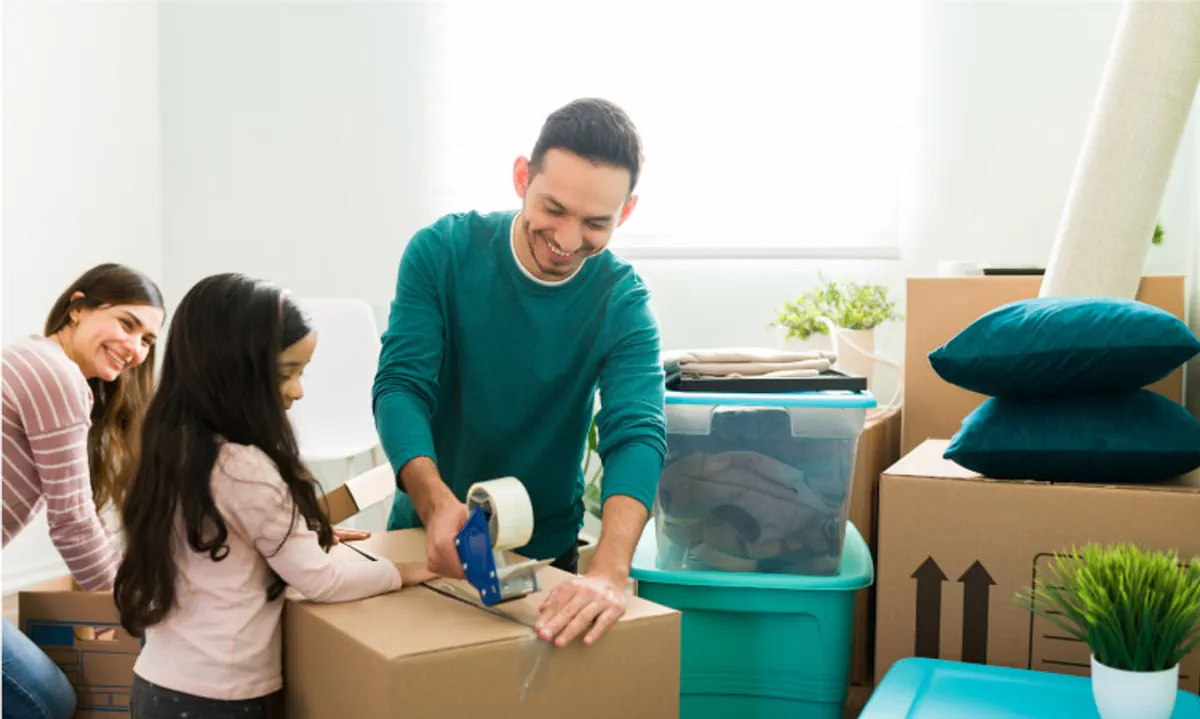
Let each child physically pack and label their own boxes. Ownership over their part of the move makes the transition feel like a team project, not something happening to them.
Comfort objects travel with a person
Plushies, books, and the pet go-bag ride with a family member, not in the moving truck. Pets travel in a secure carrier or harness, ideally with someone other than the driver.
Set up the kids' rooms and the pet safe room
Unpack the children's bedrooms before the kitchen or living room. Set up one quiet room for the pet with bedding, water, litter tray, and a door that stays closed while furniture is still moving.
Hold the routine
Stick to the usual dinner, bath, and bedtime sequence. Familiar timing tells a child's nervous system that the new house is safe.
Giving kids boxes of their own to pack turns moving from an event that happens to them into one they help lead.
The first two weeks: routines, rooms, and the gradual rollout
Helping kids claim the new space
01
Let them lead the bedroom setup
Hand over the unpacking of their own room. Ask where posters should hang, how the bed should face, and which shelf holds the prized possessions. A child who arranges the room has a harder time refusing to sleep in it.
02
Recreate, then refresh
Replicating a familiar bedroom layout at first is fine — it gives a bridge from the old room. Once everyone is settled, invite small refreshes: a new pillow, a different wall color, a poster that says 'this is the new place.'
03
Run a recon of the new town
Visit the nearest playground, library, ice cream shop, and walking route within the first week. Children settle faster when the map has landmarks, not just a new address.
04
Plug into clubs and activities early
Sign up for sports, arts programs, library story times, or volunteer projects before the loneliness can build. Shared-interest groups are the fastest way to convert a new zip code into actual friends.
05
Plan a visit back to the old town
Put a return trip on the calendar. Knowing there is a date to see old friends turns a hard goodbye into a manageable 'see you soon.'
Helping pets claim the new space
01
Start with one room, fully set up
Choose the room that will be unpacked first — often a utility room or spare bedroom — and place the pet's familiar bedding, water, litter tray, and toys there. Keep the door closed while boxes and furniture are still moving.
02
Explore on a lead, one room at a time
Once the heavy work is done, let dogs walk the garden on a lead to check for fence gaps and escape routes. Cats stay indoors for at least two weeks so the new house registers as home before any outdoor adventure.
03
Keep the schedule steady
Hold the same feeding times, walk times, and play sessions as before. Predictable routines lower anxiety faster than any amount of new toys.
04
Add enrichment, not pressure
Introduce a puzzle feeder, a new scratching post, or a sniffer mat to give the animal a job in the new environment. Reward curiosity and ignore small setbacks like a missed litter tray or a hiding spot under the bed.
05
Update records and ID
Once the move is complete, update the microchip, pet insurance, vet registration, and ID tags with the new address and phone number. Check fences, gates, and cat flaps regularly during the first month.
Differences by age: toddler, school-age, and teen
What each age group actually needs
Age group
Lead with
Watch for
Toddlers and preschoolers
Routines and familiar objects — same bedtime, same stuffed animal, same snack time
Regression in sleep or potty training; clinginess in the first weeks
School-age kids (6–11)
Involvement and information — a checklist, a role, a tour of the new school
Quiet worries about leaving the old friend group; a flat affect that can mask stress
Tweens and teens
Honesty about what is being lost plus real choices — room decor, activities, social plans
Anger, withdrawal, or sarcasm; check in by car ride or one-on-one lunch, not at the kitchen table
Pets of any age
Familiar scent and a predictable schedule ahead of any new exploration
Hiding, appetite changes, or toileting accidents that usually pass in a few weeks
The week after: how to check in without hovering
Conversation cues that actually work
Take the check-in off the kitchen table — a car ride to practice, a one-on-one lunch, or a bedtime walk opens more than a formal sit-down.
Ask specific questions: 'What is the hardest part of the new school so far?' rather than 'How are you doing?'
Name the loss out loud. Saying 'It's normal to miss your best friend' gives a child permission to feel sad instead of performing 'fine.'
Plan something to look forward to each week for the first month — a movie night, a new park, a visit back. Anticipation is a steadying force.
For pets, watch behavior more than words. Eating, sleeping, and litter habits are the real report card.
Throwing the welcome party
Once the essentials are unpacked, enlist the kids in planning a small housewarming. Younger children can deliver invitations to neighbors; older ones can help design the menu or pick the music. A gathering marks the new house as 'ours' rather than 'the place we moved into,' and it gives both kids and parents a reason to meet people on purpose instead of waiting for the slow drift of daily life.
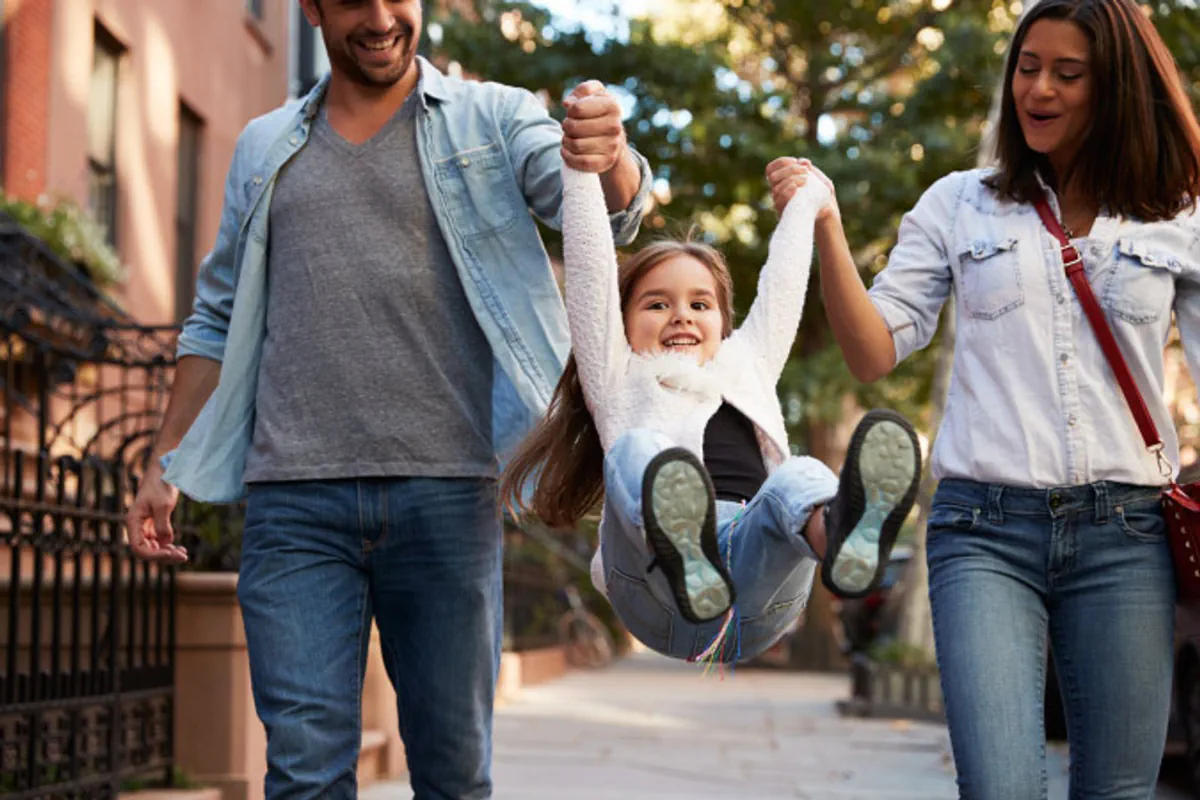
Celebrating the move together — even a short jump on the lawn — turns the new house into a place the family chose.
Family move checklist, in order
✓
Tell the kids and explain the why
Simple language, repeated updates as plans change, and a chance for them to ask questions.
✓
Book the pet's pre-move vet visit
Vaccinations current, records copied, microchip confirmed, and a new vet researched near the new address.
✓
Pack the comfort kits
Children's backpack with lovies and books; pet go-bag with bedding, food, medication, and a worn blanket.
✓
Give every child a job on packing day
Own boxes, own labels, and ownership of one piece of the move from start to finish.
✓
Set up bedrooms and the pet safe room first
Unpack the kids' rooms and the pet's quiet space before tackling the kitchen or garage.
✓
Hold the routine on night one
Same dinner, same bath, same bedtime story — predictability is the reassurance.
✓
Recon the new town within a week
Playgrounds, library, walking routes, ice cream — landmarks turn a new address into a real place.
✓
Sign up for at least one club or activity each
Shared-interest groups are the fastest route from stranger to friend for both kids and parents.
✓
Update every record with the new address
School, pediatric records, microchip, pet insurance, vet, and ID tags — all in the first month.
✓
Plan a visit back and a small housewarming
A farewell on the calendar and a welcome on the calendar both belong on the same fridge.
SUMMARY
The bottom line
The families who settle fastest treat the move as a project the kids help lead, not an event that happens to them. Tell the truth early, hand each child a real role, set up their rooms before anything else, and keep daily routines identical for the first week. Do the same for pets with a familiar-scent go-bag, a pre-move vet visit, and one calm safe room at the new house before any exploration. Everything else — the friends, the activities, the belonging — fills in faster once those two anchors are in place.
Common questions
Before you move on
When should I tell my children we are moving?+
As soon as the plans are final, in simple age-appropriate language. Kids pick up on household tension, and an early, honest explanation removes the anxiety of guessing.
Which room should be unpacked first in the new house?+
The children's bedrooms and one quiet room set aside as the pet's safe space. Familiar rooms and a familiar scent give both kids and animals a base while the rest of the house comes together.
How long should cats stay indoors after a move?+
At least two weeks, sometimes longer, so they identify the new house as home before any outdoor access. Dogs should explore the garden on a lead for the first few outings to check for escape routes.
Do federal moving rules apply to an in-state move?+
Usually no. The federal 'Your Rights and Responsibilities When You Move' booklet from FMCSA covers interstate household goods moves. An in-state move is generally regulated by the state's utilities or transportation commission, so ask the carrier which rules apply and request the matching booklet.
How do I help a teen who is angry about leaving friends?+
Acknowledge the loss directly, give real choices (room decor, activities, social plans), and check in by car ride or one-on-one lunch rather than at the kitchen table. Plan a visit back so the goodbye becomes a 'see you soon.'