Which plants and landscaping styles are best suited to my region's climate and local wildlands?
A practical guide to choosing plants, ground planes, and design moves that match your climate, your region's wildlands, and the way you actually live outdoors.
Start with your region's wildland character — meadow, chaparral, woodland, high desert, or coastal scrub — and build a layered planting palette of native and climate-adapted species around it. Replace thirsty lawn with permeable ground planes, use trees and layered beds to shape microclimates, and treat hardscape as a supporting material drawn from the local palette rather than the dominant feature.
The most resilient, good-looking yards in 2026 are not assembled from a catalog of features. They are designed as environments, with planting as the primary material and hardscape playing a supporting role. The starting point is not a style; it is the wildland character of your region — the meadow, chaparral, woodland edge, high desert, or coastal scrub that already defines the place you live. From there, plant palette, ground plane, layout, and materials all follow.
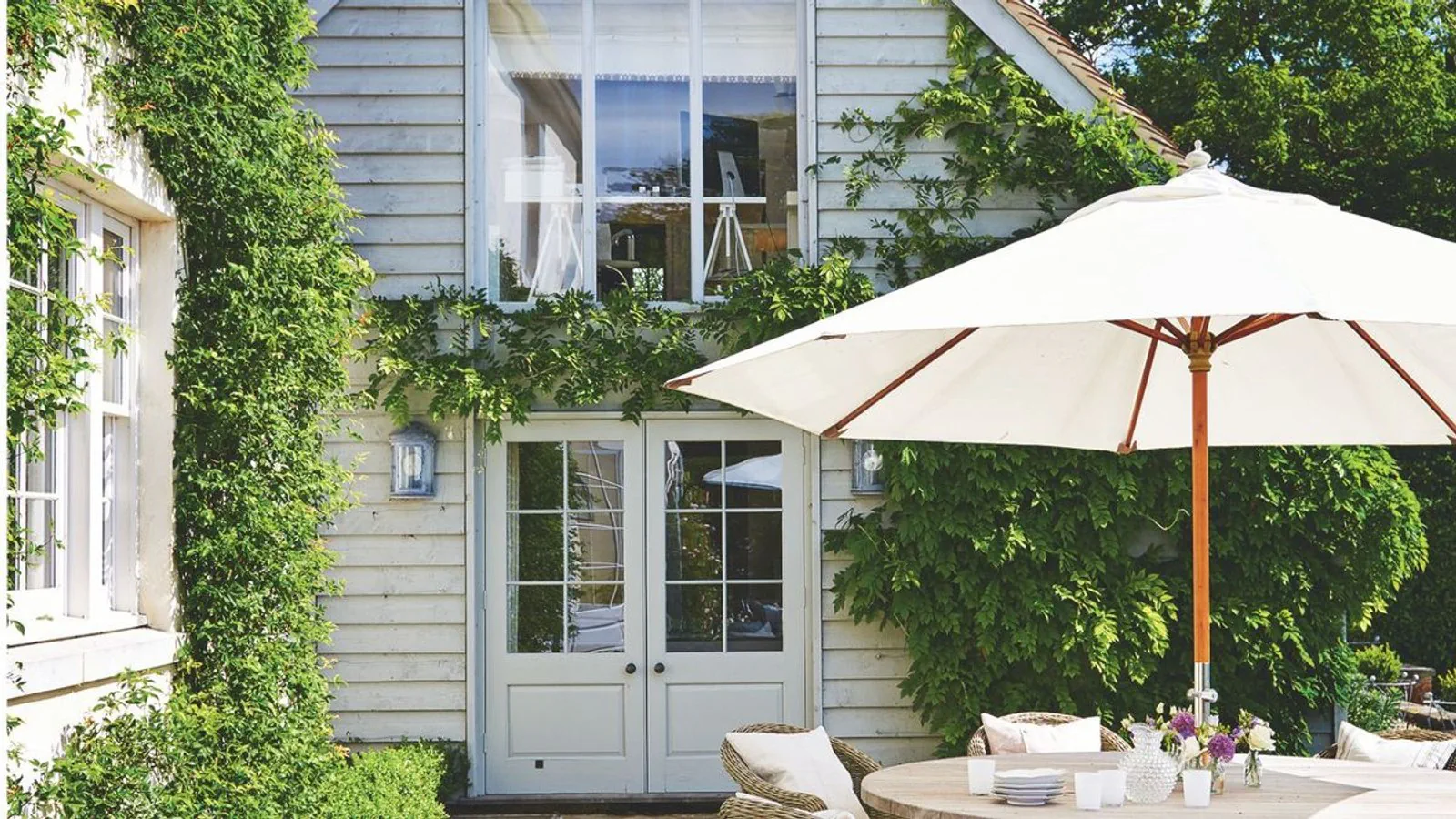
An example of a layered, planting-led yard where the design follows the region's natural character rather than imposing a generic template.
Match the planting to your region's wildland character
What 'abundant' looks like depends entirely on where you are. Layered and lush is the right move in the Pacific Northwest, where woodland edges and moist meadows set the template. Open and textural — with gravel, silver foliage, and sculptural forms — is the right move across the arid Southwest. The point is not to copy one of those looks in the other region; it is to read what your local wildland already does well, then work with those ingredients.
Regional planting starting points
Region
Wildland cues
Planting move
Ground plane
Pacific Northwest
Mossy woodland edges, wet meadows
Layered evergreen structure with ferns, salal, and seasonal perennials
Leaf mulch, shade-tolerant groundcovers
Arid Southwest / High Desert
Chaparral, sage scrub, open desert
Drought-adapted shrubs, succulents, and ornamental grasses in sculptural groupings
Decomposed granite and gravel
California chaparral & fire-prone foothills
Dense, resinous shrubs on dry slopes
Native plants kept lean with strategic fuel breaks
Gravel paths and stone interruptions between beds
Northeast / Midwest
Deciduous woodland, tallgrass edges
Multi-layer trees, shrubs, and meadow-style perennials
Clover blends and native lawn alternatives
Southeast / Gulf Coast
Pine flatwoods, humid coastal plain
Heat- and humidity-tolerant natives with strong evergreen structure
Mulched beds with permeable hardscape
Design the yard as a climate system, not a checklist
Once the plant palette is set, treat the yard as a small climate system. Tree canopy and shade structures reduce surface and air temperatures and cut cooling costs when positioned to shade the home. Layered planting retains soil moisture, captures stormwater on site, reduces erosion, and recharges groundwater. The same layered beds that manage water also create privacy, soften noise, and shape the feeling of enclosure without isolating you from the outdoors.
Microclimate moves with the biggest payoff
Place trees to shade the home's west and south exposures; they are the single most impactful landscape element.
Use layered planting — canopy, understory, shrub, ground — to build shade, privacy, and habitat at the same time.
Design with airflow in mind so evening breezes reach seating areas rather than being blocked by a solid wall.
Choose permeable ground planes — gravel, pavers on sand, mulched beds — to keep stormwater on site.
Shade structures and umbrellas do the same climate work as trees in the short term and buy time for layered planting to mature.
Replace the lawn with a ground plane that fits the place
Traditional lawn is being quietly replaced across most regions by more flexible ground planes: clover blends, native grasses, gravel gardens, and groundcovers. The right substitute depends on your climate. In dry regions, gravel and decomposed granite root a design in the local palette more effectively than almost any other material decision. In cooler, wetter regions, clover blends and native groundcovers carry texture and permeability without the water and pesticide load of a conventional lawn. In every region, shrinking the lawn and investing the saved budget in layered planting is the most reliable path to a healthier, lower-maintenance yard.
Ground-plane decision checklist
✓
Walk the site at different times of day
Note where sun, shade, wind, and water actually land before choosing a surface.
✓
Match the ground plane to the wildland
Gravel for arid and Mediterranean climates; mulch and groundcovers for woodland edges; clover or native grass for temperate regions.
✓
Keep surfaces permeable
Wherever possible, let rain soak in rather than run off toward the street or foundation.
✓
Use regional stone color
A local stone palette makes a designed space feel like it belongs to the landscape rather than sitting on top of it.
Build shape, materials, and color around the planting
Once planting leads, hardscape settles into a supporting role. Curved pathways, informal planting edges, and outdoor rooms that flow into the landscape replace rigid rectangles. Natural stone, cobble pavers, and gravel carry the color and texture of the surrounding landscape into the designed space. The color story follows the same logic: green tones from soft sage to deep forest across planting, materials, and furnishings, with small pops from flowering perennials and containers — color that appears the way it does in nature, seasonal and never dominant.
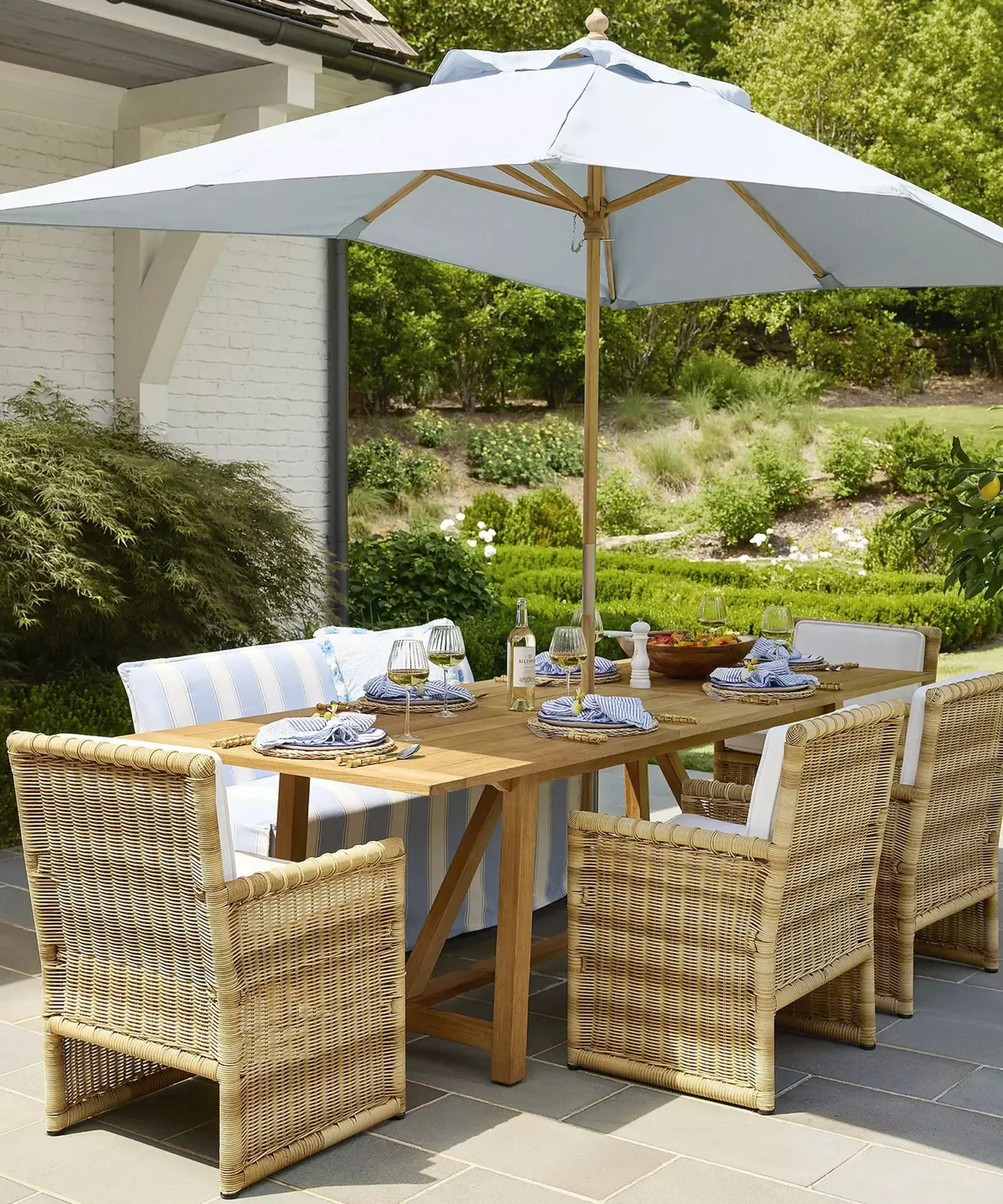
A party patio positioned next to the home, with pass-through access, layered planting, and natural materials — hardscape as a supporting element, not the headline.
Fire-prone regions need design, not denial
Match the design to the way you actually live outside
The most enjoyable yards are built around the small daily rituals that pull you outside: morning coffee, a shaded reading corner, a barefoot path between beds, a flexible zone for movement or rest. Saunas, cold plunges, and outdoor showers work best when they are integrated into the broader planting rather than dropped in as isolated fixtures. Edible planting — herbs, vegetables, fruiting shrubs — earns its place alongside outdoor kitchens and gathering spaces and reinforces the seasonal rhythm a yard at its best creates.
A practical sequence for building a climate-appropriate yard
01
Read your wildland
Identify the natural plant community your region supports — meadow, chaparral, woodland, desert, coastal — and use it as the brief.
02
Audit the site
Map sun, shade, wind, drainage, and how you move through the space during a normal day.
03
Lead with planting
Build a layered palette of native and climate-adapted species around the wildland cues, then budget hardscape to support it.
04
Replace the lawn where it doesn't earn its place
Swap thirsty turf for gravel, clover, groundcovers, or native grasses that match the climate.
05
Shape microclimates
Use trees and layered beds to manage heat, privacy, and stormwater in the same move.
06
Add the daily-life moments
Place the patio, paths, edible beds, and any wellness features last, so they follow the planting rather than competing with it.
SUMMARY
The bottom line
Pick the planting that belongs to your region's wildlands, then let everything else — ground plane, shape, materials, color, and the patio — follow. A yard designed this way costs less to maintain, stays healthier through heat and drought, supports the local ecosystem, and feels like the place it sits in rather than a template that could be dropped onto any street.
Common questions
Before you move on
How do I find out which wildland type my region belongs to?+
Look at undeveloped land within a short drive — highways, preserves, regional parks. The dominant native plants and overall structure you see are the cues. Local native plant societies, state extension services, and municipal climate or water departments publish regional plant lists that reflect the same wildland character.
Do I have to use only native plants?+
No. Climate-adapted plants that share the same water, sun, and soil needs as your natives will perform well alongside them. The goal is a palette suited to your region, not a strict native-only rule.
What if I have a small patio or balcony instead of a yard?+
Apply the same logic at a smaller scale: pick a few plants matched to your microclimate (sun, wind, exposure), use containers and vertical planting to build layers, and choose materials and color that echo the surrounding landscape.
When does this approach not work?+
It works poorly when the planting is chosen before the site is read, when lawn is kept in a climate that cannot sustain it, or when a yard in a fire-prone area is planted densely with continuous fuel up to the home without defensible-space breaks.