What are the best ways to keep guests comfortable when hosting outdoors on hot summer days?
Shade, airflow, a thoughtful menu, and a flexible indoor-outdoor flow are the four levers that decide whether an outdoor party feels refreshing or miserable in summer heat.
To keep guests comfortable when hosting outdoors on hot summer days, build shaded retreats, move air across the space with fans and breezeways, lean into a cold, light menu served at a self-serve station, and design a flexible indoor-outdoor flow so people can step inside when the sun is strongest. A few small comforts — chilled water, misting, loose linens, and sunscreen reminders — go a long way.
Hot-weather entertaining lives or dies on four things: shade, airflow, the menu, and the ability to duck inside when the sun is punishing. Get those right and even an August afternoon on a sun-baked patio can feel easy. Skip any of them and guests start peeling off early. The smartest hosts treat the yard like a small climate system — planning where the cool spots are, where the breezes come from, and where people will naturally migrate as the day shifts.
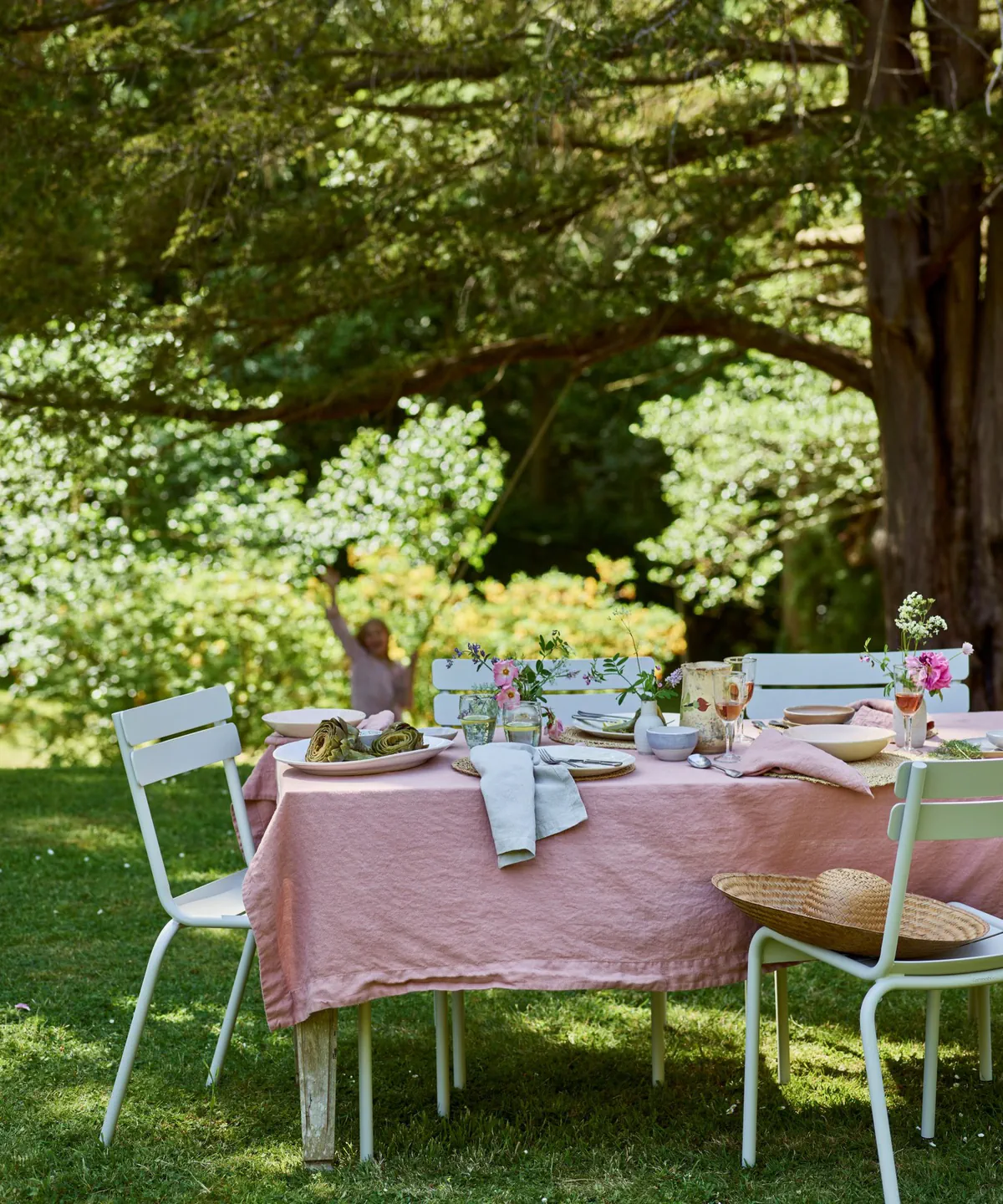
A well-set outdoor table with linens and florals shows how much a single shaded dining zone can anchor a hot-day gathering.
Build shade before you build anything else
Shade is the single biggest comfort upgrade you can make. Direct sun in summer can make a patio feel 15 to 20 degrees hotter than a shaded spot next to it, and guests gravitate to shade instinctively even when they arrived planning to sit in the sun.
Shade options that work on hot days
A large market umbrella (9 feet or wider) over the dining table — the most efficient single purchase.
Pop-up canopies or small gazebos for seating clusters away from the table.
Shade sails stretched between a wall, post, or tree for big coverage without a heavy footprint.
Half umbrellas against the house for tight patios or balconies where a full umbrella won't fit.
Tall plants, hedges, or a pergola with climbing vines for layered, natural shade that also softens the space.
Move air across the space
Still air feels hotter than moving air at the same temperature. A little breeze changes how a hot day feels almost as much as shade does.
Airflow moves that earn their keep
✓
Place fans under shade
A standard oscillating fan under an umbrella or pergola creates a noticeably cooler pocket for seating.
✓
Open the house to the yard
Keep interior doors and windows open so indoor AC-cooled air drifts outside, especially in the late afternoon.
✓
Use a screen door, not a closed door
A magnetic or retractable screen lets air and people move freely without letting bugs in.
✓
Mind the prevailing breeze
Set seating so prevailing winds cross the table rather than blowing into the backs of chairs.
✓
Skip fire features midday
Pits and torches add radiant heat; save them for after the sun is low.
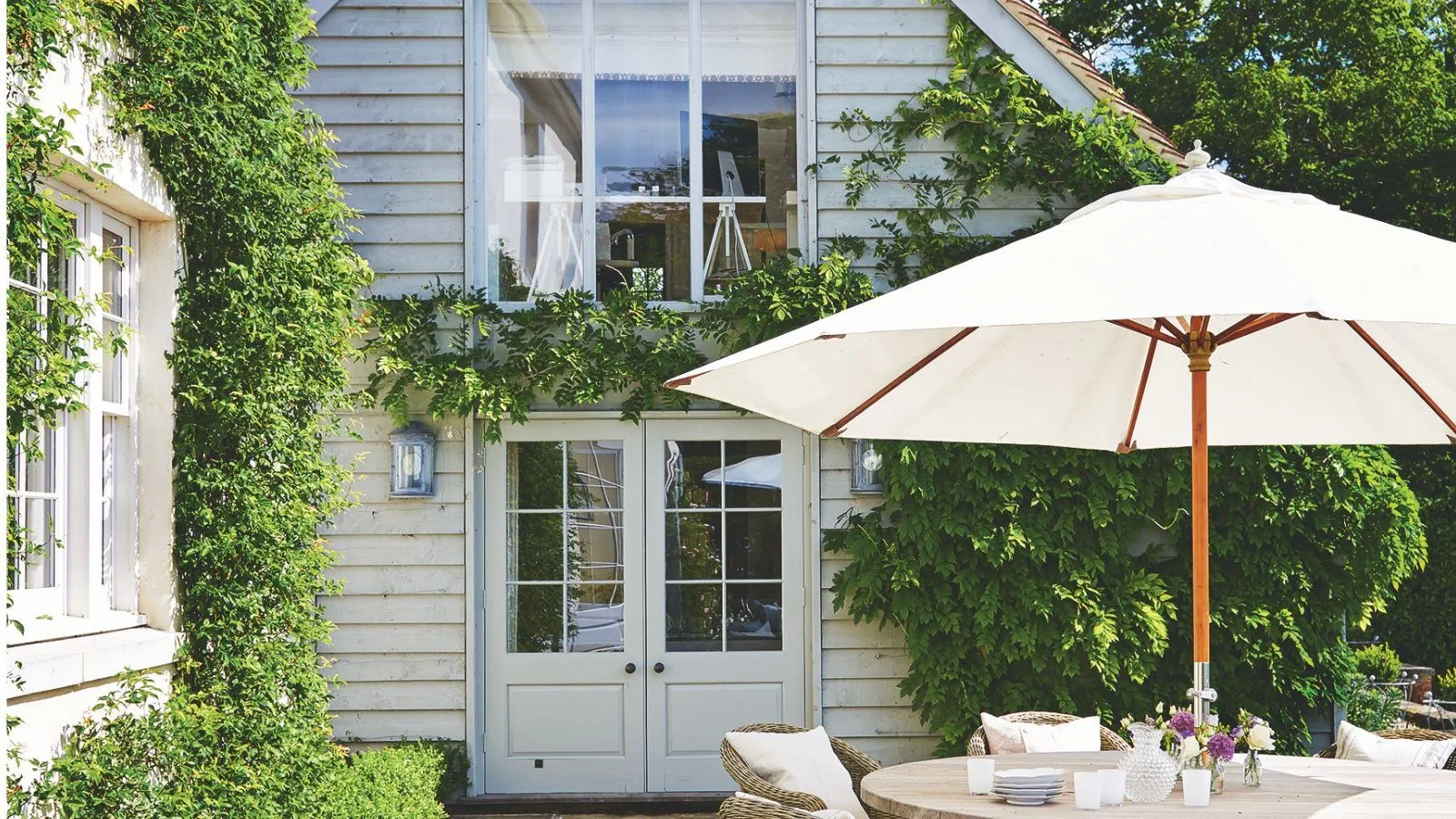
A covered porch with a large table and woven chairs illustrates how a shaded, open-air dining room bridges indoor comfort and outdoor entertaining.
Design a menu that works with the weather
What you serve quietly controls how long people stay. Heavy hot food and warm drinks raise body temperature; cold, light, water-rich food and chilled drinks lower it. On a hot day, the menu should feel like part of the cooling strategy.
Hot-day menu principles
Lead with cold, light dishes: crudo, chilled pasta salads, melon and prosciutto, sliced fruit, crudités, grain salads.
Choose quick-cooking proteins (fish, shrimp, thinly sliced steak) so the cook isn't standing over a hot grill generating radiant heat for everyone.
Serve drinks seriously cold — frosted glassware, drinks over shaved ice, and a self-serve station so guests can refill without flagging you down.
Offer water visibly. A big pitcher of infused water (cucumber, citrus, mint) on the table signals that staying hydrated is expected, not awkward.
Plan a freezer stash. Freeze grapes, or pre-batch cocktails in ice cube trays so drinks stay cold without diluting.
Let the party move between inside and out
The most comfortable summer parties aren't strictly outdoor — they flex. Plan the day around the sun instead of fighting it.
A flexible hot-day schedule
Host inside or under deep shade
Serve drinks and snacks in the coolest room of the house, or under a covered porch with fans running.
Move to the patio
As the sun lowers and the concrete gives up its stored heat, transition the group outdoors for an aperitif.
Full outdoor dinner
This is the most comfortable window for an outdoor meal in summer; lean into it with a longer table and softer lighting.
Make the transition effortless. Wide doors or sliding panels, a magnetic screen across the main opening, and a clear path between kitchen and patio mean guests don't have to choose — they drift.
An outdoor bar or drink station lets guests refill without trips back into a hot kitchen.
Small comforts that punch above their weight
Quiet upgrades guests notice
Wet towels or a chilled washcloth basket near the door — a classic move that always lands.
A light mister on a hose hookup for genuinely scorching days; even a fine spray drops the effective temperature.
Loose, light-colored linens on the table instead of heavy runners that trap heat.
Sunscreen and a basket of hats or sunglasses by the entrance; people forget, and being reminded is a kindness.
Citronella candles or a tabletop fan with a built-in repellent for the hour after sunset when mosquitoes show up.
Plan for the people who run hot
Not every guest handles heat the same way. Older relatives, anyone on certain medications, pregnant guests, and small children regulate temperature less efficiently and may need a real cool-down space, not just a shaded chair. Identify the coolest interior room in advance and let a couple of people use it as a retreat without making it feel like a sickroom. Keeping a few chilled drinks and a fan ready there costs nothing and protects the guests most at risk.
Where to put your cooling effort
Tactic
Best for
Effort
Large umbrella over the dining table
All-day anchor shade
Low — one purchase
Pop-up canopy or sail
Lounging zones away from the table
Low to medium
Outdoor fans under shade
Still-air evenings and humid regions
Low
Self-serve drink station
Reducing kitchen trips and keeping glasses cold
Medium
Indoor-outdoor flow with screens
Peak-heat hours and longer parties
Medium
Pergola or planted shade
Long-term comfort and aesthetics
Higher
SUMMARY
The bottom line
Treat your yard as a small climate system, not a backdrop. Layer shade over both the dining and lounging zones, keep air moving with fans and open doors, build a cold and light menu around a self-serve drink station, and let the party flex between inside and out so guests follow the comfort instead of the clock. Add a few quiet comforts — chilled towels, sunscreen, light linens — and a hot afternoon starts to feel like the whole point of summer instead of the problem.
Common questions
Before you move on
What temperature is too hot for an outdoor party?+
There's no single number, but once the heat index climbs into the upper 90s°F (35°C+) or a heat advisory is in effect, the safe call is to move indoors or shorten the event to early morning or after sunset. Young children, older adults, pregnant guests, and anyone on medications that affect temperature regulation are more vulnerable and may need a cool retreat even at lower temperatures.
How do I keep food safe on a hot day?+
Cold food should sit out for no more than two hours — one hour if it's above 90°F (32°C). Keep salads, dips, and cut fruit in bowls nested over trays of ice, and refill platters in small batches rather than putting everything out at once. Cooked food should not be left in the sun; shade it or rotate it back to a cool kitchen between servings.
Do outdoor misters actually help?+
Yes, modestly. A fine mist evaporates off skin and lowers the perceived temperature, often by 10–20°F in dry climates. They're less effective in very humid conditions, where sweat can't evaporate anyway, and they work best in a breezy, shaded area rather than in direct sun.
What's the cheapest way to make a patio feel cooler?+
One large umbrella over the dining table plus one oscillating fan is the highest-impact, lowest-cost combo. If you can't add either, string a shade sail between two anchor points, or simply move the table under an existing tree and add a pitcher of ice water — small moves genuinely change how the space feels.