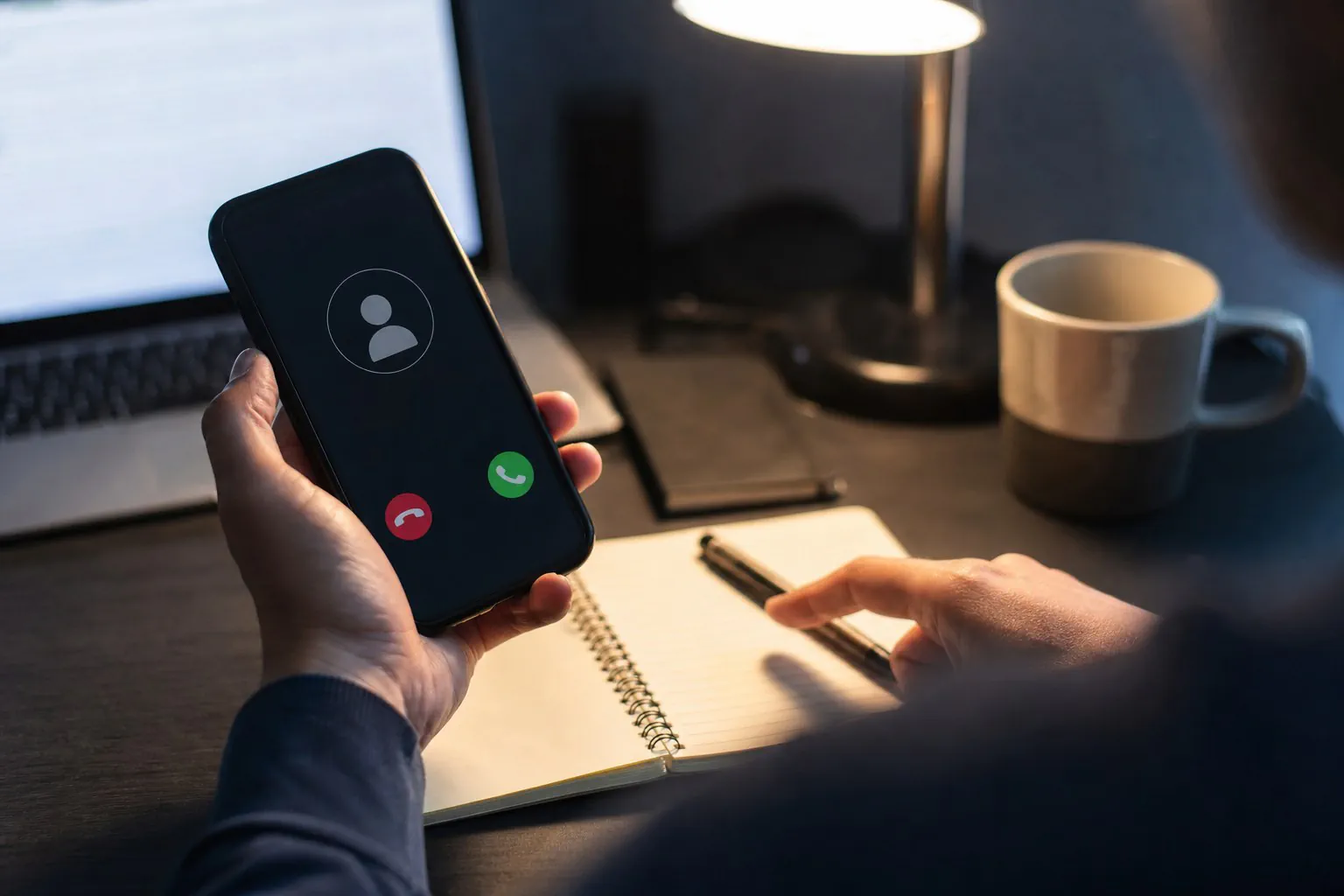
How can I tell if a call, email, or job offer is really a scam?
A small set of warning signs shows up across nearly every scam, whether it arrives by phone, inbox, or LinkedIn. Learn the four signs to look for, the specific ways they show up in different channels, and how to keep evidence that helps if you report.
If a contact arrives unexpectedly, pressures you to act right away, asks for payment through gift cards, wire transfers, cryptocurrency, or payment apps, or requests information you didn't expect to share, treat it as a scam. Slow down, verify through a channel you chose yourself, and save the original message as evidence before you do anything else.
Scams hide inside ordinary-sounding contacts: a call about a missed delivery, an email claiming your account is locked, a job offer that came out of nowhere with a high salary and a fast start date. The good news is that a small set of warning signs shows up across nearly all of them. Once you learn to recognize those signs, you can catch a scam before you send money, gift card numbers, or personal information that you can't take back.
Four warning signs that should make you pause
Run every contact through this list before you respond
✓
The contact came out of nowhere
Real banks, employers, and government offices rarely call, email, or text first about a problem or a prize. If you weren't expecting the message, treat it as unverified until you've checked it through a channel you chose yourself.
✓
The story leans on fear or excitement
Scammers manufacture a problem to fix (a warrant, an unpaid tax, a frozen account, a package waiting on a fee) or dangle a windfall (a sweepstakes win, a refund, a job you never applied for). Both versions want you reacting before you think.
✓
There's pressure to act right now
Phrases like 'within 24 hours,' 'or your account will be closed,' and 'don't hang up' are designed to crowd out the part of your brain that says wait. Legitimate institutions give you time and a way to call back on your own terms.
✓
The only way to pay or verify is unusual
Bank wire transfers, cryptocurrency, payment apps, and gift cards are the methods scammers ask for because they're hard to reverse. Being told to pay that way for any unexpected problem is a strong scam signal, no matter who the caller claims to be.
How the same signs show up across channels
Warning signs by contact type
Warning sign
Phone call
Email or text
Job offer
Out of nowhere
Caller claims to be the IRS, Social Security, your bank, or a grandchild in trouble.
Message says your account is locked, a delivery needs a fee, or a document is ready to view.
Recruiter messages you about a role you didn't apply for, often remote and unusually high-paying.
Problem or prize
You owe back taxes, missed jury duty, have a warrant, or won a sweepstakes you never entered.
There's a suspicious login, a package problem, or you're getting an unexpected refund.
You're hired on the spot, then asked to send money for equipment, training, or to deposit a check.
Urgency
Stay on the line, don't tell anyone, pay now or face arrest.
Click this link in the next hour or lose access to your account.
Start today, decide before the offer expires, don't talk to your bank yet.
Unusual payment or verification
Buy gift cards and read the numbers, or wire money through a specific service.
Send a payment through a payment app, or click a link to 'verify' your login.
Share your bank login to set up 'direct deposit,' or send part of a deposited check back.
If something feels off, keep the evidence
Capture the trail before you delete or reply
01
Leave the message in place
Don't delete the email, text, or job posting, and don't reply. Replying tells a scammer the inbox is live, and deleting destroys your only record of what they wanted.
02
Screenshot the basics
Capture the full message, including the sender's address, the date and time, any links, and the phone number that showed on caller ID. For voice mails, save the audio file rather than just the transcript.
03
Write down what they wanted
In your own words, while it's fresh, note the amount, the payment method, and the account or wallet they pointed you to. Stick to facts, not feelings.
04
Save anything you clicked
If you followed a link, take a screenshot of the page before closing it. If you called the number back, record both the number you dialed and the one that showed on caller ID, since they may not match.
05
Search the exact wording
Put the company name in quotes, the job title with the word 'scam,' or a distinctive sentence from the message into a search engine. Scams leave a paper trail online, and other people usually have reported the same pitch.
Verifying without falling into a second trap
Safer ways to check a contact
Hang up and call back through a number you find yourself, on the back of your card, the official site, or a recent statement.
Open the company's site in a new tab rather than clicking a link inside the message.
For job offers, confirm the company's name, address, and hiring manager through a separate channel, and never share your bank login to 'set up payroll.'
If the contact claims to be a relative in trouble, hang up and call that person directly at a number you already have.
Treat pushback on calling back as a sign in itself. Legitimate callers are happy to let you verify.
SUMMARY
The bottom line
Scams survive because they create urgency, impersonate people and institutions you trust, and steer you toward payments you can't reverse. Slow down, verify through a channel you chose yourself, and keep the original message until you've reported it. If any one of the four warning signs is present, treat the contact as a scam until proven otherwise, and that bar is high.
Common questions
Before you move on
A caller knew my name and the last four digits of my Social Security number. Aren't they legitimate?+
Data breaches have put real personal information into scammers' hands. Knowing a fact about you doesn't prove the caller is who they say they are. Hang up, then call the institution back through a number on their official site or your card.
I already sent a gift card code. What should I do?+
Treat the money as lost, but act fast. Call the gift card company right away to report the card as used in a scam, save the codes and receipt, and report the incident to the FTC at ReportFraud.ftc.gov and to your local police for a written record. The faster you report, the better the chance of stopping further use.
Should I report a scam attempt even if I didn't lose money?+
Yes. Reports feed scam-tracking databases and help flag the same pitch when it shows up for someone else. The FTC accepts reports of attempts, not just losses, and the same applies to your state attorney general.