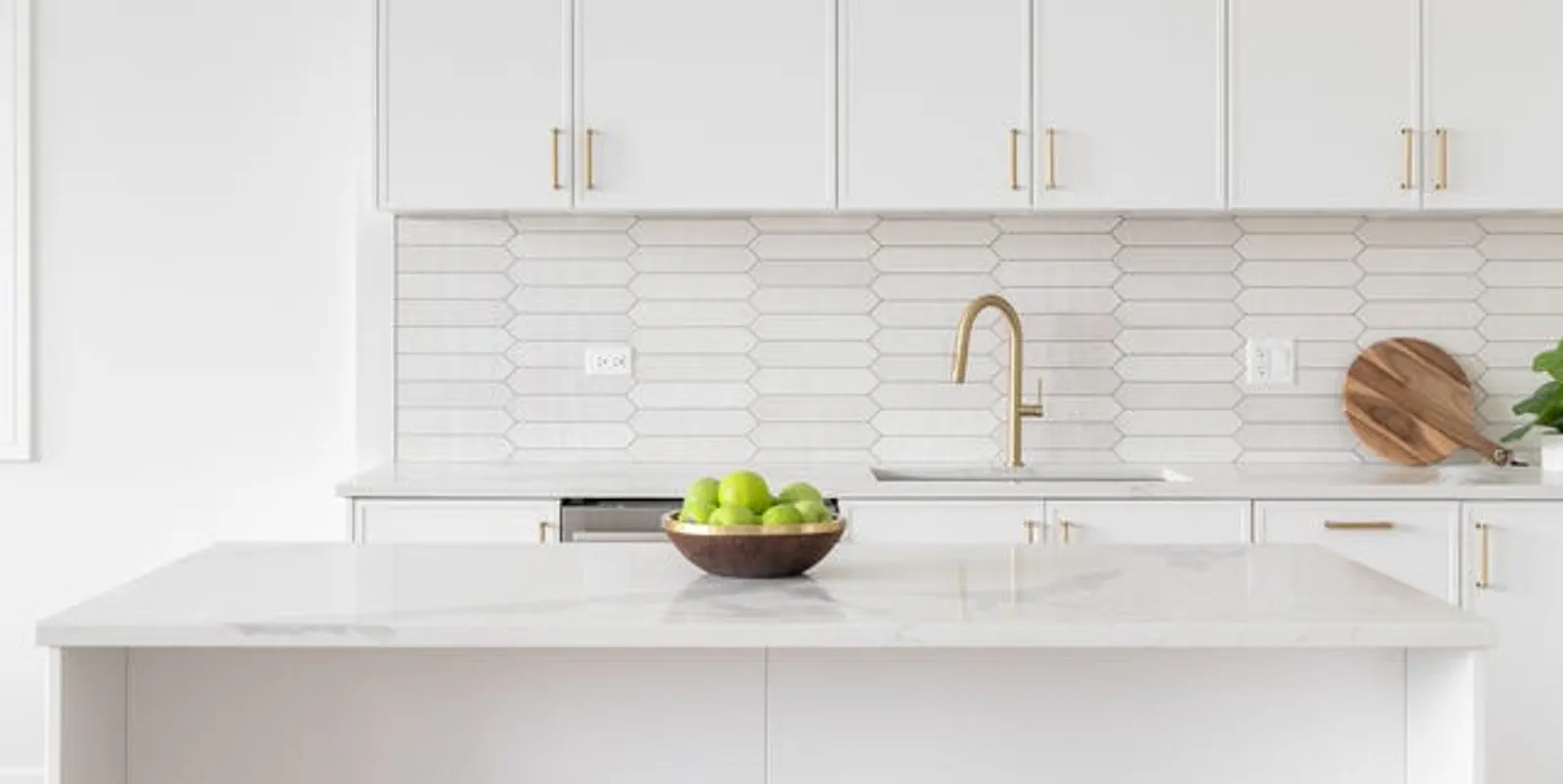
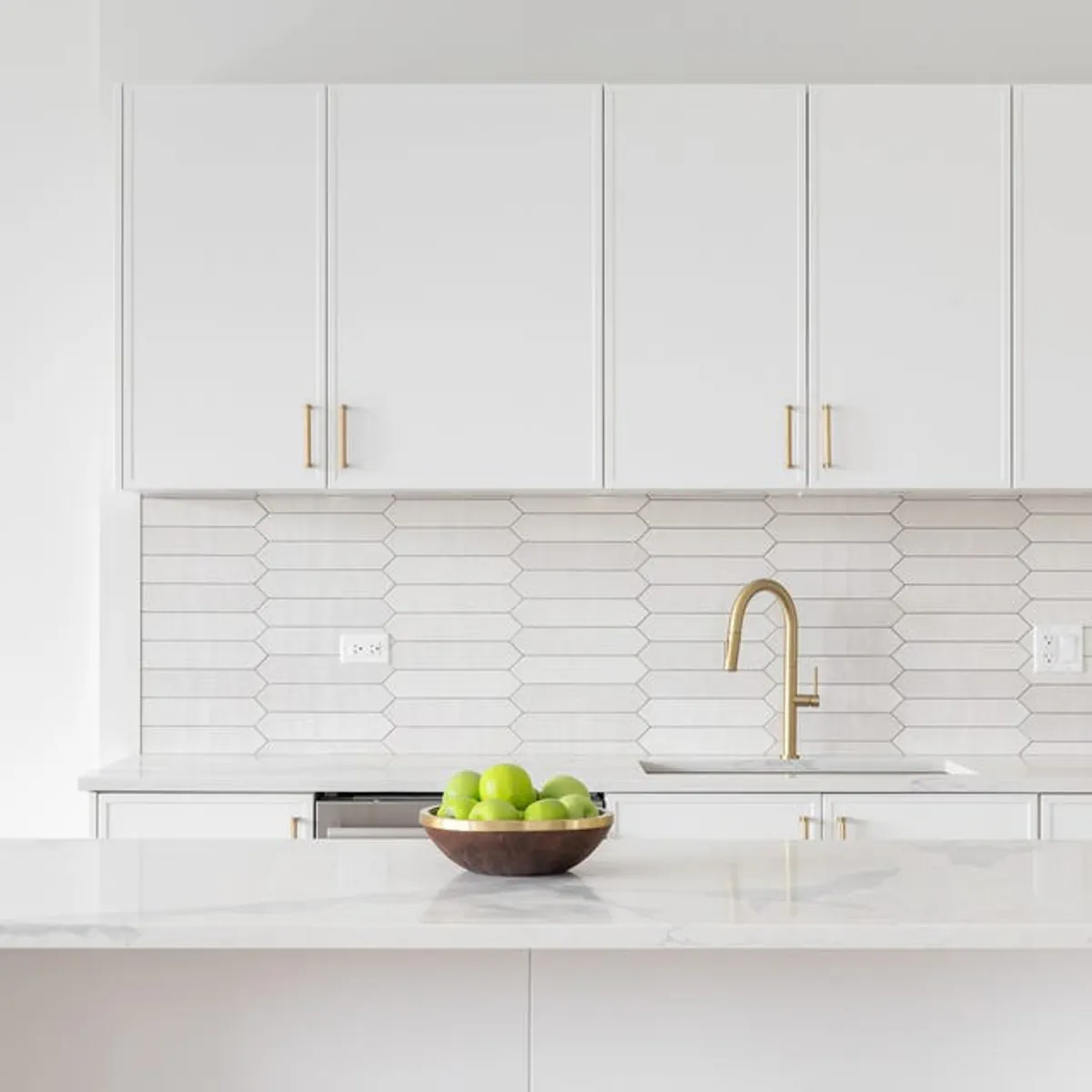
Avoid the looks that already feel generic in 2026: all-white kitchens, the matching wood-tone era, the minimalist showroom, flat drywall, catalog-styled rooms, and the entire modern-farmhouse package. Replace them with layered color, mixed materials, tailored millwork, and textured walls — choices that age slowly and still feel personal a decade from now.
When you build or remodel, every finish you commit to is a bet on how long it will still feel right. In 2026, designers are quietly walking away from a long list of looks that defined the late 2010s and early 2020s. The pattern is consistent: anything that became a default — anything you could spot in three model homes in a row — is on the way out. What is replacing it is depth, warmth, texture, and a clearer sense of the person who lives there. The smart move is to choose the replacements, not the leftovers.
Kitchens that are cooling off
The white-on-white kitchen is the headline trend designers say is fading — color, texture, and contrast are taking its place.
Two kitchen moves have become so common they now read as builder-grade. The all-white kitchen, once the gold standard of clean design, is being described as flat and dated. Designers are swapping crisp white cabinets and counters for layered palettes — deep greens, inky blues, soft taupes — and richer surfaces that hold light differently throughout the day.
Kitchens to skip and what to choose instead
All-white kitchens → warm, layered palettes with one or two saturated tones.
Waterfall-edge islands in a single stone → islands that mix wood, metal, or a contrasting stone on the sides.
Oversized statement pendants → smaller, scaled fixtures that work with the architecture rather than dominate it.
Cabinets, floors, and furniture in the same wood → intentionally mixed wood tones for warmth.
Bedrooms, baths, and the soft-goods shuffle
Some of the most popular fabrics and furniture shapes of the last decade are losing their pull. The scallop headboard, which suited a post-pandemic craving for softness, is giving way to tailored, architectural headboards in natural materials. Bouclé, the nubby white fabric that showed up on every chair and sofa, has become so common it now feels like a default rather than a choice. Designers are reaching for brushed wool, slub linen, and matte chenille — textures that still feel cozy but have more dimension.
Soft-surface swaps
Scallop headboards → straight-lined, architectural headboards in wood, rattan, or upholstered panels.
Bouclé everywhere → mixed tactile weaves, with bouclé used sparingly as an accent.
Café curtains → floor-length drapery or simple linen shades that keep sightlines clean.
Whole-house looks that are losing favor
Beyond rooms, several style eras are ending. The minimalist, white-walled living room is being pushed aside by a return to pattern, color, and layered objects — a more maximalist mood, but one that's curated rather than cluttered. The gray-on-gray neutral palette that defined the millennial decade is being swapped for warmer whites, saturated colors, and bolder choices. And the modern farmhouse — shiplap, exposed white beams, black metal hardware on everything — is being called out as the look that finally looks dated. Designers describe primarily white-and-black interiors with matching black fixtures as feeling lazy rather than intentional, the visual equivalent of a builder basic.
On the architecture side, flat drywall on every wall and ceiling is being replaced by plaster finishes, fluted panels, ceiling treatments, and detailed crown molding. Understated craftsmanship — the idea that good design should disappear — is out; people now want millwork that is tailored, specific, and clearly theirs.
Rethinking the formal dining room
The rarely used formal dining room is one of the most practical things to reconsider. Designers say clients are expanding eat-in kitchen space instead and converting the formal room into a home office, library, media room, or quiet reading space. If you are choosing a floor plan or planning a renovation, treat that room as flexible square footage rather than a fixed-purpose showroom.
The bigger pattern behind all of it
Step back and the trend cycle in 2026 has a clear direction. Anything that was easy to copy — all-white kitchens, matching wood tones, flat walls, catalog-styled rooms, modern farmhouse defaults — is being rejected as the lowest common denominator. What is rising is the opposite: layered color, mixed materials, textured surfaces, tailored millwork, and rooms that look like they belong to a specific person. Designers describe the new mood as confident but restrained: personality without clutter.
Where this guidance can bend
Design tastes are local, and so is resale math. In some neighborhoods, especially those where buyers expect a certain style — coastal, mountain, historic — buyers may still pay a premium for the look that is fading elsewhere. Before you rip out a neutral kitchen in a subdivision of neutral kitchens, check comparable sales. In a custom or personal-forever home, follow the direction the industry is moving and lean into the replacements.
SUMMARY
The bottom line
Skip the all-white kitchen, the matching wood-tone era, the flat drywall, the catalog-styled room, the bouclé-on-everything look, and the modern-farmhouse default. Build around warm color, mixed materials, textured walls, tailored millwork, and a clear sense of the people who live there. Those choices age slower than any single trend and make a home feel intentional rather than inherited.
Common questions
Before you move on
Are all-white kitchens really out in 2026?+
Designers consistently say the all-white kitchen has peaked. The replacement is layered palettes with deeper greens, blues, or taupes and richer surfaces that hold light differently through the day.
Is modern farmhouse style officially dated?+
Yes — at least in the form it became known for. White-and-black interiors with matching black metal hardware are being described as feeling builder-grade. Tailored millwork and warmer, mixed palettes are the new direction.
What is replacing minimalist interiors?+
A more layered, pattern-and-color-forward look that designers are calling a return to maximalism, but curated rather than cluttered. Calm rooms still matter; the change is in depth, color, and personality.
Should I still choose a formal dining room in a new house?+
Many designers now recommend treating that space as flexible square footage — a home office, library, or media room — since formal dining is used only a few times a year for most households.
Do these trend calls apply to every region?+
Not uniformly. In neighborhoods or price points where buyers expect a specific style — coastal, mountain, historic — the look that is fading nationally may still be the local resale standard. Check comparable sales before committing either way.