Quick Facts
- Design Origins: The Scandinavian sheepskin lounge chair movement began during the 1930s Danish Funkis (functionalism) era, prioritizing organic comfort over rigid formality.
- Signature Piece: The Little Petra Lounge Chair, designed by Viggo Boesen in 1938, remains the quintessential "embrace" in furniture form.
- Key Benefit: Natural sheepskin is self-regulating; its fibers provide warmth in winter and breathable cooling properties in summer.
- Investment Value: Premium heritage pieces currently range from $2,640 to $9,440, with an average investment of $5,600 for authentic reissues.
- Sustainability: 100% of the most sought-after designs in today’s luxury market are faithful reissues of original mid-century masterpieces created between 1938 and 1956.
In the world of interior styling, few textures evoke the same immediate sense of "Hygge" as natural sheepskin. It is the ultimate tactile luxury—a material that manages to feel both ancient and avant-garde. As an editor, I often see trends flicker and fade, but the Scandinavian sheepskin armchair has remained a permanent resident in the most sophisticated homes for nearly a century. This isn't just about "floof"; it’s about a design philosophy that emerged in the 1930s known as Danish Funkis. This movement sought to marry functionalism with a softer, more organic aesthetic, moving away from the cold, industrial chrome of the early Bauhaus era and toward something that felt undeniably human.
When you invest in an iconic sheepskin chair, you aren’t just buying a seat; you are acquiring a piece of design history. Remarkably, 100% of the most sought-after sheepskin lounge chairs in modern luxury interiors are reissues of original designs created between 1938 and 1956. This highlights the enduring value of Mid-Century Modernism. Whether it’s the petite, embracing curves of a Viggo Boesen classic or the architectural precision of an Yngve Ekström frame, these chairs serve as the anchor of a room—a place where the eye, and the body, can finally rest.
Why Natural Sheepskin? Benefits Beyond the Texture
Before we dive into our curated list, it is essential to understand why sheepskin remains the gold standard for upholstery in high-end Scandinavian design. Many clients ask if it’s too warm for year-round use, and the answer lies in nature’s own engineering.
Genuine sheepskin offers natural thermoregulation. The hollow fibers of the wool allow air to circulate, which means the material provides warmth during the biting chill of winter but maintains cooling properties during the summer. It is a breathable, "living" material that adapts to your body temperature. Beyond comfort, sheepskin is incredibly durable. When sourced correctly and treated as an heirloom, these chairs resist pilling and aging, developing a beautiful patina over decades of use. In a world of fast furniture, a sheepskin armchair is a definitive "buy once, keep forever" investment.
The 10 Most Iconic Sheepskin Chairs for Your Home
Selecting the right chair requires a balance of spatial awareness and aesthetic intent. Here are the ten most iconic designs currently defining the luxury market.
1. The Little Petra Lounge Chair by &Tradition
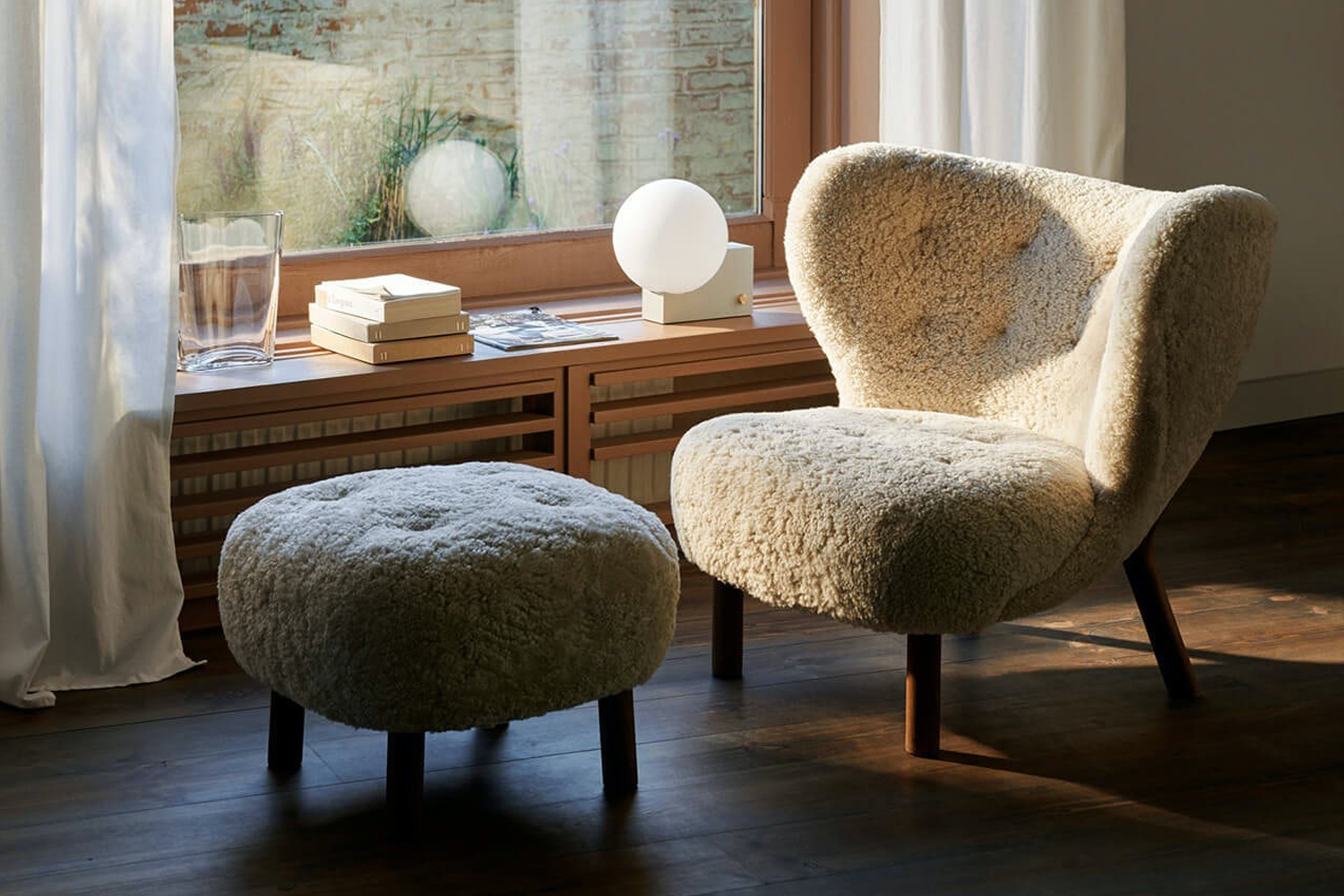
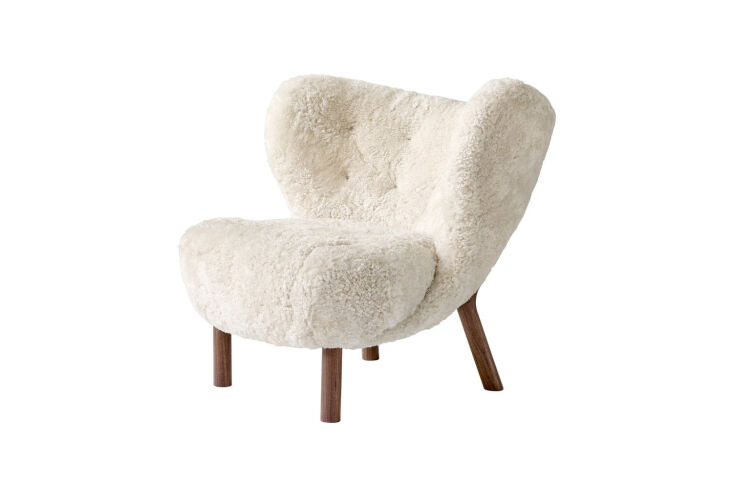
Designed in 1938 by architect Viggo Boesen, the Little Petra is perhaps the most famous "Funkis" piece in existence. Named after Boesen’s mother-in-law, the chair was surprisingly petite for its era, designed to fit into smaller apartments without sacrificing the feeling of a grand lounge. Its organic, embracing form feels like a hug, making it the perfect centerpiece for a minimalist living room or a cozy reading nook.
- Designer/Year: Viggo Boesen (1938)
- Key Feature: Low-slung, compact footprint with a deep, curved backrest.
- Price Tag: ~$7,650
2. The Tired Man Chair by By Lassen
If the Little Petra is a hug, The Tired Man is a full-body embrace. Designed by Flemming Lassen in 1935 for a competition, Lassen famously described the sensation of sitting in it as being "as warm and safe as a polar bear cub in the arms of its mother in the middle of an ice cap." With its voluminous armrests and overstuffed proportions, it is the ultimate statement of luxury.
- Designer/Year: Flemming Lassen (1935)
- Key Feature: Over-proportioned, plush armrests and a deep reclining angle.
- Price Tag: ~$9,000+
3. The Lamino Easy Chair by Swedese
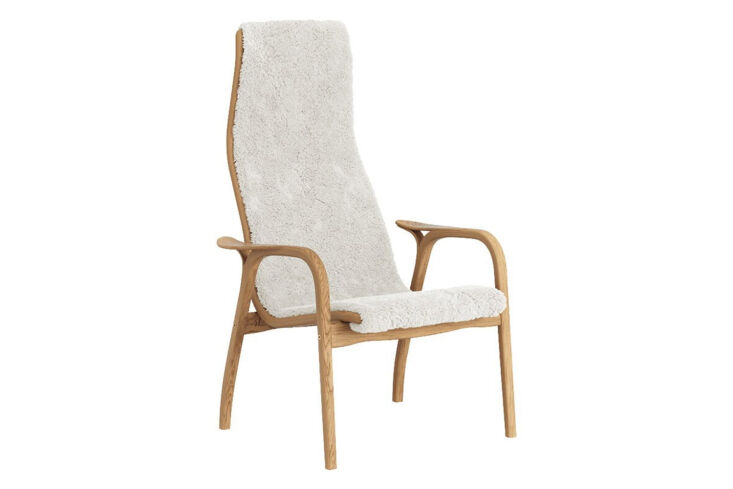
For those who prefer a more minimalist, "sculptured" look, the Lamino is the gold standard. Voted the "Swedish Furniture Design of the 20th Century," Yngve Ekström’s masterpiece is a lesson in ergonomic perfection. Unlike the heavier Danish designs, the Lamino features a bentwood frame that feels light and airy, while the high-back sheepskin upholstery provides targeted lumbar support.
- Designer/Year: Yngve Ekström (1956)
- Key Feature: Minimalist bentwood frame and an exceptionally comfortable high back.
- Price Tag: Starting at $2,640 (The entry-point icon)
4. The Pelican Chair by House of Finn Juhl
Finn Juhl was a pioneer who looked toward surrealist art rather than traditional furniture making. The Pelican Chair, debuted in 1940, was decades ahead of its time. Its "wings" wrap around the sitter, creating a sculptural silhouette that looks like a piece of modern art from every angle. When upholstered in thick sheepskin, its surrealist form becomes even more tactile and inviting.
- Designer/Year: Finn Juhl (1940)
- Key Feature: Surrealist, winged silhouette and low, sturdy legs.
- Price Tag: ~$8,200
5. The Knitting Chair by Audo Copenhagen
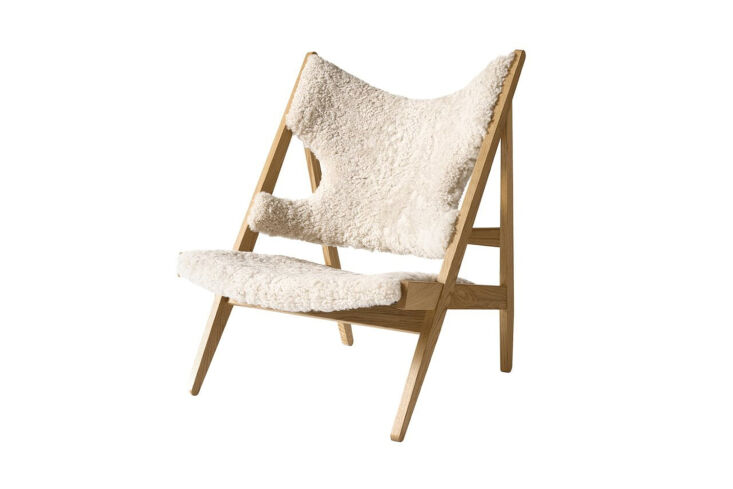
Functionality is at the heart of the Knitting Chair. Ib Kofod-Larsen designed this in 1951 with specific cut-outs in the backrest to allow a person’s elbows to rest comfortably while knitting (or, in modern times, scrolling on a tablet). It features a beautiful triangular construction and a sloping seat that encourages a relaxed posture.
- Designer/Year: Ib Kofod-Larsen (1951)
- Key Feature: Unique elbow cut-outs and a distinctively sharp wooden frame.
- Price Tag: ~$6,170
6. The Clam Chair (Muslingestolen) by Philip Arctander
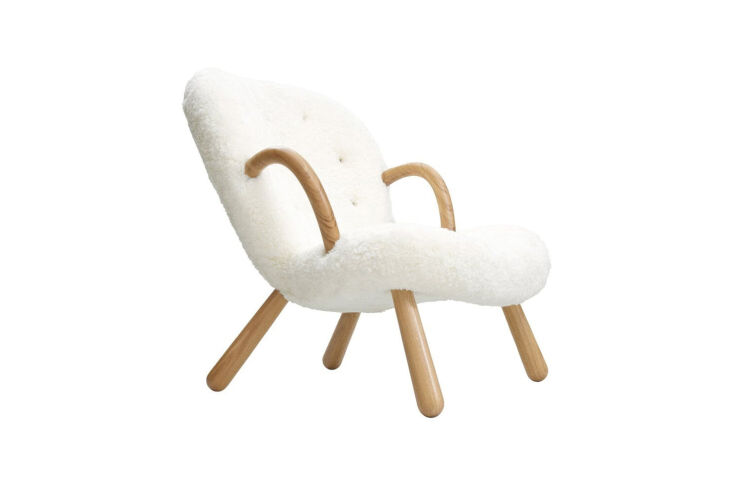
A true collector’s item, the Clam Chair (or Muslingestolen) is often the "holy grail" for interior designers. Its shell-like appearance and rounded club feet give it a playful yet sophisticated character. While vintage originals can fetch staggering prices at auction, modern high-quality reissues allow this 1940s classic to shine in contemporary homes.
- Designer/Year: Philip Arctander (1940s)
- Key Feature: Scalloped, shell-like back and iconic "club" legs.
- Price Tag: Variable, high-end reissues ~$5,500+
7. The Stay Lounge Chair by GUBI
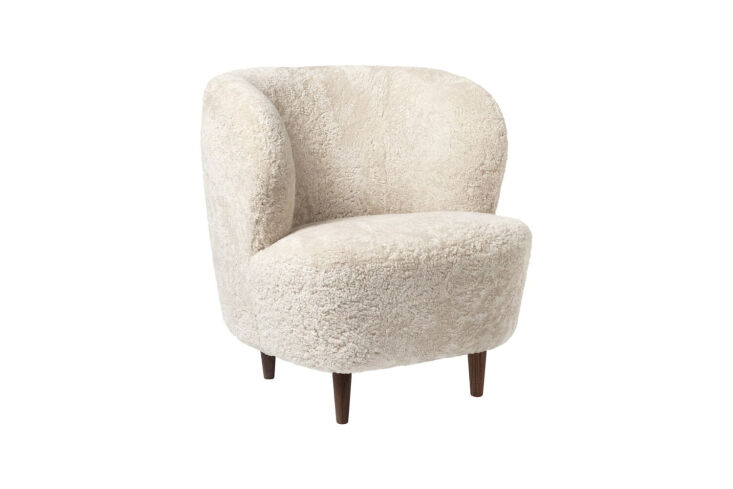
Moving into a more contemporary interpretation of the sheepskin trend, the Stay Lounge Chair by Space Copenhagen offers a continuous, sculptural stroke. It lacks the visible wooden frames of its mid-century predecessors, opting instead for a voluminous, fully upholstered look that feels grounded and modern.
- Designer/Year: Space Copenhagen (Contemporary)
- Key Feature: A seamless, monolithic shape that encourages "staying" put.
- Price Tag: ~$4,999
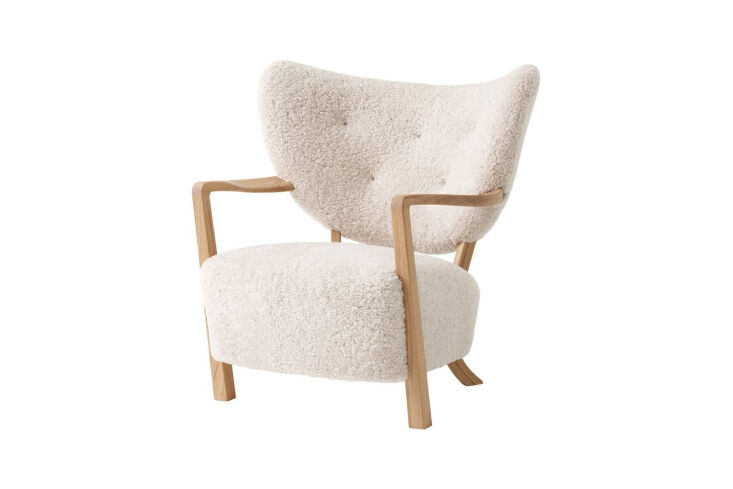
8. The Wulff ATD2 Lounge Chair by &Tradition
Drawing heavy inspiration from 1930s architectural silhouettes, the Wulff ATD2 is a commanding presence. Its backrest is remarkably high and curved, supported by solid oak or walnut legs that showcase exquisite joinery. It’s a chair that demands a place by a fireplace or in a formal library.
- Designer/Year: Inspired by 1930s designs (Reissued 2021)
- Key Feature: Grand, architectural back and flared armrests.
- Price Tag: ~$9,440
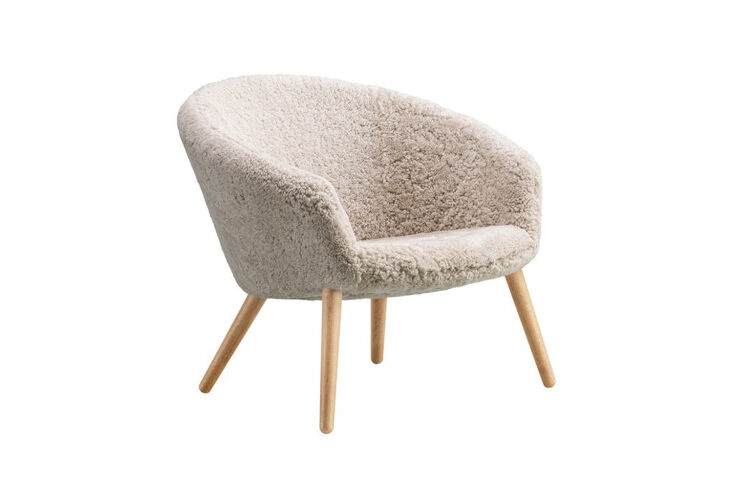
9. The Ditzel Lounge Chair by Fredericia Furniture
Nanna Ditzel was one of the few women to rise to prominence in the mid-century Danish design scene. Her 1953 lounge chair is a testament to her eye for proportion. The chair features a spacious, rounded seat that feels much larger than its footprint suggests, offering an elevated sense of comfort without looking bulky.
- Designer/Year: Nanna & Jørgen Ditzel (1953)
- Key Feature: Fluid, circular backrest and spacious seating area.
- Price Tag: ~$2,765
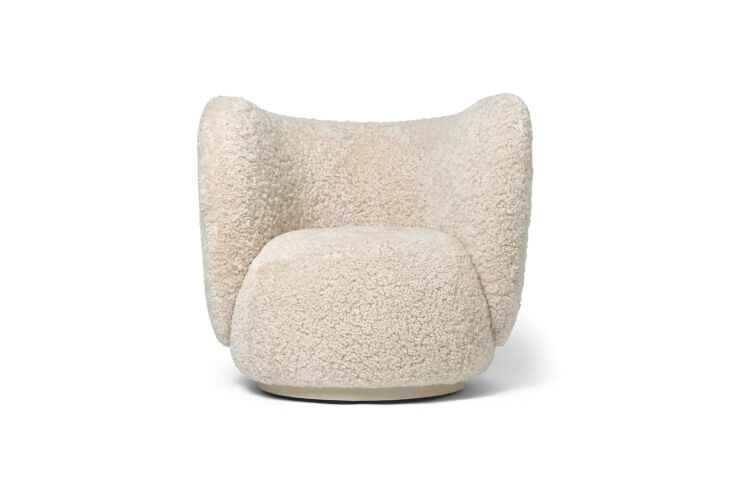
10. The Rico Lounge Chair by Ferm Living
The Rico chair is the epitome of "soft minimalism." It takes the classic fluffy sheepskin texture and applies it to a modern, volumetric curve. It is less about mid-century nostalgia and more about creating a soft, curved statement in a contemporary apartment.
- Designer/Year: Ferm Living (Contemporary)
- Key Feature: Volumetric, rounded curves and a hidden base.
- Price Tag: ~$6,645
Comparison of Iconic Sheepskin Chairs
| Chair Name | Brand | Designer | Est. Price |
|---|---|---|---|
| Little Petra | &Tradition | Viggo Boesen | $7,650 |
| The Tired Man | By Lassen | Flemming Lassen | $9,000+ |
| Lamino | Swedese | Yngve Ekström | $2,640 |
| Pelican Chair | House of Finn Juhl | Finn Juhl | $8,200 |
| Knitting Chair | Audo Copenhagen | Ib Kofod-Larsen | $6,170 |
| Clam Chair | Various (Arctander) | Philip Arctander | $5,500+ |
| Stay Chair | GUBI | Space Copenhagen | $4,999 |
| Wulff ATD2 | &Tradition | Heritage Inspired | $9,440 |
| Ditzel Chair | Fredericia | Nanna Ditzel | $2,765 |
| Rico Chair | Ferm Living | Ferm Living | $6,645 |
Investment Guide: Navigating Prices and Authenticity
When shopping for these pieces, you will likely encounter a wide range of prices. As our analysis shows, authentic premium sheepskin chairs currently range from $2,640 to $9,440. The average investment for a heritage piece is approximately $5,600.
While "inspired" replicas exist for a fraction of the cost, they rarely capture the soul of the original. Authentic reissues are produced by the original manufacturers (like &Tradition or House of Finn Juhl) who hold the rights to the designer’s drawings. They use the correct wood species, joinery techniques, and high-grade Australian or Scandinavian sheepskin. From a styling perspective, an authentic piece holds its value—and often appreciates—whereas a replica is a depreciating asset.
Stylist’s Tip: Always look for the manufacturer’s mark or a certificate of authenticity. In the world of high-end design, the pedigree of the piece is just as important as its comfort.
How to Style Sheepskin in Modern Interiors
Sheepskin is a powerful textural tool, but it requires a careful hand to avoid making a room feel like a "mountain lodge." Here is how I recommend styling these icons:
- The Rule of Moderation: A sheepskin lounge chair should be the star of the show. If you have a Little Petra in "Moonlight" sheepskin, avoid adding a sheepskin rug or too many fluffy pillows. Let the chair’s silhouette breathe against a smoother surface, like a flat-weave wool rug or a polished concrete floor.
- Natural Palettes: Most iconic designs are best served in natural, undyed tones—creams, off-whites, or soft greys. These tones highlight the natural variation in the wool and allow the wooden legs (oak, walnut, or beech) to provide a warm contrast.
- Create a Sanctuary: Sheepskin chairs are perfect for "dead corners." Place a Lamino or a Knitting chair next to a floor lamp and a small side table to instantly transform an unused space into a high-end reading retreat.
FAQ
Are sheepskin chairs difficult to maintain? Not as much as you might think. Natural sheepskin contains lanolin, which makes it somewhat dirt-resistant. Regular shaking to remove dust and the occasional gentle brushing with a wire wool brush will keep the fibers "lofty." For stains, professional cleaning is recommended to preserve the hide.
Why are some sheepskin chairs so much more expensive than others? Price is driven by three factors: the rarity of the design rights, the quality of the wood craftsmanship, and the grade of the sheepskin. A chair like the Wulff ATD2 uses massive amounts of premium long-haired sheepskin and solid hardwood, contributing to its $9,000+ price tag.
Is sheepskin ethical for furniture? Most reputable Scandinavian brands (like those listed above) source their sheepskin as a byproduct of the meat industry, ensuring that the hide is used rather than wasted. Many also adhere to strict animal welfare standards, such as those found in New Zealand or Australia.