We have all been there: standing in front of an overstuffed pantry, shifting stacks of half-opened pasta boxes and leaning towers of canned beans, only to realize we just bought a third jar of paprika because we couldn’t find the first two. It is a universal kitchen pain point that turns a simple meal prep into a frustrating archaeological dig. As we look ahead to the home trends of 2026, the philosophy of “Clarity & Glow” is taking center stage. This isn't just about making things look pretty for a photo; it’s about creating a system where the "inventory" of your life is visible, accessible, and sustainable. An organized pantry isn't a luxury—it’s a functional tool that reduces decision fatigue and saves money.
The secret to a professional-grade pantry lies in two core principles: visibility and volume optimization. The most effective way to organize a pantry is to use clear airtight containers for dry goods, which allows for instant inventory checks and prevents the accidental purchase of duplicate items. Furthermore, to maximize vertical space—especially in small kitchen pantry solutions—experts recommend using shelf risers to create tiered storage and over-the-door racks to utilize otherwise wasted surfaces. By shifting our perspective from "storage" to "systematization," we can transform the kitchen from a place of chaos into a sanctuary of calm.
1. Decant into Clear Airtight Containers
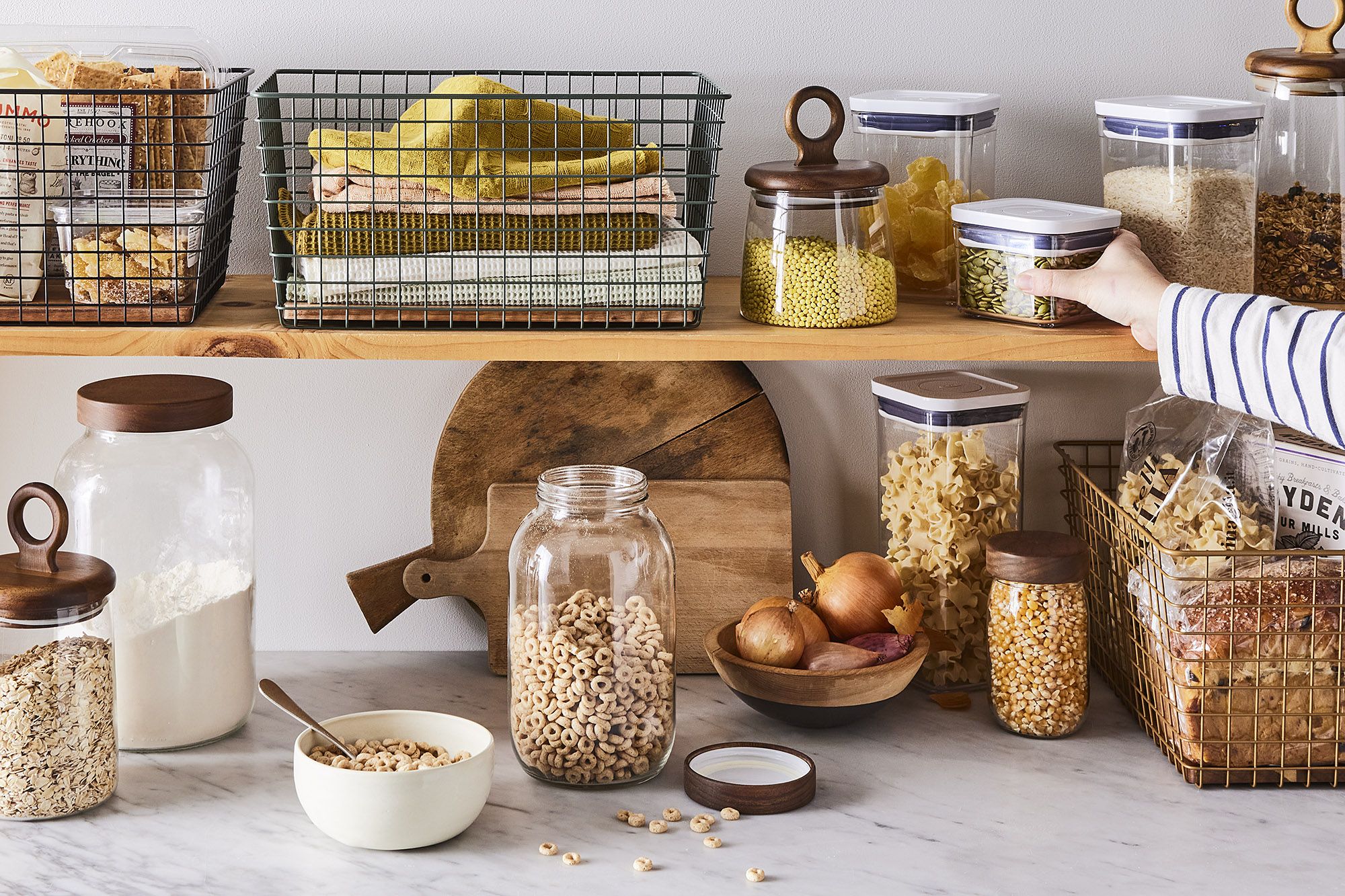
Decanting—the process of moving food from its original packaging into uniform containers—is the cornerstone of professional pantry organizing tips. While it might feel like an extra step after a grocery haul, the benefits are immediate. Original packaging is designed for marketing, not for space efficiency. Boxes are often half-empty, and bags are prone to spills and pests.
When you switch to clear food storage containers, you gain "at-a-glance" inventory management. Statistics show that implementing a clear container system can reduce household food waste by an estimated 25% simply by increasing the visibility of stock levels and expiration dates. No more guessing if you have enough flour for Sunday pancakes; the evidence is right there in front of you.
Sophie’s Pro Tip: When choosing containers, opt for square or rectangular shapes rather than rounds. Round containers create "dead space" between them, whereas square containers sit flush against each other, maximizing every inch of your shelf's footprint.
2. Maximize Verticality with Shelf Risers
One of the biggest mistakes I see in home pantries is the "flat-earth" approach—placing everything directly on the shelf and leaving the top 10 inches of air completely empty. In a small kitchen pantry solution, that empty air is a wasted opportunity.
Utilizing vertical storage solutions like shelf risers and tiered organizers can increase the usable storage capacity of a standard kitchen pantry by up to 40%. Shelf risers allow you to stack items without the risk of a "pantry-slide" when you try to pull something from the bottom. Think of it as adding a second story to your shelves. This is particularly effective for canned goods and spices, where "stadium seating" style risers allow you to see the labels of the back row just as clearly as the front.
3. Implement the 'Zoning' System
A professional pantry system should be categorized into 'zones' based on how you actually live and cook. Without zones, items wander, and the system collapses within a week. I recommend mapping your pantry based on usage frequency:
- The Prime Zone (Eye Level): Daily essentials like coffee, tea, breakfast cereals, and the kids' school snacks.
- The Cooking Zone (Waist Level): Grains, pasta, oils, and frequently used spices.
- The Baking Zone (Lower or Higher): Flours, sugars, and specialized baking tools that you might only use once a week.
- The Backstock Zone (Top/Bottom): Bulk items, paper towels, or vinegar refills.
By grouping items (e.g., all "Snacks" together in one bin), every family member knows exactly where to find what they need and, more importantly, where to put it back.
4. Master the Art of Labeling (Beyond Aesthetics)
While a beautiful cursive label looks great, the true power of labeling is information management. In my own kitchen, I’ve moved beyond just labeling the name of the product. The most important piece of information isn't "Oats"—it's "Expires: Oct 2026."
Use a chalk marker on the back of your glass jars to note expiration dates and cooking instructions (like the water-to-rice ratio). This ensures food safety and maintains the "system" even when someone else is doing the cooking. If you prefer a more flexible approach, simple masking tape and a Sharpie work wonders for items that rotate frequently.
Comparison: Choosing Your Storage Material
Before you invest in a full set of containers, consider which material best suits your lifestyle and budget.
| Feature | Glass Containers | Plastic (BPA-Free) |
|---|---|---|
| Durability | Fragile but long-lasting | Impact-resistant; great for kids |
| Stain Resistance | Excellent (won't absorb odors) | Can stain with tomato/oily foods |
| Weight | Heavy | Lightweight and stackable |
| Price Point | Higher investment | Budget-friendly |
| Best For | Grains, baking staples, seeds | Snacks, pasta, kids' cereals |
5. Utilize Over-the-Door Storage
If you are struggling with a reach-in pantry, the back of the door is your secret weapon. Over-the-door racks are one of the most underrated pantry storage ideas 2026. They utilize otherwise wasted surfaces to house lightweight items that usually clutter up shelves.
I find these racks perfect for "skinny" items: boxes of wraps (foil, parchment paper), spice jars, or single-serving snack bags. By moving these to the door, you free up the deep shelves for larger items like Dutch ovens or bulk bags of rice. It’s about clearing the visual clutter from the main stage.
6. The Power of Turntables (Lazy Susans)
Deep corner cabinets are where condiments go to die. We’ve all found a jar of honey from 2019 hidden in the dark recesses of a corner shelf. The solution is the "Lazy Susan" or turntable.
By placing oils, vinegars, and jars on a turntable, you bring the back of the shelf to the front with a simple flick of the wrist. Look for turntables with a "lip" or rim; this prevents taller bottles from flying off when the kids spin it a little too enthusiastically.
7. Vertical File Storage for Cookware and Lids
Standard stacking is the enemy of efficiency. When you stack baking sheets or cutting boards horizontally, you have to lift five heavy items to get to the one at the bottom. Instead, borrow a trick from the office: file them vertically.
Use "tension rods" or dedicated wire dividers to stand your cutting boards, muffin tins, and baking sheets on their sides. This allows you to pull one out like a book from a library shelf, leaving the rest undisturbed. This "vertical filing" method is a game-changer for maintaining a calm, functional kitchen environment.
8. Add Hooks to Interior Cabinet Walls
Don’t ignore the side walls of your pantry or the inside of cabinet doors. Adhesive hooks are a low-cost, high-impact way to free up shelf space. I use them for:
- Measuring cups and spoons (hang them right next to the baking zone).
- Oven mitts and aprons.
- The "clutter" items like reusable grocery bags.
Sophie’s Pro Tip: To ensure your adhesive hooks actually stay put, always clean the surface with rubbing alcohol first. This removes any kitchen grease that might cause the adhesive to fail over time.
9. Install Wheeled Bins for Floor Storage
The floor of the pantry often becomes a "catch-all" for heavy bags of dog food, 20-lb sacks of potatoes, or bulk flour. Dragging these across the floor is bad for your back and your flooring.
The solution is to use wheeled bins or "rolling dollies." Being able to slide a heavy bin out from under the bottom shelf makes cleaning easier and ensures that you actually use the items stored at the very bottom. It turns a "dead zone" into a high-functioning storage area.
10. Specialized Racks for Canned Goods
Stacking cans on top of each other is a recipe for a domino-effect disaster. To achieve a "professional" look, consider gravity-fed can racks. These work on the FIFO (First-In, First-Out) principle: you load new cans at the top/back, and the oldest cans roll to the front for use. This is a crucial strategy for managing expiration dates and ensuring your "emergency stash" of beans and soups stays fresh.
11. Elevate with Smart Lighting and Textures
The 2026 pantry trend is all about moving away from the "utility closet" look and toward a "boutique" aesthetic. Lighting is the most effective way to achieve this. Battery-operated, motion-sensor LED strips under each shelf can transform a dark pantry into a high-end display.
Furthermore, don't be afraid to mix textures. While clear containers are great for visibility, mixing in wicker baskets for potatoes or wire bins for bagged snacks adds warmth and character. A functional home doesn't have to feel clinical; it should feel like a curated part of your lifestyle.
The Pantry Purge Checklist
Before you start buying containers, you must clear the decks. Follow this simple process:
- [ ] Empty Everything: Take every single item out. A clean slate is non-negotiable.
- [ ] The Expiration Audit: Toss anything past its prime. If you haven't used that exotic spice in two years, you won't use it today.
- [ ] Group by Category: Place "like with like" on your counter to see how much space each zone will need.
- [ ] Measure Twice: Measure your shelf height, width, and depth before ordering bins.
- [ ] Wipe Down: Clean the shelves while they are empty—it’s the only time you’ll have the chance!
FAQ
Q: Is decanting really worth the time? A: Absolutely. Beyond the visual appeal, it creates an airtight seal that keeps food fresh longer and prevents pests. Most importantly, it allows for instant inventory tracking, which prevents overbuying and saves money in the long run.
Q: How do I organize a pantry on a tight budget? A: You don’t need expensive sets. Repurpose glass jars from pasta sauce or pickles (just soak off the labels). Use simple cardboard boxes covered in contact paper as bins. The "system" of zoning and labeling is more important than the price of the containers.
Q: What is the best way to handle "backstock" (extra items)? A: Designate a specific "overstock" bin on the highest or lowest shelf. When your primary clear container is empty, refill it from the backstock bin. If the backstock bin is also empty, add the item to your grocery list.
Creating a professional pantry is not about achieving perfection; it’s about creating a system that works for you. By focusing on visibility, utilizing vertical space, and implementing a logical zoning system, you can turn your kitchen into a streamlined, stress-free hub of the home.
Ready to start your transformation? Take it one shelf at a time, and remember: if you can see it, you can manage it.