There is a profound, almost primal satisfaction in bringing the elements of the deep earth into the controlled environment of a modern home. As an editor focusing on the intersection of high-end styling and functional living, I’ve watched the "quiet luxury" trend evolve from soft linens into something more tectonic—something that carries the weight of history and the grit of the natural world. Foscarini’s latest foray into volcanic stone lighting is the zenith of this movement. These are not your parents’ kitschy lava lamps; they are architectural artifacts, born from the molten heart of Italy and refined through the lens of cutting-edge sustainable engineering.
Designed by the acclaimed father-and-son duo Alberto and Francesco Meda in collaboration with the Naples-based volcanic stone specialist Ranieri, this collection represents a paradigm shift in how we perceive stone in the home. Traditionally, volcanic rock is a heavy, cumbersome material relegated to garden paths or thick kitchen countertops. Through a proprietary molding process, however, the Medas have transformed mineral waste into three sculptural pendants that possess the gravity of a mountain but the lightness of contemporary art.
The Eolie Collection: Alicudi, Filicudi, and Panarea
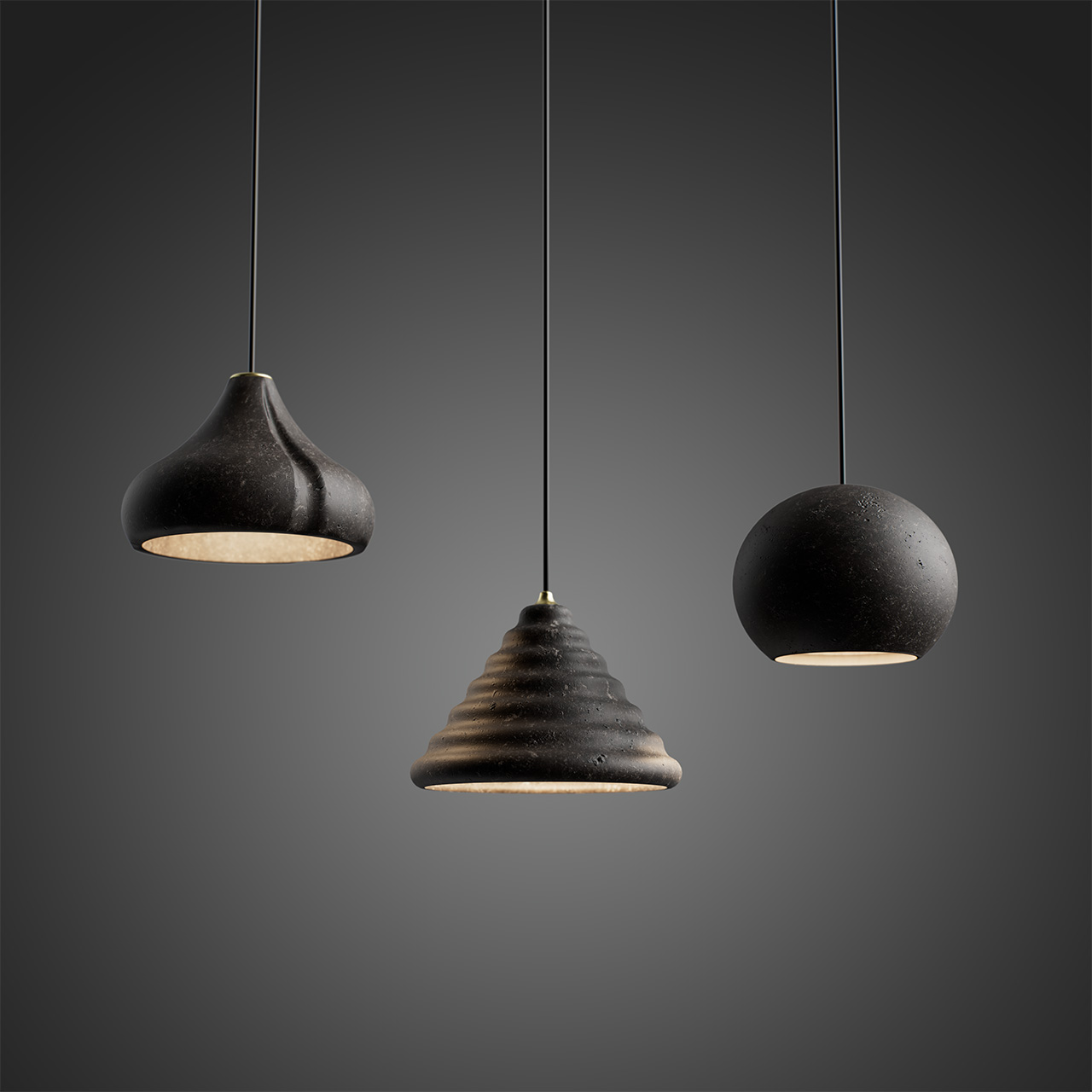
The collection is aptly named after the Aeolian Islands (Isole Eolie), a volcanic archipelago in the Tyrrhenian Sea known for its rugged landscapes and deep connection to the forge of Vulcan. Each of the three lamps in the series—Alicudi, Filicudi, and Panarea—captures a different facet of geometric purity, grounded by the matte-black, porous texture of the stone.
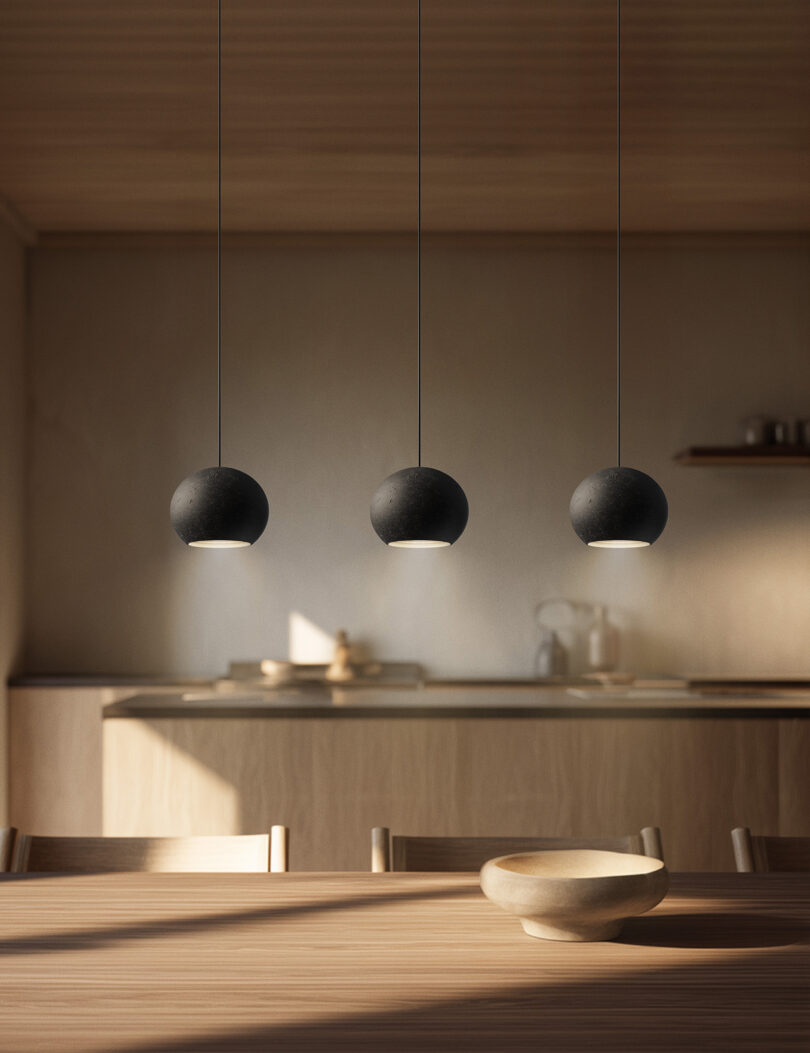
- Alicudi: A perfect sphere that mimics a celestial body. Its simplicity allows the texture of the recycled lava stone to take center stage, creating a soft, diffused presence in a room.
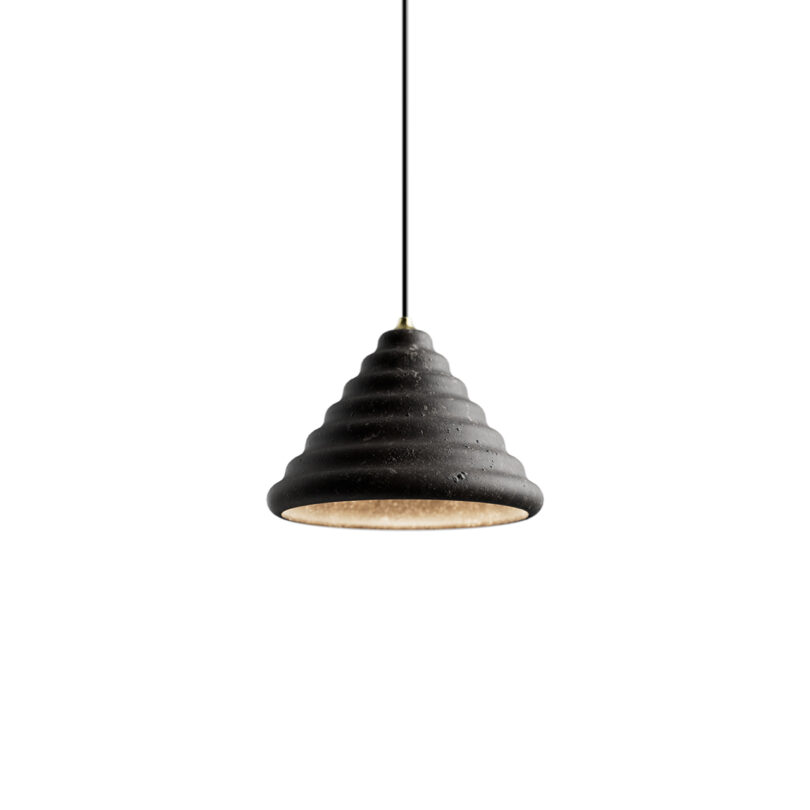
- Filicudi: Defined by its ribbed cone silhouette, this piece feels the most "engineered." The vertical grooves catch the light, emphasizing the interplay between shadow and mineral grain.
- Panarea: A bulbous, more organic form that feels as though it were pulled directly from a cooled lava flow. It provides a grounded, stable aesthetic that works beautifully in minimalist settings.
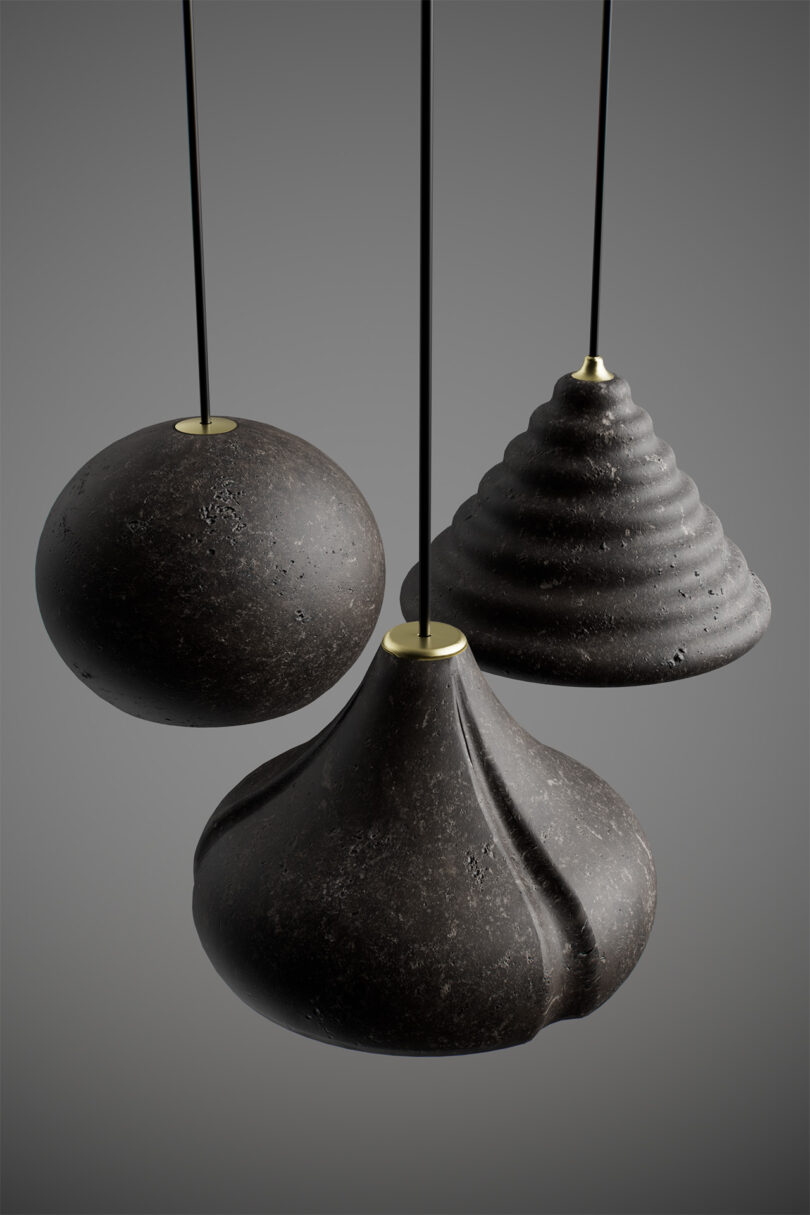
These lamps possess a dual identity. By day, they are matte-black sculptures—opaque, silent, and imposing. By night, they transform. Because the stone is dense, the light is channeled with absolute precision downward, creating a concentrated "pool" of illumination that highlights the area below while leaving the stone’s exterior in a dramatic, moody silhouette. It is lighting as "sculptural jewelry"—a phrase we are seeing more frequently as we move toward 2026 interior trends.
Material Innovation: The Science of Recycled Lava Stone
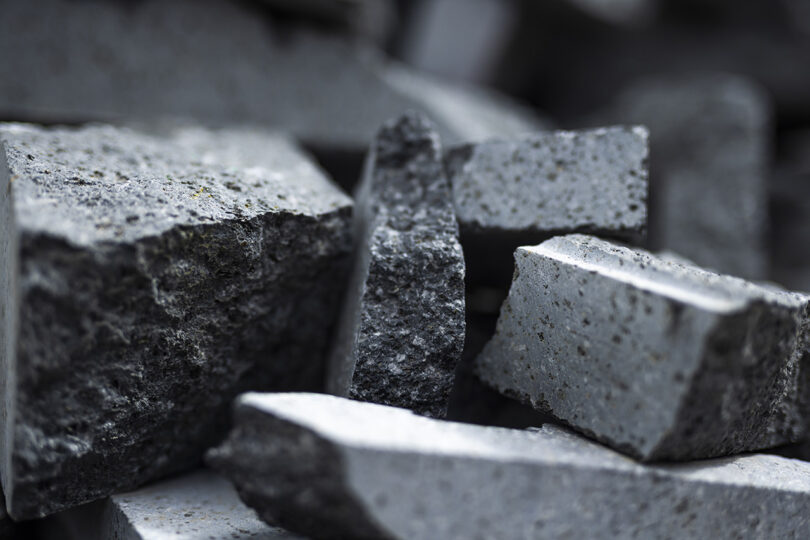
The true brilliance of the Foscarini volcanic lamp series lies in its materiality. These fixtures are crafted from a proprietary material composed of recycled Italian lava stone and a natural binder. This is not simply a piece of rock carved out of a quarry; it is a sophisticated composite that solves the age-old problem of stone’s weight.
Working with Ranieri, the Medas developed a technique that allows the material to be poured into molds rather than CNC-machined from solid blocks. This innovation yields significant structural advantages. The resulting material is approximately 30% lighter than natural volcanic stone, which is a game-changer for ceiling-mounted pendant lights. Furthermore, the molding process enables remarkably thin profiles. While traditional carved stone usually requires a thickness of 15–20 millimeters to remain structurally sound, Foscarini’s volcanic lights achieve a wall thickness of just 8–10 millimeters.
| Feature | Traditional Carved Stone | Foscarini Recycled Lava Composite |
|---|---|---|
| Wall Thickness | 15–20 mm | 8–10 mm |
| Relative Weight | 100% (Baseline) | ~70% (30% Lighter) |
| Material Origin | Quarried blocks | Recycled industrial scrap |
| Surface Finish | Natural/Porous | Refined/Textural |
Pro Tip: When installing these pendants, consider the ceiling's load-bearing capacity. Even though they are 30% lighter than solid stone, they still carry more physical presence than plastic or glass. Use reinforced anchors to ensure a flush, secure fit against the ceiling rose.
Sustainability: Turning Industrial Waste into Art
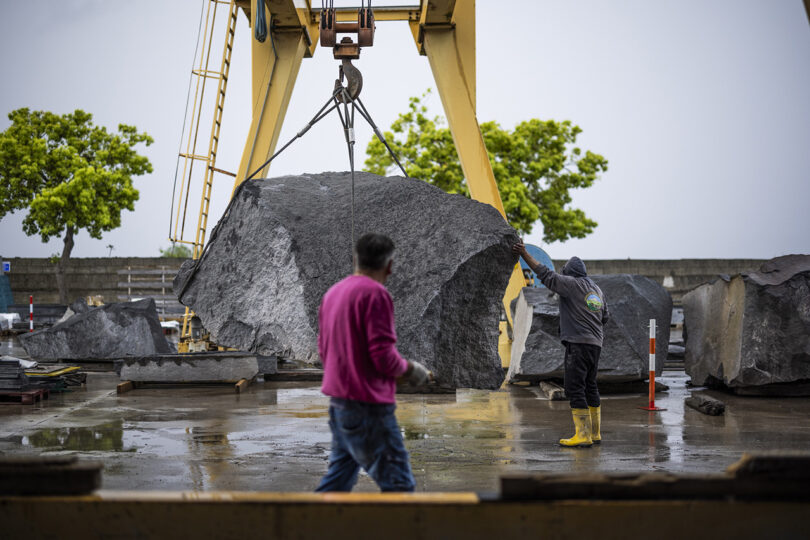
In an era where sustainability is often a buzzword, Foscarini’s approach is refreshing. These sustainable sculptural pendant lights are the result of a "waste-to-resource" philosophy. The production process utilizes industrial scrap material—the dust and chips leftover from traditional lava stone cutting—that would otherwise be discarded as mineral waste.
By grinding this surplus and mixing it with a natural binder, Foscarini creates a new life cycle for the material. It represents an "Industrial-Artisanal" balance: the efficiency of modern molding combined with the soul of the earth. Because the cooling and setting process is influenced by ambient temperature and the manual handling of the stone mixture, no two lamps are identical. Each piece bears tiny variations in its "craters" and texture, making it a unique piece of geological history for your dining room.
Styling the 2026 Trend: Sculptural and Human-Centric
As we look toward 2026, the trend landscape is shifting away from the cold perfection of marble and toward more "human-centric" and "honest" materials. Volcanic stone, with its warmth, depth, and tactile porosity, is the perfect candidate for this transition. We are seeing a move toward "Invisible Architectural Integration"—where the light fixture feels like part of the building's own skeleton rather than a decorative afterthought.
In Residential Spaces
In a kitchen or dining setting, I recommend grouping the Eolie series in odd numbers. The matte-black finish provides a stunning contrast to natural oak or walnut cabinetry. Because the light is directed downward, they are ideal for kitchen islands where you need functional task lighting but want to maintain a sophisticated, low-glare atmosphere in the rest of the open-plan space.
In Public & Commercial Environments
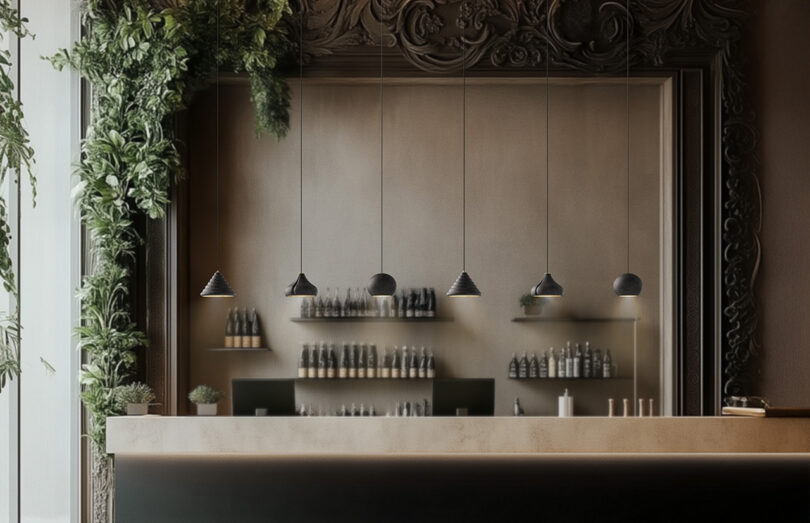
For bars, hotel lobbies, or high-end boutiques, these lights function as "lighting as art." They command attention not through bright colors, but through their sheer material gravity. When hung at varying heights, the trio of Alicudi, Filicudi, and Panarea creates a rhythmic, architectural installation that feels permanent and ancient, yet undeniably modern.
The Shift from Waste to Narrative Resource
Foscarini has managed to do something rare in the world of luxury design: they have taken the most primitive material imaginable—molten rock—and used high-tech innovation to make it accessible for the modern interior. The collaboration between Alberto and Francesco Meda and the stone-masters at Ranieri is a testament to the power of circular design.
By choosing these modern volcanic rock designs, you aren't just buying a lamp; you are participating in a narrative that stretches from the Sicilian coastline to the pinnacle of Italian industrial design. In a world of disposable interiors, a lamp made of volcanic earth is a statement of permanence.
FAQ
Are the Foscarini volcanic lights heavy? While they have the appearance of heavy solid stone, they are actually made from a recycled lava stone composite that is 30% lighter than solid rock. This makes them significantly easier to install as pendant lights than traditional stone fixtures.
How do I clean the volcanic stone surface? Because the material is naturally porous, it is best to use a dry, soft-bristled brush to remove dust. Avoid using harsh chemical cleaners or excessive water, which can settle into the "craters" of the stone's texture.
Is the light output sufficient for a whole room? These lamps are designed as directional pendants. They provide excellent downward task lighting but do not emit light from the sides. To light an entire room, they should be paired with ambient lighting like recessed LEDs or floor lamps to balance the shadows.