The public square is undergoing a quiet revolution. For decades, the design of commercial and civic spaces was dictated by a rigid choice: either cold, utilitarian rows of seating or bulky, isolating privacy pods. However, as we navigate the complexities of a post-pandemic world, our collective priorities have shifted toward a more nuanced definition of "well-being." We no longer just seek a place to sit; we seek environments that foster emotional security, facilitate spontaneous connection, and provide the physical freedom to move. Enter the Tate Modular Seating System by Here Now—a design intervention that translates the serenity of outdoor urban parks into the high-stakes interiors of modern offices, airports, and healthcare facilities.
Tate enhances well-being by masterfully balancing the paradox of public life: the need for social connection and the necessity of personal comfort. By utilizing lower backrests that maintain clear sightlines, the system ensures a sense of environmental security, while ergonomic swiveling pads encourage the micro-movements our bodies crave. This isn't just furniture; it is a catalyst for "moments of delight" in otherwise stressful environments.
Design Inspiration: Bringing the High Line Indoors
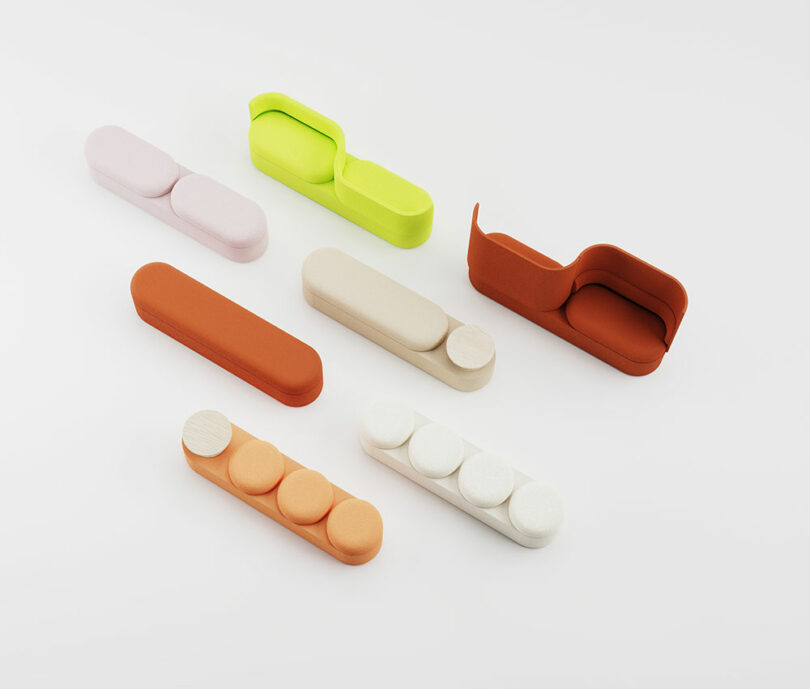
The genesis of Tate lies in the philosophy of Justin Champaign, founder of Here Now. Champaign observed a specific human behavior most evident on New York City’s High Line: "parallel play." On the High Line’s 230-plus benches, people sit near one another, sharing a view or a atmosphere, yet remaining entirely within their own personal bubble. They are alone, together.
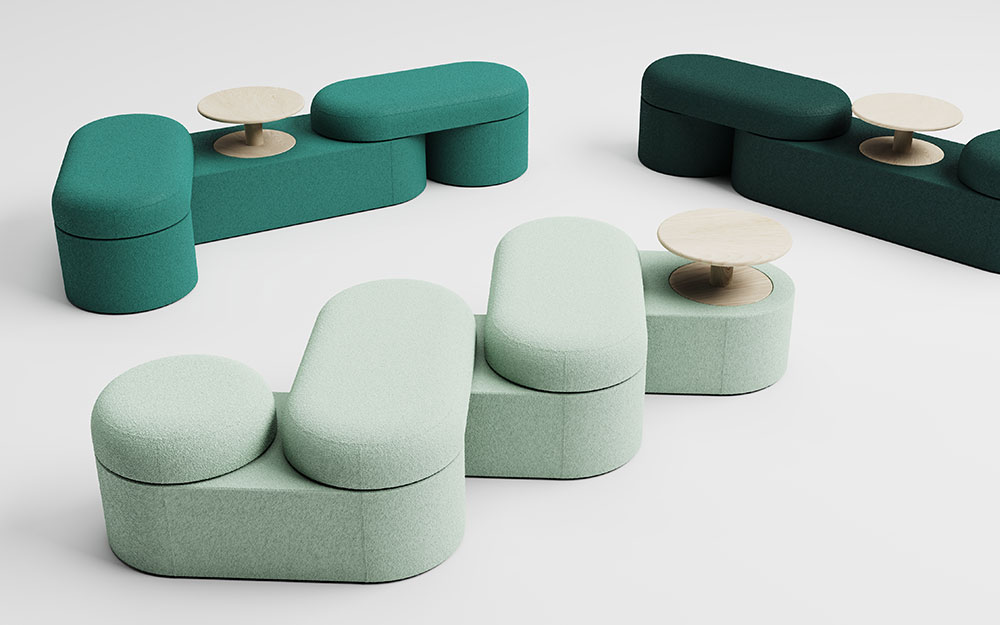
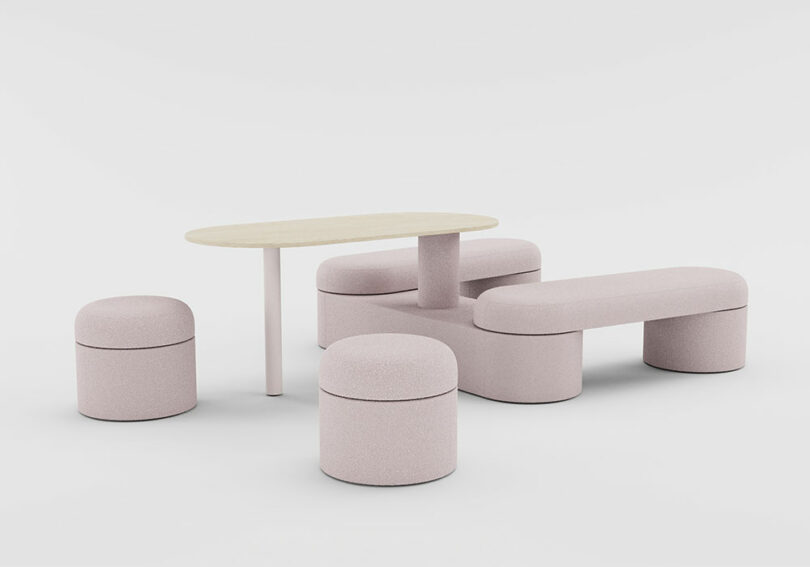
Tate was engineered to recreate this urban magic. In a traditional lounge setting, users often feel trapped—either too close to a stranger or too isolated behind a high-walled pod. Tate breaks this binary. Its modular geometry allows for expansive, landscape-like arrangements where users can choose their level of engagement.
"The goal was to create a seating landscape that feels as organic and unscripted as a public park," says Champaign. "We wanted to move away from the 'prescriptive' nature of contract furniture and toward something that empowers the user."
The Technical Edge: A 'Kit of Parts' for Designers
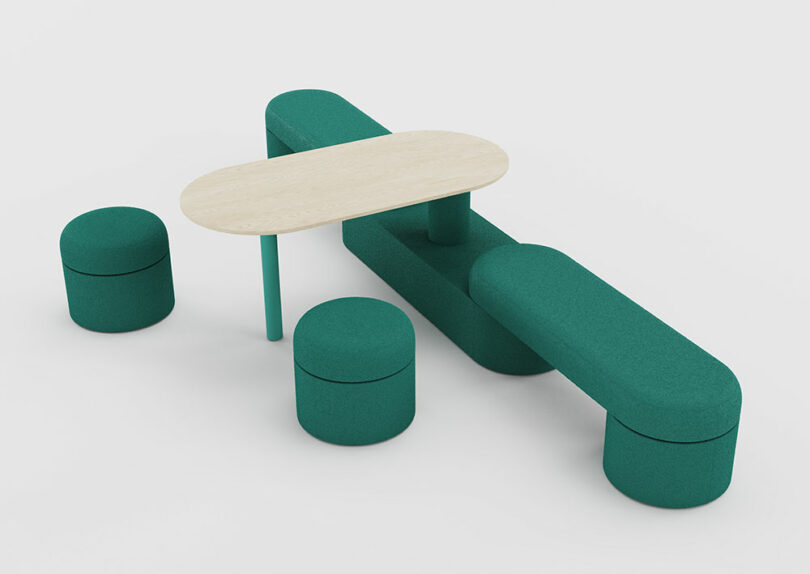
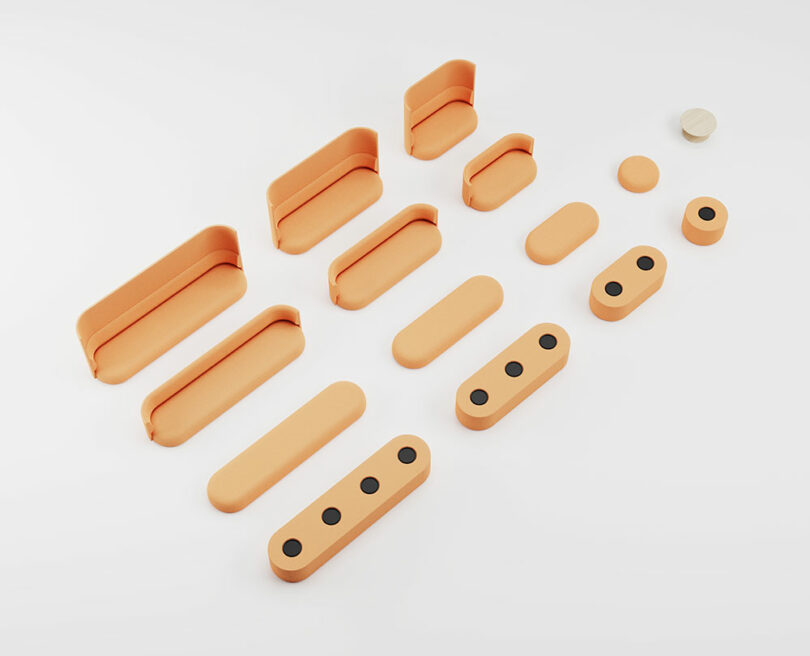
From a facility management and design perspective, the brilliance of Tate lies in its "kit of parts" methodology. Most modular systems are deceptively complex, requiring specialized tools and hours of labor to reconfigure. Tate disrupts this with a patent-pending pivot connector. This tool-free system allows for instant adjustments, enabling the furniture to "flow" around columns, snake through narrow corridors, or form circular hubs for collaborative brainstorming.
The impact on operational efficiency is significant. By utilizing this tool-free connector, the Tate system reduces assembly and reconfiguration time by approximately 65% compared to standard modular commercial lounge furniture. This flexibility ensures that a space can evolve alongside its users without requiring a secondary investment in labor or new components.
| Component | Technical Specification | Benefit |
|---|---|---|
| Connector | Patent-pending pivot | Tool-free, 360-degree flexibility |
| Frame | Lightweight reinforced plastic | Easy to move, 100% recyclable |
| Seat Pads | Swivel-mounted ergonomic foam | Encourages movement and posture change |
| Modularity | "Kit of Parts" | Infinite configurations with minimal inventory |
Emotional Security through Ergonomic Visibility
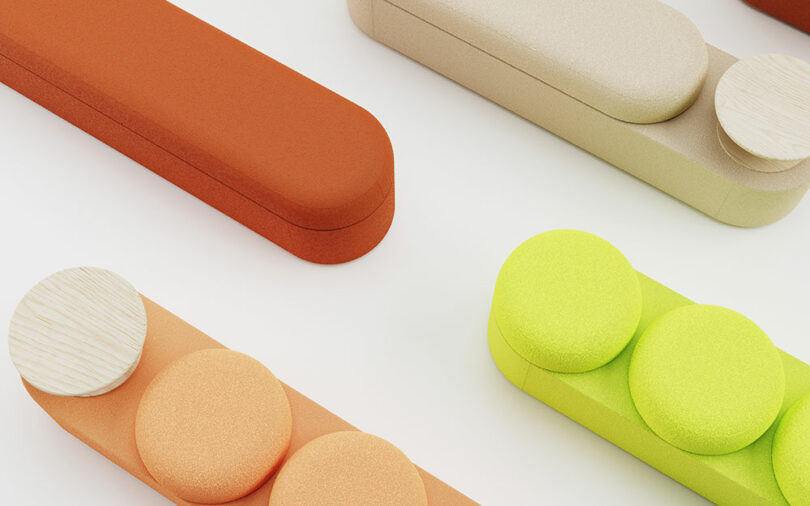
One of the most profound psychological stressors in public spaces is the loss of peripheral awareness. While the "privacy pod" trend of the 2010s offered acoustic isolation, it often created a sense of vulnerability—the "cubicle claustrophobia" effect. Tate rejects this by intentionally lowering the backrest height.
The Tate seating system's low-profile backrests stop at shoulder height, a design choice that improves peripheral visibility by approximately 40% compared to traditional high-back pods. This visibility is a cornerstone of neuro-inclusive design; it allows the brain to subconsciously map the environment, reducing the "startle response" and lowering cortisol levels.
Furthermore, the integration of swiveling seat pads acknowledges that human comfort is dynamic, not static. By allowing users to pivot their orientation without moving the entire unit, Tate supports varied postures—from focused solo work to casual side-by-side conversation. This subtle empowerment of the user is what transforms a "waiting room" into a "wellness space."
Sustainability and the Circular Life Cycle
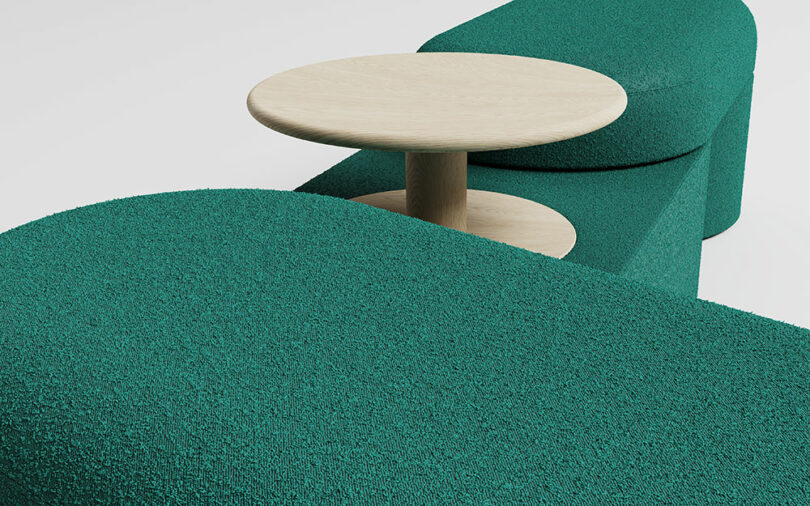
In the era of the "Green New Deal" for interiors, modularity is the ultimate form of sustainability. The Tate system is built on a foundation of circularity. Rather than a permanent, bonded construction that ends up in a landfill, Tate is designed for total disassembly.
- Lightweight Frames: The internal structure is crafted from high-strength plastic frames that are significantly lighter than traditional wood or metal, reducing the carbon footprint of shipping.
- Recyclable Materials: Both the plastic frames and the high-resiliency foam are 100% recyclable at the end of their lifecycle.
- Component Replacement: Because it is a "kit of parts," a single damaged module or a stained seat pad can be replaced individually, extending the overall lifespan of the installation by years.
This approach ensures a high return on investment (ROI). Instead of replacing an entire lounge suite when design trends change or wear-and-tear occurs, designers can simply re-skin or reconfigure the existing Tate components to meet new needs.
2026 Commercial Trends: Where Tate Fits In
As we look toward 2026, commercial ergonomic furniture trends are moving away from purely "functional" aesthetics toward biophilic modular lounge design and neuro-inclusive baselines. Tate sits at the intersection of these movements. Its soft, organic curves mimic natural forms, while its ability to be customized through the Kvadrat textile program allows it to blend into high-end hospitality or sleek corporate environments.
The trend of "resimercial" design—merging residential comfort with commercial durability—is personified here. Tate offers the tactile warmth of a home sofa with the rigorous performance standards required for high-traffic public zones. It is a system designed not just for where we are now, but for how we will gather in the decade to come.
FAQ
How does the Tate system handle irregular floor plans? The patent-pending pivot connector allows the system to curve and bend at virtually any angle. This makes it ideal for "wrapping" around architectural columns or creating serpentine paths in organic, non-linear spaces.
Is the assembly truly "tool-free"? Yes. The pivot connectors are designed to lock into place manually, allowing a two-person team to assemble or reconfigure a 20-piece landscape in a fraction of the time required for traditional bolted modular furniture.
What upholstery options are available? Through Here Now’s partnership with premium textile providers like Kvadrat, Tate can be specified in hundreds of colors and textures, ranging from high-performance recycled polyesters to luxuriously soft wools, ensuring it meets both aesthetic and durability requirements.
Creating a Legacy of Calm
The true measure of a successful public space is how people feel within it after twenty minutes. Do they feel exposed? Trapped? Or do they feel supported and at ease? By prioritizing visibility, movement, and modular freedom, the Tate system provides a blueprint for the future of public well-being. It is a reminder that in our fast-paced, digital world, the most innovative thing we can do is create a space that allows us to simply be.