Quick Facts
| Feature | Details |
|---|---|
| Designer | Maye Ruiz, Founder of Maye Estudio |
| Location | San Miguel de Allende, Mexico |
| Signature Style | "Vaquero Barroco" (Cowboy Baroque) |
| Major Recognition | AD100 Latin America (2023) |
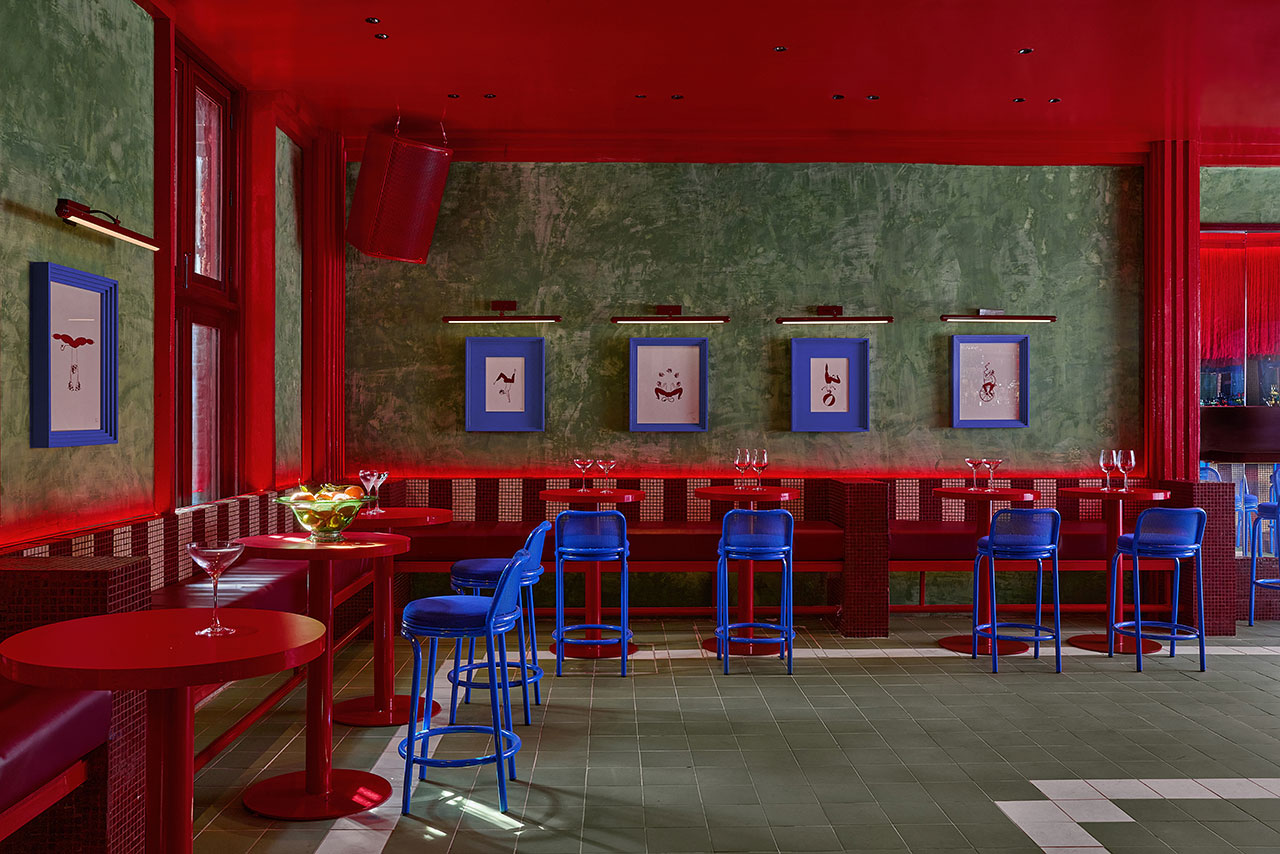
| Notable Projects | Bekeb, Carmín, Casa Coa |
| Inspiration Sources | Hieronymus Bosch, Italian Horror, her dog Quesadilla |
In a design world often dominated by the muted "greige" of minimalist trends, Maye Ruiz is a refreshing explosion of narrative and saturated pigment. Founded in 2021, her firm Maye Estudio has rapidly ascended to the pinnacle of Latin American design, proving that Mexico’s aesthetic soul is far more complex than just terracotta and white stucco. Ruiz is a visionary who doesn't just decorate rooms; she builds cinematic worlds. Best known for her signature "vaquero barroco" style, she masterfully blends the rugged utility of Mexican ranch life with the ornate, dramatic intensity of the Baroque period.
Within just three years of launching her studio in the historic heart of San Miguel de Allende, Ruiz was named one of the 100 most influential creatives in Latin America by Architectural Digest (AD100). Her work has graced the pages of Dezeen, Elle Decor, and Architectural Digest, signaling a shift toward a new "modern Mexican" identity—one that is unapologetically bold, high-contrast, and deeply rooted in personal history.
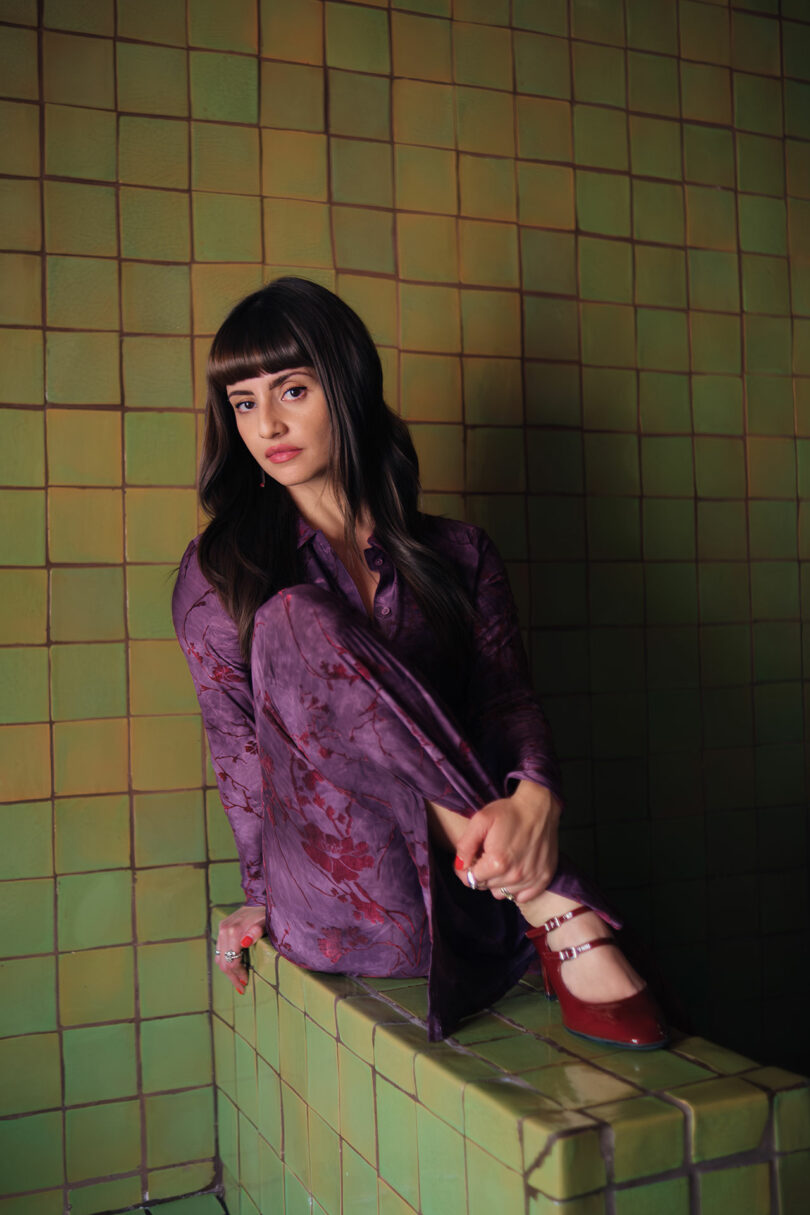
The Roots of Vocation: From Child’s Play to Masterful Design
Long before she was designing award-winning bars and residences, Maye Ruiz was a child who viewed furniture as building blocks for a broader story. Like many great designers, her vocation didn't arrive via a textbook; it started at home. She recalls the hours spent rearranging her grandmother’s furniture, a process that wasn't about "tidying up," but about reinventing the energy of a room. This early habit of inventing new uses for everyday objects became the bedrock of her current philosophy: Designing spaces as a narrative rather than a blank canvas.
Ruiz treats every project as a "hidden narrative." She doesn't ask what a room looks like; she asks what it feels like when the sun sets, or what secret the walls might whisper. This storytelling approach is what separates a Maye Ruiz interior from a standard luxury renovation. Whether it's a 1970s Italian horror-inspired nightclub or a private home inspired by Charles Dickens, there is always a pulse beneath the surface—a sense that you have stepped into the middle of a grand, vibrant story.
Five Pillars of Inspiration: What Fuels Maye Ruiz
What goes on inside the mind of a designer who refuses to be boring? For Ruiz, inspiration is a chaotic, beautiful mix of high art and domestic comfort.
1. The Dog (Quesadilla)
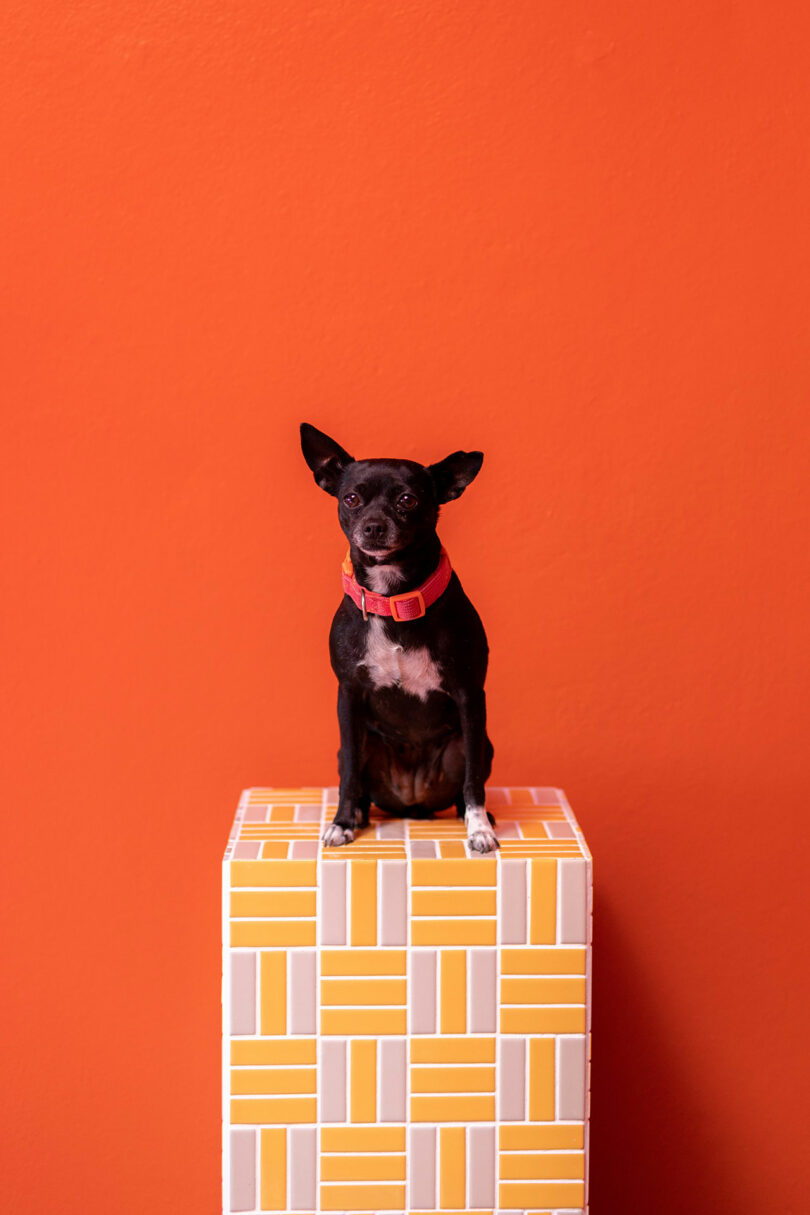
Creative genius can be exhausting. To keep herself grounded, Ruiz relies on her loyal companion, Quesadilla. Beyond being a source of emotional support, the dog acts as a "grounding anchor" in the high-stakes world of international design. Quesadilla represents the "lived-in" quality that Ruiz strives for in all her projects—no matter how high-concept a space is, it must remain a place where life (and pets) can happen.
2. The Art (Hieronymus Bosch)
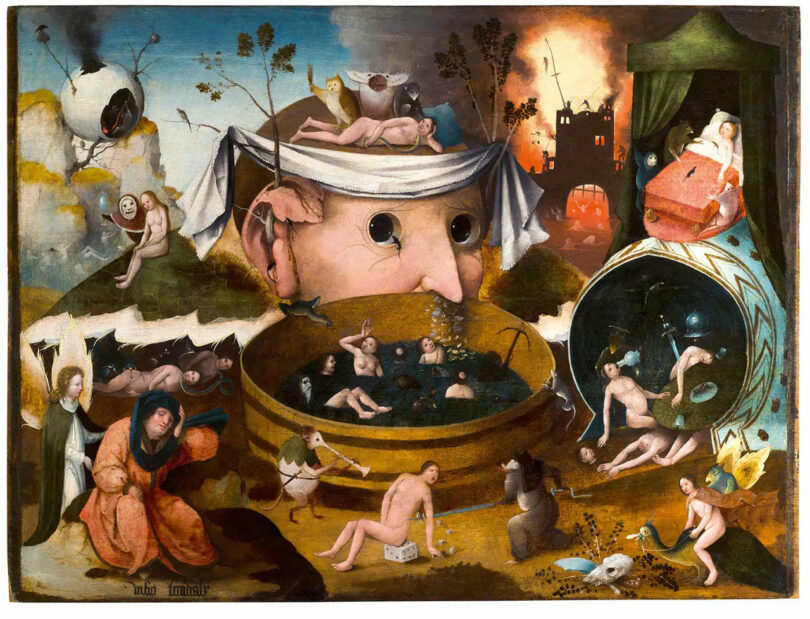
Ruiz’s fascination with the surreal and the intricate can be traced back to the Dutch master Hieronymus Bosch, particularly his work The Vision of Tondal. She is drawn to the layered symbolism and the "world within a world" quality of Bosch's paintings. This influence is visible in her preference for discovery-based design—spaces where the more you look, the more you find, from hidden textures to unexpected geometric alignments.
3. The Materials (Unexpected Finds)
While many designers source from exclusive high-end showrooms, Ruiz finds her magic in the non-traditional tile shops of Dolores Hidalgo. She explores local workshops and material yards with the curiosity of an archaeologist, finding beauty in the "humble" materials—terracotta, local stone, and traditional glazing—and then elevating them through sophisticated, high-fashion applications.
4. The Process (Sketches & Geometry)
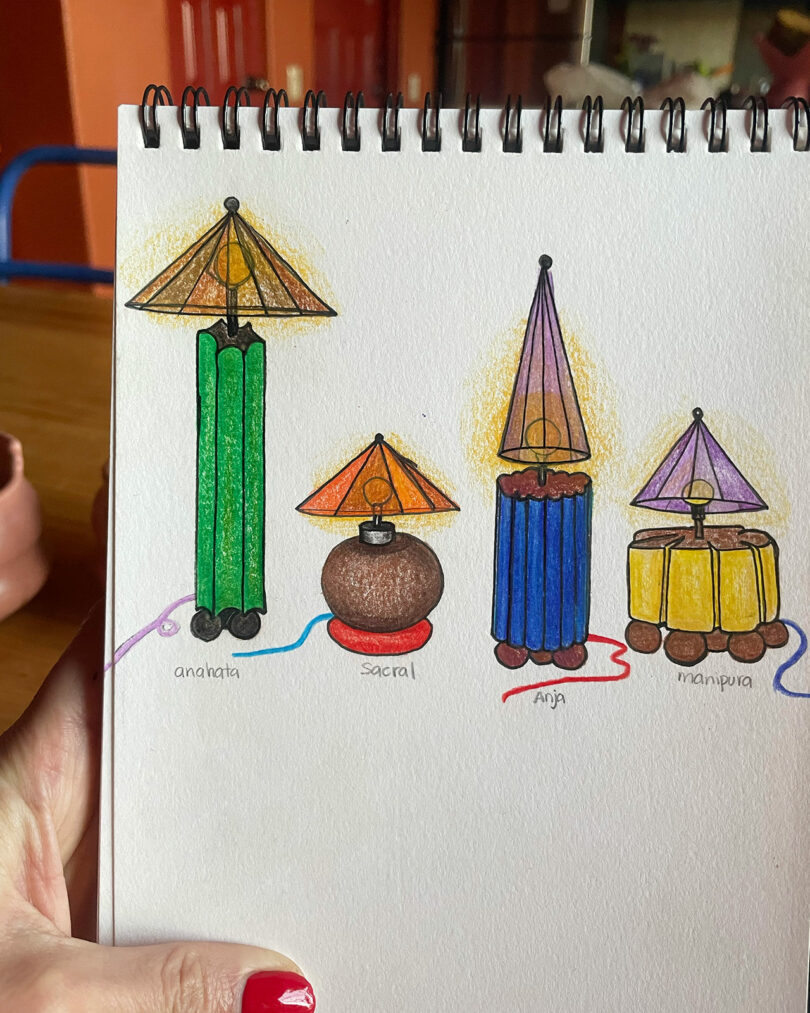
Maye’s internal world is "messy" and filled with intense ideas. To bring order to this chaos, she turns to geometry. Her creative process often begins with spontaneous sketches of lamps and furniture. These sketches serve as her laboratory, where she experiments with postmodern forms to balance the intensity of her color palettes.
5. The Contrast: Humble vs. Sophisticated
The core of "Vaquero Barroco" is the tension between opposites. Ruiz loves the friction created by pairing a rough, hand-carved wooden beam with a velvety, deep-red textile, or a rustic ranch stool with a polished brass fixture. This contrast ensures that her spaces feel prestigious but never "precious" or untouchable.
Signature Projects: Bringing 'Vaquero Barroco' to Life
To truly understand Ruiz’s impact, one must look at her commercial and residential masterpieces. Each project is a case study in how to use drama as a functional element of design.
Carmín: A Cinematic Fever Dream
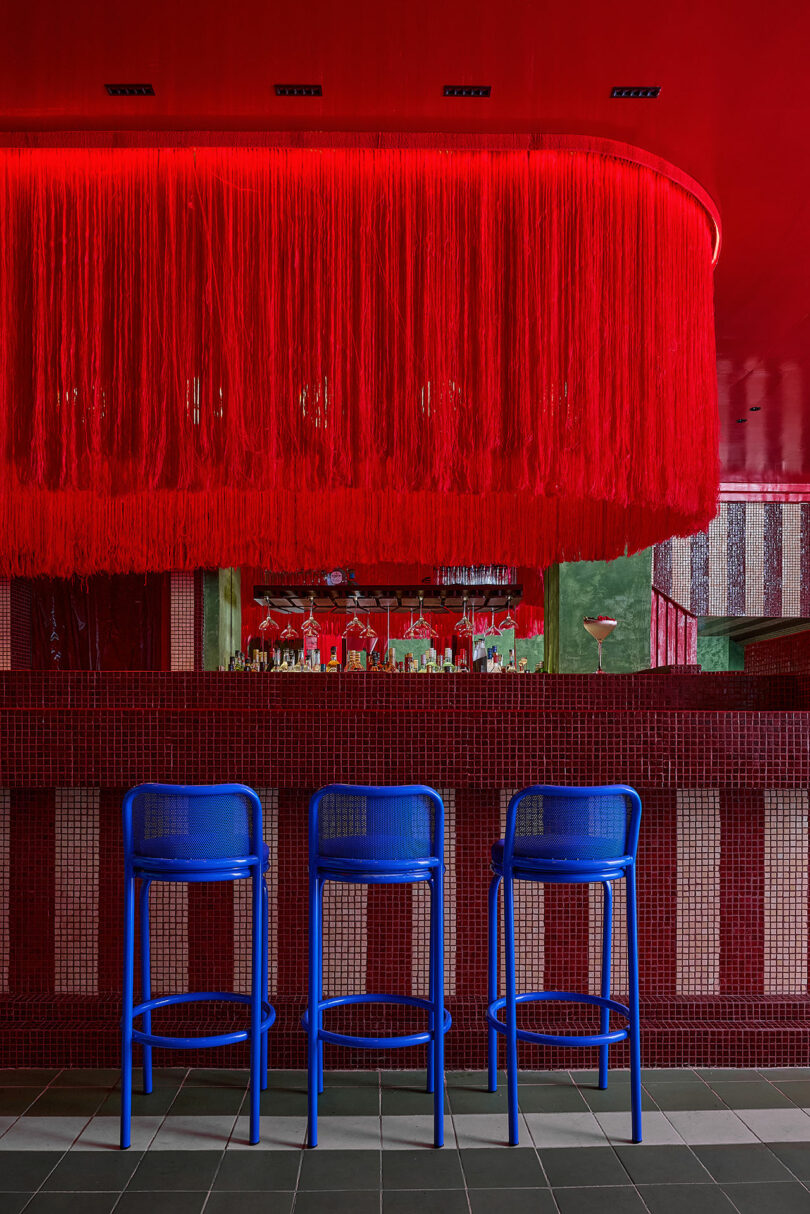
Located in Mexico City, Carmín is perhaps the most visceral expression of Ruiz's love for theatricality. Inspired by the 1970s Italian horror classic Suspiria, the nightclub is a masterclass in the use of monumental red textile canopies. The space doesn't just use color; it is color. The deep, velvety reds and atmospheric lighting create a sense of mystery and intensity that feels like stepping onto a film set.
Bekeb: Ranch Life Meets Mysticism
Bekeb, an award-winning mixology bar in San Miguel de Allende, is where the "Vaquero Barroco" style was perfected. The design references the local landscape—the agave plants, the dry earth, and the proximity of colonial Catholic temples. It blends the rugged aesthetic of a Mexican ranch with the reverence of a cathedral, using a palette that feels both ancient and modern.
Casa Coa: The Power of Eclecticism
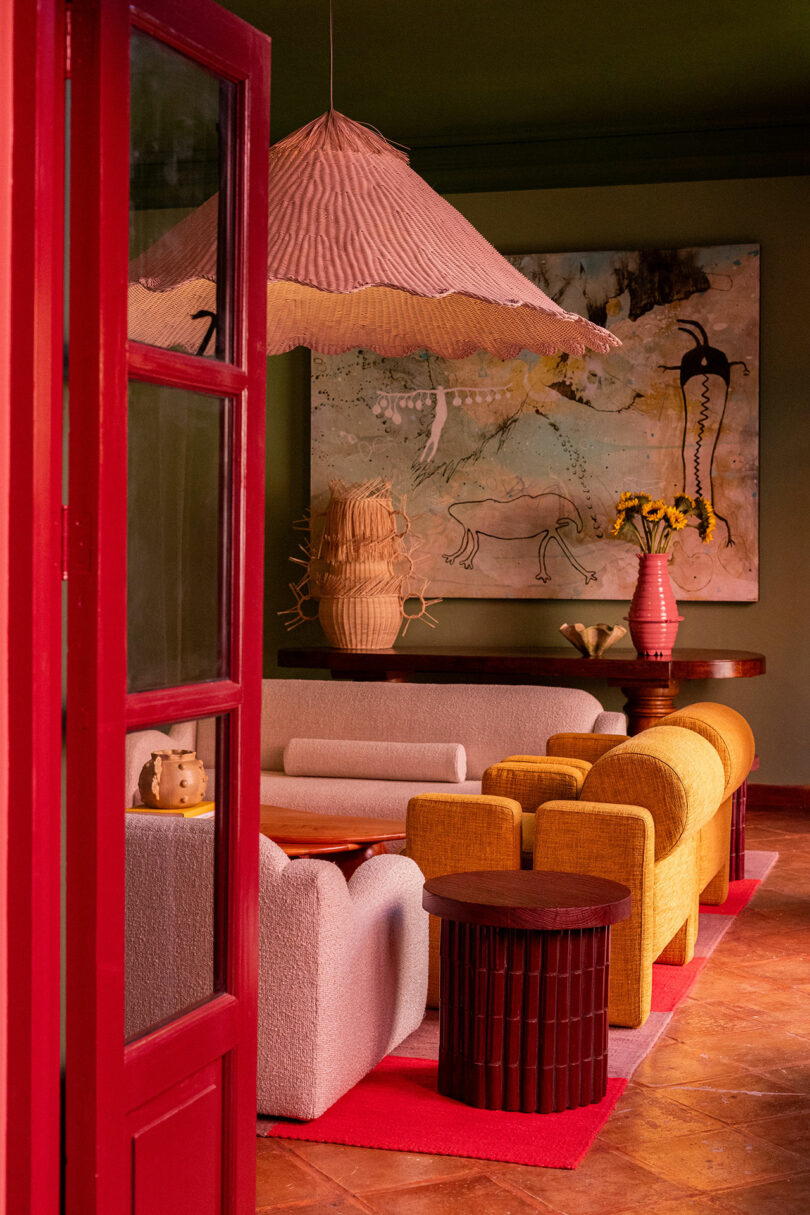
In the residential realm, Casa Coa stands as a testament to Ruiz's ability to handle residential scale without losing her signature edge. Drawing inspiration from the film Great Expectations (the aesthetic of fading grandeur) and local serpent motifs, the home is a curated journey through eclectic furniture and high-contrast hues. It proves that "colorful" can also be "sophisticated."
The Masterclass: How to Decorate Unapologetically with Color
As an editor, I often hear readers say, "I love color, but I'm afraid I'll get tired of it." Maye Ruiz’s work offers a blueprint for how to use intense palettes without overwhelming the senses. Here is her "Masterclass" on decorating with conviction.
1. The Importance of the 'Point of Rest'
Ruiz doesn't just paint everything red and call it a day. The secret to her success is balancing rich, heavy tones (like burgundy, forest green, or burnt orange) with "points of rest." This might be a stark white structural column, a neutral linen sofa, or a clear glass partition. These moments of visual silence allow the bold colors to sing rather than scream.
2. Create Architectural Depth
Instead of using white for the ceiling and color for the walls (the "safe" choice), Ruiz often flips the script. Using darker, more intense tones for moldings, baseboards, or even the ceiling itself can define the architecture of a room. Lighter walls can then serve as a luminous backdrop for art and furniture, creating a sense of three-dimensional depth.
3. Mastering the Mix
Mixing patterns is an art form. Ruiz often combines florals, stripes, and checks in a single room. The key to making it look intentional? A strict, coherent color palette. If every pattern shares at least one common hue, the room will feel curated and unified rather than chaotic.
| Design Strategy | Maye's Technique | Result |
|---|---|---|
| Color Saturation | Using deep burgundies and hunter greens on "unexpected" surfaces. | Heightened sense of drama and luxury. |
| Texture Play | Pairing heavy velvet with raw terracotta or fringe. | A "tactile narrative" that feels layered and rich. |
| Furniture Curation | Mixing 19th-century antiques with postmodern geometric lamps. | A timeless, "Vaquero Barroco" aesthetic. |
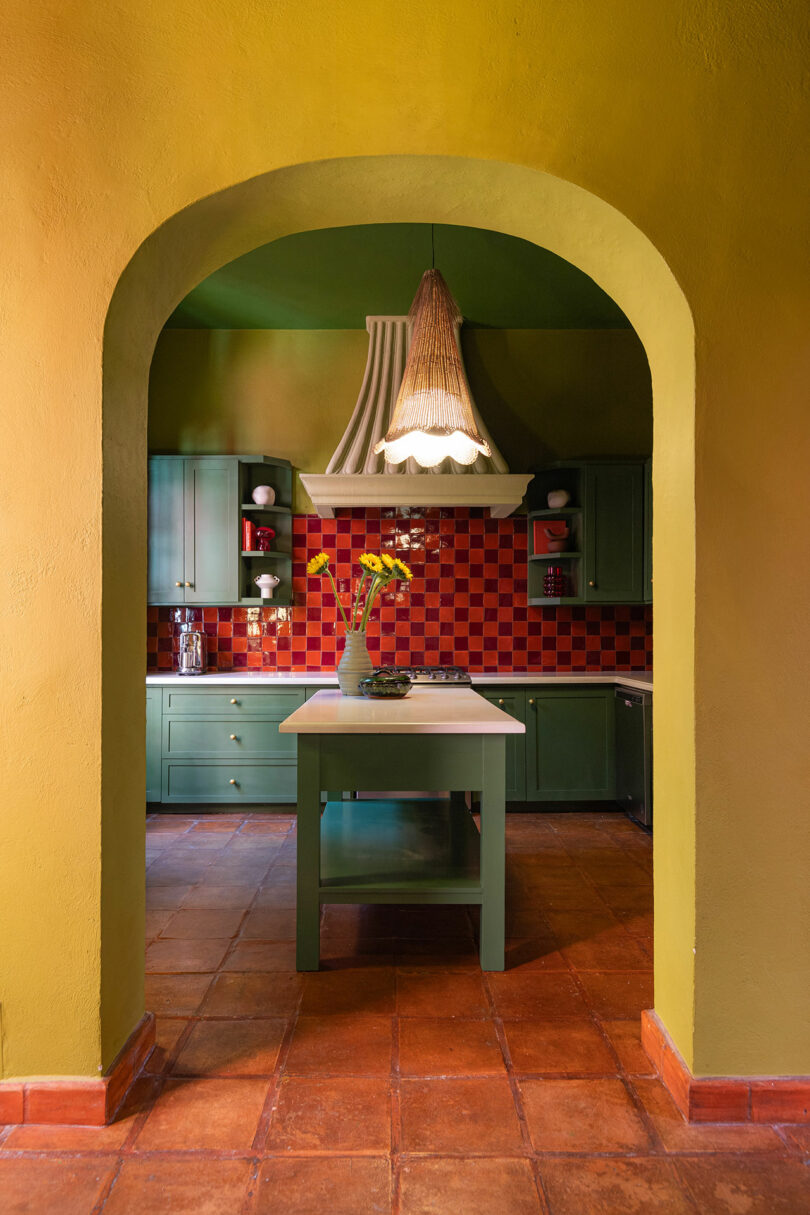
Ivy's Tip: If you're nervous about bold color, start with the ceiling. Painting a small room (like a powder room or a study) in a deep, glossy jewel tone from floor to ceiling—including the trim—creates a "jewel box" effect that feels intentional and cozy rather than overwhelming.
Conclusion
Maye Ruiz is more than a designer; she is a cultural provocateur. By leaning into the "messy inner world" of her own inspirations—from Hieronymus Bosch to her dog Quesadilla—she has carved out a space in the design world that is uniquely her own. Her work at Maye Estudio serves as a reminder that our homes and public spaces should be reflections of our most vivid dreams, not just our safest choices. Whether it's through the monumental red fringes of Carmín or the serene, serpent-inspired corners of Casa Coa, Ruiz invites us all to live a little more colorfully, a little more dramatically, and a lot more authentically.
FAQ
What exactly is 'Vaquero Barroco' style? It is a term coined to describe Maye Ruiz’s signature look, which blends the rustic, functional elements of Mexican "cowboy" or ranch culture with the theatrical, ornate, and high-contrast elements of the Baroque period.
How does Maye Ruiz balance such bold colors in a small space? She uses "points of rest"—neutral zones or architectural breaks—to ensure the eye isn't constantly stimulated. She also uses color to define architectural depth, often painting moldings and ceilings in dark tones to create a structured, sophisticated feel.
Is Maye Estudio open for international residential projects? While based in San Miguel de Allende, Maye Estudio has gained significant international recognition and works on a variety of hospitality and residential projects across Mexico and beyond.