For decades, the interior design world has operated under a comfortable illusion: that "plush" equals "quality." We have been conditioned to believe that for a chair to be comfortable, it must be stuffed with layers of dense, springy foam. But as someone who has spent years dissecting the lifecycle of home products, I can tell you that the secret life of furniture foam is far from cozy. Traditional polyurethane foam is a petroleum-based product that is notoriously difficult to recycle, often off-gasses volatile organic compounds (VOCs), and represents a "linear" design flaw—once the foam degrades or the fabric tears, the entire piece usually ends up in a landfill.
Enter the Isomi Knit One Chair. This isn't just a new piece of furniture; it is a fundamental rejection of the "foam-first" philosophy. By trading chemical-heavy bulk for structural innovation, Isomi has created a seating solution that prioritizes both the planet and the human body.
Rethinking Comfort: Why Foam is a Thing of the Past
The traditional armchair is a composite of many materials—wood, metal, glue, staples, and thick slabs of foam. Because these materials are often bonded together, they are nearly impossible to separate at the end of their life. This "Frankenstein" construction is the primary reason why furniture is one of the least recycled categories of household goods.
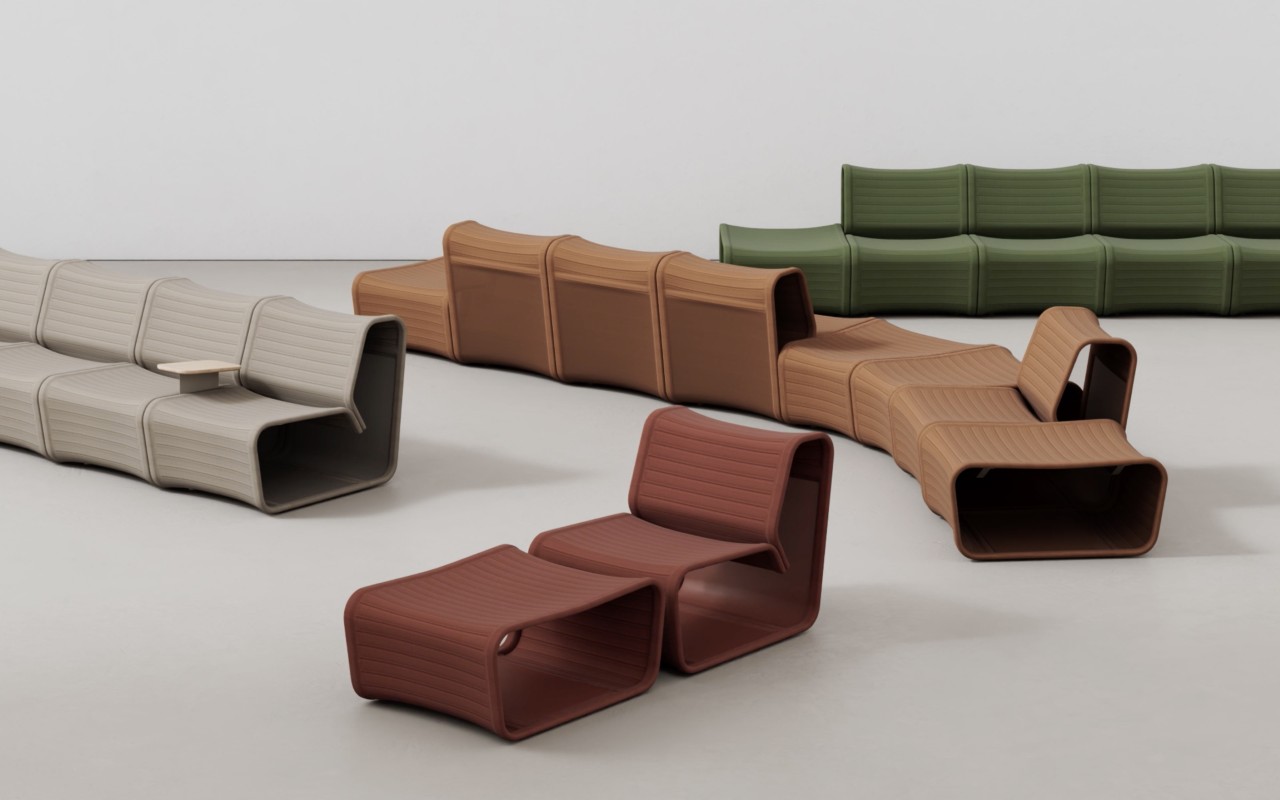
The Isomi Knit One Chair offers a radical alternative. It replaces traditional upholstery foam with a high-tech, 3D-knitted skin made of mono-filament structural fibers and SEAQUAL yarn. Instead of sitting on a block of chemicals, you are supported by tension and the inherent elasticity of engineered textiles.
This shift in material science achieves several goals simultaneously:
- Breathability: Unlike foam, which traps body heat, the 3D-knit structure allows for constant airflow, keeping the sitter cool.
- Weight Reduction: By removing the foam, the chair becomes significantly lighter, reducing the energy required for shipping.
- Chemical Safety: The absence of polyurethane foam means no added flame retardants or VOCs that can affect indoor air quality.
The Magic of 3D-Knitting: How it Works
To understand the Knit One, you have to think of it more like a high-performance running shoe than a traditional chair. In standard furniture manufacturing, fabric is woven in large sheets, and shapes are cut out of it. This "cut-and-sew" method inevitably results in significant "off-cut" waste—sometimes as much as 20% to 30% of the material is simply thrown away.
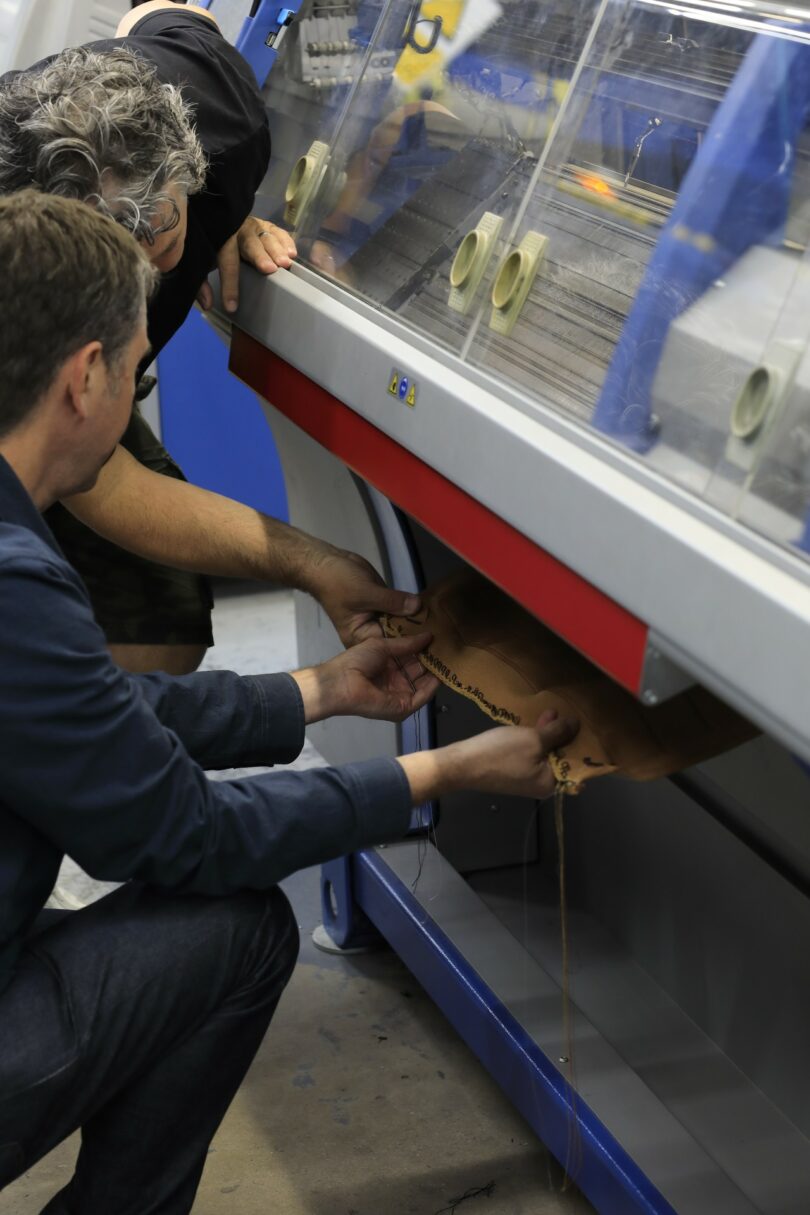
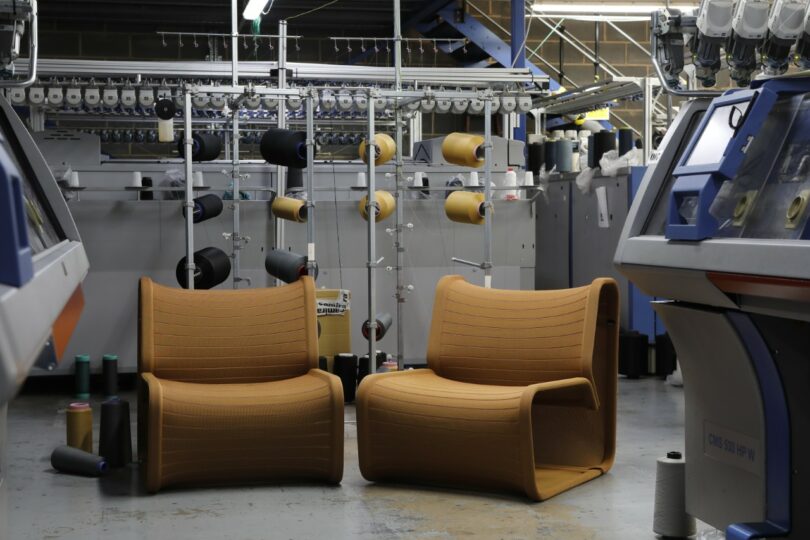
3D-knitting, however, is a zero-waste process. Using computer-controlled industrial knitting machines, the "skin" of the Knit One is produced to the exact dimensions of the chair’s frame. There is no cutting involved; the machine "prints" the yarn into a three-dimensional sleeve that fits perfectly over the structural core.
"3D-knitting allows us to place support exactly where it’s needed. We aren't just making a cover; we are engineering a structural component that provides ergonomic comfort without a single ounce of foam."
By utilizing 3D-knitting technology, the Knit One production process achieves nearly zero fabric waste. This precision is a hallmark of the new era of sustainable manufacturing, where efficiency is baked into the design phase rather than managed as an afterthought.
Traditional Seating vs. Isomi 3D-Knit Seating
| Feature | Traditional Foam Seating | Isomi Knit One (3D-Knit) |
|---|---|---|
| Primary Support | Polyurethane (PU) Foam | Engineered 3D-Knit Tension |
| Production Waste | 20-30% Fabric Off-cuts | Nearly Zero Waste |
| Material Origin | Petroleum-based | Recycled Marine Plastics (SEAQUAL) |
| Assembly | Glued & Stapled (Permanent) | Modular & Disassemblable |
| Recyclability | Extremely Low | 100% Recyclable Components |
| Shipping | High volume (Shipping "Air") | Flat-pack Capable |
From Ocean Plastic to Designer Seating
The sustainability story of the Knit One Chair goes deeper than its manufacturing process—it’s in the very fibers of the yarn. Isomi partnered with textile experts Camira and the SEAQUAL INITIATIVE to source materials that actively clean the environment.
The chair's skin is composed of two primary elements: a high-strength mono-filament that provides the structural tension needed to support weight, and SEAQUAL YARN. This yarn is made from upcycled marine plastic. Every year, tons of plastic are recovered from our oceans; this waste is processed into high-quality polyester yarn that looks and feels premium.
The impact is measurable and significant: each meter of the Isomi Knit One 3D-knitted sleeve repurposes up to 35 post-consumer marine plastic bottles.
When you choose the Isomi Knit One Chair, you aren't just buying a piece of furniture; you are supporting a supply chain that removes pollution from the sea. For the eco-conscious homeowner or office manager, this transforms a simple purchase into an act of environmental stewardship.
Modular Design for a Modern Life
One of the greatest challenges in sustainable living is the "disposable" nature of modern furniture. Most chairs are designed as single, static objects. If one part breaks, the whole thing is ruined. The Knit One breaks this cycle through a modular system.
The collection is designed to be versatile, featuring:
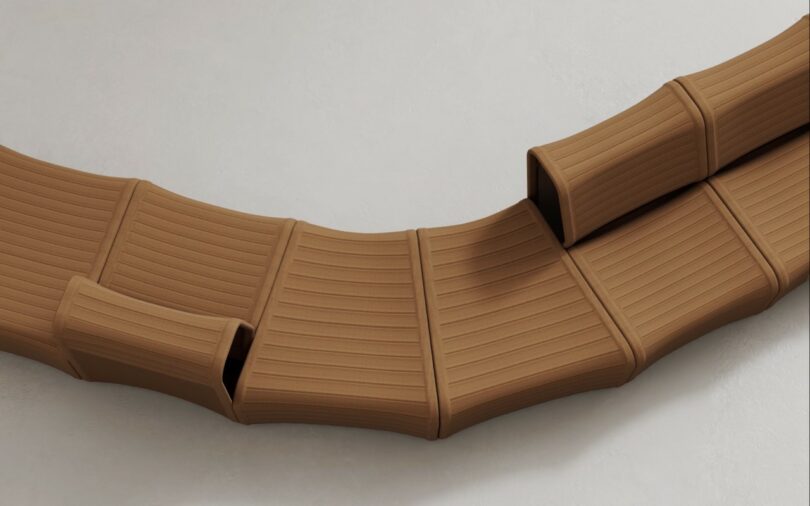
- Lounge Chairs: The core of the collection, offering ergonomic support.
- Ottomans: Complementary pieces that extend the comfort.
- Angled Modules: Allowing for the creation of unique, rhythmic seating arrangements.
- Integrated Side Tables: Making the system a complete solution for public or private spaces.
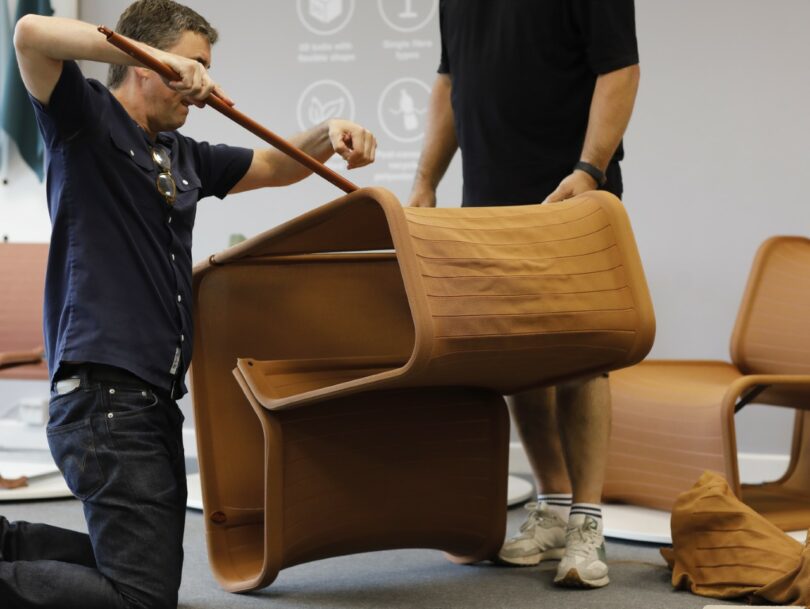
The modularity also extends to how the chair arrives at your door. Traditional armchairs are bulky and expensive to ship, resulting in a high carbon footprint. The Knit One is designed for flat-pack efficiency. The metal frame can be easily assembled, and the "knit sleeve" simply drops over the frame, held in place by tension. This reduces the shipping volume significantly, allowing more units to fit in a single container and slashing transport-related emissions.
Built for Circularity: Life Beyond the Living Room
As an editor focused on sustainable living, "Circularity" is the gold standard I look for in every product review. A circular product is designed from the start to be taken apart.
The Isomi Knit One Chair is a masterclass in Design for Disassembly. Because it uses no adhesives or heavy composite materials, the chair can be fully disassembled in minutes using basic tools—or in some cases, no tools at all.
- Renewable Aesthetics: If your interior design style changes, you don't need to replace the whole chair. You can simply swap the 3D-knit sleeve for a different color or texture.
- Easy Repair: If the frame is damaged, it can be repaired or replaced independently of the textile.
- True Recyclability: At the end of its very long life, the metal frame can be sent to a metal recycler, and the 100% polyester knit sleeve can be processed back into textile fibers.
The Knit One Chair proves that we don't have to sacrifice comfort or style to live sustainably. By leveraging 3D-knitting technology and marine-recycled plastics, Isomi has moved the furniture industry one step closer to a waste-free future. It is light, transparent, and undeniably comfortable—a true "foam-free" revolution for the modern home.
FAQ
Is a 3D-knit chair as comfortable as a foam chair? Yes, though the sensation is different. While foam provides a "sinking" feeling, the Knit One provides "suspended" support, similar to a high-end ergonomic task chair or a tight hammock. It conforms to your body shape without the heat-trapping properties of foam.
How do I clean the Isomi Knit One? Because the knit sleeve is a technical textile made of polyester and mono-filament, it is highly durable. Most spills can be spot-cleaned with mild detergent. For a deeper clean, the sleeve can be removed from the frame, making it much easier to maintain than traditional upholstery.
Can the Knit One be used in high-traffic commercial spaces? Absolutely. The structural fibers and SEAQUAL yarn used in the 3D-knit process are engineered for durability and meet high standards for abrasion resistance, making them ideal for offices, lounges, and public waiting areas.