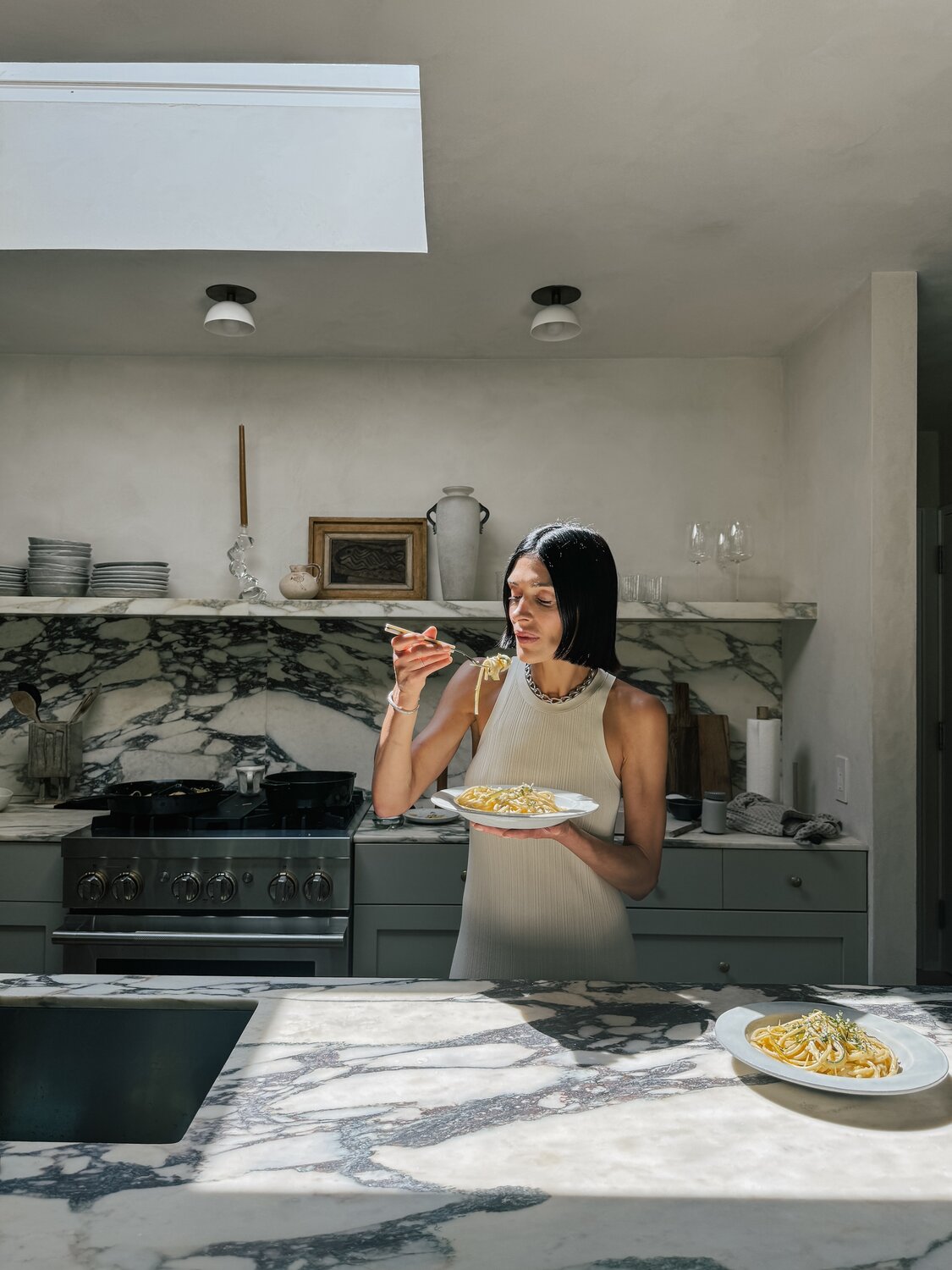
There is a specific kind of magic that happens when a bowl of pasta is placed on the table. It is more than just sustenance; it is what Athena Calderone often describes as a "unifier"—a sensory experience that invites an instant exhale. Whether it’s the steam rising from a slow-simmered ragu or the bright, citrusy scent of a spring linguine, pasta has a unique psychological ability to ground us. It is the ultimate "one-bowl" comfort, a fact supported by recipe engagement data showing that 72% of home cooks prioritize these seasonal, singular dishes as their primary source of weeknight culinary solace.
But the secret to a truly transformative bowl isn't just in the sauce—it’s in the science of the vessel. Culinary surface-area analysis indicates that ridged pasta shapes (rigate) increase sauce adherence by approximately 35% compared to their smooth-surfaced counterparts. Understanding this architecture is the first step from being a cook to becoming a pasta artisan.
Part 1: The Secret Architecture of Pasta Pairing
The most common mistake in the home kitchen is treating pasta as a mere vehicle for sauce. In reality, the relationship is a delicate dance of physics and texture. The "Golden Rule" is simple: the shape should complement, never compete with, the sauce.
The Architecture of Adherence
- Wide, flat ribbons like Pappardelle and Tagliatelle are ideal for heavy meat ragus because their broad surface area supports thick, rustic toppings and holds up to slow-simmering.
- Bucatini is the preferred choice for Carbonara because its hollow center captures the creamy sauce inside the noodle, ensuring a flavor-rich experience in every bite.
When you pair a thin, delicate Capellini with a chunky Bolognese, the sauce slides off, leaving you with a puddle at the bottom of the bowl. Conversely, a heavy cream sauce can overwhelm a tiny Pastina. To master your kitchen, refer to this fundamental pairing guide:
| Pasta Category | Best Shape Examples | Ideal Sauce Pairing |
|---|---|---|
| Long & Lean | Spaghetti, Linguine | Oil-based, light cream, or seafood |
| Hollow Tubes | Rigatoni, Penne Rigate | Chunky vegetable or thick cheese sauces |
| Wide Ribbons | Pappardelle, Tagliatelle | Hearty meat ragus and Bolognese |
| Small Shapes | Orecchiette, Orzo | Crumbled sausage, peas, or soups |
Part 2: 8 Soul-Soothes Recipes for Every Season
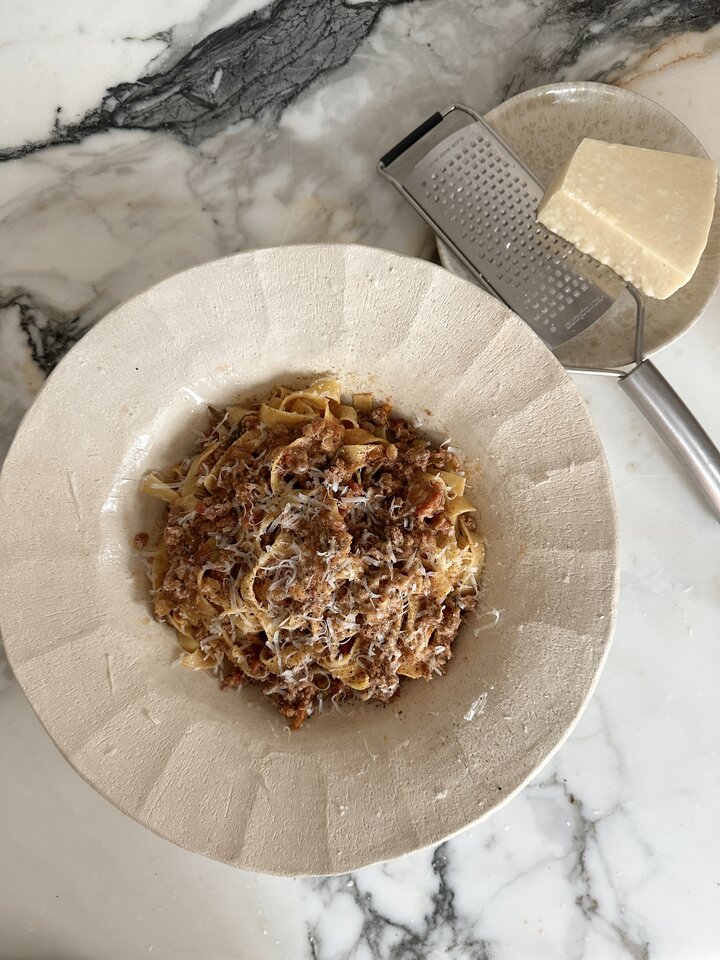
1. The Sunday Classic: Tagliatelle Bolognese
There is no ritual more sacred than the Sunday Gravy. This isn't a quick weeknight meal; it’s an exercise in patience. By using a combination of veal, pork, and beef, you create a depth of flavor that a single protein simply cannot achieve. The key is the slow simmer—allowing the fats to emulsify into a velvet-like coating for your pasta.
2. Spring Vibrancy: Lemony Bucatini with Spring Herbs
As the world wakes up, so should your palate. This dish is about brightness—incorporating chive blossoms, spicy arugula, and the subtle heat of Calabrian chilis. It relies on a professional emulsion technique that replaces heavy fats with kitchen "gold."
Pro-Tip: The Zesty Emulsion To create a simple zesty pasta sauce, combine lemon zest, ricotta, and starchy pasta water; the starch helps emulsify the ingredients into a creamy coating without the need for heavy cream.
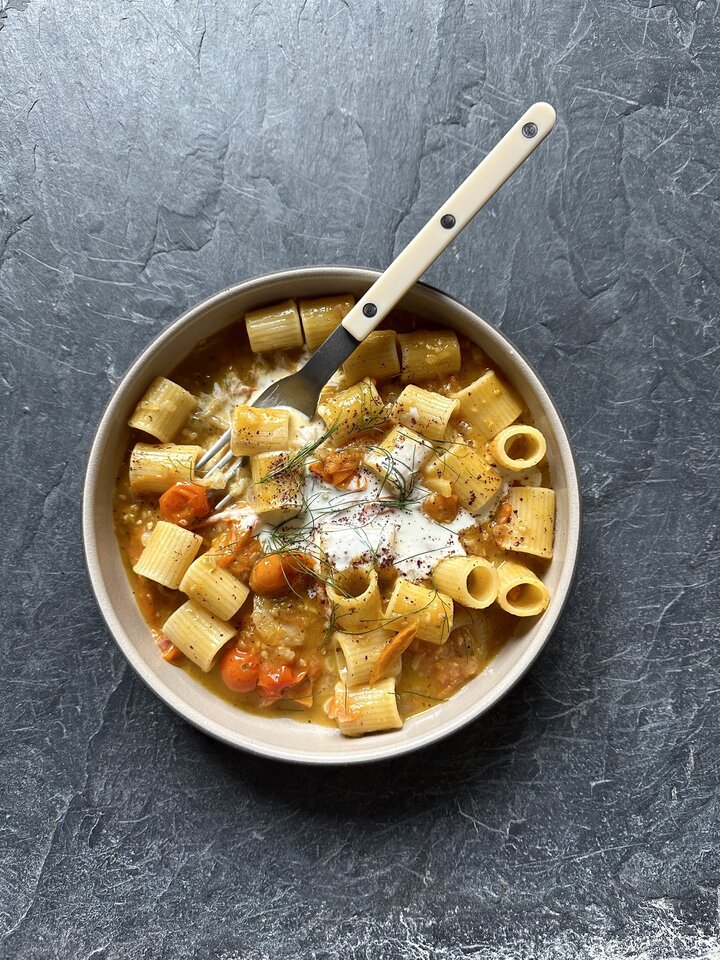
3. Summer in a Bowl: Zesty Sungold & Fennel Rigatoni
When tomatoes are at their peak, they require very little intervention. Use the "bursting tomato" technique: sautéing Sungold tomatoes in high-quality olive oil until they pop, creating an instant, 15-minute sauce. A pinch of sumac adds a surprising floral acidity that cuts through the sweetness of the fennel.
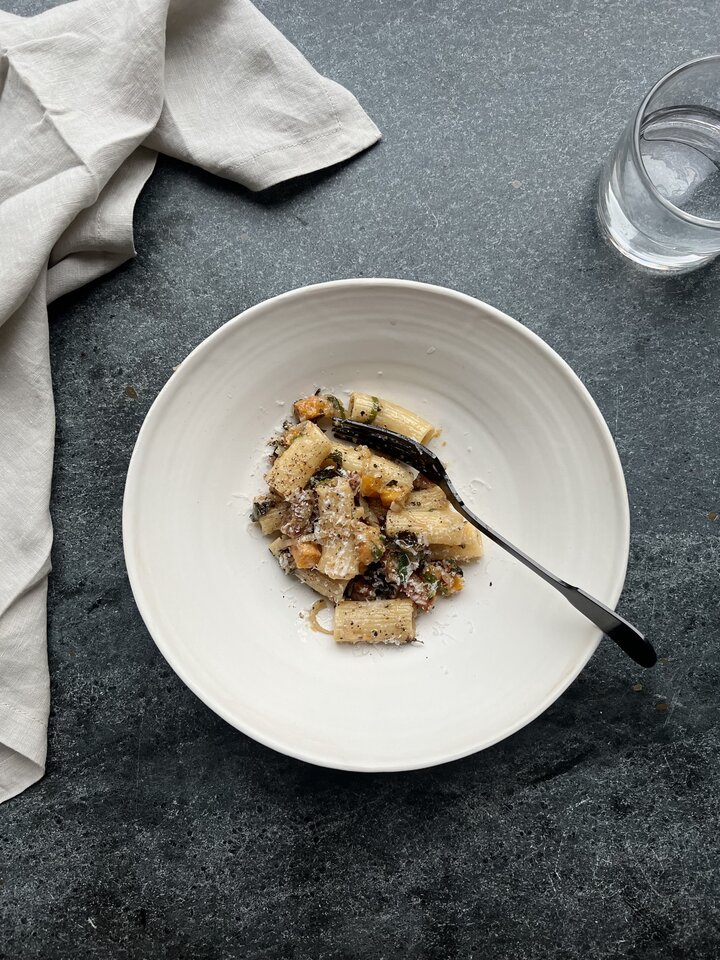
4. Fall Comfort: Rigatoni with Butternut Squash & Guanciale
Fall cooking is about the balance of earthy sweetness and salty crunch. Roasted butternut squash provides a creamy base that nestles into the ridges of the Rigatoni. To elevate this dish, use a ceramic non-stick pan (like those from Material Kitchen) to crisp the guanciale until it reaches a translucent, golden perfection.
5. Winter Indulgence: Paccheri with Pork Shoulder Ragu
Inspired by the hearty Brooklyn-Italian tradition, this dish uses large, tube-like Paccheri that can stand up to a pork shoulder that has been braised until it falls apart at the touch of a fork. For a modern twist, dollop fresh goat cheese on top just before serving; the tanginess provides a necessary counterpoint to the rich, fatty pork.
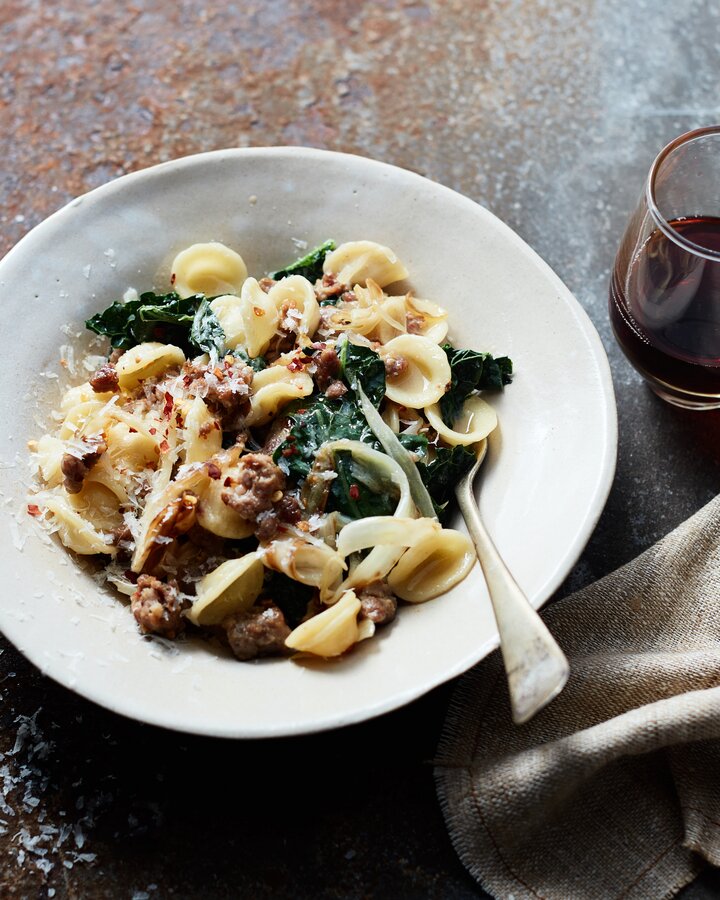
6. The Weeknight Hero: Orecchiette with Kale & Sausage
Orecchiette, or "little ears," are the ultimate weeknight shape. Their concave centers are specifically designed to trap small, flavorful bits. Whether it’s crumbled fennel sausage or finely chopped kale, every spoonful provides a complete flavor profile. It’s a versatile canvas—easily converted to a vegetarian feast by swapping sausage for crispy chickpeas.
7. The Zesty Light-Lover: Ricotta & Zucchini Pasta
For those days when you crave comfort without the subsequent "carb coma," this lighter dish is the answer. By using a mandoline to create thin ribbons of zucchini that mimic the pasta, you increase the volume and nutritional density of the meal. The sauce is a simple marriage of Pecorino Romano and starchy water, creating a glossy sheen that feels indulgent yet remains airy.
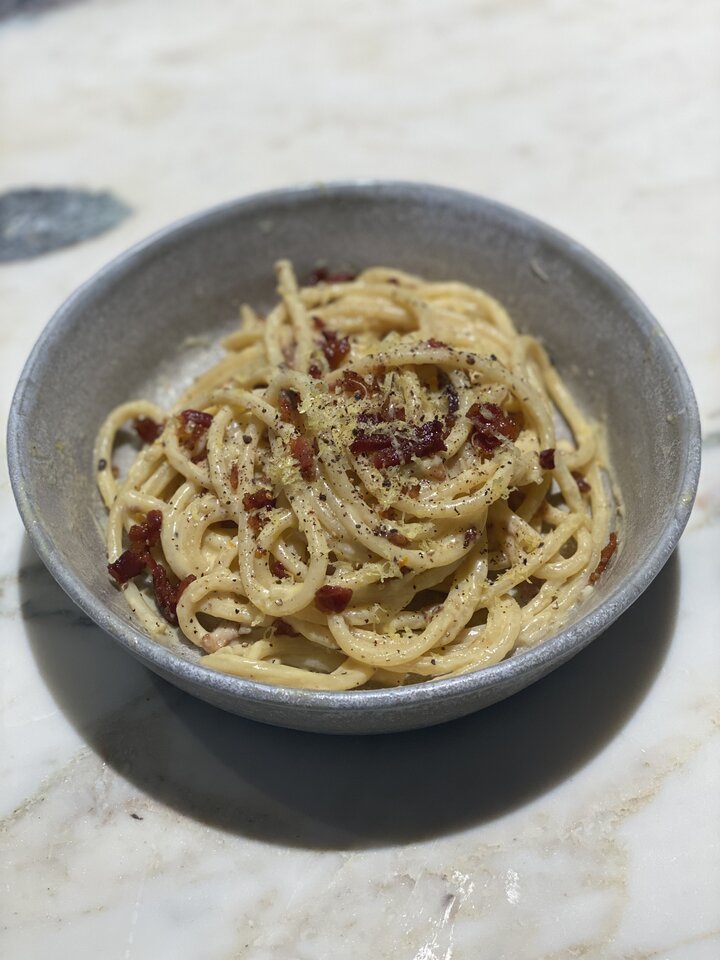
8. The Modern Twist: Lemony Carbonara Bucatini
Traditionalists might scoff at adding lemon to Carbonara, but the acidity acts as a "brightening agent," cutting through the richness of the egg yolks and Pecorino. If you’re feeling ambitious, use a manual pasta maker (the Atlas 150 is the gold standard) to roll out fresh Bucatini. The texture of fresh pasta is unparalleled in its ability to absorb the silky egg sauce.
Part 3: Professional Tips for a Better Bowl
To move from a recipe follower to a pasta master, you must adopt the techniques used in professional Italian kitchens.
The 'Pasta Risottata' Technique Never drain your pasta completely and leave it in a colander. Instead, pull the pasta out of the water 2 minutes before it hits al dente and finish cooking it directly in the sauce pan. Add a splash of the starchy pasta water. This allows the pasta to release its starches into the sauce, binding them together in a way that simply pouring sauce over dry noodles never can.
The Water Ratio Myth Many home cooks use too little water, leading to a gummy, over-starched noodle. You need a large pot—aim for 4 to 6 quarts of water per pound of pasta. This ensures the temperature doesn't drop significantly when the pasta is added, maintaining a consistent boil and preventing the noodles from sticking.
Mindful Sourcing As Athena Calderone notes, "Quality ingredients are the shortest bridge to a great meal." Seek out bronze-cut pasta. Unlike mass-produced pasta extruded through Teflon, bronze-cut pasta has a rough, porous texture that is visible to the naked eye. This texture is what allows that 35% increase in sauce adherence mentioned earlier.
Essential Kitchen Tools for Pasta Mastery
The right tools don't just make cooking easier; they make it more joyful. For the ultimate pasta setup, consider these essentials:
- A Stainless Steel Stockpot: Look for one with a built-in straining cover (Cuisinart offers excellent options) to make the transition from water to sauce seamless.
- Beechwood Tools: A traditional wooden pasta fork is gentler on delicate strands like Tagliatelle than metal tongs.
- The Finishing Touch: A high-quality microplane for grating aged Parmesan or Pecorino directly over the bowl.
FAQ
Q: Should I put olive oil in my pasta water to keep it from sticking? No. This is a common myth. Adding oil to the water will coat the pasta and actually prevent the sauce from sticking to the noodles later. To prevent sticking, simply use a large enough pot and stir the pasta frequently during the first two minutes of cooking.
Q: How do I know exactly when pasta is 'al dente'? The term means "to the tooth." The pasta should be tender but offer a slight resistance or "bite" in the center. A visual cue is to look at a broken strand; you should see a tiny white dot in the center, indicating it is just seconds away from being fully cooked.
Q: Can I use the lemon/ricotta/water technique with any pasta shape? While it works with most, it shines brightest with long strands like Bucatini or Spaghetti. These shapes allow the thin, creamy emulsion to coat the entire length of the noodle evenly.
Cooking pasta is an act of love—for the ingredients, for the process, and for the people sharing the table. By matching the right architecture with the right season, you turn a simple pantry staple into a soul-soothing masterpiece. So, put the water on to boil, pour a glass of wine, and find your comfort in the curve of a noodle.