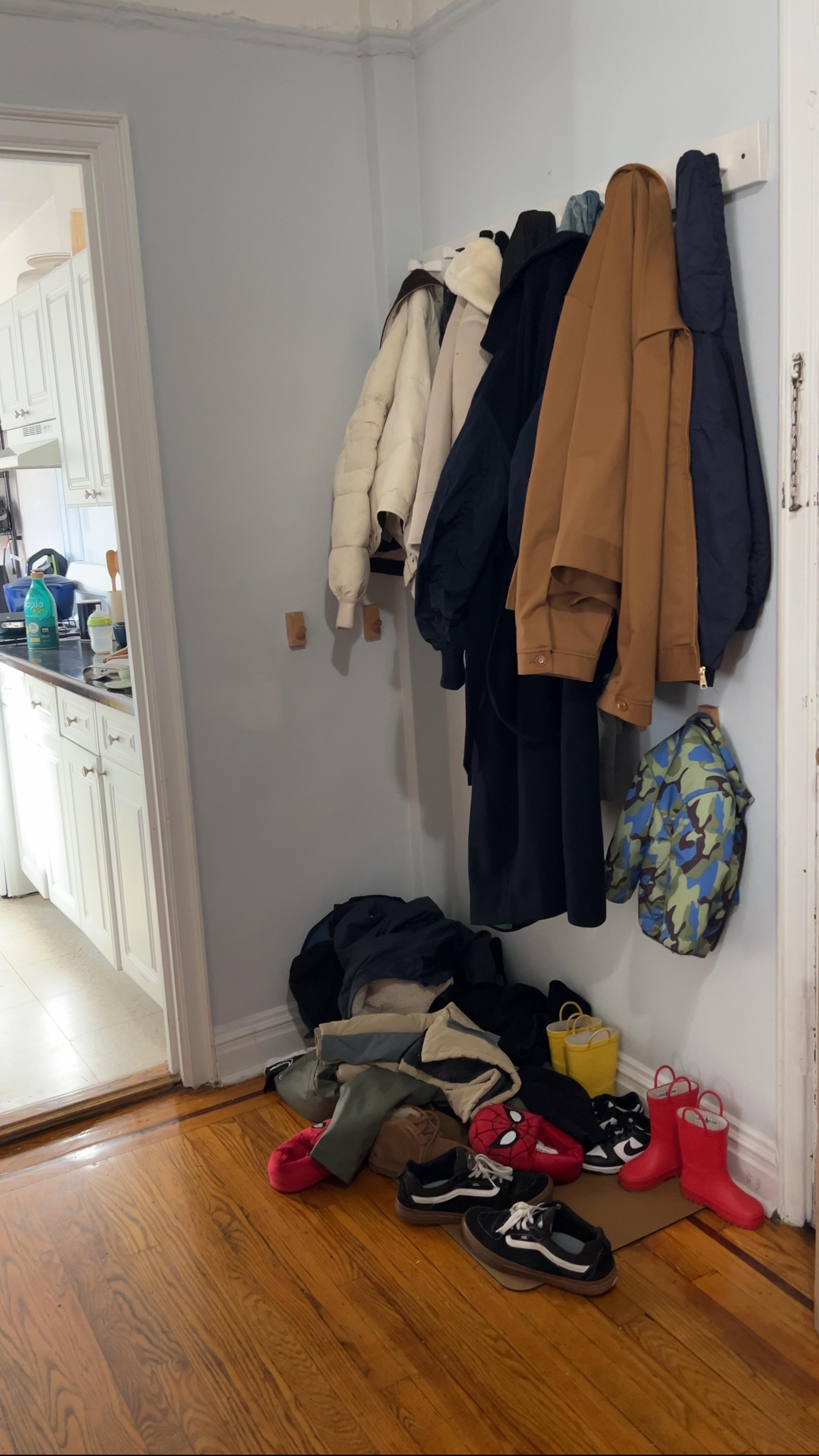
We’ve all been there: the clock is ticking, you’re already five minutes behind for school drop-off, and the entryway has transformed into a battlefield of discarded sneakers, tangled backpacks, and at least one missing mitten. You’re frantically searching under the radiator while your child stands paralyzed by the sheer volume of choices in the shoe rack. It’s a scene of high-octane stress that sets a frantic tone for the rest of the day.
But what if the entryway wasn’t a hurdle to overcome, but a tool for teaching?
To create an entryway that fosters true independence, we have to look at the world from a height of three feet. A Montessori-inspired entryway shifts the focus from "parent-managed storage" to "child-led systems." By installing hooks at your child’s eye level, providing a dedicated low bench for putting on shoes, and using accessible baskets for seasonal accessories, you transform a chaotic transit point into a functional learning zone. Families who implement these child-height storage systems often report a staggering 40% reduction in morning departure chaos and those dreaded "lost shoe" incidents. It’s not just about tidiness; it’s about giving your child the dignity of doing it themselves.
The Philosophy: Why Independence Starts at the Front Door
The core of the Montessori method is encapsulated in the phrase, "Help me to do it by myself." In many homes, the entryway is designed exclusively for adults. High coat racks, heavy drawers, and deep closets require a parent to intervene at every step of the "getting ready" process. When we do everything for our children—zipping their coats, finding their shoes, handing them their bags—we inadvertently teach them that they are not capable of these tasks.
By redesigning this transition space, we are teaching foundational organizational skills and self-care routines that will serve them for a lifetime. A child who can hang up their own coat at age three is a child who understands personal responsibility at age thirteen. Moreover, an organized environment reduces the cognitive load on a developing brain. When everything has a predictable, reachable "home," the child feels secure and empowered.
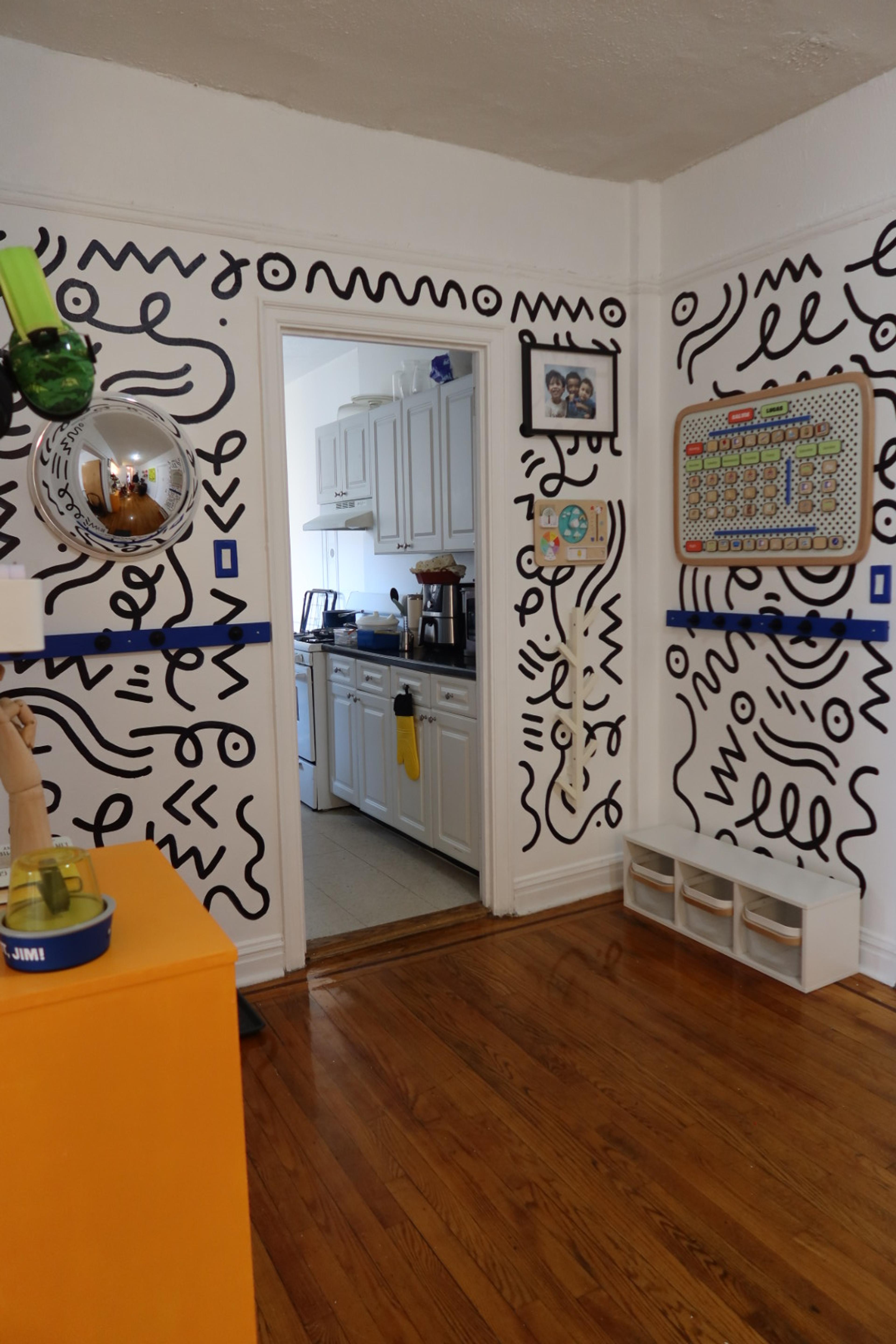
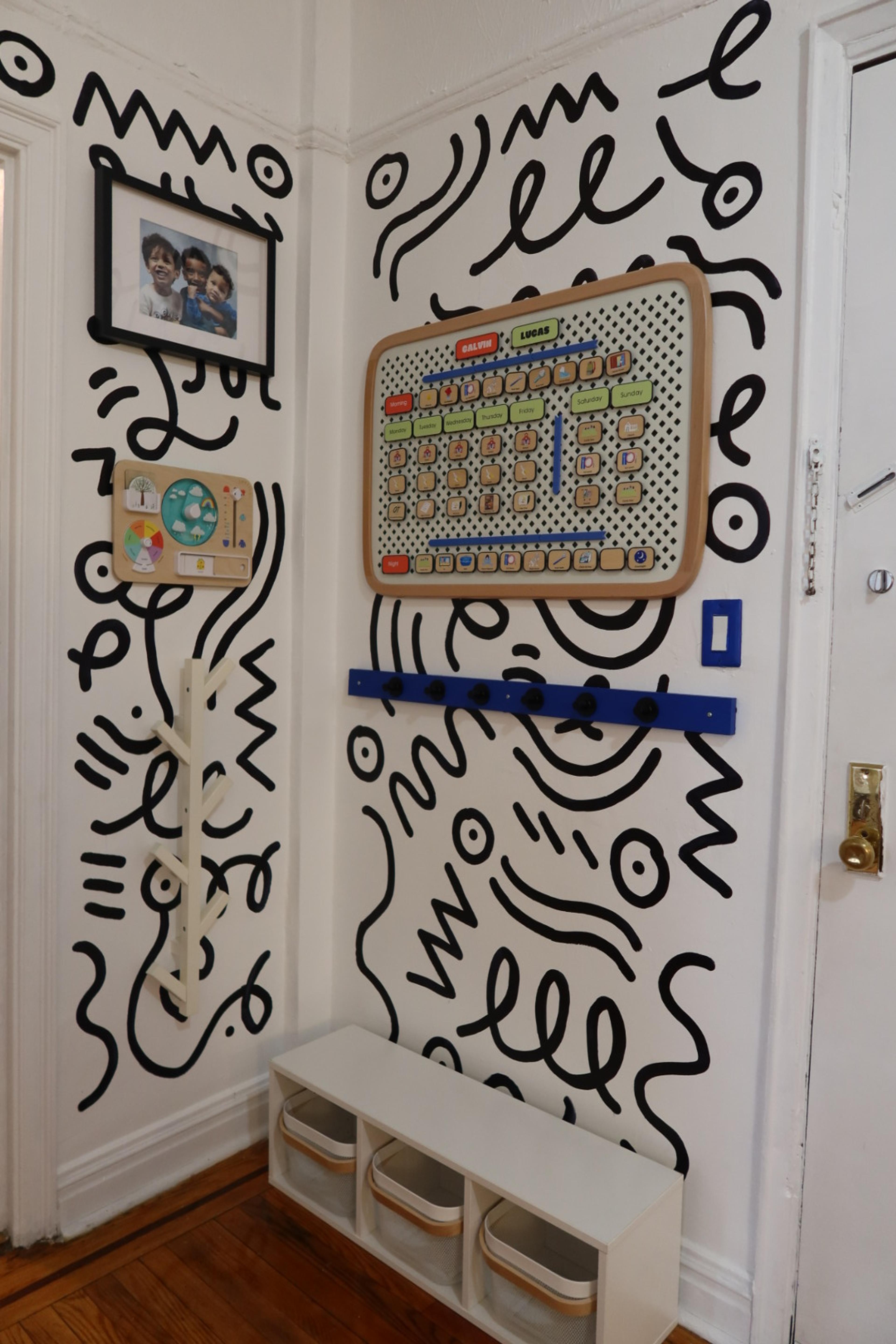
Pro-Tip: Beyond physical furniture, visual cues are essential. Using a tool like the Charmspring Calendar Map allows children to see exactly what they need for the day—whether it’s a library book on Tuesday or soccer cleats on Friday—further reducing the need for parental hovering.
1. Low-Mounted Hooks: Access is Everything
The most common mistake in entryway design is the "toddler-reach gap." Standard coat hooks are usually mounted 60 inches from the floor—fine for you, but an impossible mountain for a four-year-old. When a child can't reach the hook, the coat ends up on the floor. It’s a simple physics problem with a simple organizational solution.
How to Execute the Low-Hook System
When installing hooks for your children, aim for eye level—usually between 30 to 40 inches from the floor, depending on their age. Spacing is also key; give each hook enough "breathing room" so that a bulky winter parka doesn't knock down the backpack next to it.
- IKEA TJUSIG: A classic choice that provides a clean, modern look and can be mounted at any height.
- Command Hooks: The ultimate hero for renters or those living in small apartments. They allow you to test heights and move things as your child grows without damaging the walls.
- The "One Hook" Rule: Start with one hook for the "current" jacket and one for the backpack. Overloading a child with five jacket choices leads to decision fatigue.
2. The Seating Zone: Making Shoe Success Possible
Have you ever tried to put on sneakers while standing on one leg, balancing against a wall? That’s what we often ask our children to do in a cramped entryway. Success in putting on shoes is 50% motor skills and 50% proper seating.
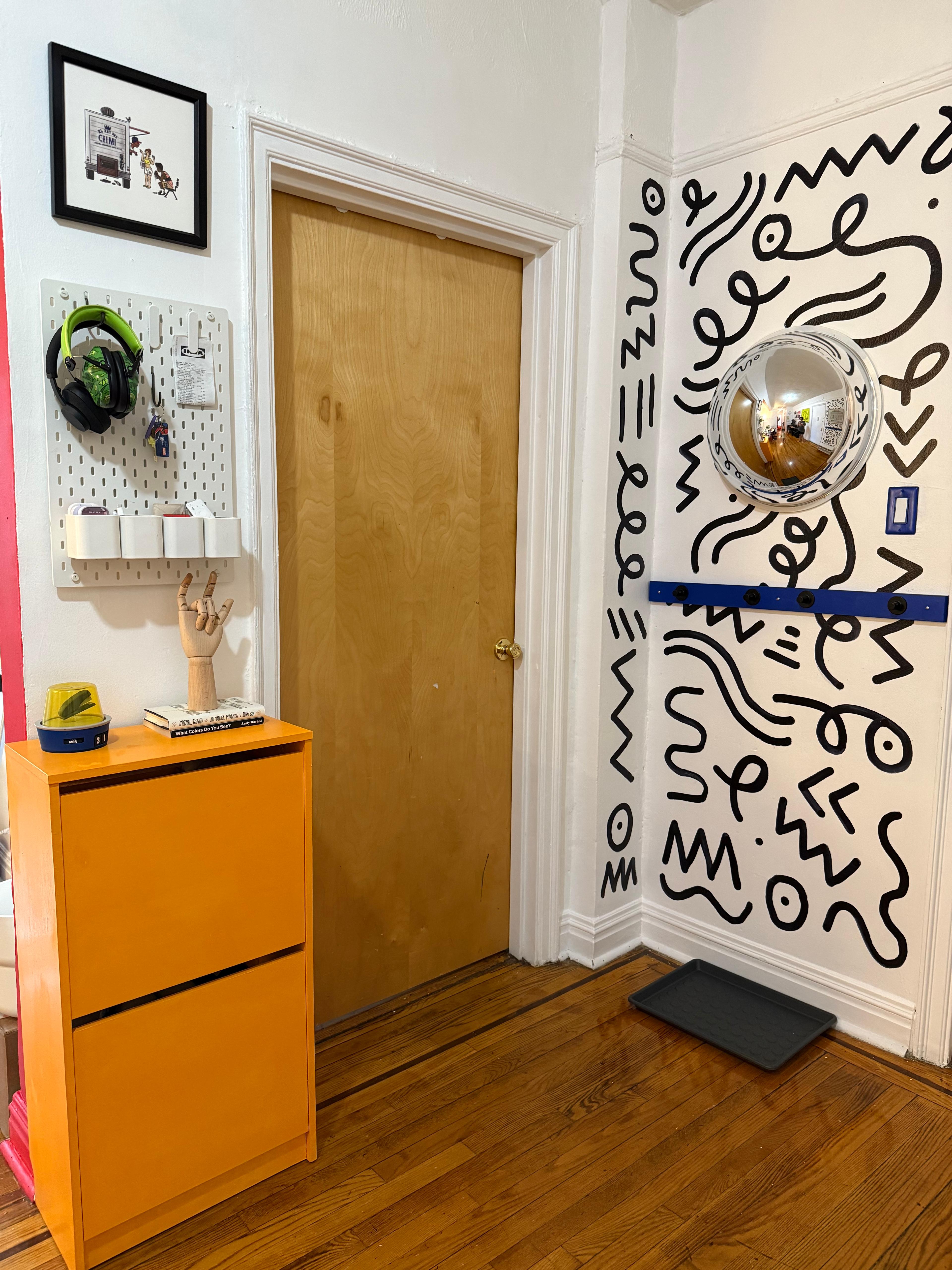
A low stool or bench is non-negotiable for a Montessori-inspired setup. It provides a stable base where a child can sit comfortably, reach their feet, and focus on the task of velcro or laces.
Creating a Functional Bench
You don’t need a custom-built mudroom bench to make this work. Many of my clients repurpose the IKEA SMÅGÖRA shelf or even a simple KALLAX unit turned on its side. By adding a small cushion on top, you create a cozy "getting ready" station.
The Secret "One-Stop" Trick: Keep a small basket of socks right next to the shoe bench. So often, the morning flow is broken because a child realizes they are barefoot just as they go to put on their boots. Eliminating that trip back to the bedroom can save five minutes of precious morning time.
3. Shoe & Accessory Storage: Hiding the Mess
Visual clutter is a major stress trigger for both adults and children. When a child sees a mountain of twenty pairs of shoes, their brain has to work harder to filter out what they need. To foster independence, we must limit choices.
The Strategy of Categorization
I recommend keeping only 2-3 pairs of seasonally appropriate shoes in the entryway. The rest should be stored in a "backstock" area like a bedroom closet. For the entryway itself, you have two main directions:
| Feature | Open Baskets | Hidden Storage (Cabinet) |
|---|---|---|
| Ease of Use | Highest; "toss and go" | Medium; requires opening a door |
| Visual Calm | Lower; shoes are visible | Highest; everything is tucked away |
| Best For | Toddlers (2-4 years) | Older children (5+ years) |
| Product Pick | Target Y-Weave Bins | IKEA BISSA Shoe Cabinet |
The IKEA BISSA is a personal favorite for small apartment entryway organization. Its slim profile fits in the narrowest hallways, and the flip-down compartments are easy enough for a five-year-old to operate. For accessories like hats, gloves, and sunglasses, use small, dedicated baskets. Label them with pictures (a drawing of a hat, a drawing of a mitten) so pre-readers know exactly where their gear goes.
4. Visual Aids & Confidence Boosters
The final piece of the Montessori puzzle isn't furniture—it's communication. Children thrive on predictability. When they know exactly what comes next in the sequence (Shoes -> Coat -> Backpack -> Lunchbox), they are much more likely to cooperate.
Research shows that incorporating a visual weekly chart in the entryway improves routine compliance by up to 65%, particularly for neurodivergent children who may struggle with executive functioning or transitions.
Tools for the "Ready to Go" Check
- Visual Schedules: Tools like the Charmspring Calendar Map allow children to "check off" their morning tasks visually. It shifts the parent’s role from "commander" to "consultant." Instead of saying "Put on your shoes!", you can ask, "What does your map say is next?"
- The Child-Level Mirror: Hanging a small mirror at their height allows them to check if their hat is on straight or if their face is clean. It’s a simple addition that builds self-image and a sense of "I am ready for the world."
- The Artwork Display: The entryway is the last thing they see before they leave and the first thing they see when they return. Use a small section of the wall for a "success gallery"—a place to hang a drawing or a gold-star paper with washi tape to celebrate their wins.
Small Space & Budget-Friendly Hacks
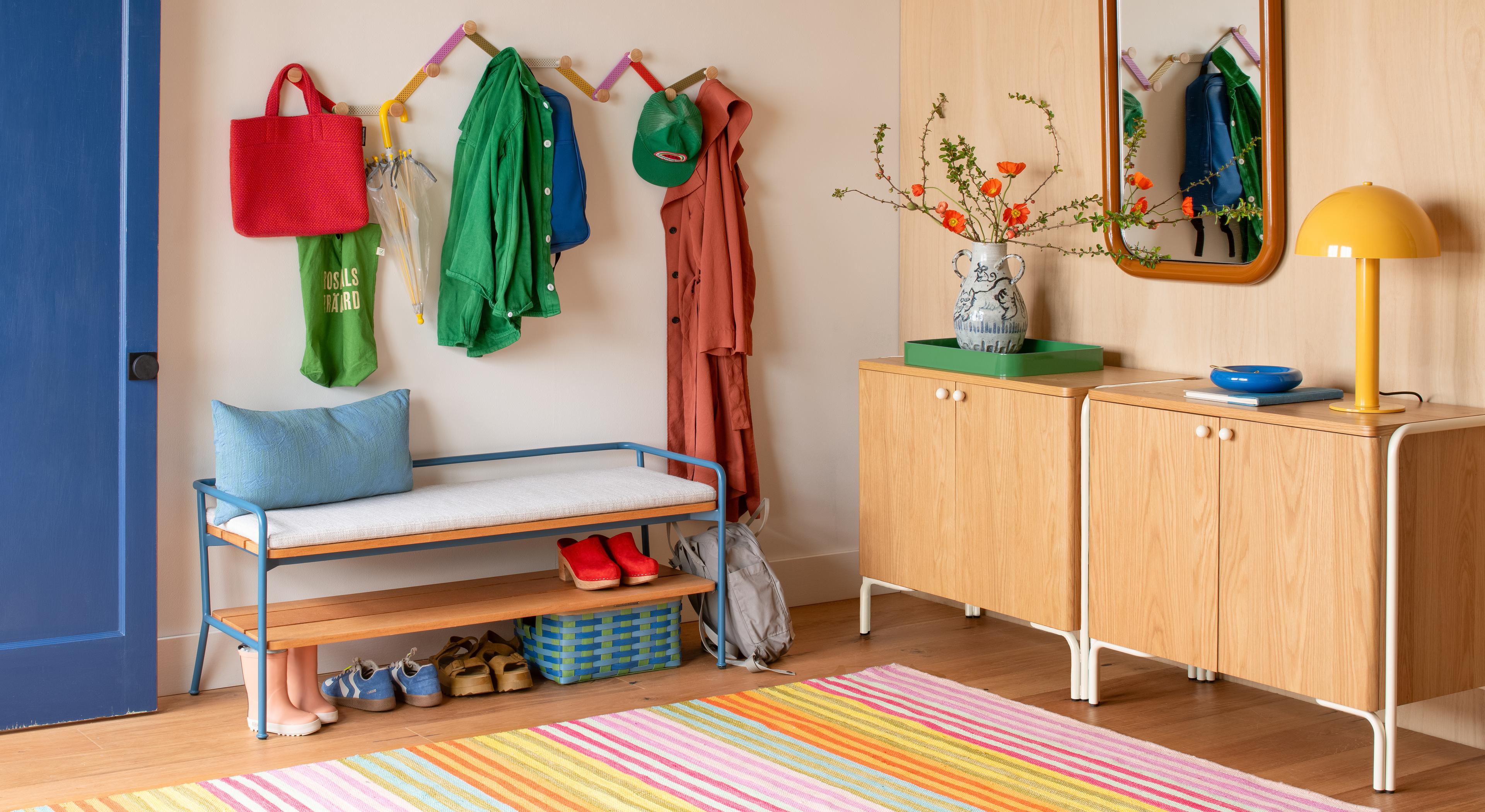
You don't need a sprawling suburban mudroom to implement these systems. In fact, Montessori principles are often easier to apply in small apartments because they force you to be intentional with every square inch.
- The Magnetic Door Hack: If you have a metal front door and zero wall space, use heavy-duty magnetic hooks. You can hang a child's coat and a small tote bag directly on the door at their height.
- The $5 DIY Coat Rack: Visit a home improvement store like Home Depot, buy a simple piece of sanded pine, and screw in three budget-friendly hooks. Mount it at toddler height behind a door. It costs less than a latte and functions perfectly.
- The Washi Tape "Parking Spot": If you don't have room for a shoe rack, use washi tape on the floor to create little rectangles. Tell your child these are "parking spots" for their shoes. It’s a visual boundary that costs pennies but keeps the floor clear.
Summary: Standard Entryway vs. Montessori Entryway
| Feature | Standard Entryway | Montessori-Inspired Entryway |
|---|---|---|
| Hook Height | 60"+ (Adult height) | 30-40" (Child eye-level) |
| Shoe Access | Large, cluttered rack | 2-3 pairs in accessible bins |
| Seating | None or high bench | Low stool or floor cushion |
| Morning Vibe | Parent-led, high stress | Child-led, calm routine |
| Outcome | "Where is my shoe?!" | "I'm ready to go, Mom!" |
FAQ
Q: My child still ignores the hooks and drops everything on the floor. What am I doing wrong? A: Habits take time! First, check the "friction." Is the hook too hard to used? Is the backpack loop too small? If the physical setup is correct, try "positive redirection." Instead of hanging it up for them, walk them back to the door and say, "I see your coat is on the floor; where is its home?"
Q: How do I handle wet/muddy gear in a Montessori setup? A: Use a low-profile boot tray right next to the bench. It provides a clear "target" for wet shoes. You can even use a small, absorbent rug that is easily washable to define the "wet zone."
Q: At what age can I start this? A: As soon as your child is walking steadily (usually around 14-18 months), they can begin participating. They might only be able to put their hat in a basket at first, but by age two or three, they can handle hooks and shoes with ease.
Take the First Step Today
Creating a Montessori-inspired entryway isn't about buying expensive furniture; it's about empathy and intentionality. This weekend, I challenge you to sit on the floor of your entryway and look around. What can you reach? What feels overwhelming?
Start small. Lower one hook. Clear out the shoe clutter. Add a stool. You’ll be amazed at how quickly your child rises to the occasion when you simply give them the tools to succeed. A calmer morning is waiting just on the other side of that front door.