In the world of professional office equipment, we often hear vague marketing terms like "all-day comfort" or "cloud-like support." But as someone who spends their life evaluating the performance and maintenance of household essentials, I’ve learned that true ergonomic value isn’t found in buzzwords—it’s found in the data.
The Haworth Breck is a chair born from an staggering 5.5 billion data points of ergonomic analysis, collected over decades of studying how the human body actually interacts with a workspace. At a starting price of $419, it positions itself in a crowded mid-range market. However, after living with this chair in a real-world home office environment, it’s clear that Haworth isn't just selling a seat; they are offering a high-tech suspension system for your spine.
Before we dive into the proprietary "Geo Stretch" technology, let's look at the baseline performance metrics.
Specs at a Glance
| Feature | Haworth Breck Specifications |
|---|---|
| Weight | 30 lbs (Ultra-lightweight) |
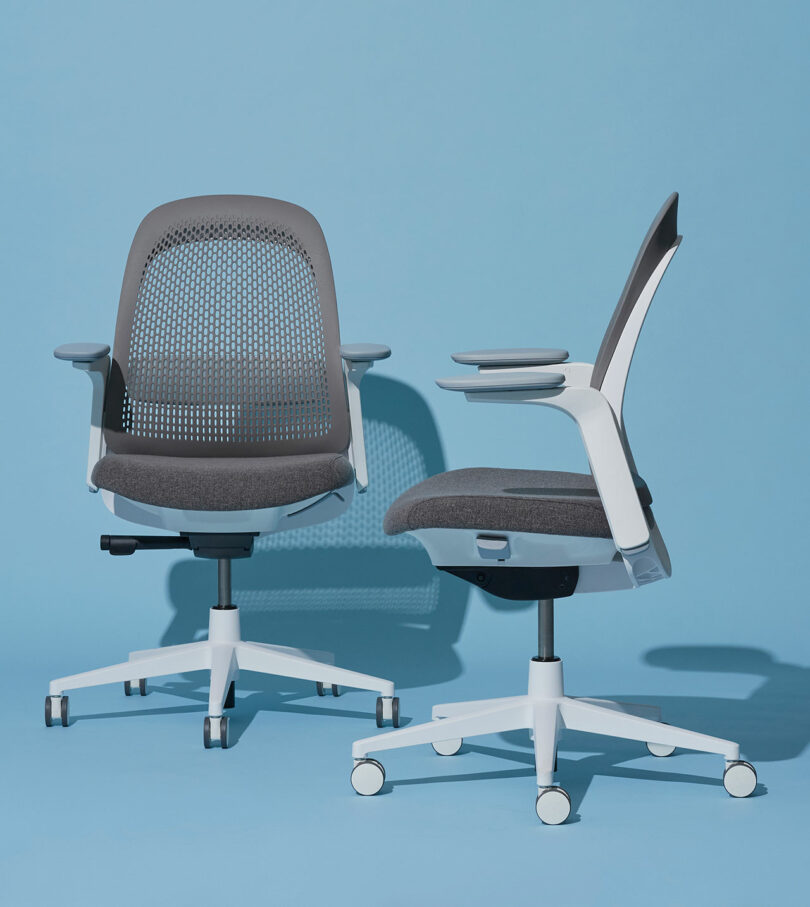
| Backrest Tech | Patented Geo Stretch™ (Proprietary Geometric Mesh) |
| Armrests | 4D Adjustable (Height, Width, Depth, Pivot) |
| Weight Capacity | 325 lbs |
| Assembly | Tool-less (approx. 60 seconds) |
| Warranty | 12-Year (Parts and Labor) |
| Certifications | BIFMA Level 3, GREENGUARD Gold |
The Core Innovation: What is Haworth Geo Stretch™?
Most ergonomic chairs under $500 rely on a simple nylon mesh stretched over a plastic frame. While breathable, these designs often suffer from "hammocking"—where the mesh loses its tension over time, causing your lower back to sag.
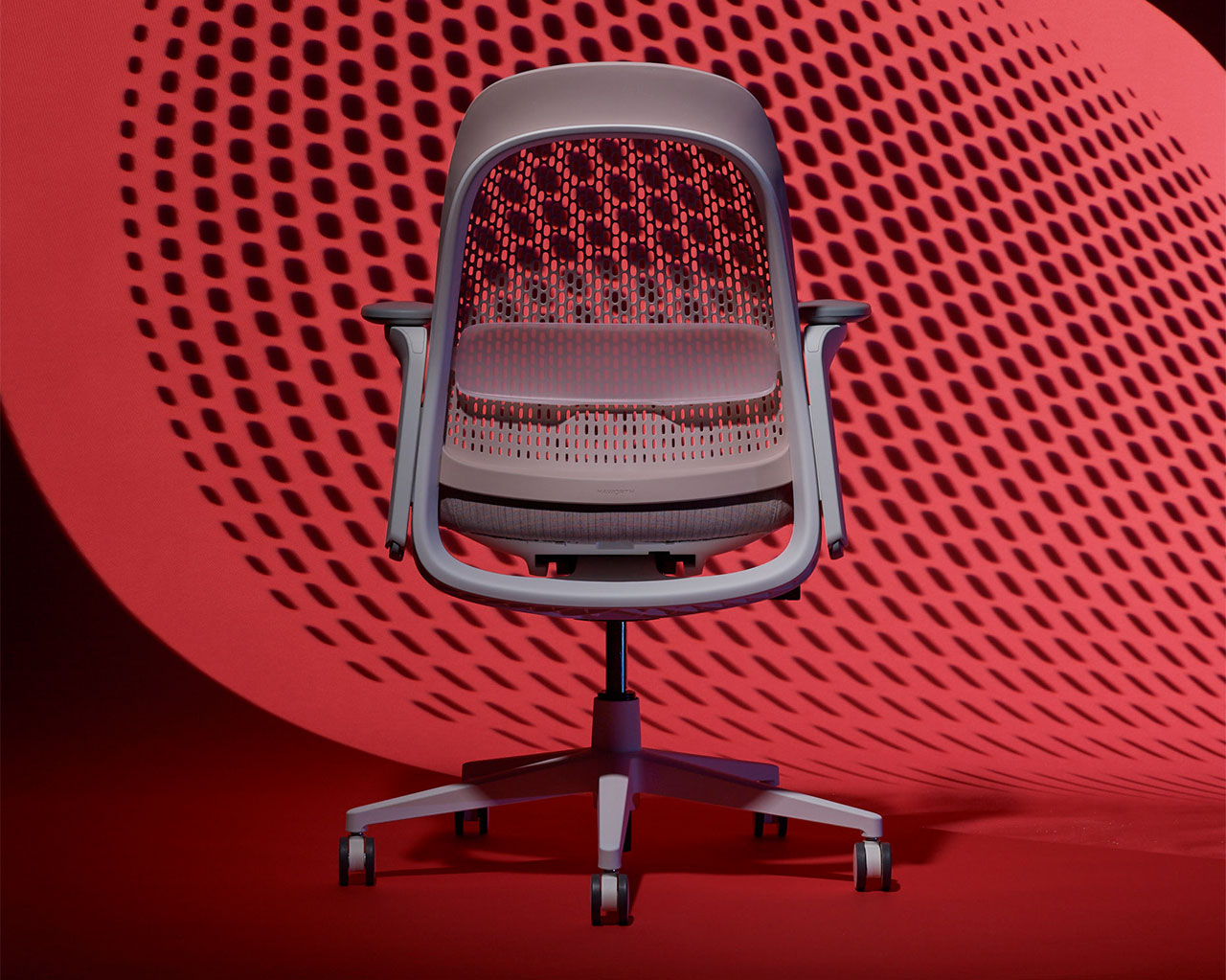
Haworth’s answer is Geo Stretch™ technology. This is a patented, proprietary structural element featuring a flexible geometric-stretch backrest. Rather than a uniform weave, the Geo Stretch material uses varying patterns to balance ergonomic suspension with movement tolerance. In simpler terms: it knows where to be firm and where to give.
The magic happens in how it manages pressure points. When you lean back, the geometric pattern expands and contracts based on the specific contour of your shoulder blades and lumbar spine. It mimics the responsive feel of high-end suspension chairs, like the $1,400 Herman Miller Aeron, but does so without the complex mechanical "exo-skeleton." This prevents the "tech neck" slump by encouraging an active, upright posture that feels supported rather than forced.
Adjustability and Performance: 5 Points of Customization
In my testing, the Breck distinguishes itself by offering customization options usually reserved for "executive" class seating. Many chairs in this price bracket cut corners on the armrests or the seat pan depth; the Breck leans into them.
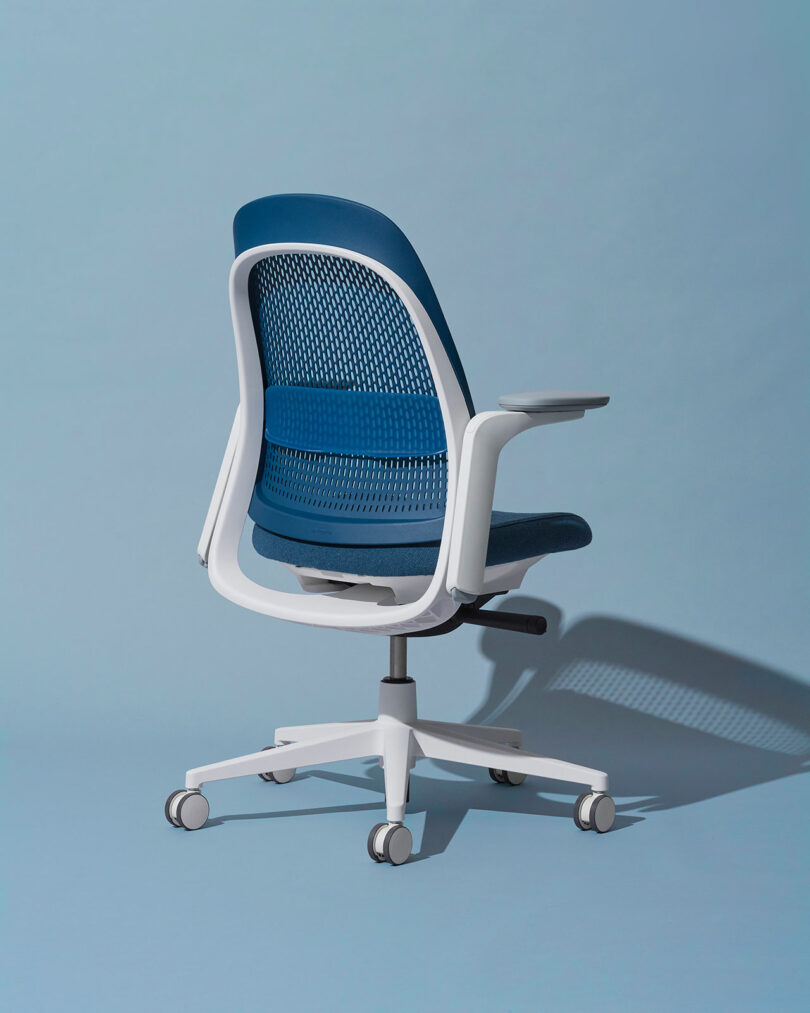
- Weight-Activated Recline: You won't find a tension knob here. The chair uses your body weight to determine the resistance of the tilt, paired with a 3-position backstop mechanism to lock your preferred angle.
- 4D Armrest Versatility: This is a standout feature. The arms move in four dimensions: height, width, depth, and pivot. Whether you are typing on a laptop or gaming with a controller, you can align the armrests to prevent wrist strain.
- Seat Depth Adjustment: A critical feature for users of different heights. You can slide the seat pan forward or backward (fore-aft) to ensure your thighs are fully supported without the front edge of the seat cutting off circulation at your knees.
- Lumbar Response: While the Geo Stretch back handles the heavy lifting, the frame is shaped to provide a consistent lumbar curve that remains effective even as you shift positions throughout the day.
- Breathability: Unlike foam-backed chairs that trap heat, the open geometric pattern ensures constant airflow, keeping you cool during those marathon 8-hour sessions.
From Box to Desk: The 60-Second Assembly
One of the biggest pain points for remote workers is the dreaded "some assembly required" tag. Usually, this involves a bag of 20 screws, a flimsy L-wrench, and thirty minutes of frustration.
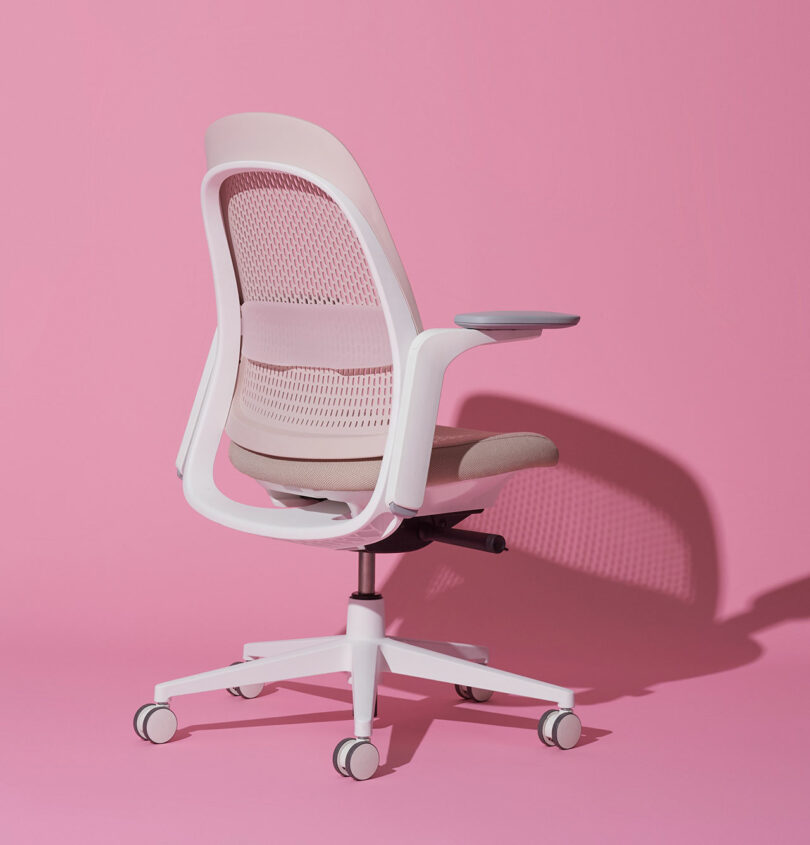
The Haworth Breck changes the game with its 60-second assembly. The chair arrives in four core components. Because of its precision engineering, the assembly is entirely tool-less. You simply drop the gas lift into the five-star base, click the seat onto the lift, and slide the backrest into the integrated slot until it locks.
In my trial, it actually took longer to remove the protective cardboard than it did to put the chair together. For companies deploying hundreds of chairs or a freelancer working from a small apartment, this ease of setup is a massive value-add. It speaks to the "maintenance-free" philosophy I look for in long-term products—there are no screws to rattle loose over time because there are no screws involved in the primary assembly.
Sustainability: Seating Made from the Sea
As an editor focused on long-term value, I consider the environmental footprint a key part of a product’s "lifecycle cost." The Breck is arguably one of the most responsible chairs on the market today.
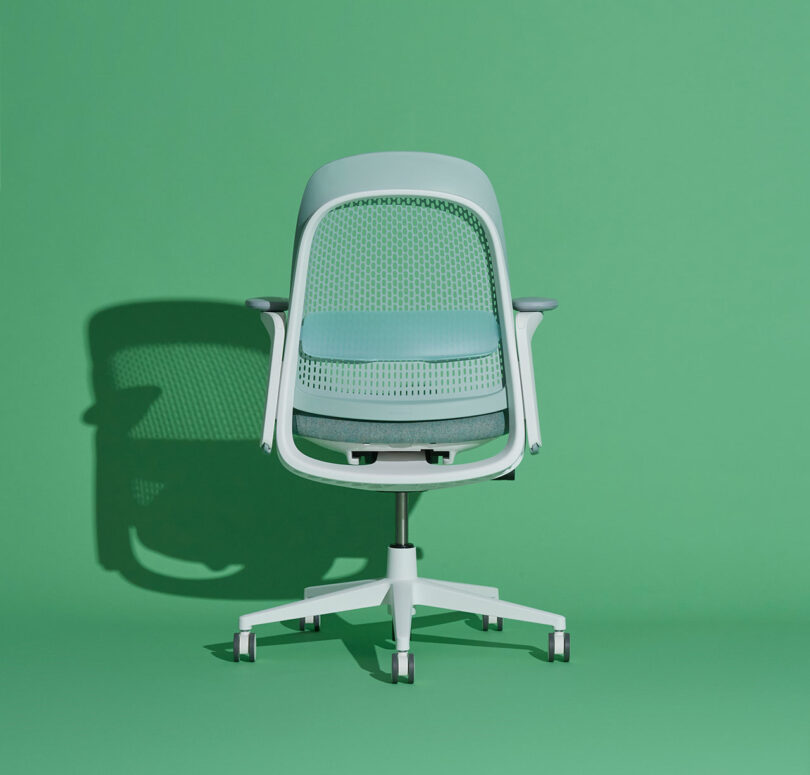
Is the Haworth Breck chair sustainable? Absolutely. It is BIFMA Level 3 and GREENGUARD Gold certified, but the real story is in the materials. The chair is constructed using over 50% recycled content, including reclaimed ocean plastic from fishing nets.
Furthermore, the Breck is manufactured in a certified zero-waste-to-landfill facility. When the chair eventually reaches the end of its life—likely decades from now, given the 12-year warranty—it is 94% recyclable. This isn't just "greenwashing"; it’s a structural commitment to the circular economy.
Performance Comparison: How Does It Stack Up?
To understand the Breck's value, we have to look at its primary competitors. While the Herman Miller Aeron is the "gold standard," it’s often triple the price. The Branch Verve is a common mid-range choice, but it lacks the scientific data-backing of Haworth’s research.
| Feature | Haworth Breck | Branch Verve | Herman Miller Aeron |
|---|---|---|---|
| Price | ~$419 | ~$599 | ~$1,400+ |
| Assembly | 1 Minute (Tool-less) | 20 Minutes (Tools req.) | Pre-assembled |
| Weight | 30 lbs | 45 lbs | 41 lbs |
| Warranty | 12 Years | 7 Years | 12 Years |
| Back Tech | Geo Stretch™ | 3D Knit Mesh | 8Z Pellicle Mesh |
Pros and Cons: A Realistic Verdict
No product is perfect, and even with Haworth’s pedigree, there are trade-offs to consider.
The Highs:
- Incredible Value: Getting 4D arms and weight-activated recline for under $500 is rare.
- Lightweight Maneuverability: At only 30 lbs, it’s incredibly easy to move between rooms if you share a workspace.
- The Geo Stretch Feel: It offers a unique "firm but flexible" sensation that is far superior to cheap mesh.
- Breathability: Excellent thermal regulation for hot climates or warm home offices.
The Lows:
- Arm Stalk Stability: Because the armrests are so adjustable, there is a slight "play" or wobble in the arm stalks if you shake them vigorously. It’s not noticeable during typing, but it doesn't feel as "tank-like" as a $1,000 chair.
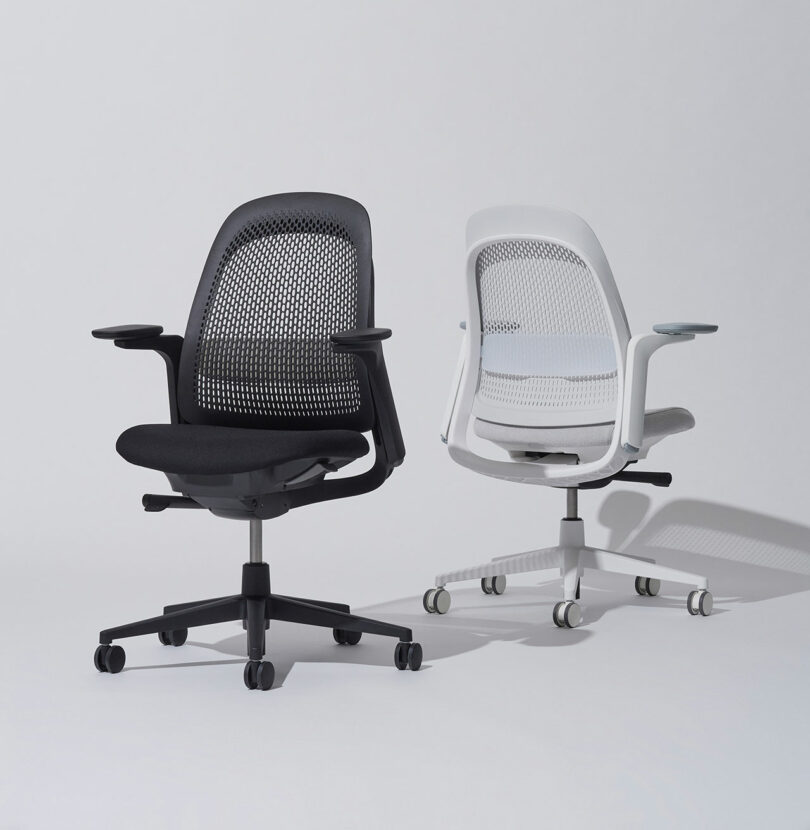
- Color Paths: While the color options for the Geo Stretch mesh are vibrant (including some beautiful eco-friendly hues), the base and frame options are more limited, typically sticking to standard black or fog.
FAQ
Q: Is the Breck chair suitable for tall users? A: Yes. Thanks to the seat depth adjustment (fore-aft) and the height-adjustable backrest, the Breck comfortably accommodates users from 5'0" up to 6'4". However, those on the extreme ends of the height spectrum should always utilize the seat depth adjustment to ensure proper circulation.
Q: Does the Geo Stretch mesh sag over time? A: Unlike traditional mesh, Geo Stretch is a proprietary geometric element designed for long-term tension retention. Haworth backs this with a 12-year warranty, which covers the mesh integrity, ensuring the chair maintains its "suspension" feel for over a decade.
Q: Can I use this chair on hardwood floors? A: The Breck comes standard with high-quality casters. For hardwood, I always recommend ensuring you select the "soft caster" option or using a chair mat to preserve your flooring, though the standard casters are quite smooth.
Conclusion: The New Standard for the Modern Workspace?
After putting the Haworth Breck through its paces, I’m convinced it represents a shift in what we should expect from "entry-level" professional seating. It manages to strip away the unnecessary bulk and complexity of traditional ergonomic chairs while doubling down on the features that actually matter: support, ease of setup, and sustainability.
If you are looking for a chair that balances scientific engineering (those 5.5 billion data points aren't just for show) with a price tag that doesn't break the bank, the Breck is a top-tier contender. It’s a "buy it once" product that provides a level of comfort that your back—and your planet—will thank you for.