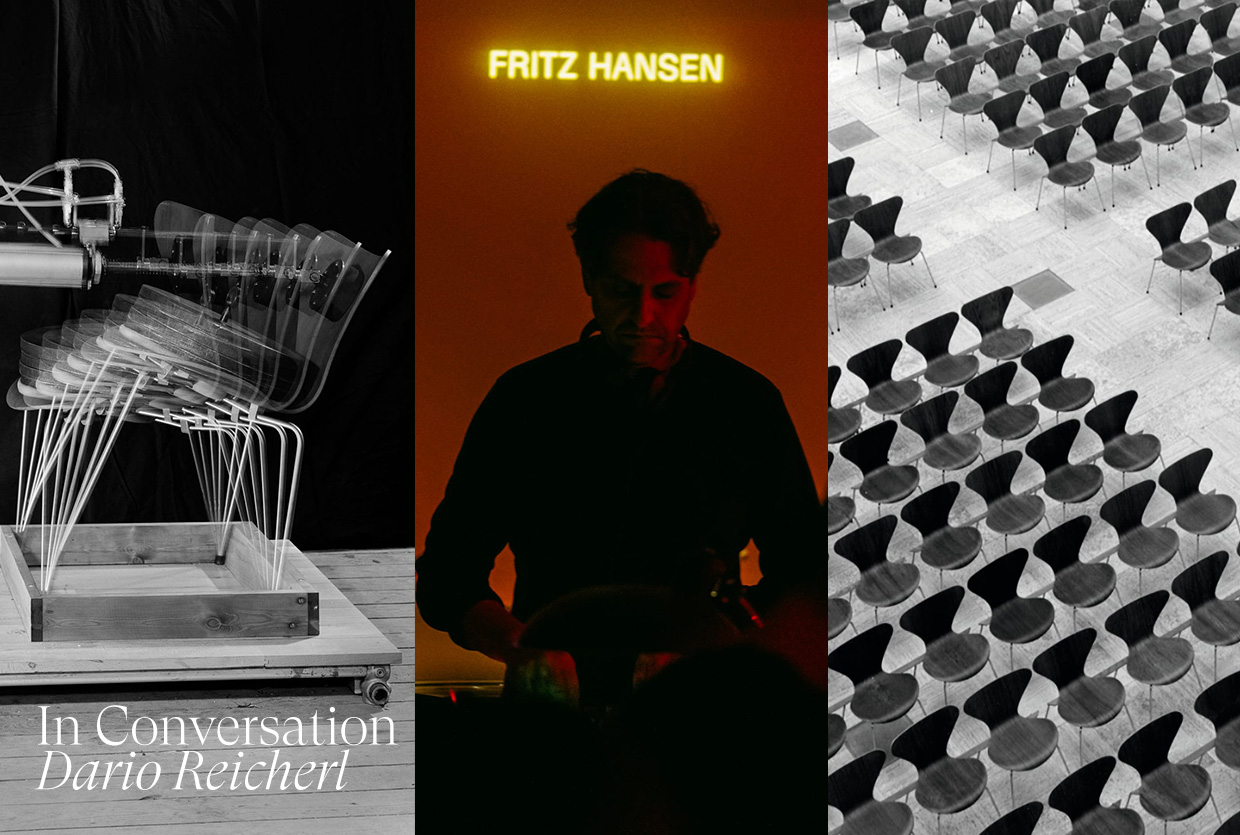
To step into a room furnished with a Series 7 chair is to witness a masterclass in the intersection of art and utility. Since its debut in 1955, this sinuous silhouette has become so synonymous with modern design that we often take its presence for granted. Designed by the visionary Danish architect Arne Jacobsen for Fritz Hansen, the Series 7—officially known as Model 3107—is not merely a piece of furniture; it is a cultural artifact. It represents a moment when industrial technology finally caught up with the fluid dreams of the human form, resulting in the most successful stackable chair in history.
The Series 7’s brilliance lies in its construction: a continuous, hourglass-shaped shell made of pressure-molded veneer. Unlike Jacobsen’s earlier commissions, which were often tied to specific architectural masterpieces like the SAS Royal Hotel, the Series 7 was designed with a broader vision—to bring high-concept Danish modernism into the everyday domestic space. Seventy years later, with over 8 million units sold worldwide, its relevance has only deepened. As we approach the 70th anniversary of this icon in 2025, we look back at the history, the craftsmanship, and the enduring soul of a chair that redefined how we sit.
The Genesis of an Icon: 1955 and the Rødovre Town Hall
While many believe the Series 7 was an overnight sensation, it was actually an evolution. In the early 1950s, Jacobsen had already experimented with the three-legged Ant™ chair. However, he sought a design with more stability and a broader appeal. The breakthrough came in 1955 when he utilized a refined pressure-molding technique that allowed the veneer to bend in two dimensions without snapping.
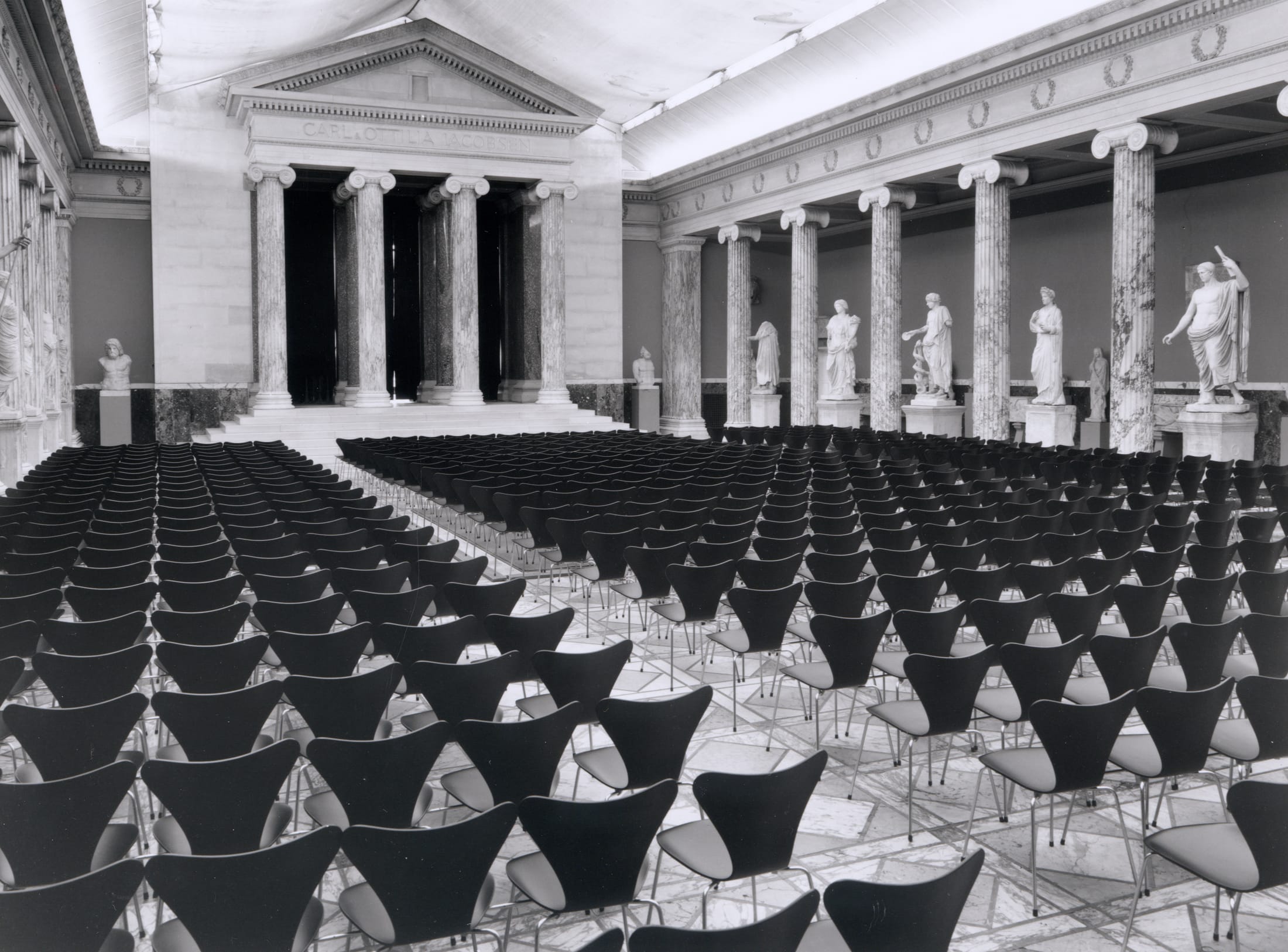
Originally intended for the boardroom of the Rødovre Town Hall, the Model 3107 quickly transcended its institutional beginnings. It was the chair that "democratized" Danish design. Its stackable nature made it practical for schools and offices, yet its sculptural beauty made it a darling of the interior design world.
Series 7 vs. The Ant™: A Design Evolution
| Feature | The Ant™ (1952) | The Series 7 (1955) |
|---|---|---|
| Leg Count | Originally 3 (later 4) | 4 |
| Waistline | Narrow, pronounced "wasp" waist | Soft, hourglass curve |
| Market Intent | Canteens and specific projects | Domestic and commercial use |
| Stability | Moderate | Exceptional |
Masterclass in Craftsmanship: How It’s Made
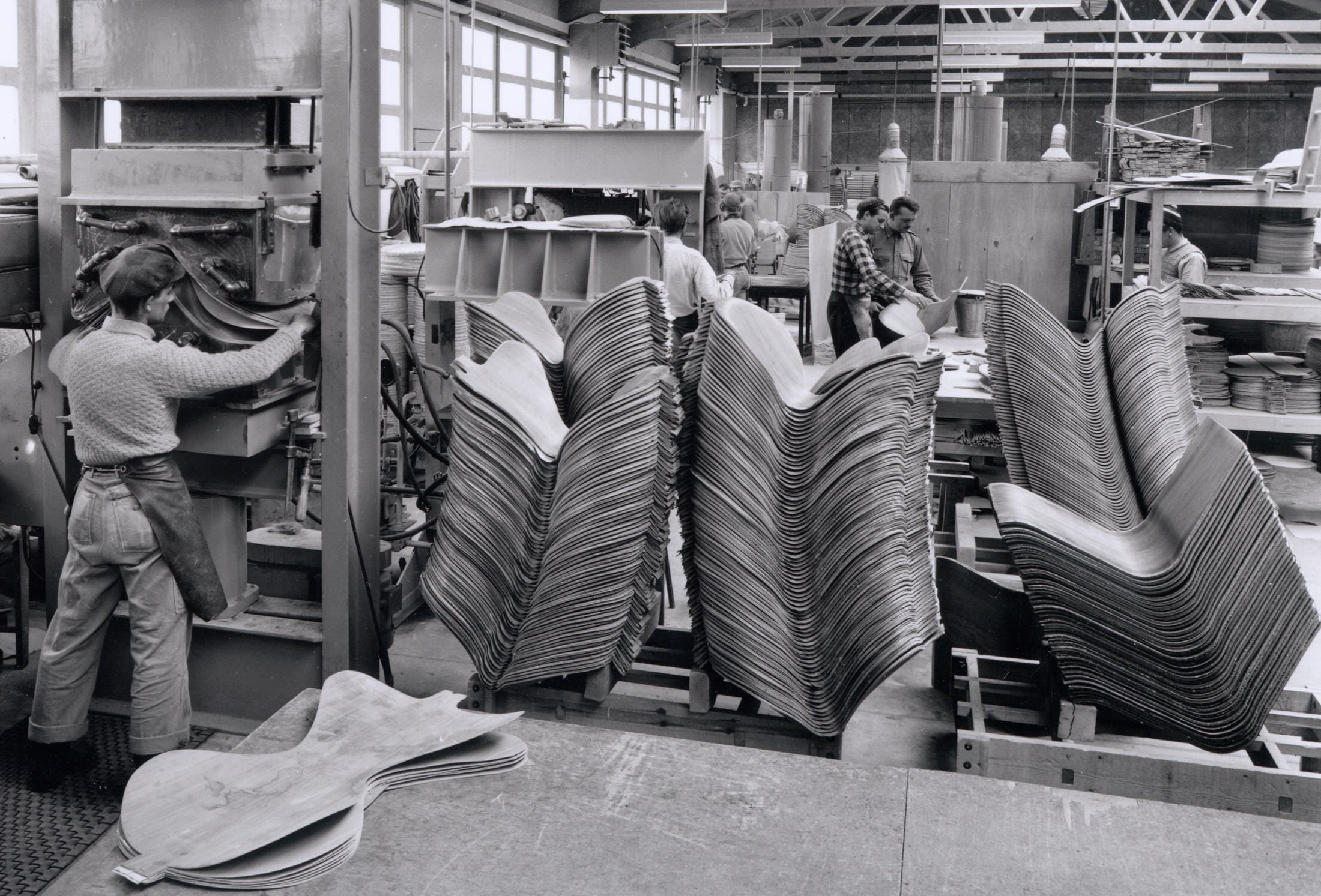
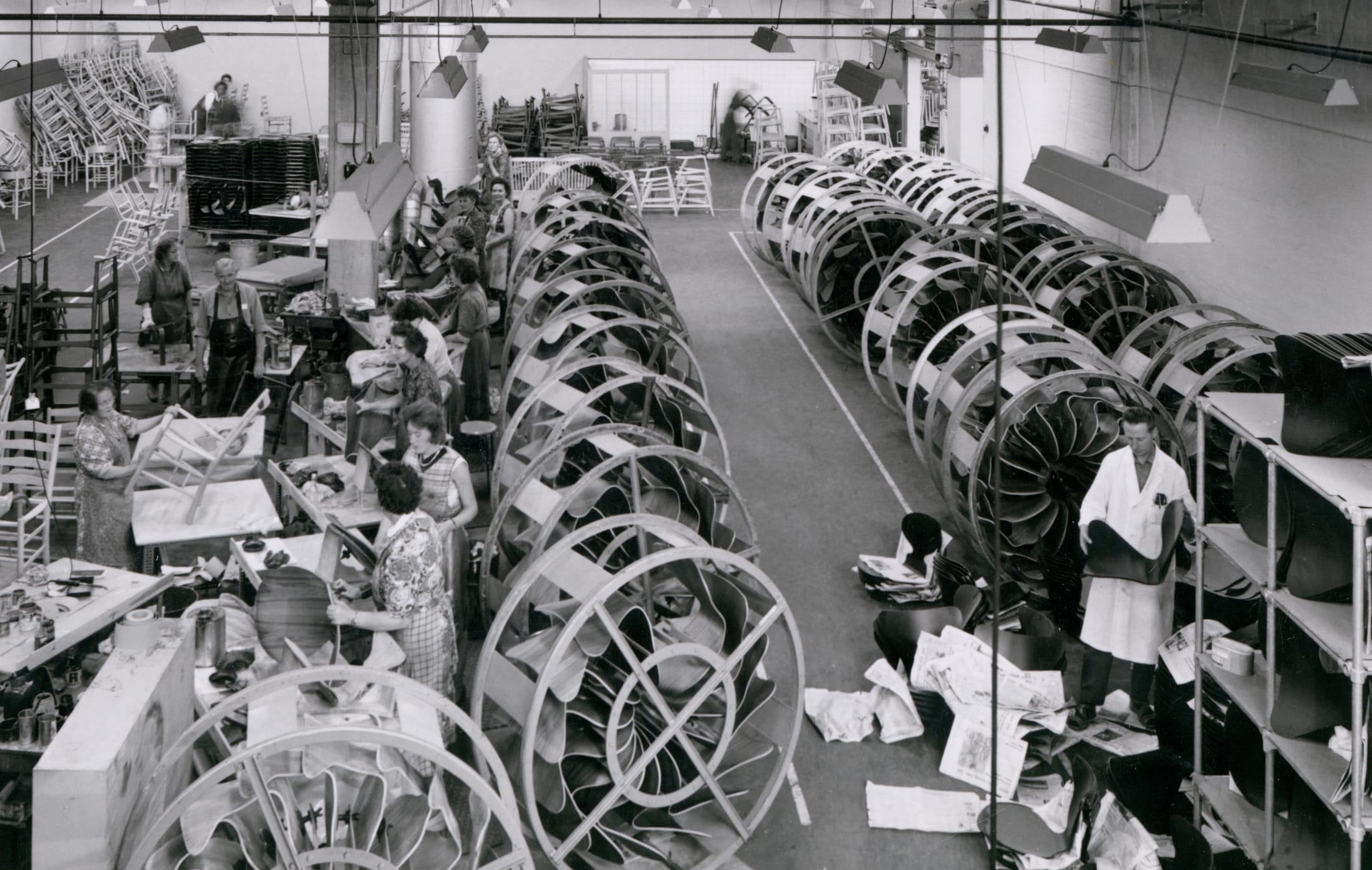
The secret to the Series 7’s longevity isn't just in its shape, but in the rigorous alchemy of its production. Each shell is composed of nine layers of veneer. The two outer layers are chosen for their aesthetic grain, while the seven inner layers are meticulously arranged to ensure maximum strength and flexibility.
At the Fritz Hansen factory in Allerød, Denmark, the process remains remarkably similar to how it was in 1955. They still use the original presses, and while the technology has been refined, the human eye remains the ultimate arbiter of quality. There is a legendary "Coca-Cola" style secrecy surrounding the specific recipe for the glue used between the layers—a formula that allows the wood to "breathe" and flex without delaminating over decades of use.
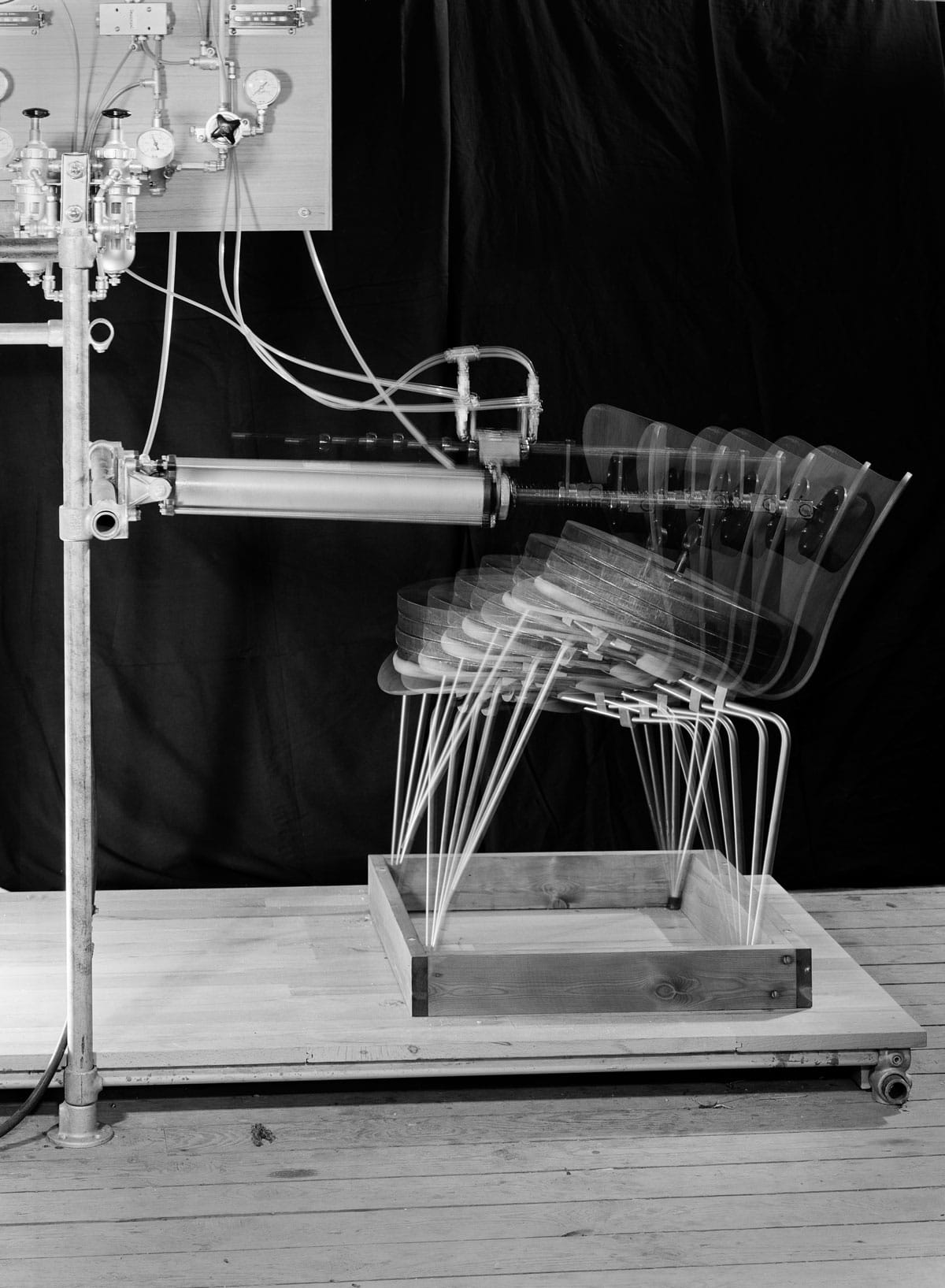
The durability of the Series 7 is a result of extreme engineering. Every batch undergoes rigorous testing to ensure the shell can withstand the weight and movement of a lifetime. It is this commitment to "over-engineering" that has allowed chairs from the 1950s to remain in active use today.
Cultural Impact: From Boardrooms to Pop Culture Scandals
The Series 7 didn’t just sit in rooms; it sat in the center of history. Its most famous "appearance" happened in 1963, when photographer Lewis Morley captured the model Christine Keeler sitting naked behind a chair during the Profumo Affair. While the chair in the photo was actually a budget replica (much to Jacobsen’s chagrin), the silhouette was so distinct that the world immediately associated the "feeling" of the photo with the Series 7.
This moment cemented the chair as more than furniture—it became a symbol of modern rebellion and sophisticated minimalism. It proved that a chair’s silhouette could be as recognizable as a celebrity's face.
The 70th Anniversary (2025): Iridescence and Tailoring
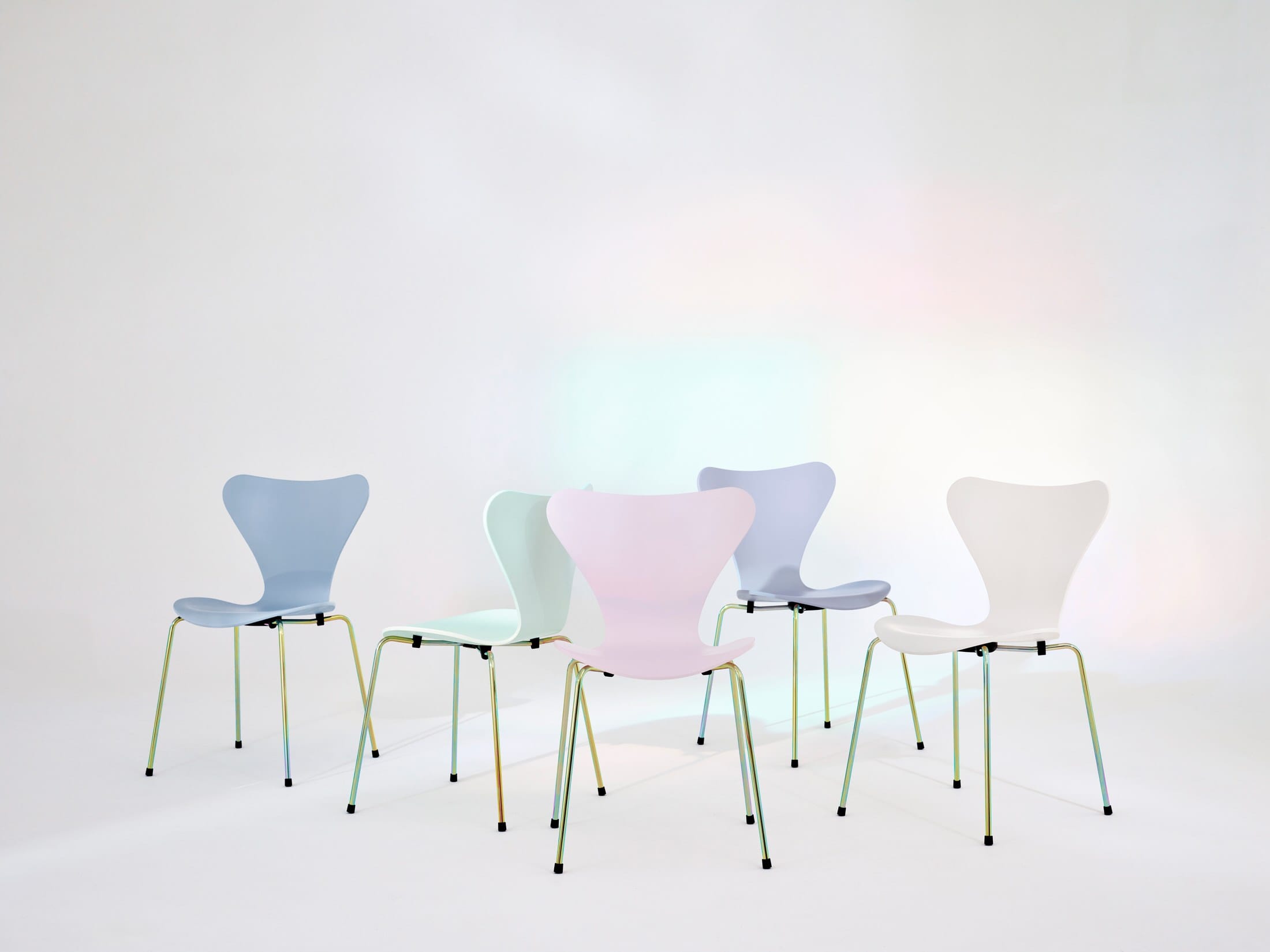
To celebrate seven decades of the Model 3107, Fritz Hansen is launching a special 2025 Anniversary collection that looks both backward to nature and forward to the future. The centerpiece of this celebration is the "Iridescent" edition.
The color palette for the 2025 anniversary is deeply poetic, inspired by the shifting hues of the Copenhagen sky at exactly 7:14 AM. This transition from night to day is captured in five iridescent finishes:
- Sky Blue: A crisp, morning clarity.
- Deep Violet: The last lingering shadows of dawn.
- Pale Pink: The first blush of sunlight.
- Morning Beige: The warmth of a rising sun.
- Ethereal Green: Inspired by the dew on Danish parklands.
Furthermore, Fritz Hansen has collaborated with the Italian leather masters at Enrico Pellizzoni to create a 'Tailored' edition. This version features handcrafted leather upholstery that hugs the chair’s curves like a bespoke suit, proving that even at 70, the Series 7 can still reinvent its wardrobe.
The Philosophy of Longevity: Why It Lasts 70+ Years
In a world of "fast furniture," the Series 7 stands as a testament to radical sustainability through durability. The best way to be environmentally responsible is to avoid creating trash in the first place. The Series 7 is designed to be passed down through generations, not sent to a landfill.
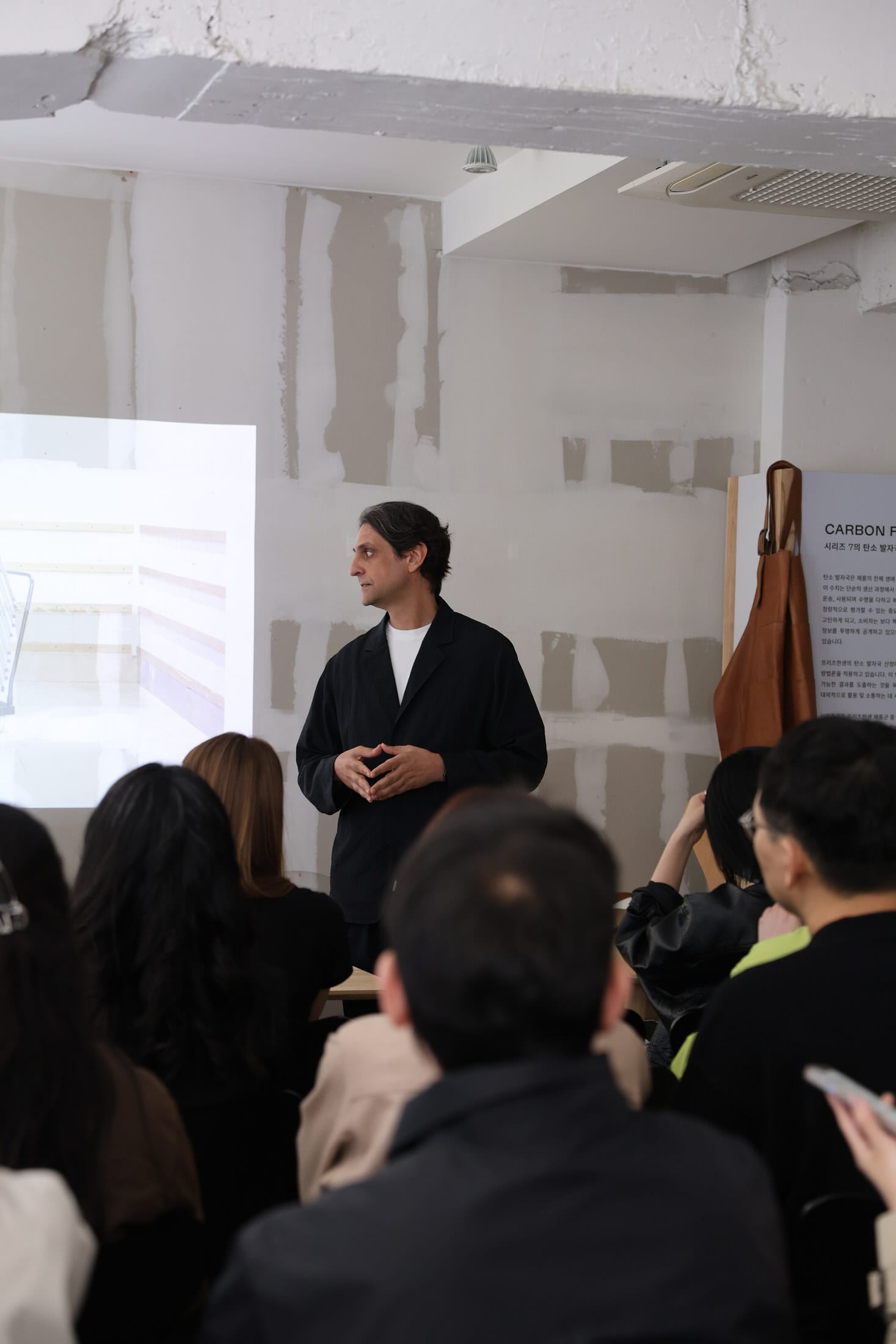
In 2024, Fritz Hansen launched the 'Care & Repair' initiative in Seoul. The event was a staggering success, with 3,000 people visiting over 15 days to learn how to restore their vintage chairs. We saw chairs from the early 1960s being brought back to life with new lacquer or base replacements, highlighting a lifespan that far exceeds the 70-year mark.
A Buyer’s Guide: Spotting the Authentic Series 7
With fame comes imitation. For the discerning collector or homeowner, knowing how to spot a genuine Fritz Hansen Series 7 is essential. An authentic chair isn't just an aesthetic choice; it's an investment that appreciates over time.
How to Spot an Original:
- The Underside Stamp: Modern authentic chairs feature a stamped serial number and a Fritz Hansen logo on the underside of the shell.
- The Waistline: Replicas often fail to capture the precise, sinuous curve of the "waist." On an original, the curve is smooth and structurally sound.
- The Veneer Layers: Look at the edge of the shell. You should be able to see the distinct layers of high-quality wood veneer.
- The Flex: A genuine Series 7 has a specific "give" in the backrest that provides comfort without compromising stability.
Editor’s Tip: If you are buying vintage, look for the circular metal "cap" under the seat. Older models have different cap designs depending on the decade, which can help you date your piece to a specific era of production.
Conclusion: Passing the Torch
The Series 7 Chair is more than a seat; it is a story of Danish resilience and the belief that good design should be accessible to everyone. Whether it’s the new iridescent 70th-anniversary editions or a weathered 1960s original found at a flea market, the Model 3107 remains the gold standard of modern living. It is a memory we can stack, a piece of history we can sit on, and a legacy that continues to shape our homes.
FAQ
Why is it called the Series 7? The name refers to its model number, 3107, and it was part of a broader series of chairs Jacobsen developed to explore the possibilities of molded plywood.
Can the Series 7 chair be used outdoors? Standard veneer Series 7 chairs are for indoor use only. However, Fritz Hansen does offer specific versions with coated finishes or different materials that may be suitable for sheltered outdoor areas—always check the specific material specifications.
Is the Series 7 chair actually comfortable for long periods? Surprisingly, yes. The pressure-molding technique allows the backrest to flex slightly with the sitter's movement, providing an ergonomic support that many rigid wooden chairs lack.