Quick Facts
- Collection Name: See Earth by SAW.Earth
- Designer: Drew Seskunas (Brooklyn-based Architect)
- Composition: 13 distinct lighting designs (floor, table, pendant, sconces) and 3 wood-and-stone assemblages.
- Primary Materials: Handmade mulberry bark paper, sustainable cedar bases, organic inclusions (hemp, bodhi leaves, dried flowers).
- Lighting Tech: Soft-glow integrated LEDs with cloth-cord dimmer switches.
- Trend Forecast: Part of the 2026 "Paper Light Renaissance," emphasizing sculptural organicism and wellness-centric diffused light.
Light has always been the silent architect of our homes. It defines boundaries, softens edges, and dictates the emotional resonance of a room. As we look toward the design landscape of 2026, we are witnessing a profound shift in how we illuminate our private sanctuaries. There is a moving away from the clinical precision of recessed "can" lights and toward what I call "soft-statement" lighting—pieces that function as quiet sculptures by day and ethereal anchors by night. Global interest in this "Paper Light Renaissance" is projected to peak in 2026, driven by a 40% increase in consumer demand for lighting that utilizes organic materials like washi and mulberry bark to foster wellness and warmth.
At the forefront of this movement is SAW.Earth’s debut lighting series, See Earth. This collection is not merely a set of fixtures; it is a profound exploration of the relationship between humans and the built environment. Comprising 13 handmade paper lamps, the series marks the first solo lighting exhibition for designer Drew Seskunas. It represents the ultimate evolution of paper lighting, moving far beyond the disposable "dorm-room" shades of the past and into the realm of permanent, architectural art.
Meet the Designer: Drew Seskunas and the SAW.Earth Vision
To understand the See Earth collection, one must understand the hand behind the fold. Drew Seskunas, a Brooklyn-based architect with a background sharpened in the design hubs of New York and Berlin, brings a structural rigor to the delicate medium of paper. His work at SAW (The Studio for Architecture and Wellness) has always been about material honesty—the idea that a material should speak for itself without being forced into an unnatural state.
The inspiration for this specific collection is as poetic as the objects themselves. Seskunas drew from Louise Erdrich’s short story, "The Stone," which contemplates the permanence of the earth versus the fleeting nature of human experience. This narrative serves as the foundation for the "See Earth" collection, where the fragility of paper meets the stoic permanence of cedar and stone. It is a negotiation between the ephemeral and the eternal, translated into light.
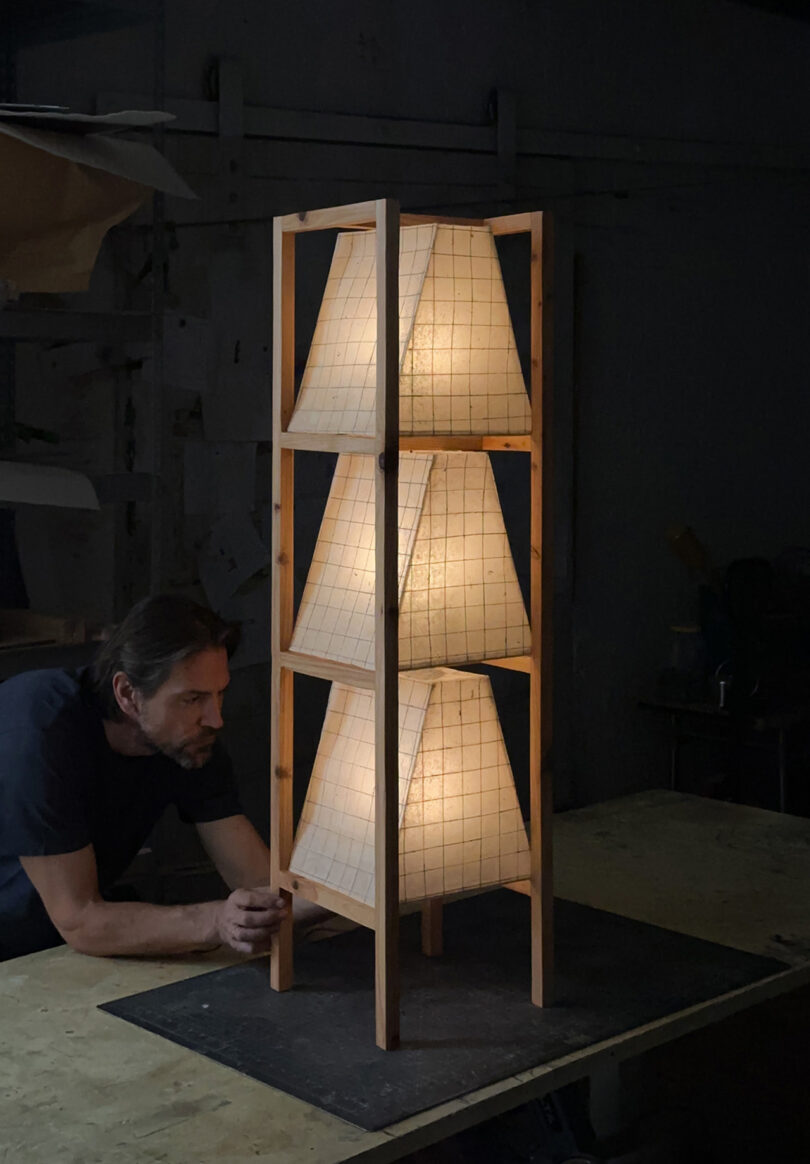
Inside the 'See Earth' Collection: Forms and Function
The See Earth collection is remarkably comprehensive, offering a solution for every "lighting layer" in a modern home. The 13 designs are categorized into:
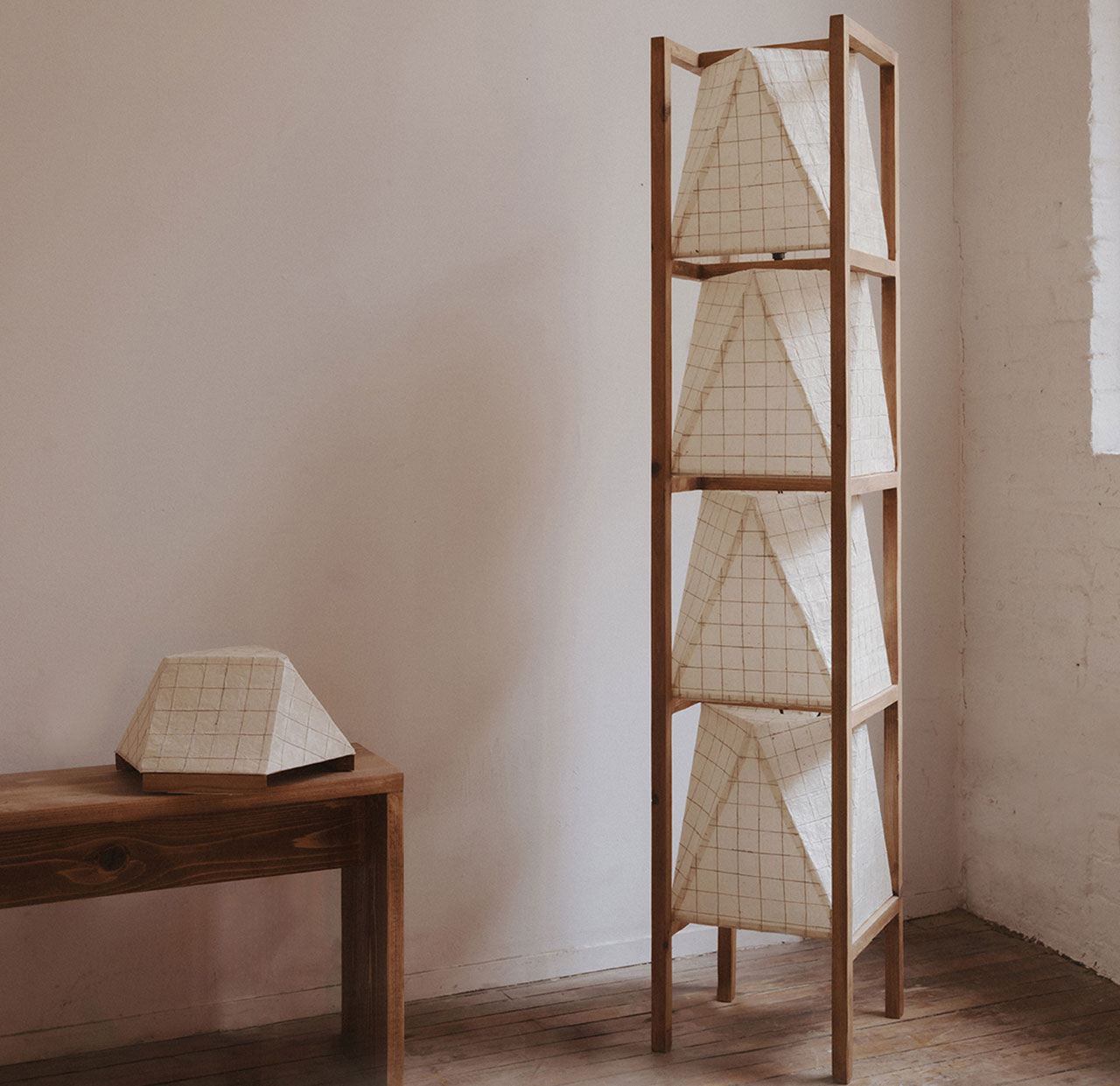
- Standing Lamps (2 designs): Tall, totemic structures that act as pillars of light in a minimalist living room.
- Table Lamps (5 designs): Varying in geometric complexity, these serve as perfect companions for bedside tables or credenzas.
- Pendants (2 designs): Overhead sculptures that transform a dining area into a gallery space.
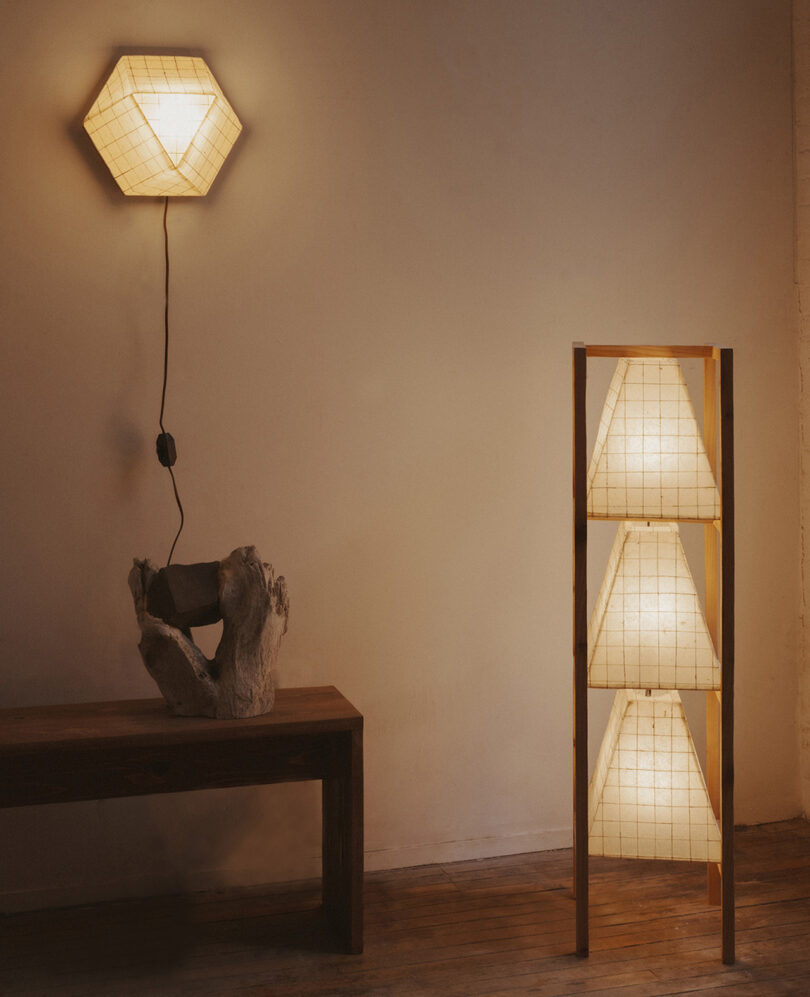
- Sconces: Wall-mounted pieces that play with shadow and depth, turning a flat wall into a textured landscape.
What sets these pieces apart is the meticulous integration of modern technology with ancient craft. Each lamp is equipped with soft-warm LEDs and cloth-cord dimmer switches, allowing the user to tune the "glow" to their specific circadian needs.
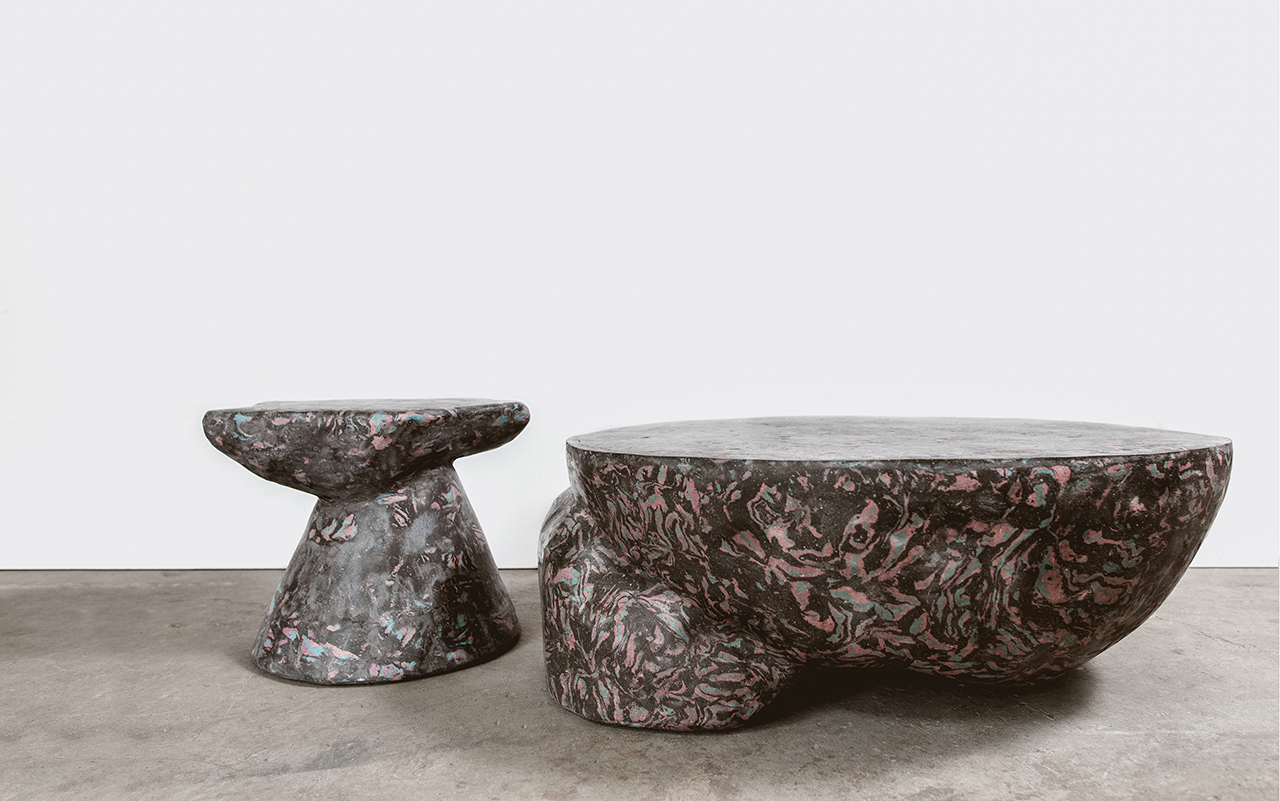
A highlight of the collection’s debut exhibition is the inclusion of three unique wood-and-stone assemblages. These pieces aren't just decorative; they ground the ethereal quality of the paper shades, providing a tactile contrast that emphasizes the weightlessness of the light itself.
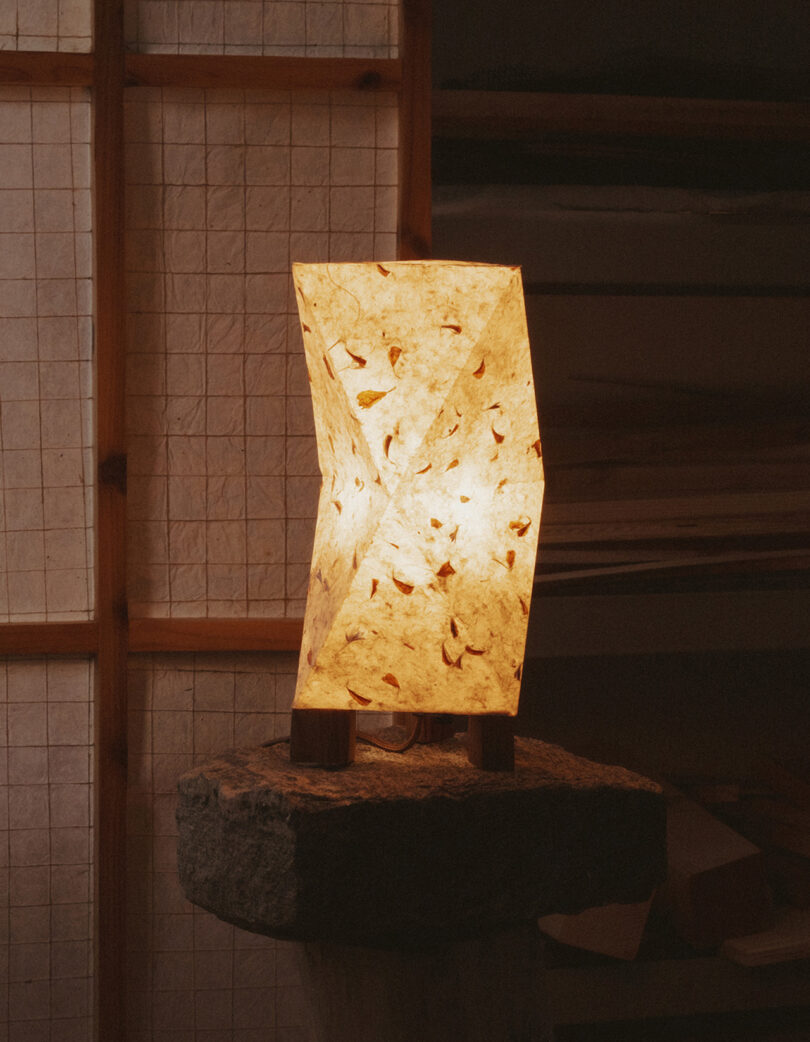
Technical Specifications & Materials
| Feature | Detail |
|---|---|
| Paper Type | Handmade Mulberry Bark (Kozo) |
| Inclusions | Raw hemp fibers, bodhi leaves, dried organic flowers |
| Base Material | Sustainably sourced Cedar |
| Hardware | Integrated soft-glow LED, cloth cord, tactile dimmer |
| Origin | Hand-assembled in Brooklyn, NY |
The Art of Mulberry Bark: Sustainability and Craft
The true soul of SAW.Earth lamps lies in the paper. Unlike mass-produced paper shades, these are constructed using sustainable mulberry bark paper, which is prized for its long, durable fibers and its ability to diffuse light with a creamy, textured quality.
Seskunas has taken this material a step further by pressing organic inclusions directly into the paper during the handmade process. When the lamp is switched off, you see a subtle, off-white geometric form. However, once illuminated, the paper reveals a hidden world: the ghost-like silhouettes of hemp fibers, the intricate veins of bodhi leaves, and the delicate shadows of dried flowers.
There is a beautiful tension here between the architectural precision of Seskunas’s frames and the "artist's hand" seen in the paper. The light reveals the grain, the shadow, and the gentle irregularities that remind us that these are objects born of nature, not a factory line.
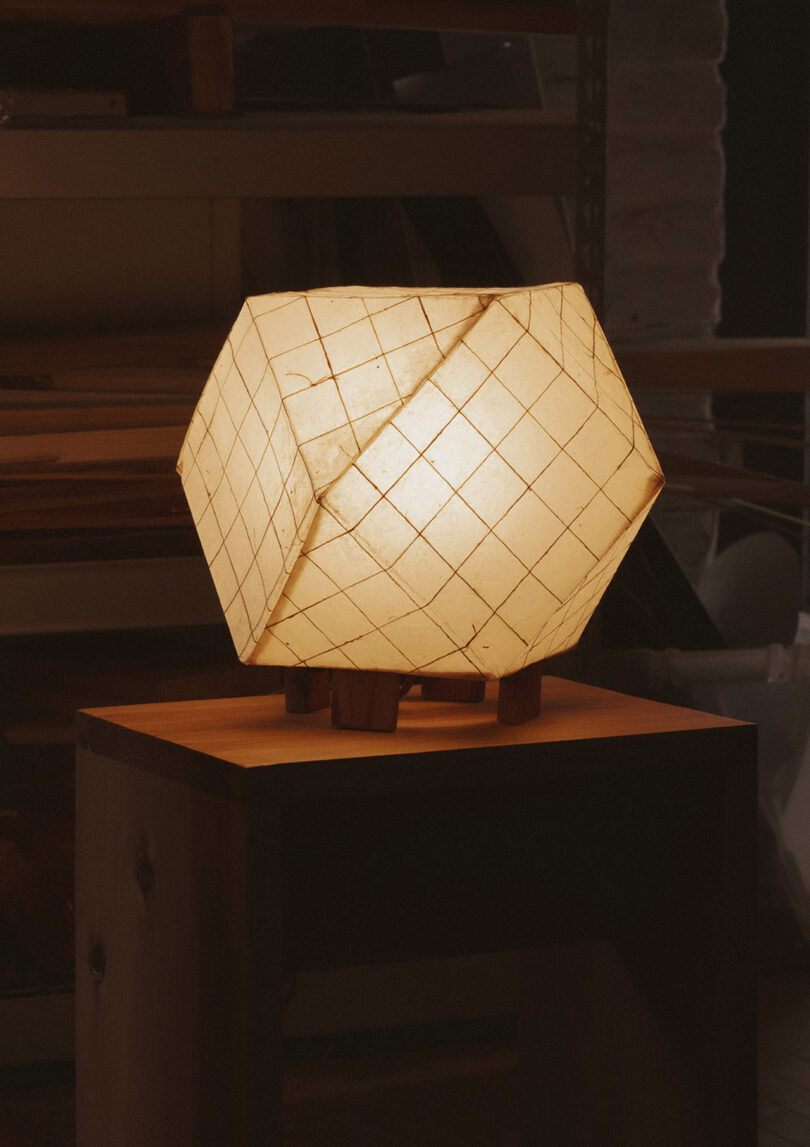
Styling the 2026 Look: Beyond Utility
As an editor, I often see readers struggle with how to incorporate "art lighting" into a functional home. The See Earth collection demands a certain level of intentionality. In 2026, we are moving away from symmetrical pairs. Instead of two identical lamps flanking a sofa, we are seeing the rise of the "asymmetrical vignette"—a look that feels more curated and less "staged."
Ivy’s Rules for Styling Sculptural Paper Lamps:
- The 'Length + Width' Rule: For table lamps in this collection, ensure the diameter of the shade is roughly proportional to the surface it sits on. A large See Earth table lamp should occupy about 1/3 of the console’s surface to maintain architectural balance.
- Material Juxtaposition: Place these mulberry paper lamps alongside "harder" materials. The softness of the paper creates a stunning dialogue when set against a cold marble countertop, a raw concrete wall, or a dark walnut desk.
- Low-Level Ambience: Use the dimmer! These lamps are at their best when dimmed to 30-40% brightness. This allows the organic inclusions (the leaves and fibers) to become the focal point rather than just the light source.
- The Corner Anchor: Use the standing lamps to "soften" a sharp corner. In modern architecture, corners often feel dead; a glowing paper totem brings that space back to life.
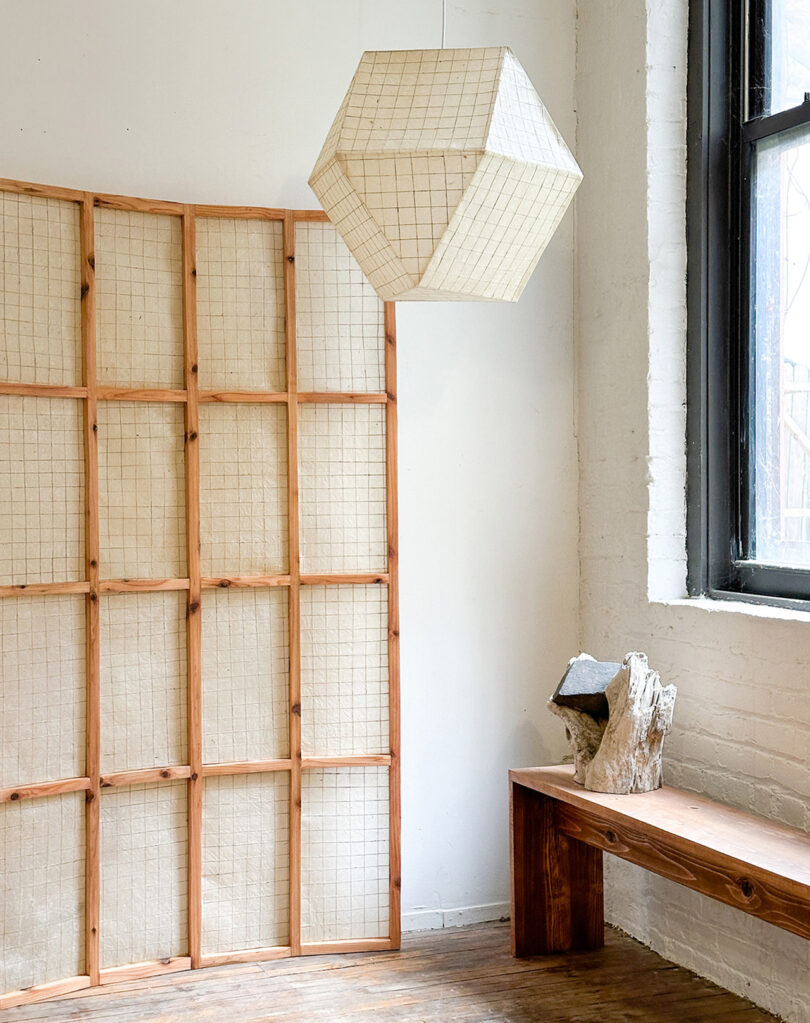
Editor’s Tip: When styling with paper lamps, keep the surrounding decor minimal. Let the light do the "talking." A single See Earth lamp on a bare wooden bench is a more powerful statement than a lamp crowded by books and trinkets.
FAQ
Q: Are paper lamps durable enough for daily use? A: Absolutely. While they appear delicate, mulberry bark paper (Kozo) is incredibly resilient and has been used in Japanese interiors for centuries. SAW.Earth uses high-quality, long-fiber paper that resists yellowing and tearing far better than standard wood-pulp paper.
Q: Do these lamps provide enough light to read by? A: The See Earth collection is primarily designed for ambient and accent lighting. While the table lamps provide a beautiful glow for a room, they are best used in conjunction with a dedicated task light if you are doing intense reading or detail work.
Q: How do you clean handmade paper lamps? A: Avoid water or cleaning chemicals. The best way to maintain the mulberry paper is with a soft, dry microfiber cloth or a gentle puff of compressed air to remove dust.
The See Earth collection by SAW.Earth is a reminder that the objects we surround ourselves with should do more than just function; they should resonate. By blending the structural language of architecture with the ancient tactile beauty of handmade paper, Drew Seskunas has created a lighting series that doesn't just illuminate a room—it transforms it into a living gallery. As we move into 2026, these are the pieces that will define the "slow design" movement: sustainable, soulful, and undeniably beautiful.