Quick Facts
- Designer: Linde Freya Tangelder (Founder of Destroyers/Builders)
- Manufacturer: Cassina
- Material: 100% Mouth-blown glass, crafted in Veneto, Italy.
- Colorways: Blue, Amber, and Fumé (Smoky Grey).
- Core Innovation: A "hollow" glass base that supports a solid, heavy upper element through master-level tension and joinery.
- Production Time: Approximately 12 hours of manual shaping per table.
- Market Position: Investment-grade collector’s furniture for the 2026 "Sculptural Artistry" trend.
Design is often a struggle between the rigid and the fluid, the permanent and the ephemeral. Rarely do we see a piece of furniture that captures the exact moment a material transitions from one state to another. Linde Freya Tangelder’s Fluid Joinery side table for Cassina is that rare exception. Launched as a cornerstone of Cassina's vision for 2026, this is more than just a surface to rest a coffee table book; it is a sculptural manifesto. Crafted from a single piece of mouth-blown glass in the historic furnaces of Veneto, Italy, Fluid Joinery redefines the boundary between functional decor and fine art.
The Collaboration: Linde Freya Tangelder and the Cassina Patronage
To understand the poetry of Fluid Joinery, one must first understand the architectural mind of Linde Freya Tangelder. As the founder of the Antwerp-based studio Destroyers/Builders, Tangelder has spent her career deconstructing architectural elements—columns, joints, and stone slabs—and reassembling them into furniture that feels ancient yet futuristic.
Her relationship with Cassina began in 2022 under the brand's "Patronage" project, an initiative designed to foster young talent and push the boundaries of industrial production. Her debut, the "Soft Corners" collection, focused on modularity and the industrial coldness of steel. However, for 2026, Tangelder has pivoted toward the ethereal. Fluid Joinery represents the evolution of this partnership, moving away from the structural rigidity of metal and into the unpredictable, organic nature of glass.
The collaboration is a testament to Cassina’s willingness to experiment. While the brand is storied for its mid-century icons, Tangelder’s influence introduces a "brutalist-poetic" lens. She treats glass not as a fragile substance to be handled with care, but as a structural medium capable of carrying significant visual and physical weight.
Fluid Joinery: The Art of Sculpting Liquid
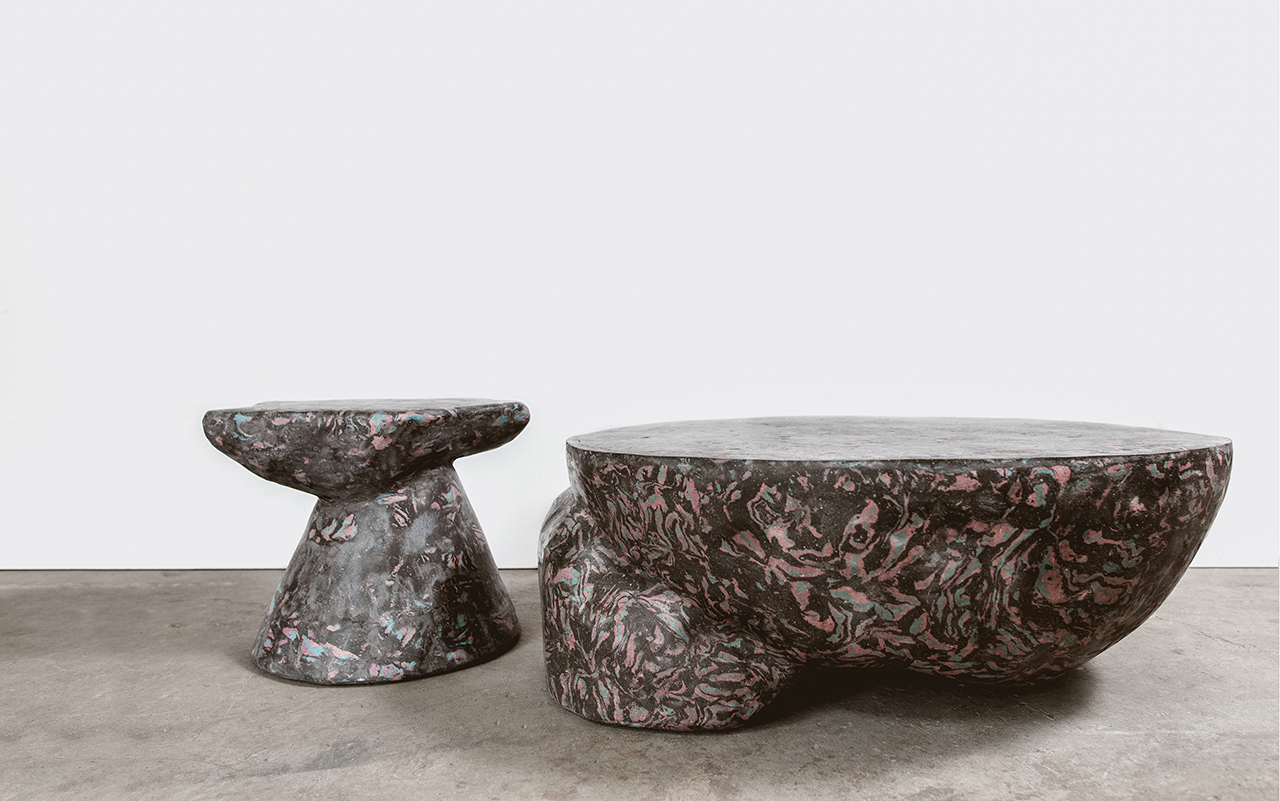
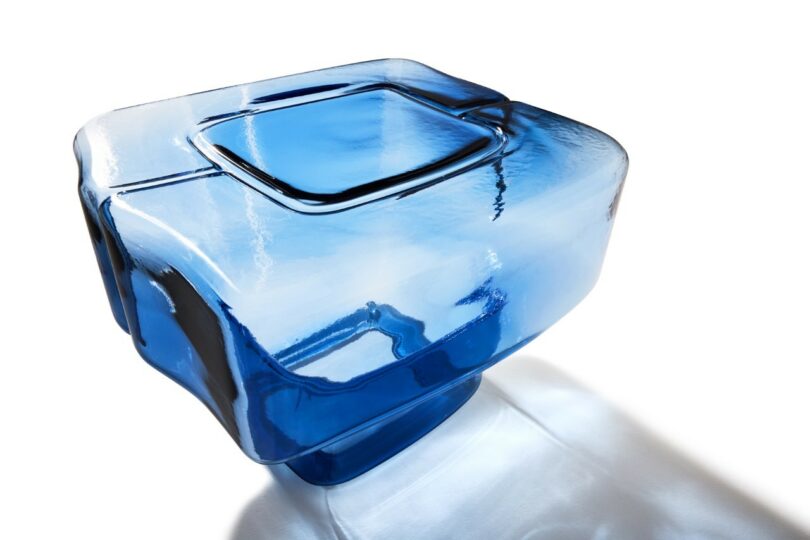
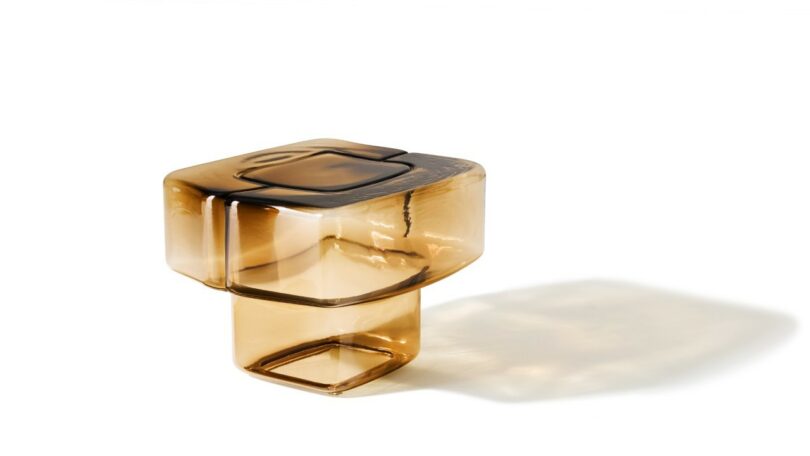
The Fluid Joinery side table is a study in material alchemy. It exists in a state of perpetual motion, appearing like a ripple of water caught mid-splash. The design features a heavy, substantial upper element that seems to float atop a more delicate, translucent base. This play on "visual gravity" is what sets the piece apart from traditional glass furniture.
The table is available in three distinct, sophisticated hues:
- Blue: A deep, oceanic translucent that evokes the Mediterranean.
- Amber: A warm, honeyed tone that glows when hit by natural light.
- Fumé: A sophisticated smoky grey that highlights the table’s architectural shadows.
"I wanted to create an object that looks like liquid frozen in a permanent sculptural state, where the 'joinery' isn't just a point of connection, but a flow of energy." — Linde Freya Tangelder
The "fluid" in its name refers to the uneven glass thicknesses throughout the piece. Unlike machine-made glass which aims for perfect uniformity, Fluid Joinery embraces the variations of the human hand. These ripples create unique reflections, casting dancing shadows across a room that change as the sun moves throughout the day.
The Craftsmanship: 12 Hours of Italian Mastery
The production of Fluid Joinery is a high-stakes performance of heat and timing. While many contemporary glass pieces are cast in static molds, Tangelder and Cassina opted for the traditional mouth-blown method in Veneto—the heart of Italian glassmaking.
Each table begins as a molten mass of glass, heated to over 1,000 degrees Celsius. Master artisans blow the glass into custom-engineered cast-iron molds. However, the mold is only the starting point. The real challenge lies in the "joinery"—the point where the base and the top meet. Because the upper portion is significantly thicker and heavier than the base, the cooling process must be managed with extreme precision to prevent the glass from cracking under its own internal tension.
Key Technical Specifications:
| Feature | Specification |
|---|---|
| Material | 100% Recyclable Mouth-Blown Glass |
| Height | 45 cm - 65 cm (Variable heights available) |
| Weight | Approximately 18–25 kg (depending on thickness) |
| Production Time | 12 Hours of manual shaping per unit |
| Origin | Veneto, Italy |
| Sustainability | Lead-free glass; zero-waste molding process |
The master artisans spend approximately 12 hours on each piece, manually shaping the glass as it cools to ensure structural integrity. This labor-intensive process means that no two tables are identical; each carries the subtle "fingerprint" of the artisan who blew it.
2026 Trend Report: The Rise of 'Sculptural Artistry'
As we look toward the interior landscape of 2026, a clear shift is occurring. Homeowners are moving away from disposable, mass-produced furniture in favor of "Investment-Grade" pieces. We are entering the era of Sculptural Artistry, where a side table is expected to perform the same aesthetic role as a painting or a sculpture.
Statistical data supports this transition:
- Market Shift: The demand for 'sculptural glass furniture' is projected to increase by 22% in 2026 as collectors prioritize unique, handmade textures over flat, industrial finishes.
- Glass as a Hero Material: Glass is no longer just for windows or lighting; it is being used as a primary structural element. The "Fluid Joinery" table exemplifies this, using glass to solve structural problems usually reserved for wood or stone.
In 2026, the home is becoming a curated gallery. Collectors are looking for pieces that tell a story of provenance and craftsmanship. A piece like Fluid Joinery—which takes half a day of expert labor to produce—fits perfectly into this narrative of "slow design."
Styling the Fluid Joinery in Modern Interiors
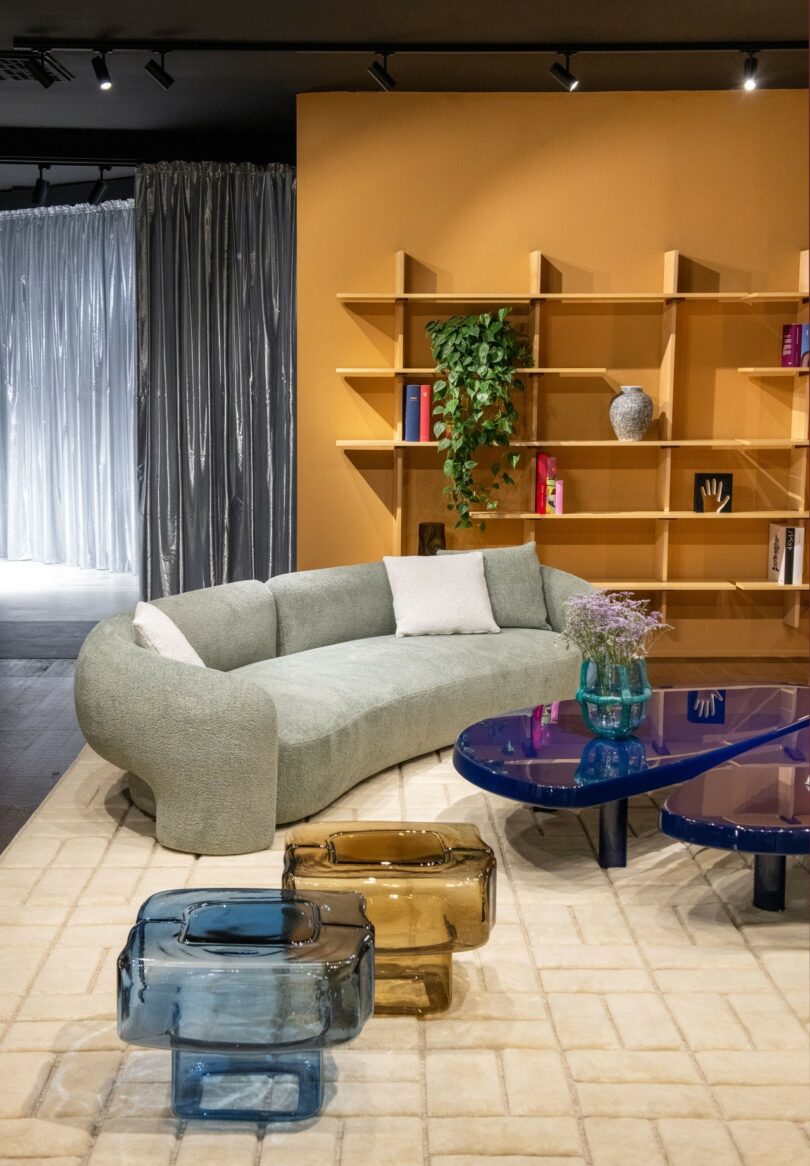
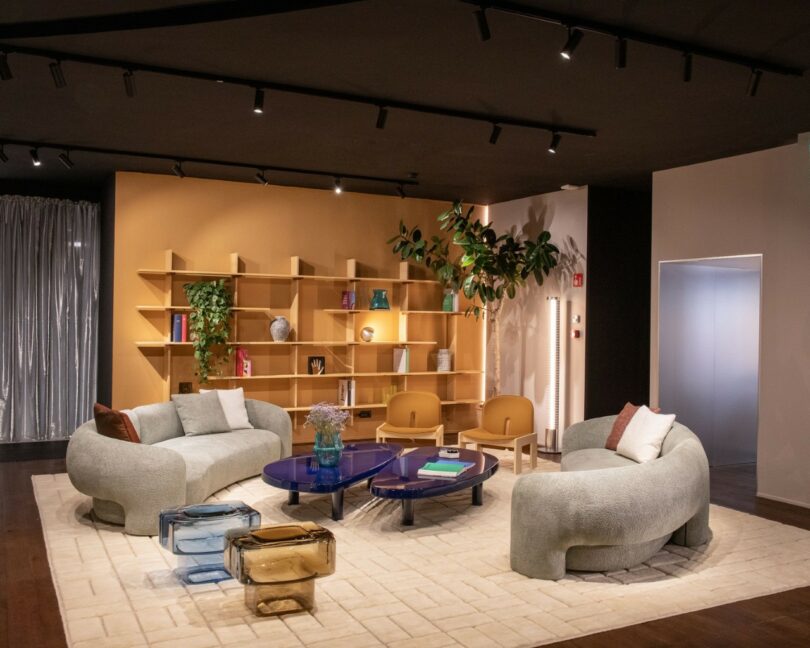
Integrating a piece as bold as Fluid Joinery requires a thoughtful approach. Because the table is translucent, it doesn't "clutter" a room visually; rather, it interacts with the light and color already present in the space.
1. Complementing "Soft Architecture"
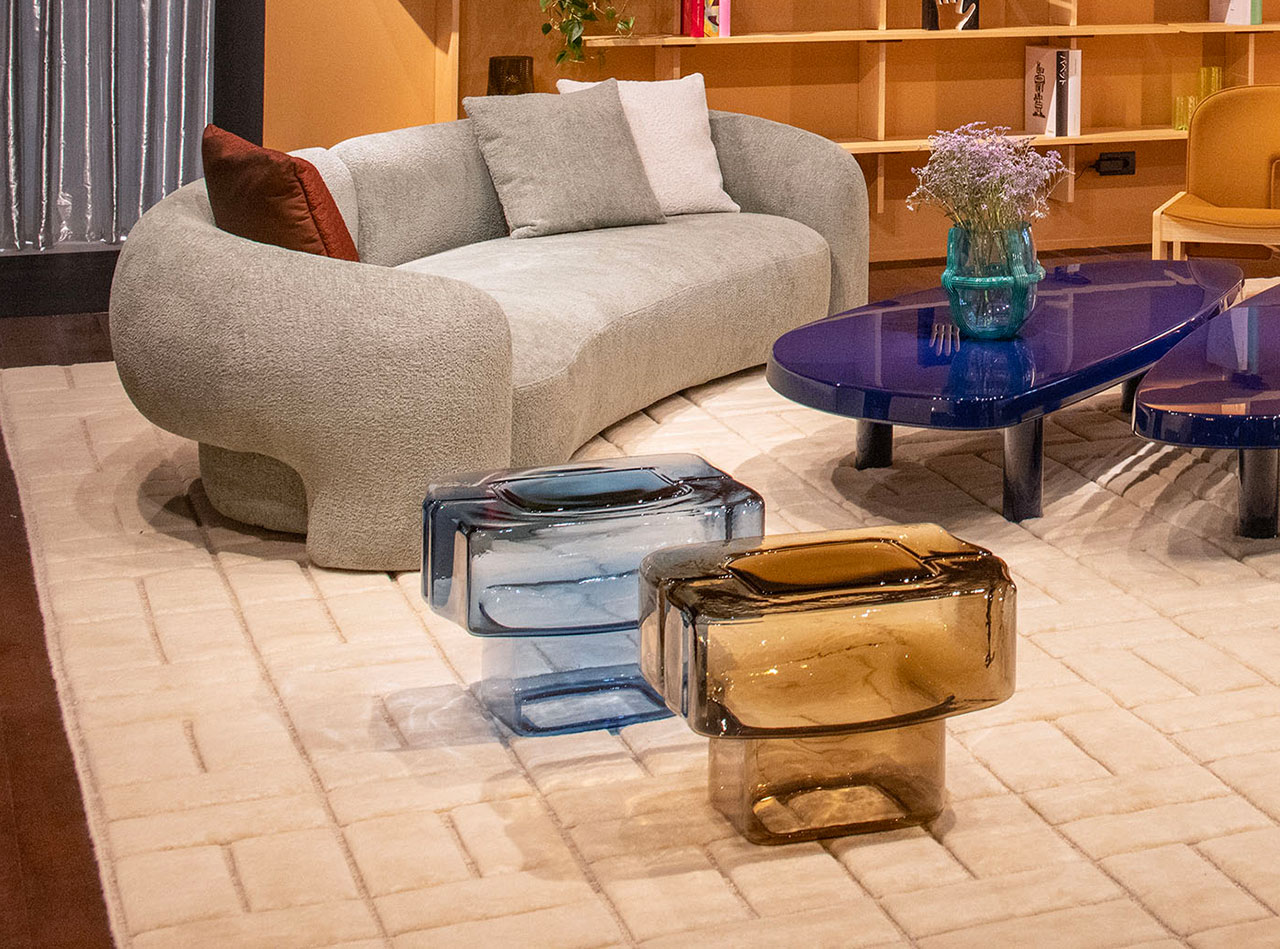
The 2026 "Soft Architecture" trend emphasizes curved sofas and rounded walls. The Fluid Joinery table acts as a perfect companion to these forms. Pair a Blue or Fumé table with a low-slung, velvet-curved sofa. The organic lines of the glass will echo the upholstery’s silhouette.
2. The Warm Minimalism Palette
For those adhering to "Warm Minimalism," the Amber colorway is a revelation. Place it near a window where it can catch the golden hour sun. Style it alongside neutral linen textiles, light oak storage units, and sculptural lighting anchors. The amber glow will act as a "visual hearth," warming up a monochromatic room.
3. Layering Textures
Glass thrives when placed in contrast with tactile materials. I recommend placing the Fluid Joinery table on a high-pile wool rug or next to a raw, honed stone fireplace. The juxtaposition of the smooth, rippling glass against "rough" materials creates a sophisticated sensory experience.
FAQ
Q: Is mouth-blown glass durable enough for daily use? A: Absolutely. While it appears fragile, the mouth-blown glass used by Cassina is significantly thicker than standard glassware. The "Fluid Joinery" table is designed with a substantial base-to-top weight ratio, making it stable and resilient for everyday use, though we recommend using coasters to prevent micro-scratches.
Q: Why does the color of the glass seem to change? A: This is the beauty of the "translucent" finish and the varying glass thicknesses. Because the glass is hand-blown into a cast-iron mold, the thickness is uneven. This causes the light to refract at different angles, making the color appear deeper in the thicker sections and lighter in the thinner ones.
Q: Can this table be used outdoors? A: While glass is weather-resistant, Fluid Joinery is designed primarily for interior use. The delicate nuances of its color and the complexity of its manual joinery are best appreciated in a controlled indoor environment where light can be manipulated.
Discover Cassina's Newest Collections
The debut of Linde Freya Tangelder’s Fluid Joinery is more than a product launch; it’s a signal that the future of interior design lies in the hands of the artisan. As we embrace the 2026 trend of sculptural artistry, pieces like this remind us that furniture can—and should—be poetic. Whether you are a dedicated collector or a design enthusiast looking for that one "forever piece," Fluid Joinery offers a rare blend of Italian heritage and contemporary vision.