There is a specific kind of resonance in a room that hasn't been over-renovated—a "ghostly" quality where the history of previous inhabitants feels like a gentle, supportive presence rather than a burden. For Marjory Sweet—farmer, cook, and author of the acclaimed Farm Lunch—finding home in an 1840s rental cottage in Rockland, Maine, wasn't about erasing the past to make room for the new. Instead, it was about a quiet negotiation between her minimalist, Donald Judd-inspired sensibilities and the "ramshackle elegance" of a 180-year-old New England structure.
Marjory defines slow living as much more than an aesthetic trend; for her, it is an intentional, seasonal approach to life rooted in the manual rhythms of farming, cooking, and community. It is a philosophy that prioritizes quality and deliberate work over the modern impulse for speed and convenience. After years spent in the high desert of Albuquerque, New Mexico, her return to her home state of Maine represents a full-circle journey, bringing a refined, Southwestern-honed eye to the rugged coastal landscape.

The Rockland Cottage: A Study in 'Ramshackle Elegance'
The house Marjory inhabits is a two-bedroom rental that dates back to the mid-19th century. In a world of "fixer-uppers" and "gut renovations," Marjory’s approach is Refreshingly hands-off. She describes her design philosophy for historic rentals as a "light touch"—a method that preserves the essential historical character of a home while punctuating it with personal, handcrafted elements.
This "ramshackle elegance" is defined by a willingness to let the house be what it is. In Rockland, a town where the architectural heritage spans nearly two centuries, the 1840s cottage stands as a testament to Maine’s enduring coastal character. The transition from the stark, sun-drenched landscapes of New Mexico to the moody, atmospheric light of Maine required an aesthetic recalibration, yet Marjory found a surprising commonality between the two.
Why the "Light Touch" Works
For those living in historic rentals, Marjory’s approach offers a masterclass in low-impact, high-style living:
- Accepting the Quirks: Rather than hiding uneven floorboards or aging plaster, these elements are treated as texture.
- Aesthetic Continuity: By moving key pieces cross-country, she maintained a visual "wavelength" that makes a new space feel instantly familiar.
- Minimalist Intervention: Using a "Donald Judd-inspired" lens means focusing on the proportions of a room and the utility of the objects within it, rather than decorative clutter.
The Kitchen: Living the 'Farm Lunch' Philosophy
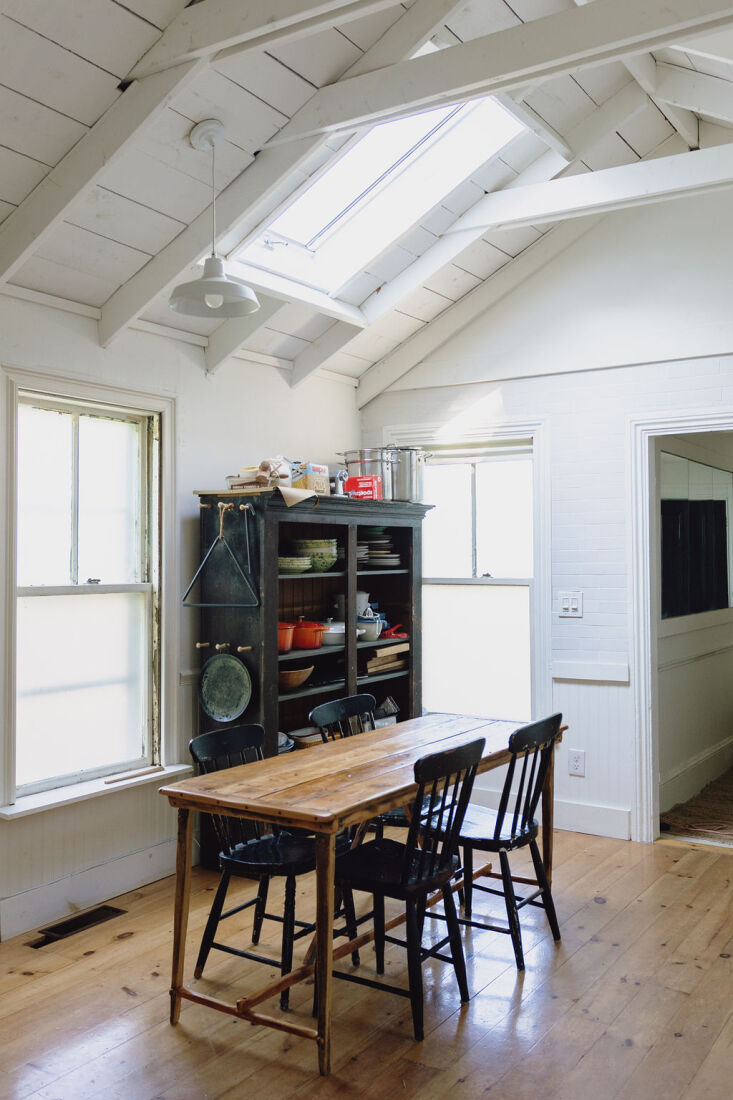
As a professional cook and author, the kitchen is naturally the heartbeat of Marjory’s home. In her Rockland cottage, the kitchen is a spacious, eat-in area that eschews the heavy, dark cabinetry often found in New England homes. Instead, she utilizes open shelving to create an airy, functional workspace.
The absence of upper cabinets is a deliberate choice. It allows the 1840s architecture to breathe and puts her curated collection of artist-made ceramics and handmade pantry staples—jams, spices, and ferments—on display. This is the "Farm Lunch" philosophy in physical form: simple, honest, and centered around the tools and ingredients of the trade.
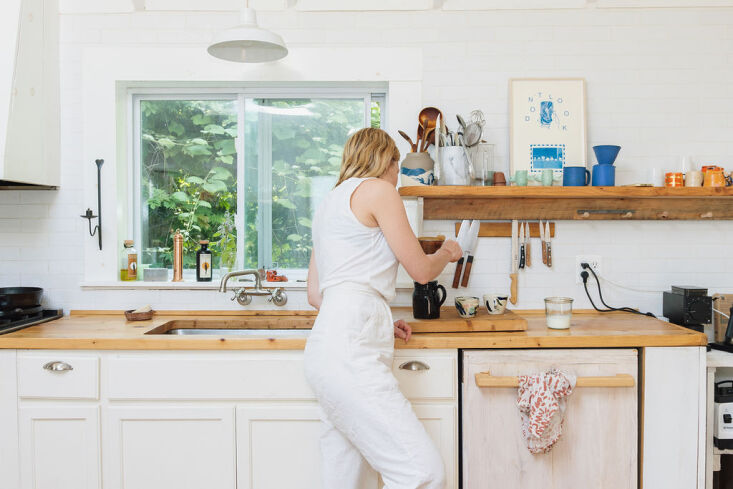
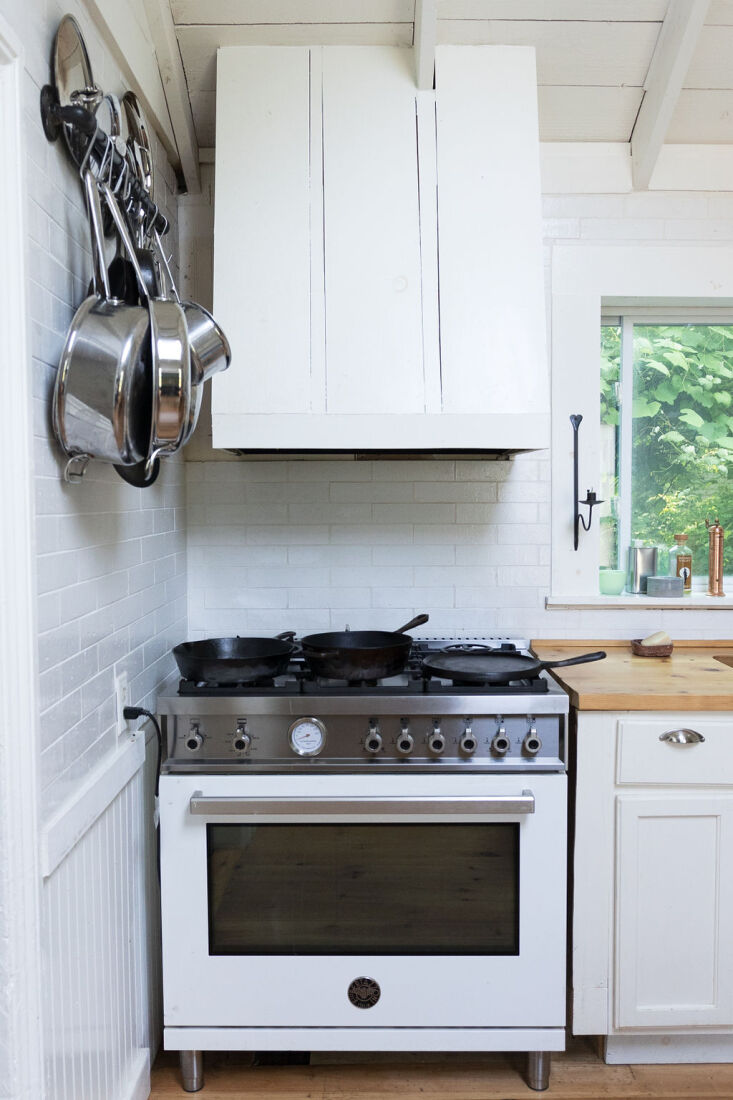
One of the most significant pieces in the kitchen is her Bertazzoni stove. This wasn't a local purchase; it was one of the few heavy items that made the cross-country journey from New Mexico. For Marjory, certain tools are non-negotiable anchors of a home. The stove represents her commitment to the ritual of cooking, serving as a reliable companion in a house full of historic variables.
Interior Styling: Custom-Built and Friend-Made
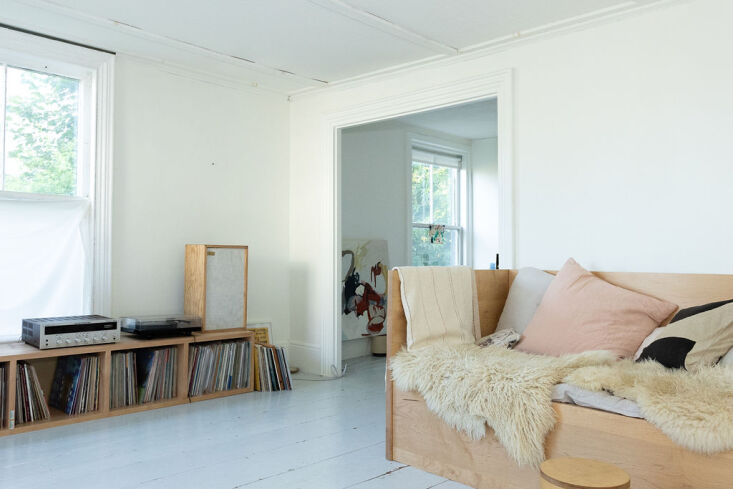
Perhaps the most impressive statistic of Marjory’s home is that 100% of the furniture in the living area is custom-built. In an age of fast furniture and flat-pack shipping, her living room serves as a gallery of friendship and craftsmanship.
The centerpieces of the room are the Judd-inspired daybeds and record cases. These pieces, characterized by their clean lines and raw wood finishes, provide a sharp, modern contrast to the "ghostly" curves of the 1840s cottage. By leaning into minimalist forms, Marjory creates a space that feels uncluttered yet deeply warm.
| Element | Marjory's Approach | Why It Works |
|---|---|---|
| Furniture Source | 100% Custom-built by friends or artist partners. | Creates a unique, non-commercial "soul" for the home. |
| Art Curation | Artwork by partner Nate Luce and close friends. | Transforms the rental into a personal archive of relationships. |
| Color Palette | Neutral whites and natural wood with one or two bold pops. | Balances New England's natural light with intentional focal points. |
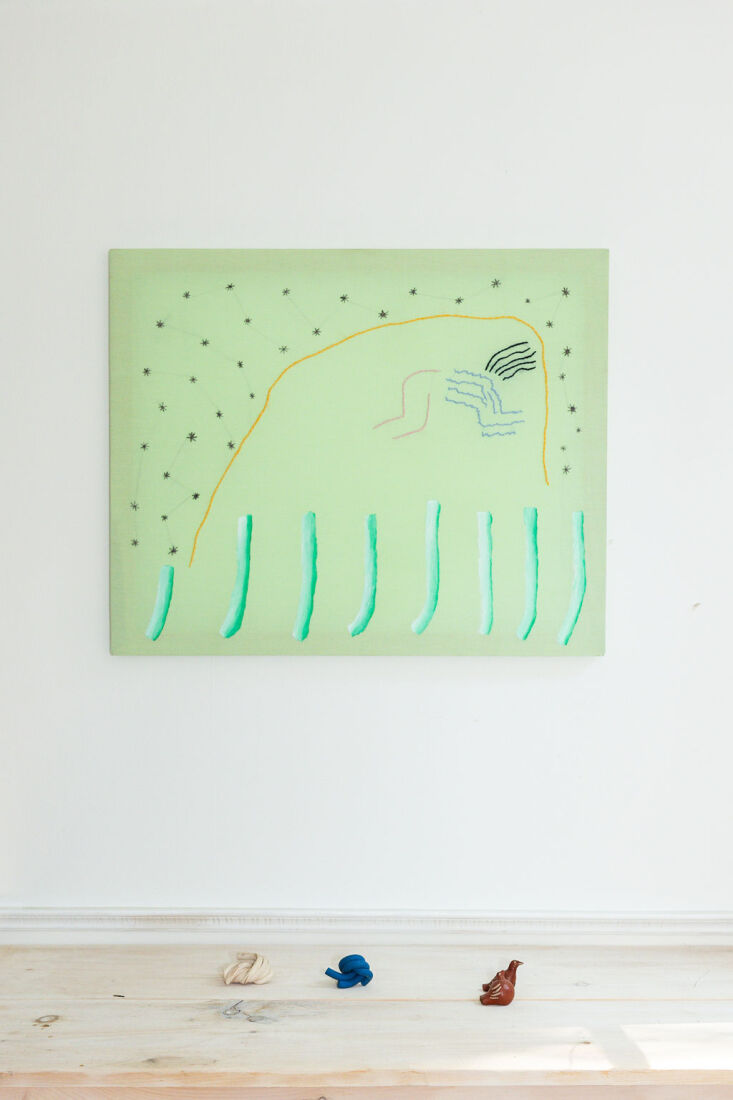
This reliance on "friend-made" objects extends to the walls. The home is filled with art created by her partner, Nate Luce, and other members of her creative community. This intentional curation ensures that every object in the home has a story and a lineage, reinforcing the slow-living ethos of prioritizing quality and connection over mere consumption.
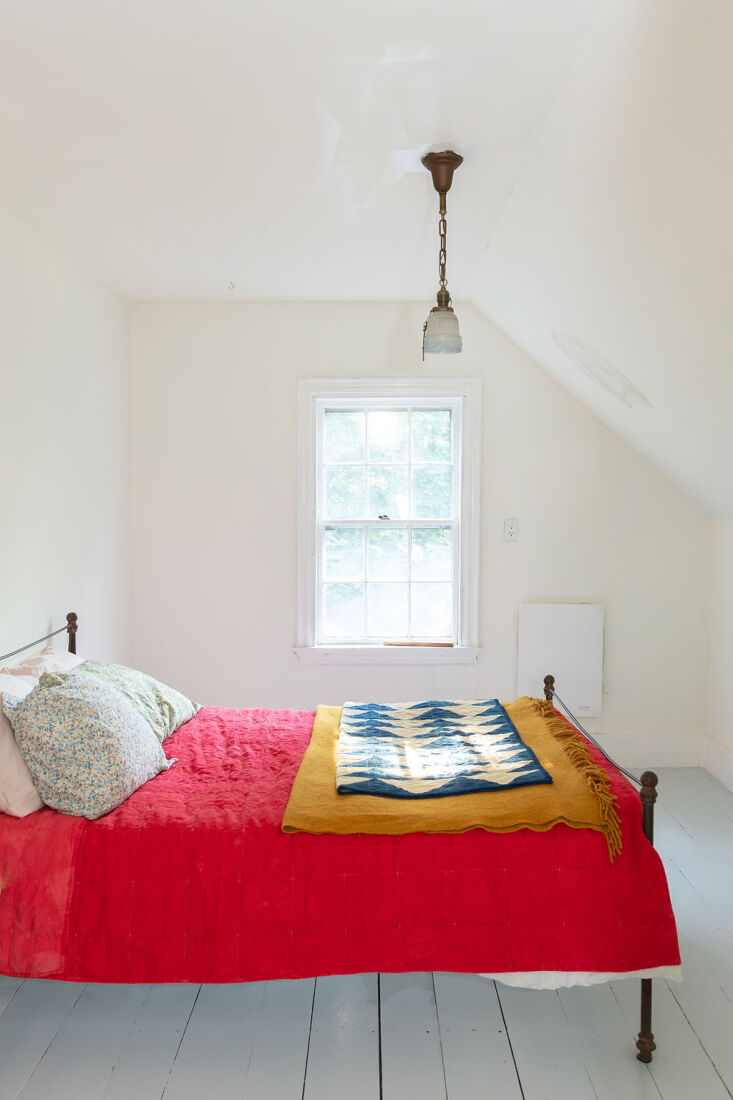
In the guest room, this philosophy takes a vibrant turn. Amidst the quiet, neutral tones of the house, a bright red quilt—dyed by a friend—serves as a bold statement. It is a reminder that minimalism doesn't have to be clinical; it can be punctuated by moments of intense color and texture.
Practical Wisdom: Embracing the Rituals of Slow Living
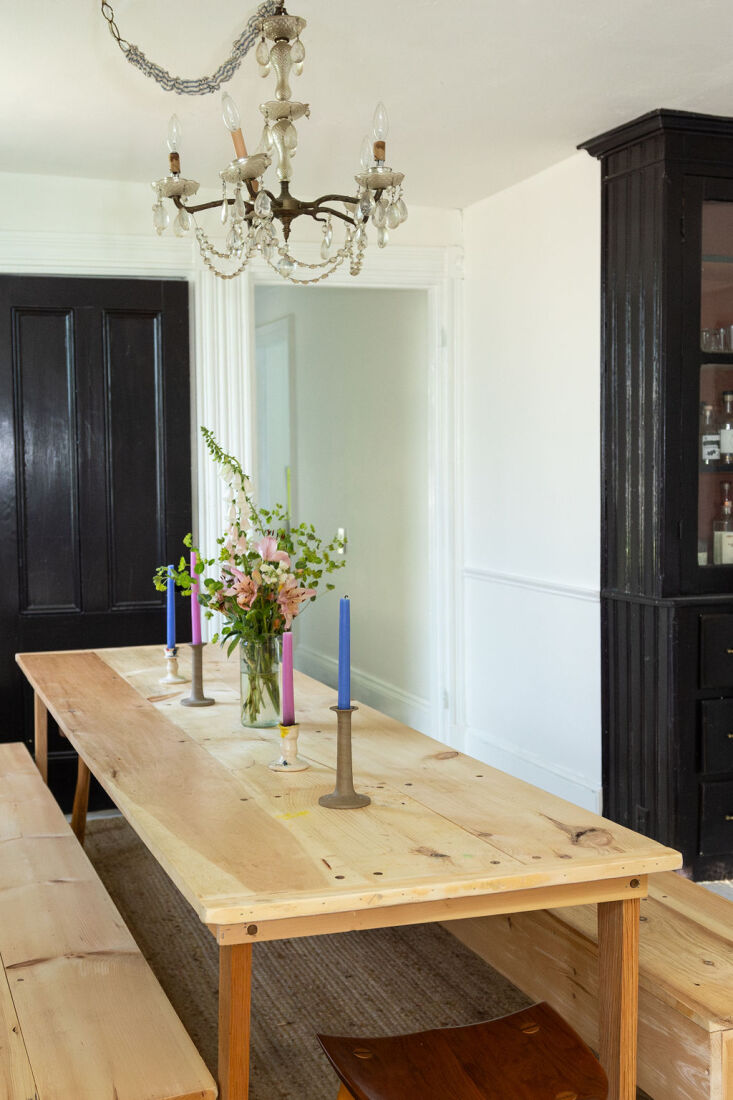
One of the most liberating aspects of Marjory’s living situation is her perspective on renting. While many see a rental as a temporary compromise, Marjory finds that it "frees the brain." By not owning the structure, she is less tempted to engage in the endless cycle of renovation and "improvement." Instead, she accepts the home's original quirks—even the ones that don't perfectly align with her minimalist style, like a surprisingly formal chandelier in the dining area.
"Candlelight is the most accessible form of magic." — Marjory Sweet
This quote encapsulates her approach to daily life. Rather than replacing the formal chandelier, she pairs it with candlelight to create an atmosphere that feels both historic and intimate. It’s about working with what you have to create "accessible magic."
Marjory’s Rituals for a Slow Home:
- Seasonal Alignment: Adjusting daily work and cooking to match the Maine climate—heavy stews in the winter, fresh farm lunches in the brief, bright summer.
- Manual Work: Prioritizing tasks that require the hands, from kneading bread to gardening, to stay grounded in the physical world.
- The Evening Table: Setting a table with intention—using handmade ceramics and real candles—even for a simple, solitary meal.
Living in a 180-year-old home requires a certain level of surrender to the seasons. The draftiness of an old window or the specific way the light hits the floorboards in November becomes part of the living experience. By embracing these nuances, Marjory Sweet has created more than just a beautiful interior; she has created a sanctuary that honors both her New Mexican past and her New England present.
FAQ
How can I achieve the 'minimalist New England' style in a rental? Focus on a "light touch." Use white paint to brighten historic rooms, remove upper kitchen cabinet doors to create open shelving, and invest in a few high-quality, custom pieces of furniture rather than a house full of temporary items. Acceptance of the home's "ghosts"—its original architectural quirks—is key.
What are the best ways to incorporate 'slow living' into a busy schedule? Start with small, sensory rituals. Marjory suggests candlelight at dinner as an easy way to shift the energy of a room. Prioritize manual tasks like cooking a simple meal from scratch or taking a daily walk in nature to realign yourself with seasonal rhythms.
Where can I find furniture similar to Marjory's Judd-inspired pieces? While Marjory's furniture is 100% custom-built by friends, you can look for local woodworkers who specialize in "Plank" or "Slab" construction. Look for designs that emphasize the raw beauty of the wood and geometric simplicity, avoiding ornate hardware or finishes.