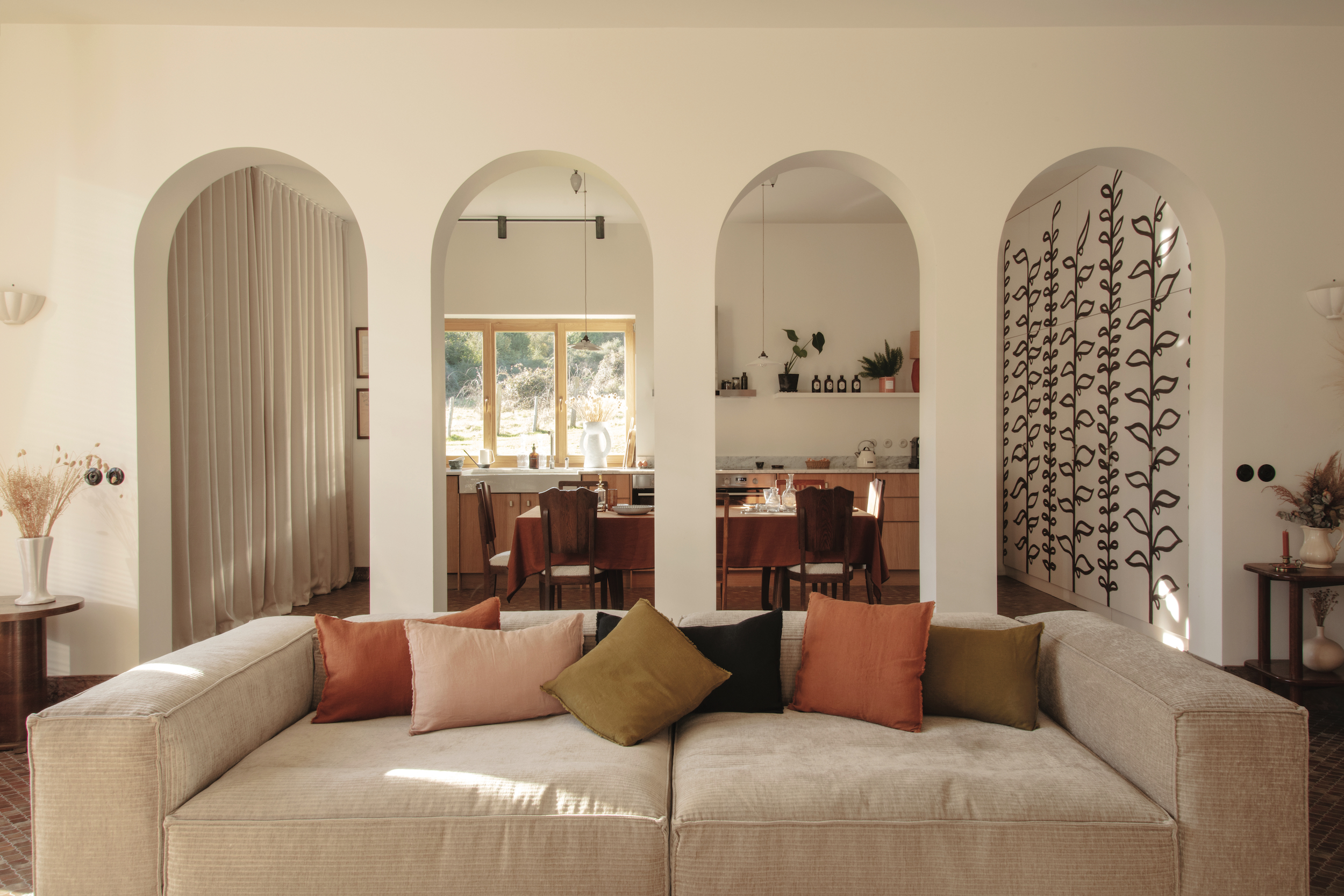
We have all been there: the "vacation exhaustion" that comes from trying to see everything, do everything, and document everything. We return from a week in Paris with 40,000 steps on our pedometers, aching arches from cobblestone streets, and a camera roll full of monuments but a mind that feels more cluttered than when we left. In the design world, we often talk about "negative space"—the intentional emptiness that allows a room to breathe. Le Moulin, a boutique sanctuary nestled in the Sarthe countryside just two hours outside of Paris, is the physical embodiment of that negative space.
Renovated by the visionary architecture firm Hauvette & Madani, this 16th-century watermill has been transformed into a design-led retreat specifically engineered to foster "slow living." It isn't just a place to sleep; it is a curated sensory experience where nature reconnection is the primary amenity. Whether you are wandering through its two hectares of ancient orchards or tracing the texture of a hand-applied lime wash wall, Le Moulin offers a rare opportunity to trade the frantic pace of modern life for a weekend governed by the rhythm of the river and the shifting light of the French countryside.
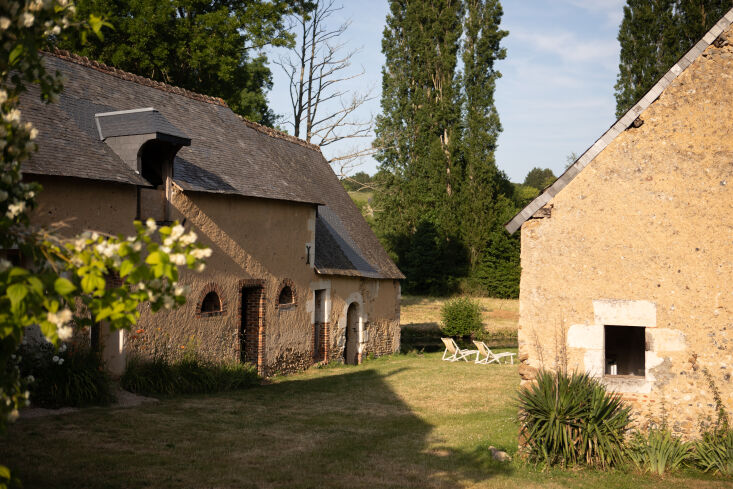
The Architecture of Stillness: Hauvette & Madani’s Vision
To understand the soul of Le Moulin, one must understand the duo behind it. Lucas Madani and Marine Hauvette are renowned for their ability to blend mid-century glamour with a contemporary, almost monastic restraint. Having built a reputation on high-end Parisian apartments and luxury hotel interiors, they brought a "Memory Factory" concept to this rural project. The goal was to create a space that felt like it had always belonged to a large, creative family—a place where the past and present reside in perfect harmony.
The architectural intervention is subtle yet profound. The designers stripped back centuries of haphazard additions to reveal the "noble" bones of the mill. Throughout the property, you’ll find a rhythmic interplay of textures:
- Matte White Tiles: Used in the bathrooms and kitchens to provide a clean, reflective surface that bounces the soft Sarthe light.
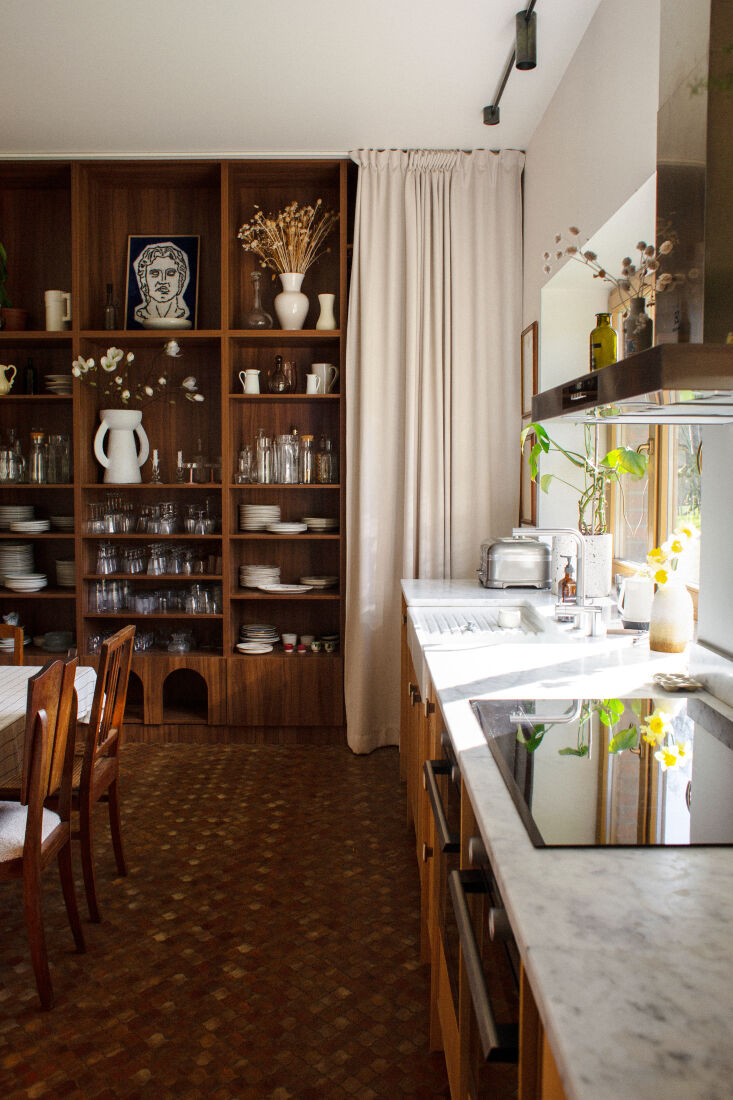
- Warm Wood-Clad Walls: Bringing an organic, cabin-like intimacy to the larger communal spaces.
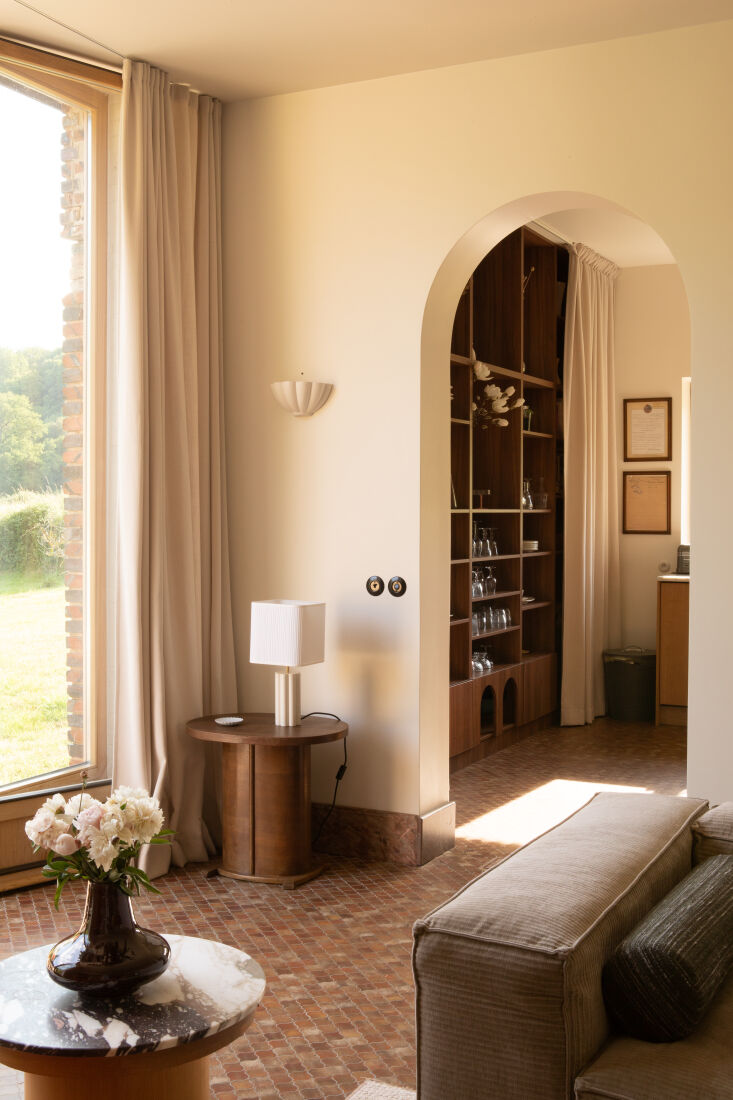
- Graceful Archways: A signature Hauvette & Madani touch that softens the transitions between rooms, guiding the eye and the body through the space with ease.
Ivy’s Design Note: The brilliance of this renovation lies in its restraint. By keeping the color palette muted—think creams, terracottas, and sage—the designers allow the view of the greenery outside to become the "art" on the walls.
The Sustainable Sanctuary: 85% Upcycled and Entirely Shoppable
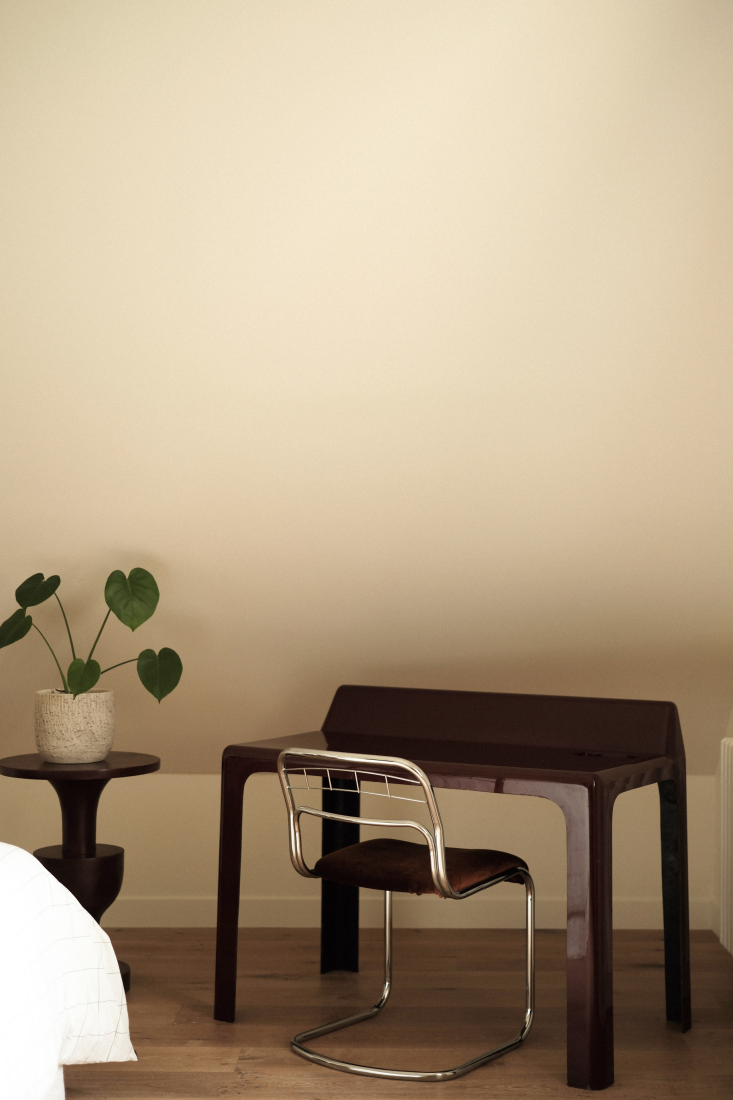
As an editor, I am often asked how to achieve a "collected" look without contributing to the cycle of fast furniture. Le Moulin provides the ultimate blueprint. Approximately 85% of the interior decor is sourced from local French flea markets, emphasizing a sustainable "upcycling" philosophy that is as stylish as it is ethical.
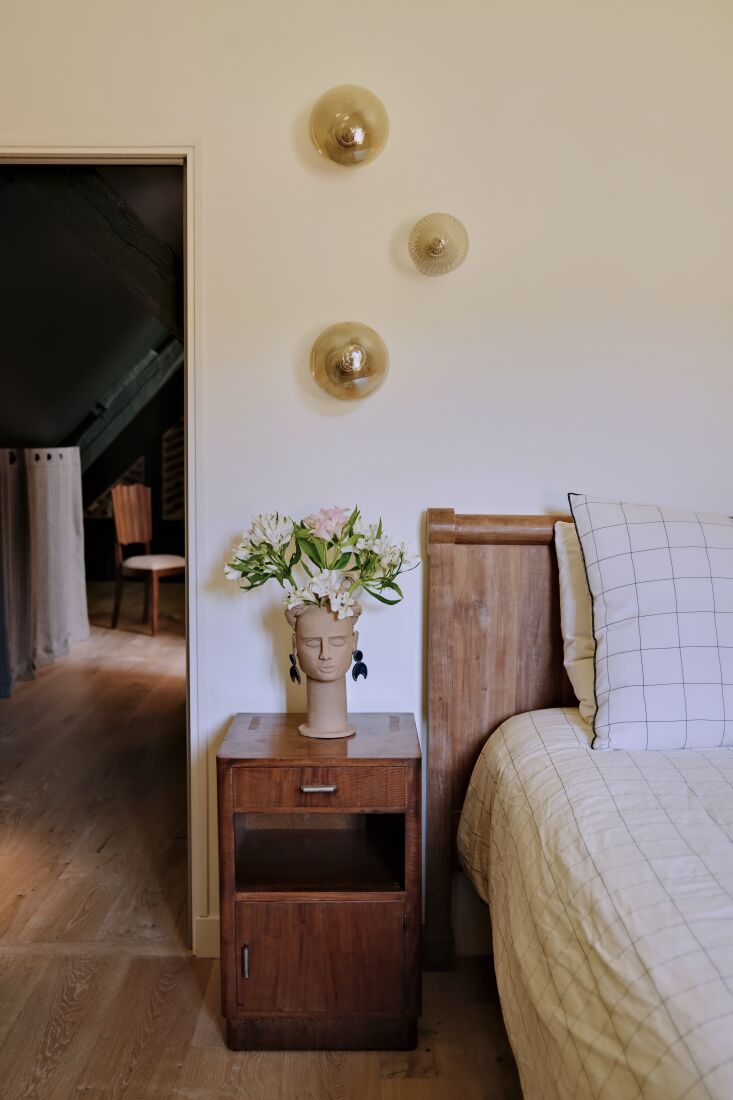
But here is the twist that sets Le Moulin apart from any other guesthouse: it is entirely shoppable. This isn't a gift shop in the lobby; it is a living showroom. Nearly every vintage object, chair, and ceramic you interact with during your stay is available for purchase. If you fall in love with the 1950s brutalist stool you used while sipping your morning coffee, or the artisan-made wall hanging in your bedroom, you can take a piece of the sanctuary home with you.
The space features a rotating collection of contemporary artists who share this slow-craft ethos:
- Atelier Paolo: Intricate, oversized wall hangings that add soft acoustics to the stone walls.
- Vincent Shoepfer: Earthy, hand-thrown ceramics that elevate the simple act of dining.
- Marine’s Mosaics: Custom mosaic details integrated into the floors and wet areas, adding a splash of artisanal texture.
Accommodations: From the Main House to the Sheepfold
Le Moulin offers a variety of staying experiences, each with its own distinct design personality. Whether you are traveling as a couple or hosting a large creative retreat, the property accommodates different needs without ever losing its cohesive aesthetic.
| Accommodation | Vibe | Key Design Feature |
|---|---|---|
| The Main House | Curated & Noble | 6 bedrooms featuring lime-wash walls, antique armoires, and soft linen bedding. |
| The 70s Suite | Retro Nostalgia | A bold mix of vintage velvet, low-slung seating, and warm ochre tones. |
| The Sheepfold | Rustic Seclusion | A two-level hideaway with original beams and vintage Pierre Frey floral curtains. |
The "Sheepfold" (or La Bergerie) is perhaps the most romantic of the offerings. It feels like a secret garden house, where the windows frame the swaying tall grass and the only sound is the occasional splash of the river. The use of Pierre Frey fabrics—heirlooms of French textile design—adds a layer of "grandmother's attic" charm that prevents the minimalism from ever feeling cold.
Slow Living in Practice: The 2-Hectare Sensory Experience
True luxury at Le Moulin is unpretentious. It is the luxury of time and the luxury of nature. The 2-hectare private estate is a playground for the senses. You are encouraged to kick off your shoes—"barefoot luxury" is the unofficial dress code here.
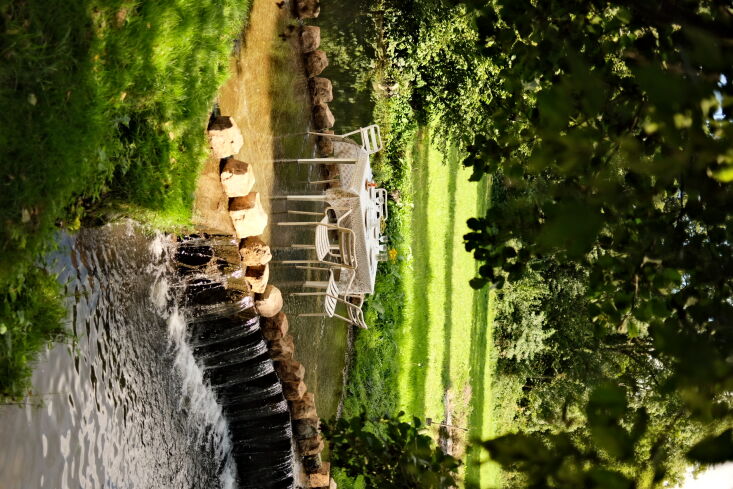
We found that the most profound moments of "slow living" happened in the transitions. It’s the long, languid lunches at the outdoor communal table, where the meal starts at noon and finishes when the shadows begin to stretch. It’s the "floating meditation" by the river, where you can simply watch the water flow by, a natural antidote to the digital "flow" of our phone screens.
The Slow Living Itinerary:
- Market-to-Table Cooking: Visit the local Sarthe markets for seasonal produce and return to the designer kitchen to prepare a meal together.
- Orchard Wandering: Pick fruit from centuries-old trees and enjoy it right there, standing in the grass.
- River Immersion: Direct access to the water allows for cooling dips or quiet sessions of reflection on the bank.
Planning Your Visit: Timing and Logistics
To truly embrace the slow travel rewards of the Sarthe region, preparation is key. While the guesthouse is only two hours from the bustle of Paris, it feels worlds away.
- Best Time to Visit: The region follows the poetic seasonal rhythms of the Lot and Sarthe. Late Spring (May-June) offers a blooming landscape and cool mornings, while Autumn (September-October) provides a golden palette and the perfect weather for the "Memory Factory" cozy vibes.
- Getting There: The most rewarding way to arrive is via the A10 route. While trains are available to nearby Le Mans, having a car is essential for exploring the local antique shops and markets that feed the guesthouse's shoppable inventory.
- Booking Tip: Because of its "shoppable" nature, the interior of Le Moulin is constantly evolving. No two stays are ever quite the same as vintage pieces are sold and replaced with new discoveries.
FAQ
Q: Can I actually buy the furniture during my stay?
A: Yes! Nearly all the vintage decor, from the bedside lamps to the dining chairs, is available for purchase. The staff can provide a price list and help arrange shipping if you find a piece you can't live without.
Q: Is Le Moulin suitable for children?
A: Absolutely. The "Memory Factory" concept was designed with family and friends in mind. The expansive grounds and river access make it a paradise for children to explore nature safely.
Q: How do the different properties compare?
A: While Le Moulin is the flagship guesthouse, the owners also manage nearby "La Carral" and "Le Malbec," which offer different scales of privacy and design focus. Le Moulin remains the primary destination for those seeking the full shoppable, design-led experience.
Are you ready to trade the 40,000-step vacation for a weekend of design-led stillness? Whether you are a design enthusiast looking for home inspiration or simply a weary traveler in need of a reset, Le Moulin is a masterclass in the art of living well.