Have you ever tried to navigate a narrow urban bedroom in the middle of the night, only to find your shin making aggressive contact with the sharp corner of a traditional nightstand? If you are living in a compact apartment or a charming but cramped cottage, you know the struggle of the "bedside squeeze." As someone who spends my days obsessing over floor plans and DIY hacks, I’ve seen how traditional 24-inch deep furniture units can swallow a room whole.
Interestingly, we aren't the only ones looking for a better way to live small. Interest in "cabin-style" functional furniture has seen a 30% increase in urban interior design trends recently, as city dwellers prioritize modular and stowable bedroom solutions. The most elegant answer to this problem isn't a smaller table—it’s a disappearing one. A nautical fold-up nightstand is a wall-mounted bedside table suspended by ropes that can be stowed away using a wooden latch, or "turn button," to save floor space in narrow rooms. By opting for a wall-mounted fold-up design, you can increase usable bedside floor space by up to 85% compared to traditional floor-standing units.
The primary advantage of these fold-down nightstands, particularly in small guest rooms, is the elimination of sharp corners in narrow walkways. This simple shift in design prevents residents from bumping into furniture while entering or exiting bed, creating a flow that feels intentional rather than forced.
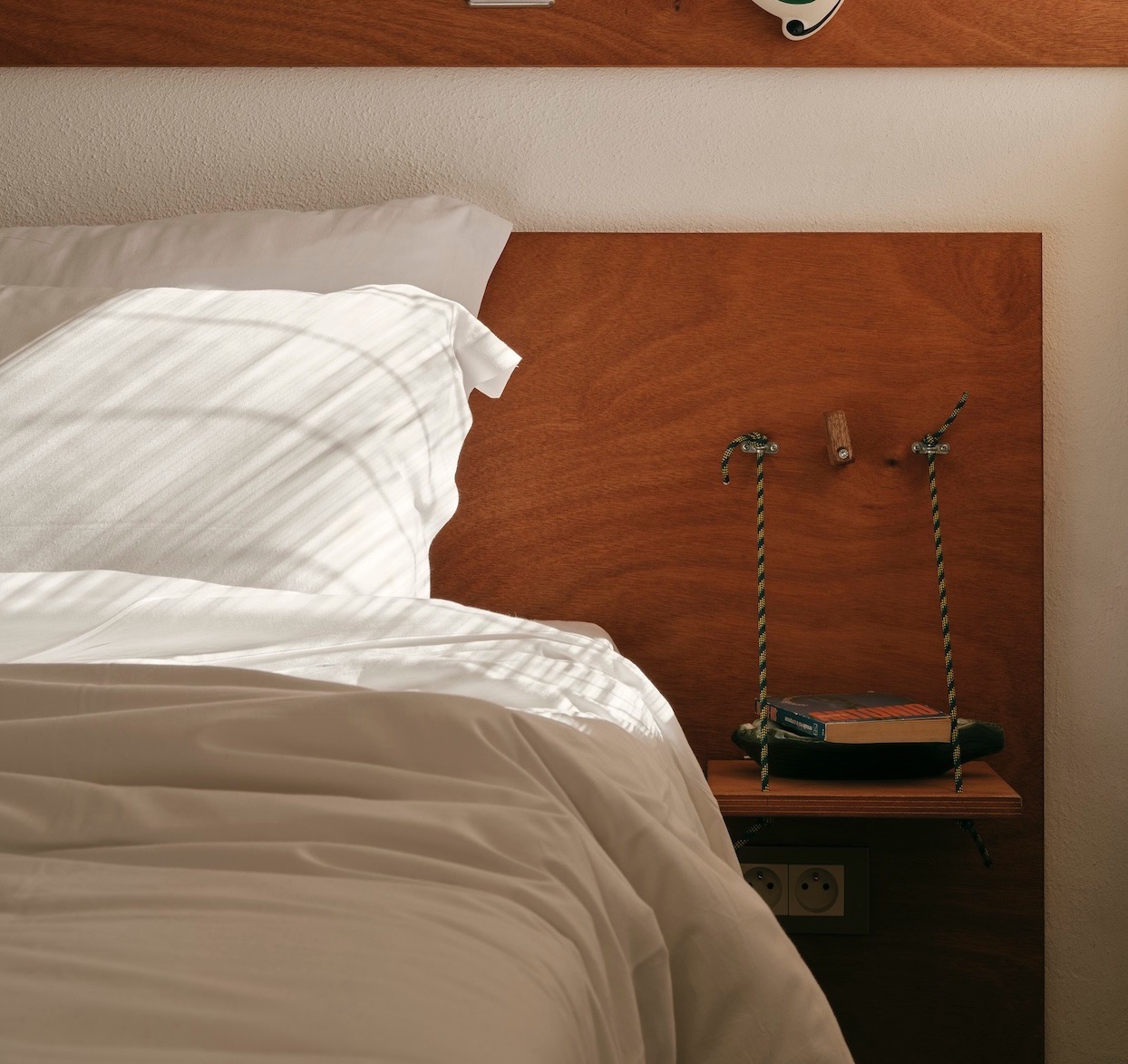
Inspiration from the Mediterranean: The Ship-Cabin Aesthetic
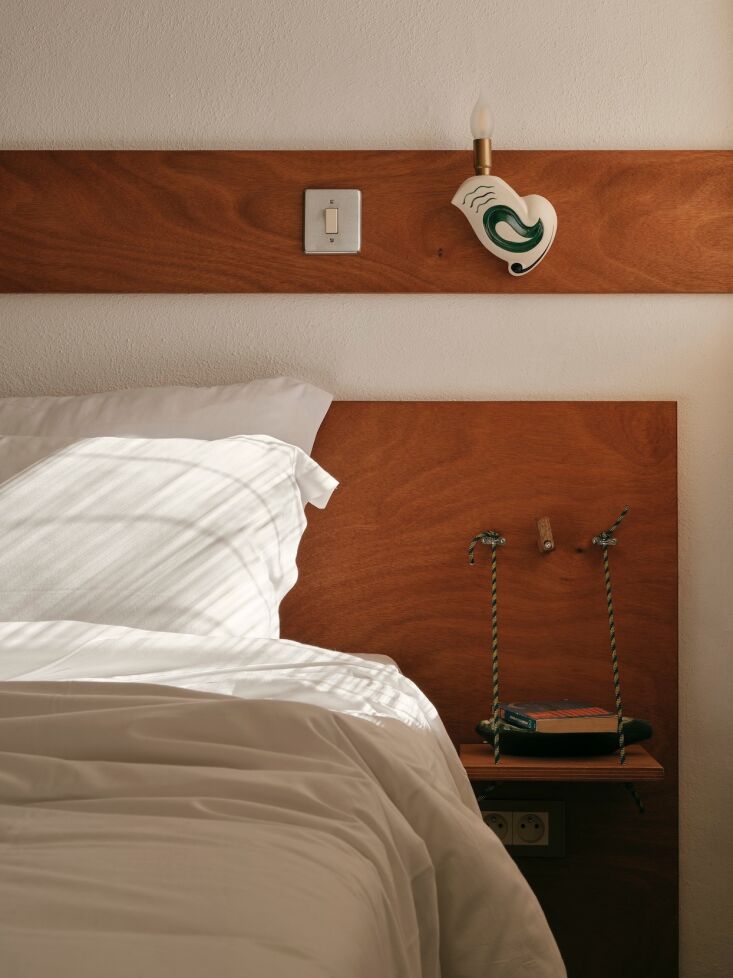
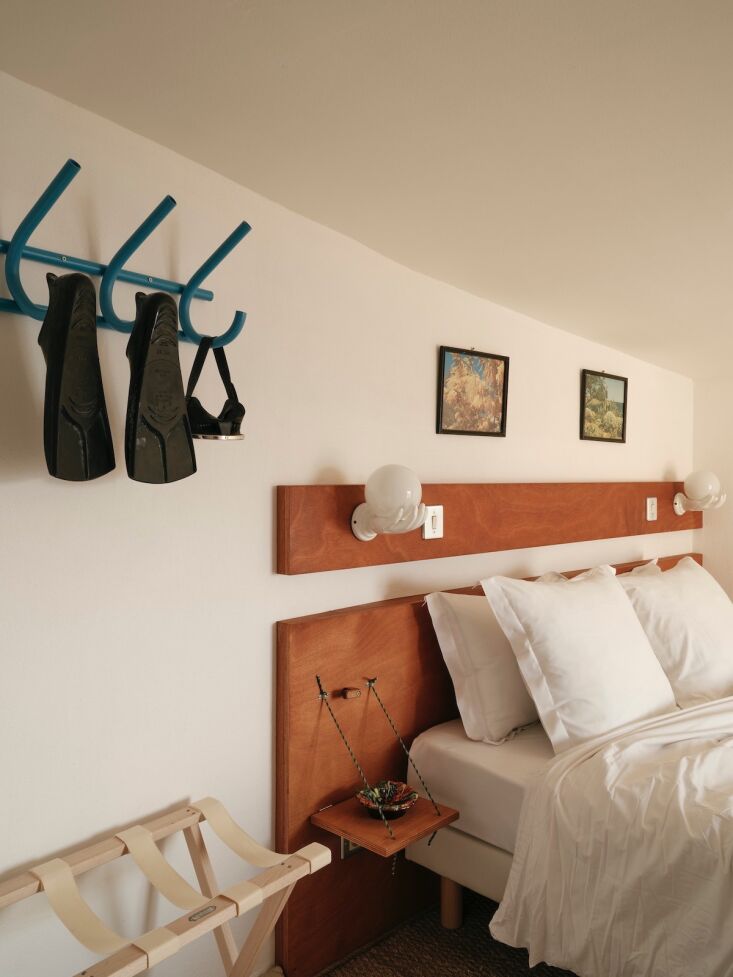
The "discovery-to-DIY" journey for this project often starts with high-design inspiration. Recently, the interior design world has been buzzing about the Tuba Club in Marseille. Of the many guest room details to admire in that coastal retreat, one jumped out at us immediately: fold-up nightstands that look like they were plucked straight from a vintage ship’s cabin.
This design isn't just about "looking nautical." It’s about the physics of maritime living. On a ship, everything must be secured or stowed to prevent it from becoming a projectile during rough seas. In a bedroom, that translates to a "stow-on-demand" surface that remains perfectly flat against the wall when you need to vacuum, make the bed, or simply enjoy the extra breathing room.
The mechanics are beautifully simple. Unlike a standard floating shelf, which requires heavy-duty hidden brackets, the nautical version uses a "suspended rope" system. The rope takes the tension and weight of the outer edge of the table, while a simple wooden block or cleat supports the back edge against the wall. To stow it, you simply lift the table and twist a small piece of wood—known in the industry as a turn button catch—to hold it vertically. It’s the same satisfying mechanical click you’d find on a high-end airplane tray table, but with the warmth of natural wood and organic textures.
DIY Project: Building Your Nautical Fold-Down Bedside Table
If you’re fed up with bumping into furniture every time you try to reach for your phone, it might be time to invest a Saturday afternoon into a DIY build. This is one of my favorite projects because it requires minimal power tools and yields high-impact results.
Essential Materials List
Before you head to the hardware store, make sure you have the following components. To achieve that authentic nautical look, don't skimp on the quality of the rope or the finish of the wood.
- The Plank: One piece of solid wood (Oak, Walnut, or reclaimed Pine work best). Aim for roughly 12" x 8" for a standard bedside setup.
- The Support: A matching wood block (the "cleat") to mount to the wall.
- The Hardware: Two heavy-duty eye hooks for the wall and two for the board.
- The Rope: Two lengths of 1/2-inch nautical cotton or manila rope.
- The Locking Mechanism: A wooden turn button catch and a brass screw.
- The Finish: A high-quality wood wax or polyurethane to protect against water rings from midnight glasses of water.
Step-by-Step Construction Guide
1. Prep the Wood: Sand your plank and support block until they are buttery smooth. If you’re going for a coastal vibe, a light driftwood-colored stain can add years of "character" in minutes.
2. Mount the Support Cleat: This is the most critical safety step. You must locate a wall stud. Use a stud finder to mark your spot. Screw the support block into the stud at your desired height (ideally 2 to 4 inches above the mattress). If a stud isn't available, use high-quality toggle bolts rated for at least 50 lbs.
3. Install the Hinges: Attach the plank to the support block using two small brass butt hinges. This allows the table to swing up and down smoothly.
4. The Rope Suspension: Screw your eye hooks into the wall (about 10 inches above the table) and into the front corners of the plank. Thread your rope through, tie a secure nautical knot (like a figure-eight or a simple overhand), and ensure the table sits perfectly level when the rope is taut.
5. Add the Turn Button: Position the turn button catch on the wall directly above where the center of the table rests when folded up. When you lift the table, the button should swivel over the edge to lock it in place.
Buying Guide: Ready-Made Nautical Nightstand Alternatives
We realize that not everyone is handy with a drill or has the time to sand down reclaimed oak. If you love the aesthetic but want a "box-to-wall" experience, there are excellent ready-made options that capture the same space-saving magic.
When shopping for a pre-made nautical fold-up table, look for stability and materials. Avoid MDF (Medium Density Fiberboard) if possible, as the tension from the ropes can cause the wood to warp or pull at the screw points over time.
Comparison: DIY vs. Store-Bought
| Feature | DIY Nautical Table | Store-Bought (e.g., Safavieh Coastal) |
|---|---|---|
| Cost | $30 - $50 (Materials) | $120 - $250 |
| Customization | High (Size, Rope, Wood) | Low (Standard Finishes) |
| Installation | Requires Drill & Stud Finder | Requires Basic Mounting |
| Durability | Depends on Hardware Choice | Professional Grade Finishes |
| Lead Time | 4-6 Hours | Shipping time |
For those who want a hybrid approach, brands like Montauk Solid Wood offer "kits" where the wood is pre-finished, but you still get the satisfaction of mounting and knotting the ropes yourself. This ensures a professional look without the trial-and-error of sourcing individual eye-hooks.
Choosing the Right Fit: Stability and Height Criteria
The biggest mistake people make with suspended furniture is getting the height wrong. Because the table is "floating," our eyes can play tricks on us. As a rule of thumb, the top of the nightstand should be 2 to 4 inches above the height of your mattress. This makes it easy to reach for a lamp or a book without straining your arm while lying down.
Stability is the second major concern. A suspended table will always have a slight "give" compared to a four-legged table. To minimize the wobble:
- Tension is Key: Ensure both ropes are exactly the same length. Even a 1/8th-inch difference will cause the table to tilt and vibrate.
- Wall Anchoring: Ensure the back edge of the table (the hinge side) is flush against the wall. This prevents the table from swinging side-to-side.
- Surface Resistance: Since this table will likely hold electronics or drinks, I always recommend a finish that is heat, UV, and water-resistant. A marine-grade spar urethane is perfect for that authentic "boat" feel and ultimate protection.
Clara’s Tip: If you’re worried about the rope stretching over time (which natural fibers like manila often do), use a "turnbuckle" hardware piece at the top hook. It allows you to tighten the tension with a simple twist without having to re-tie your knots.
FAQ
How much weight can a rope-suspended nightstand actually hold? If mounted into a wall stud with 1/2-inch rope, a typical fold-up nightstand can easily support 15-20 lbs. This is more than enough for a lamp, a few books, and a laptop. However, we do not recommend leaning on the outer edge or using it as a step stool.
Can I install this on a drywall surface without a stud? It is possible using heavy-duty toggle anchors (like Snaptoggles), but it is not ideal. Because the table is frequently moved (folded up and down), it puts "cyclic loading" on the drywall, which can eventually lead to cracks or the anchors loosening. Always try to find a stud first!
What kind of rope is best for the nautical look? For a soft, white look, go with braided cotton rope. For a rugged, "salty" ship look, manila or sisal is best. If you want the look but zero stretch, look for "synthetic manila" (polypro), which looks like natural fiber but is much more stable.
Ready to Transform Your Bedroom?
Space-saving doesn't have to mean compromising on style. The nautical fold-up nightstand is a testament to the idea that some of the best modern design solutions come from centuries-old maritime traditions. By taking your furniture off the floor and onto the wall, you open up your room, protect your shins, and add a touch of coastal whimsy to your home.
Whether you're picking up a drill for the first time or browsing for the perfect ready-made piece, the goal is the same: a bedroom that feels like a sanctuary, not a storage unit.