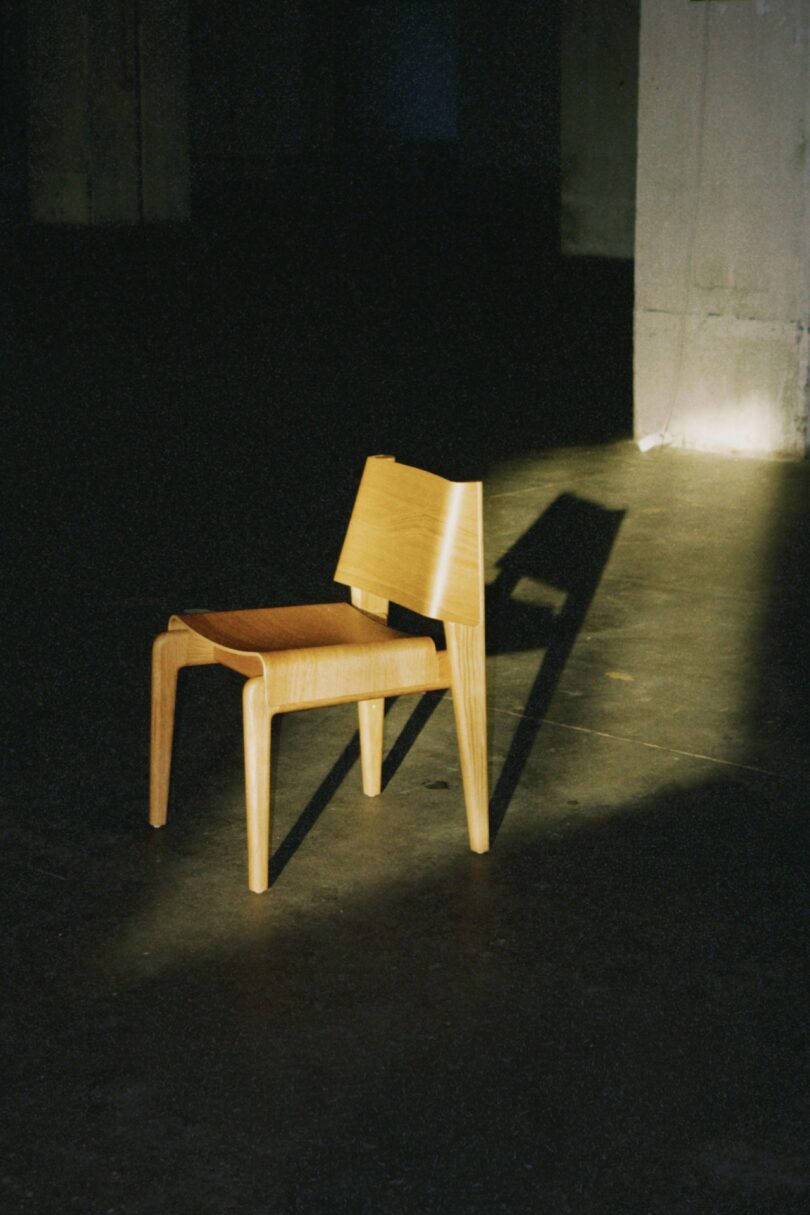
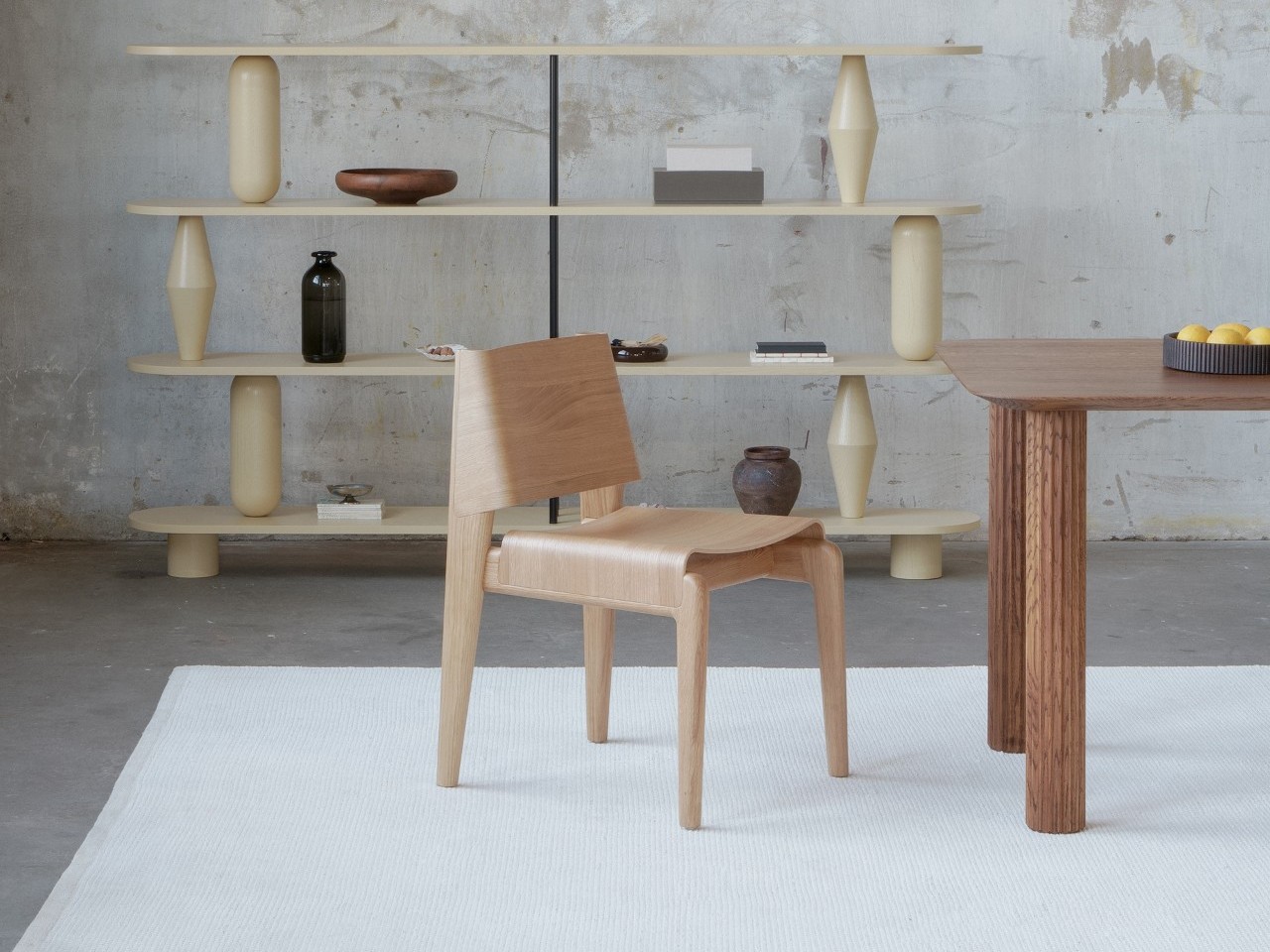
Some designs announce themselves with a shout; others arrive with the quiet confidence of a coastal breeze. The Undia Chair, a flagship piece by the Polish design house TAMO, belongs firmly in the latter category. It is a study in contradictions—where the rigidity of oak meets the fluid grace of a wave, and where industrial precision serves the human form.
At its core, the TAMO Undia Chair is a masterpiece of modern furniture engineering. It combines a robust, hand-finished solid oak frame with a sculptural seat and backrest crafted from advanced bent plywood. Designed to provide ergonomic support without the visual weight of traditional seating, the Undia Chair represents a pinnacle of bent plywood chair manufacturing. By leveraging high-pressure thermal molding, TAMO has created a piece that is as much a structural achievement as it is a work of art.
I. Design Inspiration: The Rhythm of a Wave
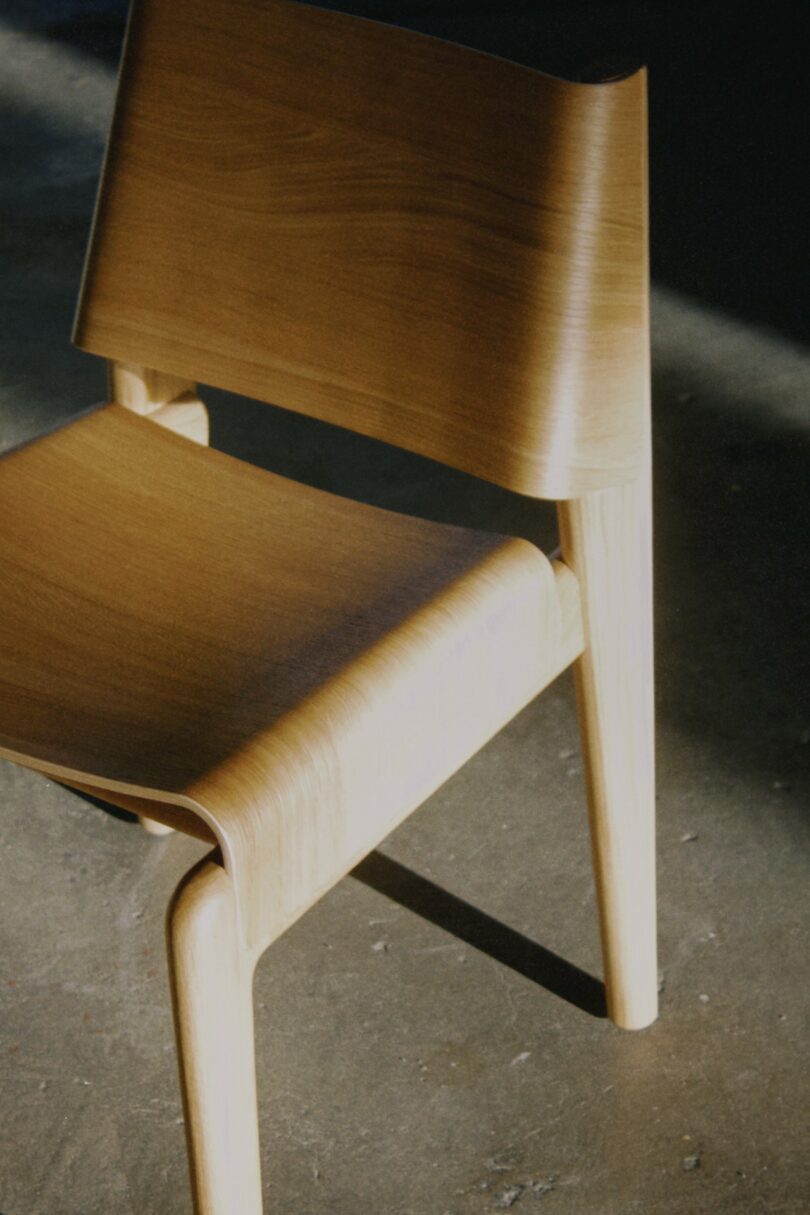
In interior styling, we often talk about "visual weight"—how much space an object appears to occupy in a room's narrative. The Undia Chair possesses a unique lightness, derived from its namesake: Onda, the Italian word for wave. The silhouette is an exercise in continuity; the seat and backrest aren't merely joined, they flow into one another, mimicking the rhythmic crest of a tide.
This sense of flow is not just a visual choice but a structural necessity reflected in the chair's "uninterrupted lines." TAMO’s designers sought to eliminate the jarring angles often found in mid-century replicas, opting instead for a seamless transition between the supporting frame and the ergonomic shell.
The chair is available in a curated palette that speaks to its organic roots:
- Natural Oak: Highlighting the raw beauty of Polish timber.
- Ebony & Black: For a graphic, architectural statement.
- Burgundy & Olive: Deep, sophisticated tones that bring warmth to minimalist spaces.
- Dark & Walnut Stains: For a classic, grounded presence.
II. Material Alchemy: Solid Oak and Engineered Plywood
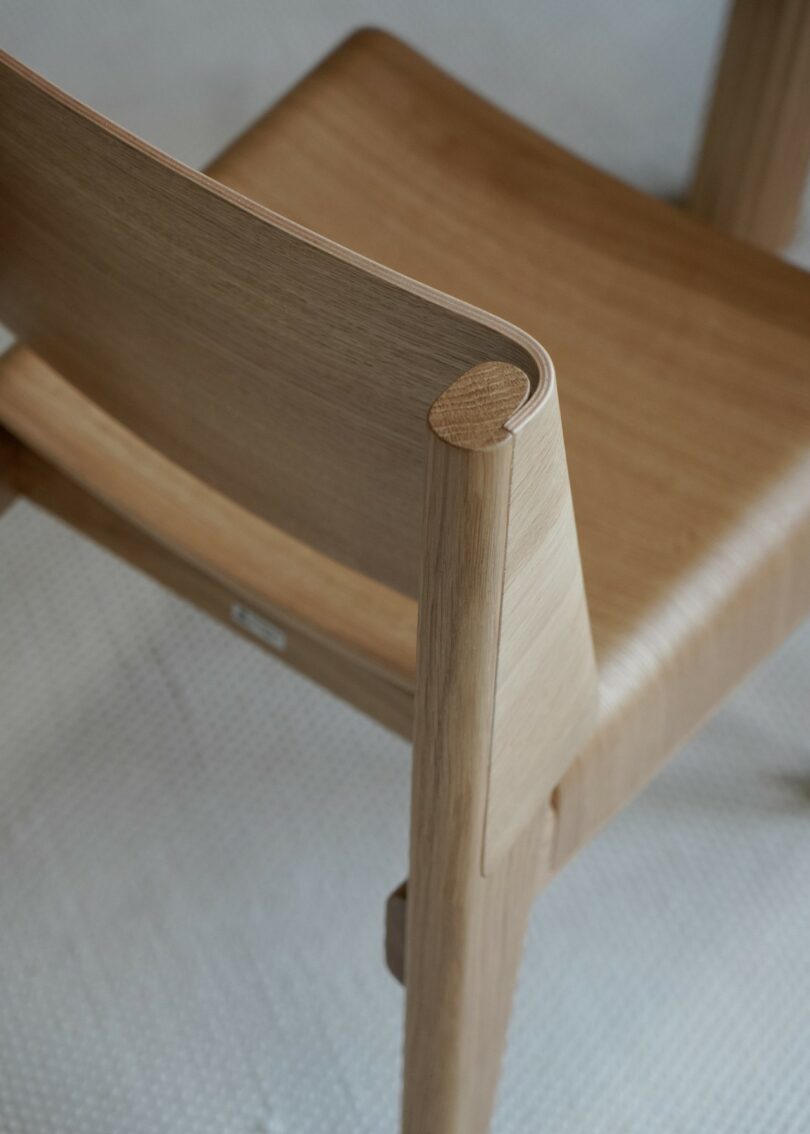
To understand the Undia Chair, one must understand the dialogue between its two primary materials. The frame is constructed from modern solid oak, providing a grounded, architectural foundation. However, the true "comfort engine" of the chair is the bent plywood seat.
Why choose bent plywood over solid wood for the seat? The answer lies in the limitations of natural grain. Solid wood is notoriously difficult to curve into tight, ergonomic radii without risking splitting or "springback." Bent wood veneer technology solves this by layering thin sheets of wood, allowing for complex curves that cradle the body.
"Bent plywood construction can reduce the overall weight of furniture components by up to 30% while maintaining the structural durability of solid wood, making it the ideal medium for high-performance seating."
This weight reduction doesn't imply a lack of strength. On the contrary, the layered nature of plywood creates a composite material that is often more resilient than the original timber.
Comparison: Bent Plywood vs. Solid Wood
| Feature | Bent Plywood (Undia Seat) | Solid Oak (Undia Frame) |
|---|---|---|
| Formability | High; allows for ergonomic 3D curves | Limited; best for linear structures |
| Weight | Lightweight (30% reduction) | Heavy and substantial |
| Stability | Excellent; resistant to warping | Subject to seasonal expansion/contraction |
| Aesthetic | Modern, layered edge profile | Traditional, continuous grain |
III. The Manufacturing Process: Step-by-Step Craftsmanship
The creation of the Undia Chair is a process of "Material Alchemy." It requires a marriage of high-tech machinery and the seasoned eye of a master craftsman. The curved plywood furniture process at TAMO follows a rigorous technical path to ensure every "wave" is perfect.
1. Veneer Preparation and Sourcing
Quality begins at the source. TAMO utilizes FSC-certified Polish oak and birch veneers. Each layer is typically 1.0mm to 1.5mm thick. The selection process involves culling veneers with structural defects, ensuring that the final "sandwich" is free of internal voids that could lead to delamination.
2. The Art of Cross-Banding
Unlike standard plywood, the veneers in the Undia Chair are "cross-banded." This means the grain direction of each layer is rotated 90 degrees relative to the one below it.
- Statistical Insight: Advanced cross-banding techniques increase dimensional stability by 40% compared to traditional longitudinal grain bending. This ensures the chair maintains its shape for decades, regardless of humidity.
3. Adhesive Application
A specialized, eco-friendly resin is applied to the veneers. In modern manufacturing, low-VOC (Volatile Organic Compound) adhesives are essential to ensure the air quality of the final living space.
4. The Hot Press: Shaping the Silhouette
The "sandwich" of 5 to 9 veneers is placed into a custom-engineered steel mold. This is where the magic happens. The mold is subjected to:
- Temperature: 100°C to 130°C to soften the wood fibers.
- Pressure: 1.0 to 1.5 MPa, ensuring the resin penetrates the wood pores for a permanent bond.
5. CNC Trimming and Hand Finishing
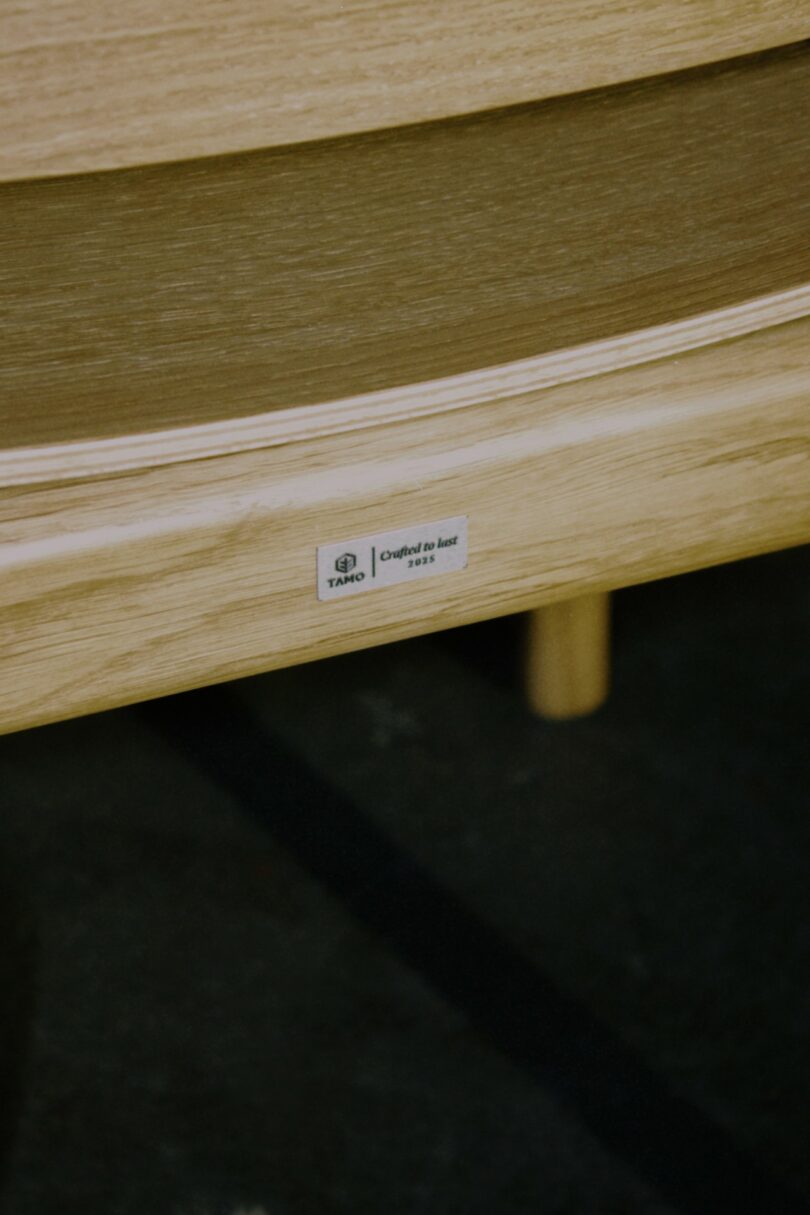
Once the shell is removed from the press and cooled, it is trimmed using high-precision 5-axis CNC machines to achieve the Undia’s signature "wave" edge. Finally, it is hand-sanded and treated with UV-resistant oils or lacquers to protect the grain while maintaining a tactile, organic feel.
IV. The Science of the Curve: Plasticizing and Lignin
There is a fascinating biological reason why bent plywood works. Inside every piece of wood is lignin, a natural polymer that acts as the "glue" holding the cellulose fibers together.
When wood is subjected to the heat and moisture of the hot press, the lignin reaches its "glass transition temperature" (Tg). At this point, the lignin softens and becomes plastic-like, allowing the cellulose fibers to slide past one another. When the pressure is held and the temperature drops, the lignin re-hardens, effectively "locking" the wood into its new, curved shape.
This scientific "fixing" of the bend is what prevents the chair from losing its ergonomic shape over time. Without proper thermal management during the pressing phase, wood has a memory and will attempt to return to its flat state—a phenomenon known as "springback."
V. Choosing Quality: What to Look for in Bent Plywood Furniture
As an editor, I am often asked how to distinguish a high-quality bent plywood piece from a mass-produced imitation. When evaluating the TAMO Undia chair design or any similar modern piece, consider these three pillars of quality:
1. Mold Precision and Defect Rates
The tighter the curve, the higher the risk of "compression failure" on the inner radius or "tension failure" on the outer radius. Inspect the edges of the plywood; the layers should be perfectly compressed with no visible gaps or "fraying" of the grain. High-end manufacturers like TAMO maintain strict defect rate management during the pressing phase to ensure structural integrity.
2. Material Certification
In today’s market, sustainability is non-negotiable. Look for FSC (Forest Stewardship Council) certification, which guarantees the wood was harvested from responsibly managed forests. Additionally, ensuring the adhesives meet CARB Phase 2 or E0 standards for formaldehyde emissions is vital for a healthy home environment.
3. Surface Finish
The beauty of the Undia chair lies in its "visual flow." A high-quality finish should feel like the wood itself, not like a plastic coating. UV-cured oils are the gold standard, providing commercial-grade durability while allowing the natural texture of the oak to shine through.
VI. Frequently Asked Questions (FAQ)
Q: Is the Undia Chair suitable for commercial use (restaurants/offices)? A: Yes. The combination of a solid oak frame and cross-banded bent plywood makes it incredibly durable. The finishes used by TAMO are designed to withstand high-traffic environments while maintaining their aesthetic appeal.
Q: How do I maintain the wood finish on my bent plywood furniture? A: For daily cleaning, use a soft, dry microfiber cloth. Avoid harsh chemicals. Every 1-2 years, depending on sunlight exposure, you may want to apply a specialized wood wax or oil to keep the grain hydrated and vibrant.
Q: Why does the Undia chair feel "flexible" when I sit in it? A: That subtle flex is a feature, not a flaw! Bent plywood has a natural elasticity that solid wood lacks. This allows the seat to respond to your body weight, providing a much more comfortable long-term sitting experience than a rigid surface.
VII. Conclusion: Where Art Meets Engineering
The TAMO Undia Chair is a testament to the fact that we don't have to choose between the soul of natural materials and the precision of modern engineering. It captures a moment of stillness in a world of movement, offering a seat that is as supportive as it is beautiful.
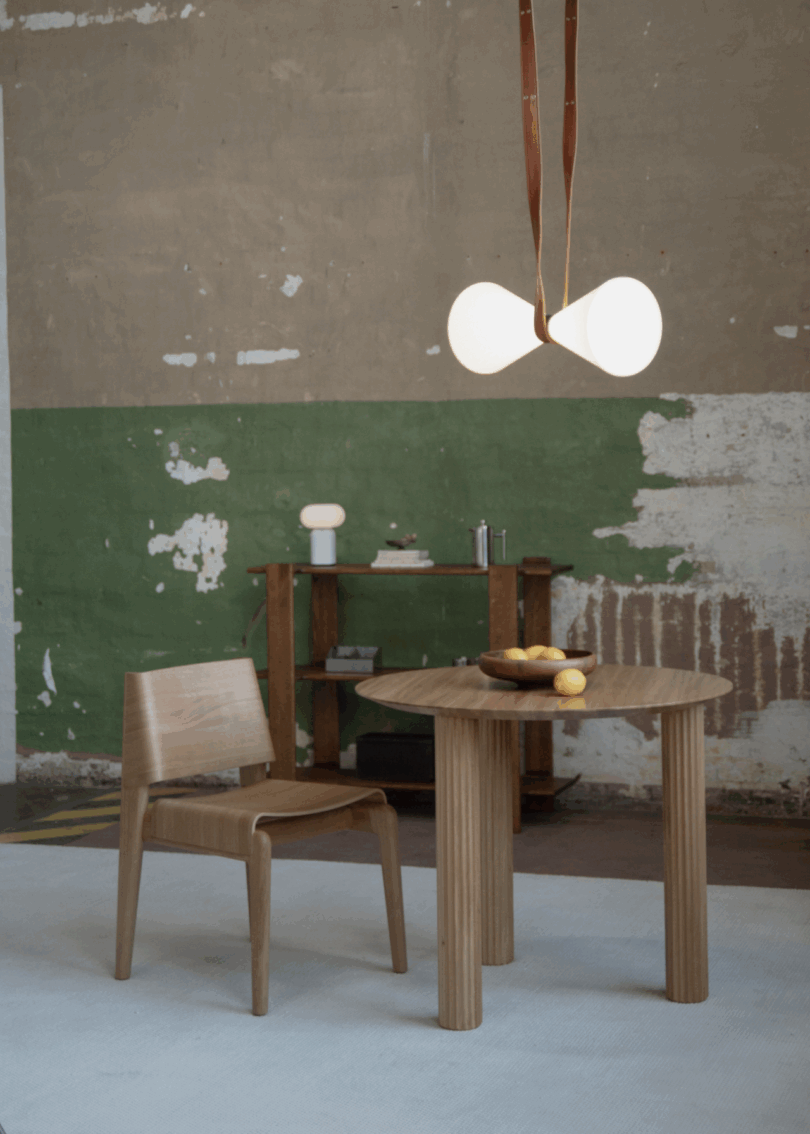
For those looking to elevate their living space, the Undia is more than just a chair; it is an investment in the art of bent plywood. Whether placed in a sun-drenched reading nook or around a minimalist dining table, it serves as a reminder that the best design is often inspired by the simplest rhythms of nature.