As the front door swings open, your entryway serves as the home’s opening statement. It is the crucial "transition zone"—the psychological bridge between the chaotic outside world and the sanctuary of your living space. Yet, for many of us, this area is less of a grand foyer and more of a high-traffic "command center" that quickly succumbs to a mountain of shoes, discarded mail, and tangled leashes.
Designing an entryway is a delicate balancing act. You want a space that feels curated and welcoming, but it must also function with the efficiency of a Swiss watch. In smaller homes, this challenge is even more pronounced. Interestingly, market research indicates that 74% of homeowners with entryways smaller than 50 square feet prioritize hidden storage over pure aesthetics when selecting furniture. This shift in mindset highlights a fundamental truth: in a limited footprint, beauty without utility is a luxury few can afford.
The Psychology of the First Impression: Why Your Foyer Matters
Your entryway is the first thing you see when you come home and the last thing guests see before they depart. It sets the tone for the rest of your interior design. If the space is cluttered, it signals a lack of order that can subconsciously increase stress levels before you’ve even set down your keys.
The secret to a successful entryway lies in its ability to manage "The Drop"—that moment when everyone enters and instinctively wants to shed their external layers. Multi-purpose furniture is essential here because it combines several functions—like seating, storage, and organization—into a single footprint. By consolidating your needs into one well-designed piece, you maintain order in a high-traffic zone without overwhelming the architectural flow of your home.
The High-Traffic Clutter Trap
Most entryways suffer from one of three problems: they are too narrow, they lack a designated "landing strip," or they have no hidden storage for the "ugly" essentials like muddy boots or umbrellas. When we talk about space-saving foyer furniture, we aren't just talking about smaller items; we are talking about smarter ones.
The best furniture pieces for a small entryway are those that serve a dual purpose. For instance, a hall tree with integrated shoe storage replaces the need for a separate coat rack, bench, and shoe rack. By stacking these functions vertically, you free up valuable floor space for movement.
Expert Tip: Before purchasing any piece, measure your clearance. You should ideally maintain a minimum of 36 inches of walking space to ensure the area doesn't feel cramped or hazardous.
Core Solutions: The Essential Multi-Functional Trio
To master the art of the entryway, most professional designers rely on three primary categories of furniture. Depending on your specific layout—whether it's a grand entrance or a tiny hallway—one of these will likely be your "hero" piece.
1. The Storage Bench: Seating Meets Organization
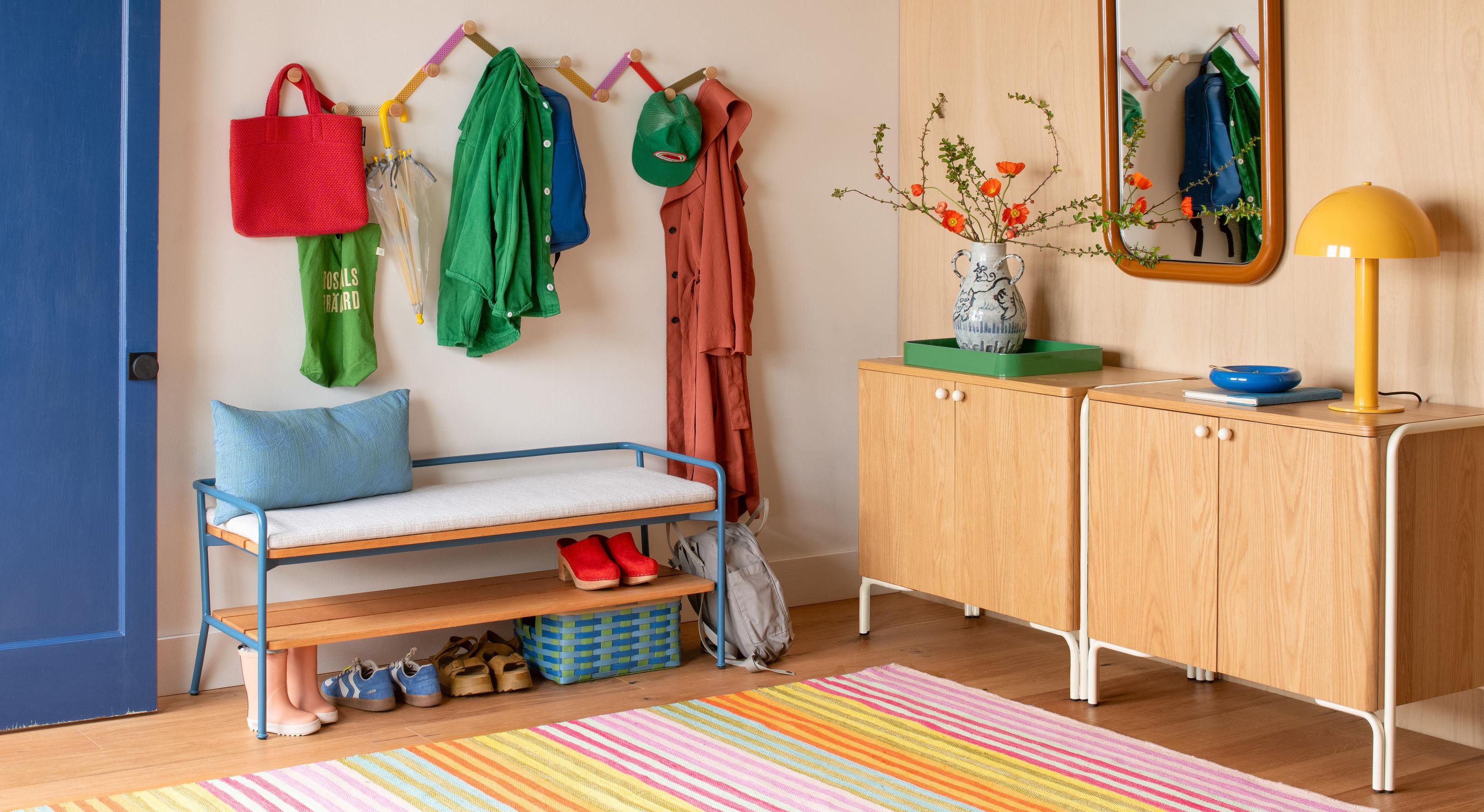
The storage bench is perhaps the most beloved multi-purpose entryway furniture. It offers a comfortable spot to sit while putting on shoes, but beneath that seat lies the real magic: hidden compartments.
For families, a bench with cubbies or a flip-top lid is a lifesaver. It allows you to tuck away seasonal gear like scarves, gloves, and hats that would otherwise clutter a tabletop. If you prefer a more minimalist look, look for a "floating" storage bench that mounts directly to the wall; it provides the same utility while keeping the floor visible, which creates an illusion of more space.
2. The Hall Tree: Maximizing the Vertical Footprint
If you have a very small footprint but high ceilings, the hall tree is your best friend. This "all-in-one" solution typically features a bench, hooks for coats, and often a top shelf for baskets.
Why it works: Switching from a standard coat rack to a vertical hall tree can increase storage efficiency by up to 300% in the same floor footprint.
By utilizing the vertical space that usually goes to waste, you can manage the "drop zone" chaos effectively. When choosing a hall tree, look for models with closed cabinetry at the bottom to hide footwear, as visible shoe piles are the number one detractor from a high-end look.
3. The Slim Console: Style for Narrow Hallways
How can I maximize a narrow hallway? The answer lies in the slim console table. For hallways under five feet wide, every inch matters. Traditional consoles are often 16 to 18 inches deep, which can obstruct the walkway.
The most effective pieces for narrow halls are slim demi-lune console tables or "skinny" consoles that are under 12 inches deep. These provide a surface for mail, keys, and a lamp (for ambiance) without protruding into your path. Floating consoles—those without legs—are particularly effective in tight quarters as they allow you to tuck baskets underneath for additional hidden storage.
Comparing Entryway Solutions
To help you decide which piece is right for your home, here is a quick comparison of the most popular multi-functional items:
| Furniture Type | Primary Function | Hidden Storage Capacity | Best For |
|---|---|---|---|
| Storage Bench | Seating + Gear Storage | High | Small foyers needing a "perch" |
| Hall Tree | All-in-one Organization | Very High | Busy families/High-traffic zones |
| Slim Console | Surface + Aesthetics | Low to Medium | Narrow hallways & corridors |
| Wall-Mounted Unit | Organization | Medium | Ultra-small apartments |
Buyer’s Guide: Sizing, Materials, and Durability
When selecting your furniture, aesthetics should come second to durability. The entryway is a high-traffic area subjected to moisture, dirt, and heavy use.
Sizing Guidelines
Before you shop, keep these dimensions in mind to ensure your entryway remains functional:
| Area | Recommended Dimension | Why? |
|---|---|---|
| Walkway Clearance | 36" - 42" | Allows two people to pass comfortably. |
| Console Depth | 10" - 14" | Ideal for narrow hallways without blocking flow. |
| Bench Height | 18" - 20" | Standard height for comfortable seating. |
| Hook Height | 60" - 65" | Ensures long coats don't drag on the floor. |
Material Comparison
- Solid Wood: Timeless and sturdy, but requires sealing to protect against wet umbrellas or snowy boots.
- Sintered Stone/Marble: Excellent for console tops; highly resistant to scratches from keys and easy to wipe down.
- Powder-Coated Metal: The best choice for hall trees or shoe racks due to its durability and resistance to moisture.
Styling Your Setup: The 'Three-Layer' Rule
Once you have chosen your multi-purpose piece, it’s time to style it. I always recommend the "Three-Layer Rule" to ensure your entryway feels like a designed space rather than just a storage unit.
- Layer 1: Function. This is the "landing strip." Use a beautiful marble tray or a ceramic bowl to catch keys, sunglasses, and mail. This prevents small items from migrating across the surface.
- Layer 2: Height. Add a vertical element to draw the eye upward. A tall table lamp or a large leaning mirror is perfect. Mirrors are especially vital in small entryways because they bounce light and create an illusion of depth.
- Layer 3: Personality. This is where the house becomes a home. Add a small vase of seasonal greenery, a scented candle, or a framed piece of art. These small touches provide the "welcome" that defines the transition into your personal world.
Design Note: If you are using a storage bench, consider adding a high-performance indoor/outdoor rug underneath. It defines the "zone" and protects your flooring from the elements.
FAQ
Q: What are the best furniture pieces for a small entryway?
The most effective pieces are multi-functional items such as hall trees with integrated shoe storage, slim demi-lune console tables, and storage benches that provide seating while hiding clutter. These items serve multiple purposes while occupying a single footprint.
Q: How can I maximize a narrow hallway?
Focus on vertical storage and slim profiles. Use wall-mounted hooks, floating shelves, and narrow console tables (under 12 inches deep) to keep walkways clear. Keeping the floor visible (via floating furniture or legs) also makes a narrow space feel wider.
Q: Is it better to have open or closed storage in a foyer?
While open shelving is easier for quick access, 74% of homeowners prefer hidden storage for small entryways. Closed cabinetry hides the visual noise of mismatched shoes and bulky winter gear, making the space feel instantly cleaner and more organized.
Elevate Your Arrival
The entryway is more than just a place to leave your shoes; it’s the threshold to your life. By investing in multi-purpose furniture, you are not just saving space—you are investing in the daily ritual of coming home. Whether it's a slim console that holds your evening mail or a hall tree that organizes the morning rush, these pieces ensure that your home’s first impression is one of calm, order, and effortless style.