A coherent home isn't built by making every room match—it's built by anchoring the house to a small set of recurring colors, finishes, and proportions, then letting each room interpret that framework in its own way.
A home rarely feels disjointed because of one bad purchase. It usually feels disjointed because every room was decided on its own, with nothing tying the choices together. Cohesion isn't about picking a style label and forcing every piece into it. It's about giving the house a shared language—colors, materials, and proportions that repeat just enough to feel intentional, but vary enough to keep the eye interested. That's the goal. Here is a step-by-step method for getting there, even if you're furnishing one room at a time.
A lived-in, mixed-material room that feels composed without feeling staged—a useful reference point for what 'cohesive but not matched' actually looks like.
A step-by-step method for a coherent home
Seven steps to a house that reads as one home
01
Decide the feeling first
Before you pick a single piece, name the mood you want the house to hold—calm and architectural, warm and layered, refined with a touch of drama. This becomes your filter for every later decision and the yardstick you measure new purchases against.
02
Build a connected palette
Choose two or three dependable neutrals and one or two accent shades. The accents should reappear in different rooms—a rust cushion in the living room, a rust throw in the bedroom, rust in artwork down the hall. Echo, don't duplicate.
03
Pick your repeating materials
Choose one dominant wood tone, one metal finish family, and one textile language (linen, wool, leather) and let them travel through the house. Repetition of finish is what makes a home feel quietly unified—more than color, more than style.
04
Set hierarchy in each room
One or two focal pieces per space. A sculptural light fitting, a single piece of art, a beautifully proportioned sofa can each lead. When everything competes, the room loses clarity. Decide what's the hero before you add supporting pieces.
05
Plan the transitions
Hallways, landings, and entries are where the home either holds together or falls apart. A repeated finish, a continuation of wall color, or one well-chosen piece of art can carry the eye from one room to the next. Treat these spaces as part of the whole, not leftovers.
06
Treat the small details as part of the system
Hardware, lampshades, vases, and trays all speak. Curved silhouettes can repeat across a mirror, a lamp base, and a chair. A dark metal handle can echo a wall sconce across the room. This is where the visual language either locks in or fragments.
07
Edit before you add more
Negative space lets the best pieces register. If a beautiful object disrupts the balance of a room, it likely belongs somewhere else—or nowhere. The final step is almost always removal, not addition.
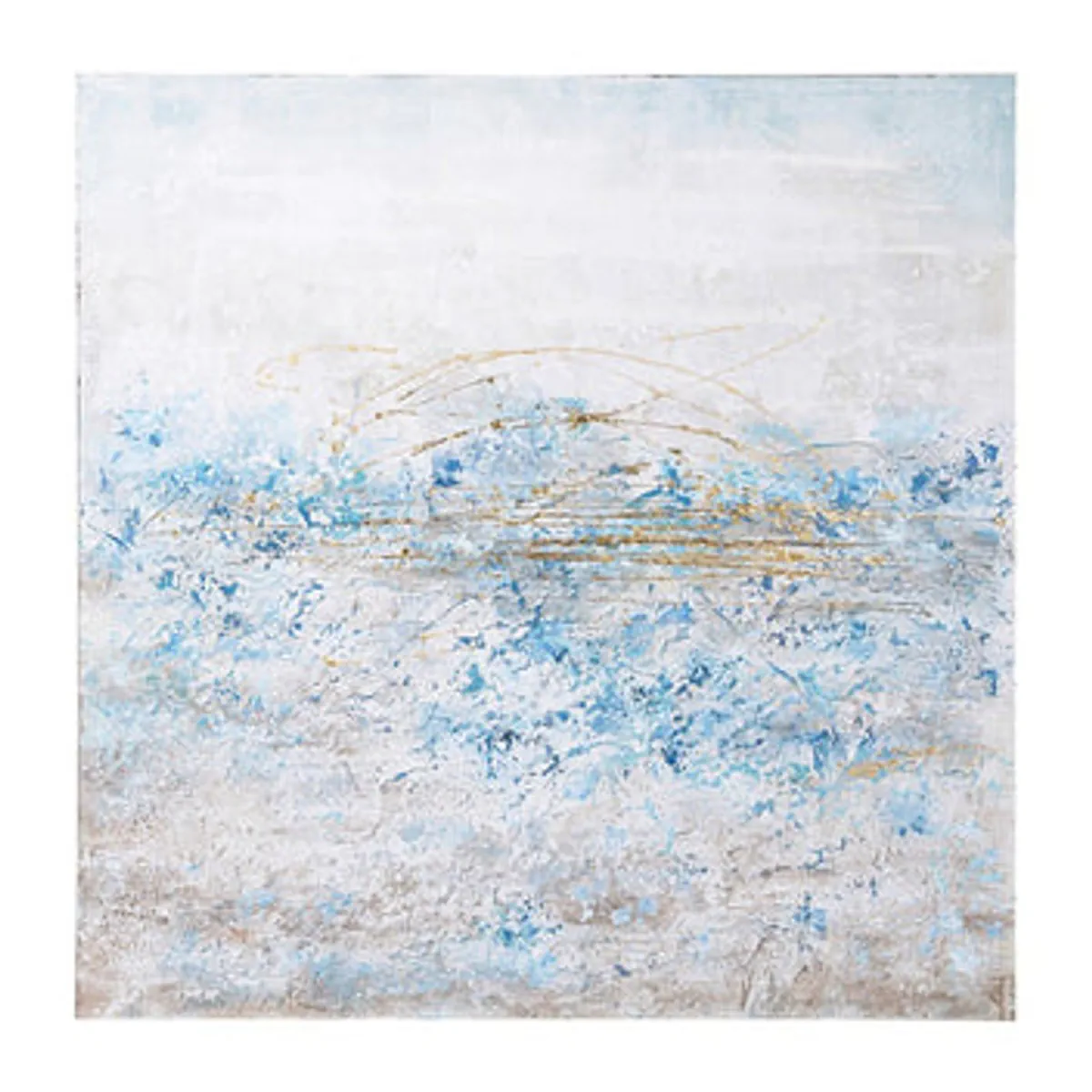
A single piece of artwork anchored on a neutral wall—a reminder that one chosen object per room, in a recurring color or motif, can do real connecting work across the house.
Build the room-by-room framework first
Lock these in before you buy anything else
✓
The dominant wood tone (or stone, or metal) for the whole house
Carries across floors, furniture legs, and frames. Pick one and stick with it for the foundation pieces.
✓
Two or three base neutrals
The walls, large upholstered pieces, and broad surfaces. These set the temperature of the home.
✓
One or two accent colors allowed to travel between spaces
Used sparingly in cushions, art, throws, a single lamp, or a piece of stoneware.
✓
The metal finish family
Brushed brass, polished nickel, blackened steel. Once chosen, repeat it on hardware, lighting, and frames.
✓
The textile language
Linen, wool, leather, boucle. One family repeated across rooms reads as continuity, not sameness.
✓
The level of contrast you want
Calm and tonal, or layered and varied. Decide this up front so the rooms don't pull in different directions.
How core pieces and finishing layers work together
Core pieces vs. finishing layers
Core pieces
Finishing layers
Role in the home
Set the design language
Refine and update the mood
Typical lifespan
Years to decades
Seasons to a few years
Examples
Sofas, dining tables, beds, storage units
Lighting, mirrors, cushions, vases, hardware, art
How to choose them
Buy with conviction; these are the anchors
Swap freely as your taste and the seasons evolve
Where the scheme usually falls apart
Common ways a home loses its thread
Too many competing finishes in a single room
Trend-led pieces that don't relate to the foundation you've set
Hallways and landings treated as afterthoughts instead of connecting spaces
Furnishing one room at a time with no shared reference palette
Rushing the small details at the end and choosing whatever's available
Filling every surface instead of letting the best pieces breathe
A decorative decanter and styled tabletop—a reminder that finishing objects (vases, trays, glassware, candleholders) carry the same design language as the larger pieces when you let them.
Edit until the home breathes
Once the major pieces are in, the hardest move is to stop. Step back and look for visual noise—too many finishes in one area, too many small objects on a surface, no clear focal point. A coherent home should feel collected, not crowded. Refined, not overworked. If a piece is beautiful but disrupts the balance, it may simply belong in another room, or it may be time to let it go. The most compelling interiors are not built through excess. They are shaped through clarity, craftsmanship, and the confidence to let good pieces speak for themselves.
SUMMARY
The bottom line
Cohesion is a framework, not a formula. Decide the feeling, lock in a small set of recurring colors, finishes, and materials, give each room a clear focal point, and let the details do the connecting work. Buy core pieces with conviction, layer finishing pieces with restraint, and edit as you go. That is how a house becomes a single, considered home—room by room, without rushing.
Common questions
Before you move on
How long does it take to make a home feel cohesive?+
There's no fixed timeline, and most homes aren't furnished all at once. The framework—your palette, wood tone, metal finish, and textile language—can be set in a weekend. Filling the house to that framework usually takes months or years, and the home often becomes more cohesive over time as you edit and refine.
Can I make a home feel cohesive on a budget?+
Yes. Repetition of finish and color does most of the connecting work, and both are cheap to change. Paint, hardware, lighting, and textiles can carry the visual language even when the larger furniture is a mix of new and inherited pieces. Save the conviction for the pieces you'll live with longest.
Should every room use the same color?+
No. Each room should be slightly different, but the colors should be related. A living room and bedroom shouldn't look identical, but they should share the same neutrals and accents. A dark wood tone or a single accent color returning in different places is usually enough to make the house read as one home.
What if I inherited furniture I don't want to replace?+
Treat the inherited pieces as either core anchors or starting points. If a piece fits the framework you've set (wood tone, scale, finish family), keep it and let other purchases work around it. If it doesn't fit, repurpose it in a room where its finish is repeated, or reupholster or refinish it to bring it into the scheme.