Start with a clear design direction, then repeat it through palette, materials, lighting, and details so rooms feel related without being identical. Focus on flow and function before finishes, layer lighting for warmth and depth, lean toward timeless choices over trends, and edit aggressively so the best pieces can breathe.
A home rarely feels disjointed because of one bad purchase. It feels disjointed because every room was decided separately. The fix is not to make everything match. It is to give every choice a shared language so the house reads as one considered space, with enough variation to stay interesting and enough consistency to feel calm.
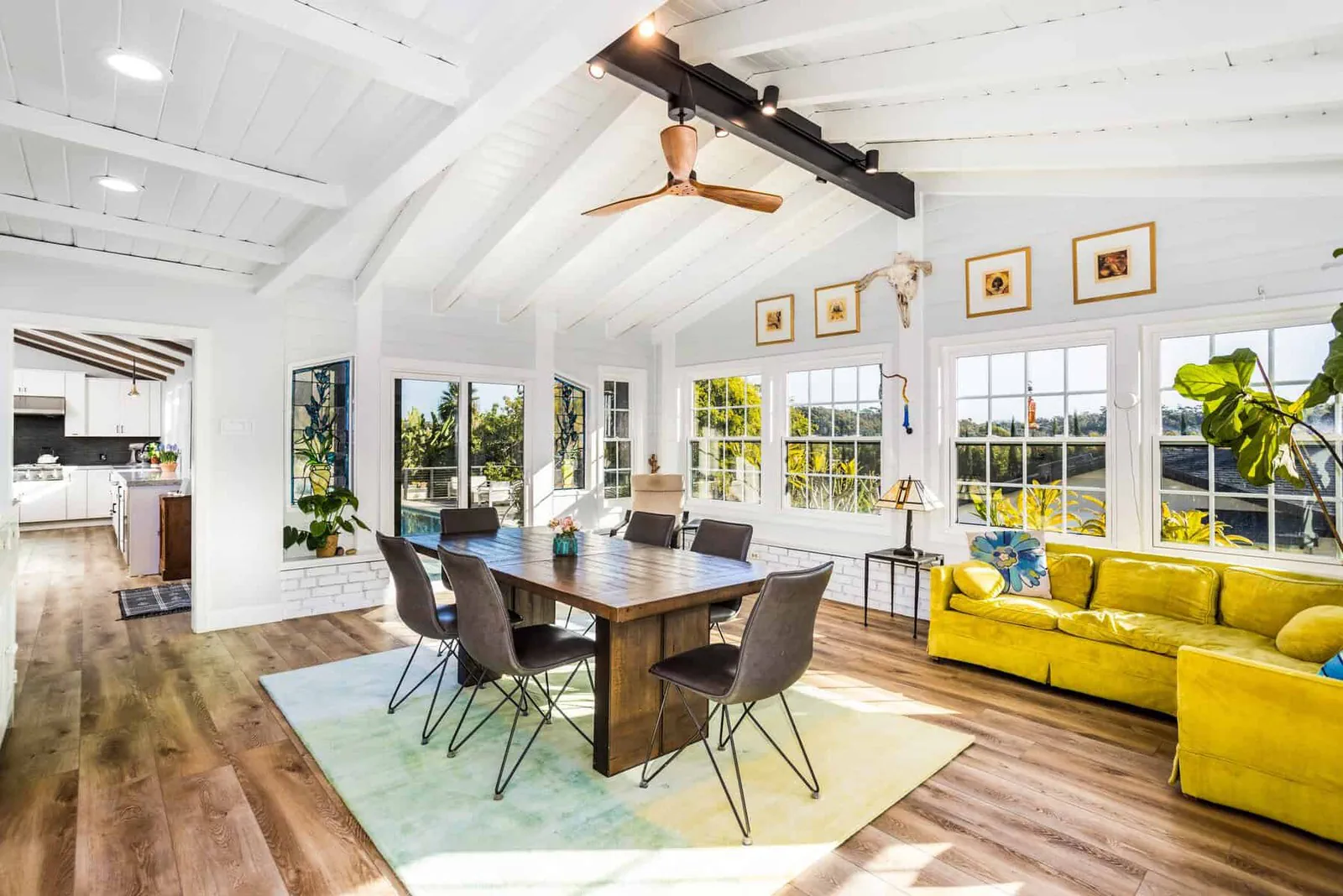
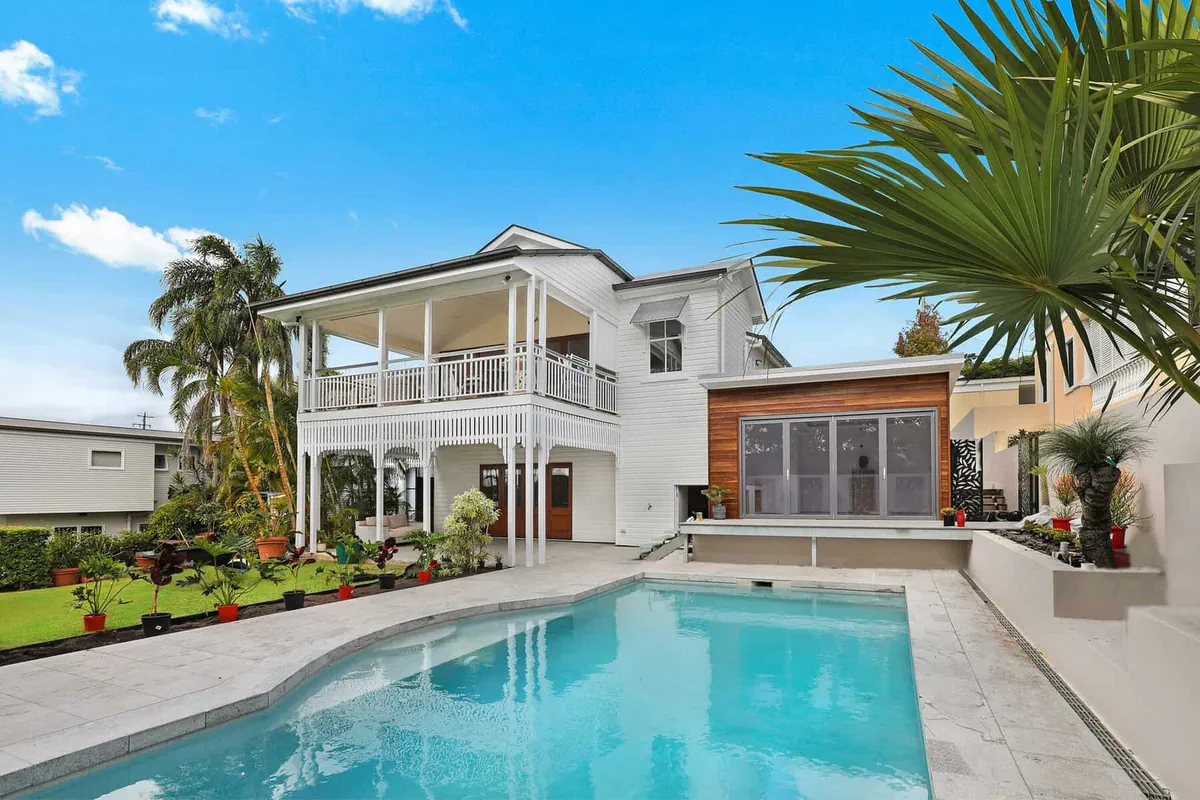
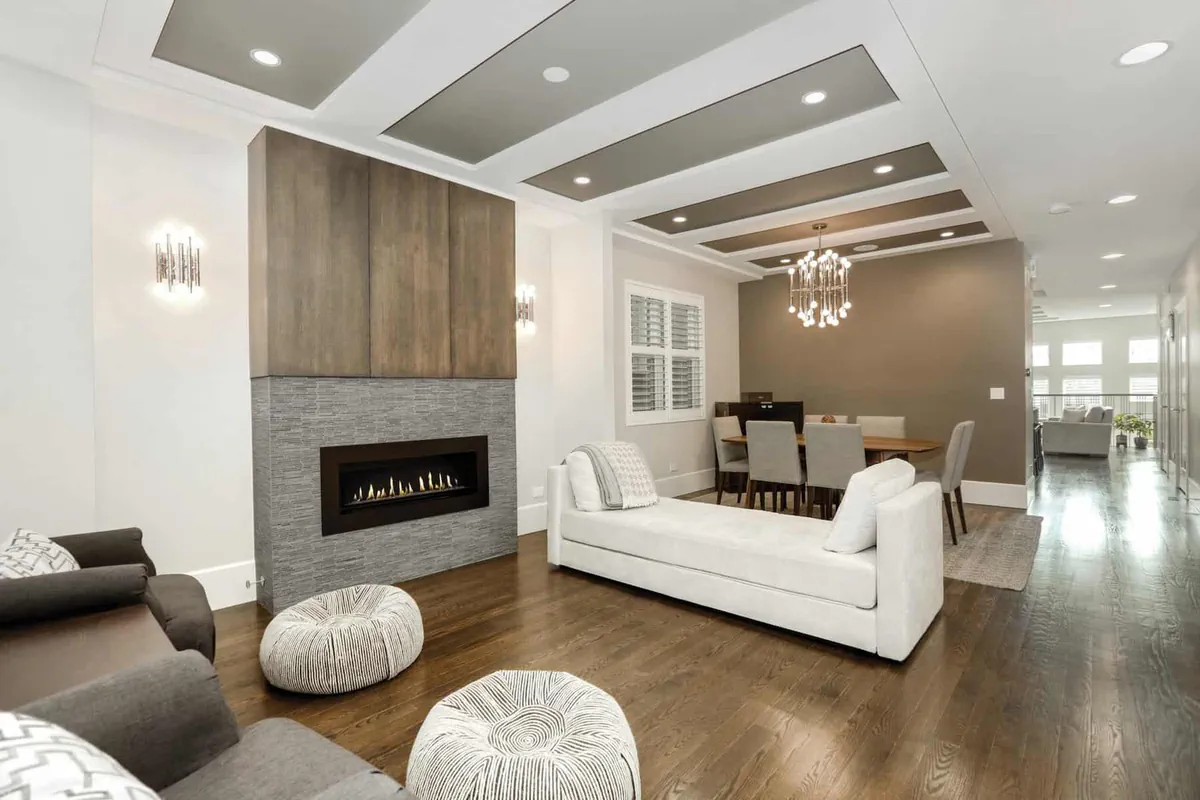
A connected sequence of rooms shows how repeated finishes and a shared palette make a home feel like one space rather than separate rooms.
Set a direction before you buy anything
Decide what should stay true across the house before you pick a sofa or a paint color. That anchor can be a material story such as warm oak, brushed brass, linen, and stone, or a mood such as architectural restraint, layered warmth, or quiet drama. Without it, attractive pieces accumulate without ever settling together.
Build the palette so colors echo, not duplicate
A whole-home palette does not need to be narrow, only connected. Start with two or three dependable neutrals such as soft taupe, warm ivory, and charcoal, then introduce accent shades that return in different forms across rooms. A cushion tone in the living room can reappear as a wallpaper detail in a bedroom. A dark timber finish in the dining area can show up again in a bedside cabinet or mirror frame.
Palette rules that hold a house together
Pick a base of two or three neutrals and let accents recur rather than repeat.
Test paint in the actual room, since daylight and evening light shift the same color dramatically.
Use the 60-30-10 split: dominant neutral, secondary tone, and a smaller accent that travels between rooms.
Allow one or two rooms to hold more drama, as long as the shared neutrals still tie them to the rest of the house.
Let materials carry the continuity
Polished homes are often held together by materials more than by color. If you favor aged brass hardware, carry it through more than one space. If your dining table has a rich walnut tone, let adjacent furniture speak to it rather than fight it. If natural linen shows up in window treatments, let it inform cushions, bedding, or an occasional chair.
Repeated wood tones, metal finishes, and textile textures do more to unify a home than matching furniture sets.
Solve flow and function before finishes
Good design supports movement, sightlines, and daily routines first, then layers in materials and decor. When flow and function are resolved early, the home feels intuitive rather than forced. A beautiful space should work effortlessly for the people who actually use it.
Flow and function checklist
✓
Circulation
Arrange furniture so people move naturally through rooms without obstacles.
✓
Proportion and scale
Choose pieces that fit the room size and complement ceiling heights.
✓
Sightlines
Make sure views across rooms feel open and intentional, not cluttered or awkward.
✓
Daily routines
Plan the layout around how you cook, entertain, work, and relax.
Layer lighting for warmth and depth
Layered lighting often changes how a home feels more than furniture or decor. A well-lit space makes colors, textures, and architectural details read as polished rather than flat.
Light a room like a designer
01
Ambient
Start with general overhead lighting that evenly illuminates the room.
02
Task
Add focused lights for reading, cooking, or working, such as reading lamps, under-cabinet kitchen lights, or desk lamps.
03
Accent
Highlight artwork, architectural features, or decor with spotlights or wall scones to add depth.
04
Natural
Maximize windows and daylight, since natural light improves mood and makes rooms feel larger.
05
Control
Add dimmer switches so the same room can shift between bright, social energy and softer, evening calm.
Treat the home as a connected sequence
Think of a home as a sequence of experiences rather than a list of rooms. Pay attention to how light, circulation, and scale connect spaces so they feel cohesive. Hallways, landings, and doorways are where cohesion is often won or lost, so give them the same care as the larger rooms.
How to make transitions feel intentional
Repeat a finish or wall color across connecting spaces so the eye reads continuity.
Use one well-chosen piece of art or a console in hallways rather than filling them with clutter.
Match furniture scale and ceiling proportions across adjoining rooms.
Plan sightlines from the entrance, dining table, and main seating area so views feel curated.
A hallway that continues the home's palette and materials acts as a quiet bridge between rooms instead of leftover space.
Choose statement pieces with discipline
Every memorable interior needs moments of emphasis, but a cohesive home knows where to stop. A sculptural chandelier, a well-proportioned sofa, a carved cabinet, or a striking mirror can each carry a room. The mistake is assuming every category needs its own statement, which leaves the eye with nowhere to rest.
Lean timeless over trendy
Homes that feel effortless usually rely on durable, classic choices rather than the latest look. Neutral palettes with personality, quality materials, and flexible rooms tend to age well and adapt as life changes.
Timeless versus trend-led choices
Decision
Timeless approach
Trend-led risk
Materials
Solid wood, natural stone, linen, brass
Mixed synthetics or finishes that date quickly
Palette
Soft neutrals with a recurring accent
Saturated color of the moment in every room
Furniture shape
Classic proportions that fit the room
Statement silhouettes that fight each other
Layout
Rooms that can flex between uses
Single-purpose rooms built around a passing fad
Let lifestyle and location guide the details
The best interiors fit the way people actually live and the environment they live in. In humid regions, choose moisture-resistant flooring and finishes that hold up. In coastal settings, soft earthy tones, organic textures, and large windows that frame the view tend to feel right. In colder climates, layered textiles and warmer woods can do the same work.
Tie design to place
Design around how the household really uses each space, not an idealized version of it.
Pick materials and finishes that suit the local climate and environment.
Embrace indoor-outdoor connections with porches, patios, or large windows where it makes sense.
Borrow color and texture from the surroundings so the home feels grounded.
Edit before you add
Once a room is furnished, the instinct is often to add more. Cohesion depends as much on what you remove as what you include. Step back and look for visual noise: too many finishes in one area, too many small accessories, every surface filled. Rooms need moments of rest so the best pieces can register.
Final editing pass
✓
Surfaces
Clear at least one surface per room so the eye can rest.
✓
Finishes
Reduce the number of competing metal or wood finishes in any single view.
✓
Accessories
Keep only pieces that earn their place or tie back to the shared palette.
✓
Lighting
Confirm every room has ambient, task, and accent layers working together.
SUMMARY
The bottom line
A cohesive, effortless home comes from a shared design direction, not from matching everything. Repeat your palette, materials, lighting layers, and level of contrast across rooms; solve flow and function before finishes; treat hallways as part of the story; choose timeless pieces with discipline; and edit until the best items can breathe.
Common questions
Before you move on
How do I make different rooms feel connected without making them match?+
Repeat a short palette of two or three neutrals plus one accent, carry one or two materials across rooms, and keep furniture scale consistent. Echo rather than duplicate, so each room stays individual but clearly belongs to the same house.
What is the fastest change to make a home feel more cohesive?+
A fresh paint pass in a shared neutral, a hardware swap to one metal finish used throughout, and a lighting tune-up with dimmers and layered lamps usually deliver the biggest shift for the least cost.
Should I follow current design trends to make my home feel effortless?+
Use trends sparingly and only when they fit your existing direction. A single on-trend piece can sharpen a room, but stacking several trend-led items usually dates the home and weakens its identity.
How do I keep a cohesive look while furnishing gradually?+
Lock in your recurring neutrals, wood tones, and metal finishes first, then buy core pieces like sofas, beds, and dining tables that fit that framework. Treat later accessories and textiles as a flexible finishing layer on top of a stable foundation.