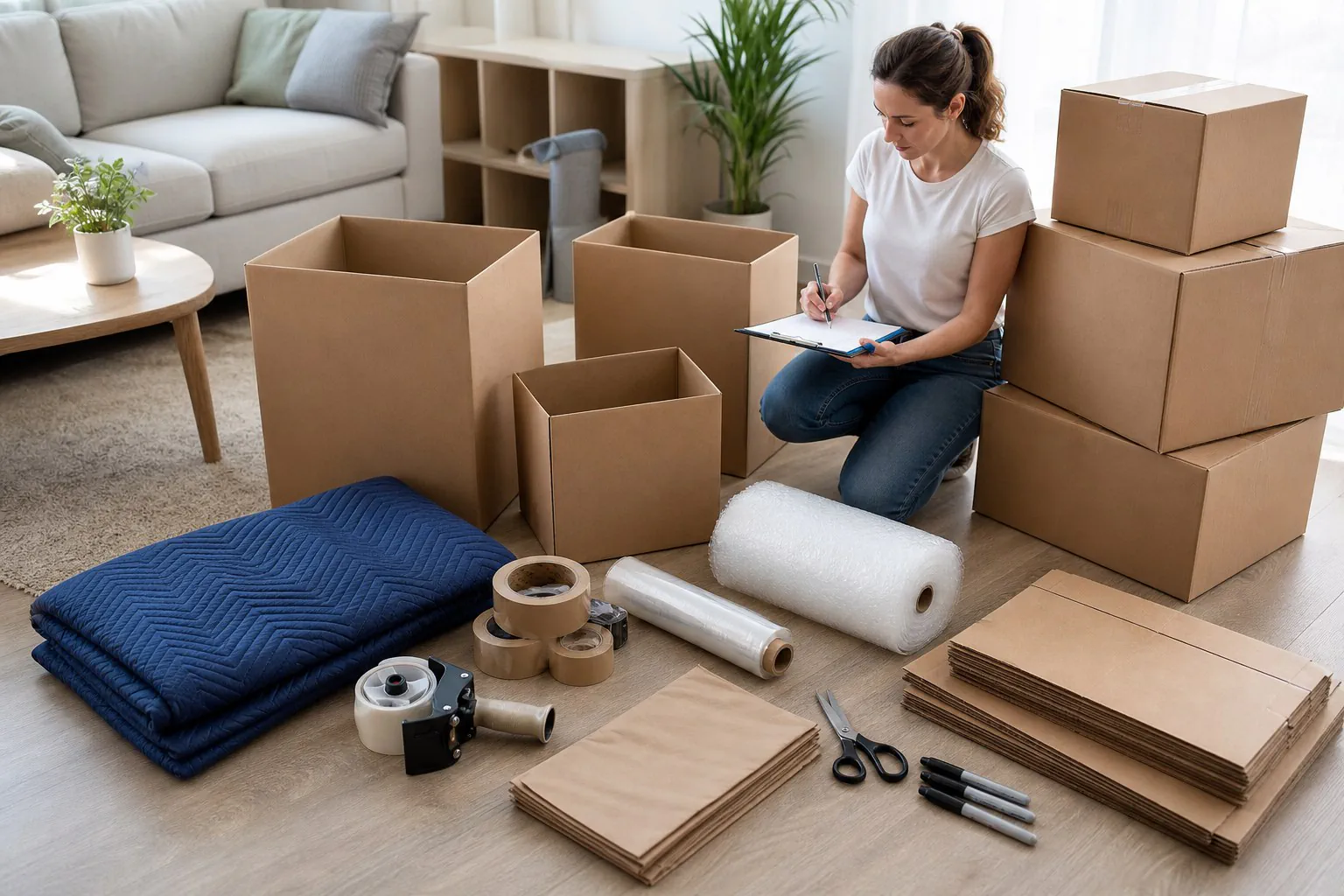
What is a complete checklist of moving supplies I need?
A practical, room-by-room checklist of moving supplies — boxes, tape, padding, labels, and tools — with sizing guidance and tips to avoid waste and overspending.
To pack and protect a typical home, you need: a mix of small, medium, and large boxes plus wardrobe and dish-pack boxes; packing tape; bubble wrap or packing paper; permanent markers; moving blankets or furniture pads; a box cutter and basic tools; and trash bags for soft items. Specialty items like mattress bags, plastic stretch wrap, and furniture sliders are optional and only needed for specific pieces or long-term storage.
The fastest way to keep a move from turning chaotic is to gather every supply before the first box is taped shut. A short, prioritized list — boxes, tape, cushioning, labels, a few tools — covers roughly 90% of what most homes need. The remaining supplies only earn their cost if you have specific furniture, fragile items, or a long storage gap between move-out and move-in.
The complete moving supplies checklist
Boxes by size and use
✓
Small boxes (about 1.5 cu ft)
Use for heavy items: books, canned goods, tools, small appliances, vinyl records. The smaller footprint keeps the total weight per box under control.
✓
Medium boxes (about 3 cu ft, e.g., 18×18×15 in.)
The most common size. Good for toys, office supplies, kitchen gadgets, decor, and mixed household items. Pair with box dividers for stacks of dishes.
✓
Large boxes (about 4.5 cu ft and up)
Reserve for light, bulky loads only: pillows, blankets, comforters, lampshades, stuffed animals. Filling a large box with heavy items is the most common way boxes fail.
✓
Wardrobe boxes
Tall boxes with a hanging bar. They let you transfer hanging clothes without folding, and they protect suits and dresses from wrinkling.
✓
Dish-pack boxes (cell boxes)
Double-walled boxes with built-in cardboard cells. Worth buying for a full set of plates, bowls, or stemware where extra protection matters.
Tape, wrap, and cushioning
✓
Packing tape
Use a wide, strong acrylic or hot-melt tape, not regular office tape. Plan on roughly one full roll per 10–15 medium boxes.
✓
Tape gun (optional)
Speeds up taping if you have more than a handful of boxes. Skip it for studio moves and tight budgets.
✓
Bubble wrap
Best for glass, ceramics, electronics, framed art, and any item you don't want shifting in the box. Smaller bubbles protect surfaces; larger bubbles absorb impact.
✓
Packing paper or newsprint
Cheaper than bubble wrap in volume. Layer it between plates and stack dishes vertically rather than flat to reduce breakage.
✓
Plastic stretch wrap
Optional. Wraps furniture doors shut, bundles loose items, and keeps dust off upholstered pieces during transit.
Labels, tools, and cleanup
✓
Permanent markers and color-coded labels
One wide-tip marker for box contents, plus sticker dots or colored tape to mark room destination. Color coding saves real time on move-in day.
✓
Box cutter or heavy scissors
For opening boxes at the new place. Keep one in your essentials bag so you are not hunting for it at 9 p.m.
✓
Screwdriver set, Allen wrench, and a small hammer
Most beds, dressers, and disassembled furniture need at least one of these to come apart and go back together.
✓
Trash bags
Double as bags for soft items like linens and shoes, and as the fastest way to dispose of used packing paper at the end.
✓
All-purpose cleaner and paper towels
For wiping down the inside of cabinets, the old kitchen, and any item that needs it before it is packed.
Furniture and specialty supplies (optional)
✓
Moving blankets or furniture pads
Wrap wood tables, dressers, headboards, and any piece that scratches easily. Rent them from a moving company if you only need them for a day.
✓
Mattress bags
Cheap protection for mattresses and box springs. Skip only if everything is going directly from bedroom to bedroom with no truck time.
✓
Furniture sliders
Save your back and your floors when sliding dressers, tables, and sofas across thresholds and into the new place.
✓
Ratchet straps or bungee cords
Hold wardrobe boxes upright, secure drawers, and tie down items in the truck. Ratchet straps are more secure than bungees for heavy loads.
Right-sizing your boxes
Most packing problems trace back to one of two things: a box that is too big for its contents, or a box that is too heavy. Use the small/medium/large rule of thumb based on weight density: small for heavy, large for light, medium for everything in between. A medium box in the 3 cubic-foot range — roughly 18×18×15 inches — is the right call for most kitchen items, including small appliances. Plates and bowls still belong in a dish-pack with cells, because the weight inside a plain medium box adds up fast.
Where to find supplies without overspending
Ways to keep costs down
Free boxes: grocery stores, liquor stores, bookstores, recycling centers, and office mailrooms often have sturdy used boxes. Post on a local social media group for pickup.
Reuse what you own: towels, blankets, t-shirts, and socks make solid padding for fragile items and save a roll of bubble wrap.
Buy in kits: pre-packed moving kits bundle the right ratio of small, medium, and large boxes and are usually cheaper per box than buying piecemeal.
Rent what is expensive: moving blankets and dollies are often cheaper to rent from a truck rental company or moving company for a day than to buy.
Watch for free on move-out day: many people leave packing paper, paper rolls, and bubble wrap on the curb the week of their move.
Packing mistakes that waste supplies
Overfilling large boxes: the box looks full but it weighs 50 lb, the bottom blows out, and one box of loss turns into ten boxes of repacking.
Empty space inside boxes: anything that can shift will. Fill gaps with crumpled paper, towels, or clothing so items do not move when you tilt the box.
Plates stacked flat: plates are far more likely to crack when stacked flat in a single layer. Stack them vertically like records.
No labels at all: even a single word per box (KITCHEN, BATH, OFFICE) cuts unpacking time dramatically. Numbers and a master list work even better.
Skipping the 'essentials' box: pack a small bag or box of chargers, medications, snacks, paper towels, and a box cutter to open the rest of the boxes. It is not a supply, but it is the most common packing mistake.
SUMMARY
The bottom line
Start with a kit: small, medium, and large boxes; wardrobe and dish-pack boxes if you have hanging clothes or a real set of dishes; packing tape; a choice of bubble wrap or packing paper; a permanent marker; a box cutter; and trash bags. Add moving blankets, mattress bags, sliders, and stretch wrap only for the furniture and finishes that need them. Buy only what your real packing problems require, and reuse what you already own before spending on padding.
Common questions
Before you move on
How many boxes do I need for a one-bedroom apartment?+
A common starting point is about 10 small, 10 medium, and 5 large boxes, plus 2 wardrobe boxes if you have hanging clothes. Adjust up or down based on how much you own versus how efficiently you can stack.
What size box is best for dishes and small appliances?+
Use a medium box (around 3 cubic feet) for small appliances and general kitchen items. For plates, bowls, and stemware, use a dish-pack with cardboard cells, because the weight in a plain medium box adds up quickly and the cells absorb the impact.
Can I use newspaper instead of packing paper?+
Yes. Newspaper works as filler and as light cushioning. The tradeoff is that it can leave ink on dishes, glass, and light-colored items — wrap those in plain paper first if you do not want to wash everything on move-in day.
Do I really need bubble wrap?+
For glass, ceramics, electronics, framed art, and any item you cannot easily replace, yes — or use packing paper generously. For clothes, linens, and most plastic or metal household items, towels and t-shirts do the same job for free.