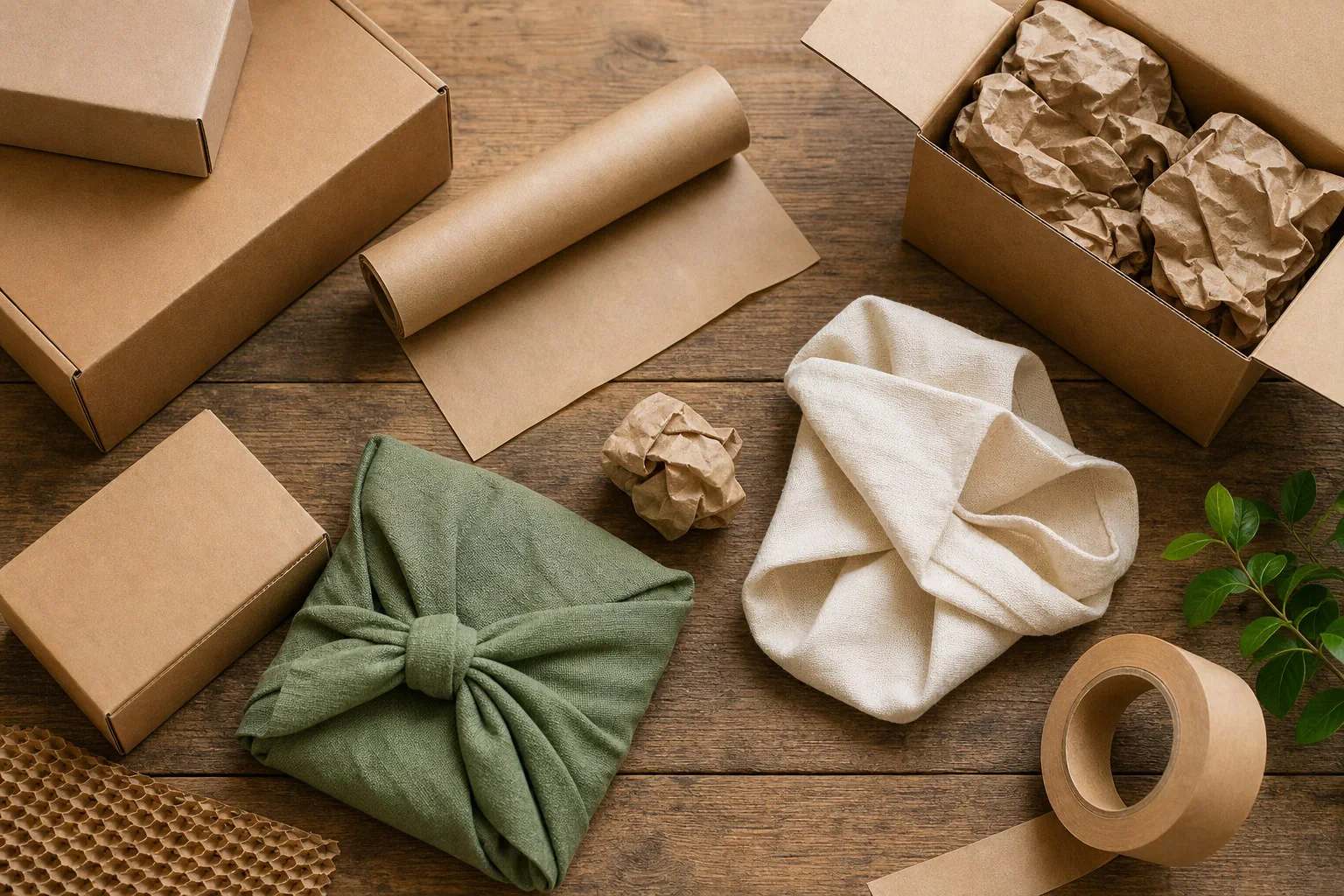
Right-size your boxes, replace plastic filler with paper and cloth you already own, and borrow or buy used before you buy new. The smallest eco-friendly move starts with the smallest appropriate box.
The fastest way to cut packing waste is to match the container to the contents. An oversized box leaves room for items to shift, which means more filler ends up in the trash. A too-small box crushes the load and forces a backup box, doubling your cardboard. Right-sizing is the greenest move you can make, and it costs nothing extra.
Size boxes to the items inside
Most households can get through a move with three or four box sizes, each reserved for a specific job. A box that works well for clothing is rarely the right box for dishes or small kitchen gear.
Where the medium box earns its keep
18 x 18 x 15 in. or 22 x 16 x 15 in. (about 3 cubic feet) — the most common mover's box, sized for office supplies, records, toys, small appliances, and decor
Use it for anything moderately heavy that benefits from a tight fit, so you can wrap items in a single sheet of paper rather than padding voids
Resist the temptation to overfill it; an overstuffed medium box is a common cause of crushed bottoms in the recycling bin after the move
A general-purpose medium box handles small appliances, decor, and records; the same shape carries over whether you move across the city or to a new country.
Eco-friendly supply swaps that work
Most of the plastic used in a move is filler, not the box itself. A few direct swaps cover the bulk of void fill and surface protection without leaning on bubble wrap or foam peanuts.
Build a low-waste packing kit
✓
Recycled or reused cardboard
Look for boxes marked with high recycled content, or skip the store entirely and source from grocery stores, liquor stores, and community groups.
✓
Kraft paper instead of newsprint
Plain kraft rolls don't smudge onto dishes and break down faster than dyed newspaper. A single roll covers most of a typical kitchen's dishware.
✓
Paper or water-activated tape
Reinforces boxes for stacking, seals without plastic backing, and is accepted by recycling streams that often reject clear plastic tape.
✓
Compostable peanuts or crumpled paper
Cornstarch-based packing peanuts dissolve in warm water; if your mover hands you the old polystyrene kind, save them in a labeled bag for future shipping instead of tossing.
✓
Cloth wraps and old towels
T-shirts, pillowcases, and retired towels cushion fragile items and double as padding in the truck. They re-enter the laundry at the destination.
Soft goods already in the home — towels, linens, sweaters — can wrap fragile decor and furniture hardware, replacing rolls of plastic.
Reuse, then buy only what is missing
A short sourcing order that keeps boxes out of the trash
01
Check what you already have
Set aside any boxes from recent deliveries, plus bins, suitcases, and laundry baskets you can fill instead of buying new.
02
Ask your network
Neighbors, Buy Nothing groups, and local small businesses often have a steady supply of sturdy used boxes. Liquor stores are a reliable source of double-walled boxes for heavy items.
03
Rent plastic bins if you have a long lead time
Services that drop off reusable totes swap clean ones for your empties on move-in day, sparing you one trip to the recycling truck.
04
Buy new only for the gaps
Specialty sizes — wardrobe boxes, dish packs, mirror cartons — are worth purchasing new. Everything else can usually be borrowed or sourced secondhand.
If your move crosses a state line, federal paperwork and protections apply; if it stays in-state, the same expectations are worth asking for in writing from your mover.
Handle the end-of-move cleanup
The move is over, but the waste stream is not. Flatten every cardboard box as you unpack so it fits in the recycling bin, and stack the flattened pieces in a dry corner until pickup. Tape, labels, and any leftover polystyrene peanuts go in a separate bag for proper disposal rather than mixed recycling. Cloth wraps drop straight into the laundry, and rented totes go back to the supplier for cleaning and reuse.
SUMMARY
The bottom line
A low-waste move is mostly a sizing problem, not a supply problem. Right-size your boxes, swap plastic filler for paper and cloth you already own, and borrow what you can before buying. The small habit of asking 'do I need a new box, or just a smaller one?' does more for the environment than any single eco-friendly product.
Common questions
Before you move on
Are biodegradable packing peanuts worth the extra cost?+
For occasional moves, plain crumpled kraft paper handles the same void-filling job at a lower cost and is accepted by curbside recycling. Biodegradable peanuts make more sense for shippers who send out boxes every week and want to skip the disposal step.
Can I use grocery store boxes for fragile items?+
Lightly used produce or cereal boxes are usually single-walled and not strong enough for dishes, glass, or electronics. Reserve them for soft goods like linens and clothing, and save sturdier liquor-store or appliance boxes for fragile loads.
Do eco-friendly supplies protect as well as plastic?+
For most household items, yes, when the box is correctly sized and the load is wrapped snugly. Heavy, valuable, or vibration-sensitive items (large TVs, artwork, certain antiques) still benefit from rigid foam or custom crating regardless of how green the rest of the move is.