Items that usually benefit from climate control
- Wood furniture and antiques
- Artwork, photographs, and important documents
- Musical instruments
- Leather furniture or clothing
- Electronics
- Books and paper records
- Mattresses
- Wine or specialty collectibles
A practical breakdown of the storage options a mover is likely to encounter — climate-controlled, indoor, drive-up, vehicle, portable containers, and lockers — and how to match each to the timeline, items, and access you actually need.
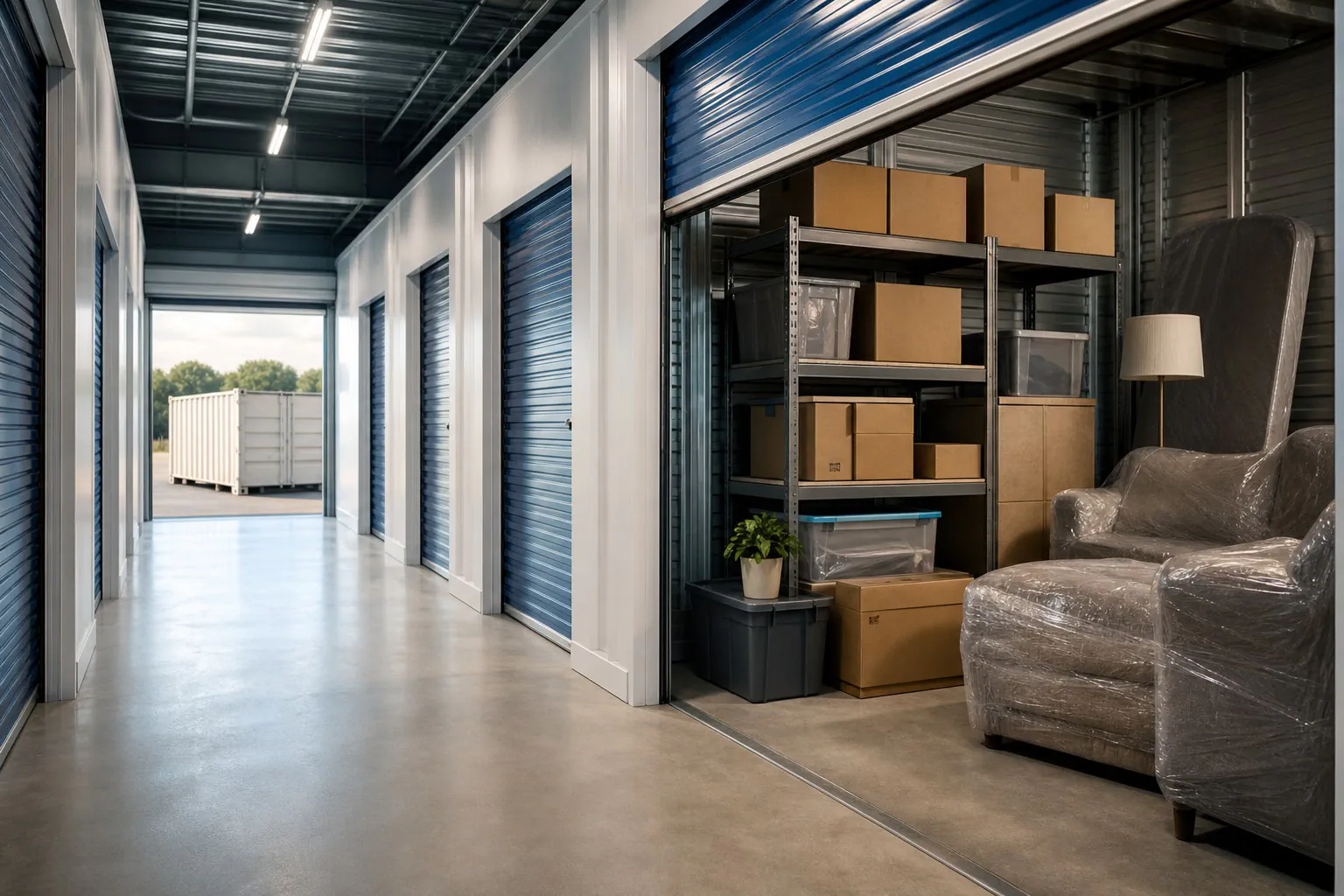
Six storage formats cover most moving-day needs: climate-controlled, indoor, drive-up, vehicle/specialty, portable containers, and small lockers. Match the type to what you are storing, how long, and how often you need to get in — not just to the lowest price.
If you need extra space during a move, you will usually end up choosing between six storage formats: climate-controlled, indoor, drive-up, vehicle or specialty, portable containers, and small lockers. Each one solves a different problem, so the right pick depends on what you are storing, how long it will sit, and how often you need to get back in. Size still matters most — most moves land somewhere between a 5×10 and a 10×20 unit — but the type of unit controls cost, access, and the level of protection your belongings actually get.
| Type | Typical sizes | Access | Climate control |
|---|---|---|---|
| Climate-controlled | 5×5 to 10×30 | Indoor hallway, elevator, or loading area | Yes |
| Indoor | 5×5 to 10×30 | Interior hallway or elevator | Sometimes |
| Drive-up | 5×10 to 10×30 | Roll-up door with vehicle access | Usually no |
| Vehicle / specialty | Parking space to enclosed unit | Outdoor, covered, or enclosed | Sometimes |
| Portable container | 8-ft to 16-ft containers | Delivered to your home or stored off-site | No |
| Storage locker | Small closet-style spaces | Indoor hallway access | Sometimes |
Climate-controlled units sit inside the building and keep temperature — and often humidity — within a steadier range than an outdoor unit can. That extra protection costs more, so it is not always worth it for a two-week gap or for durable goods. It earns its price when you are storing things that do not handle heat, cold, dampness, or big swings well, or when the items will sit through a hot summer, a cold winter, or a rainy season.
Indoor units are inside the storage building and reached through a main entrance, hallway, loading area, or elevator. Sizes range from small lockers up to spaces that can hold an apartment or small home. Because the unit is inside, your belongings are shielded from rain, snow, and outdoor dirt, and many facilities add gated entry, cameras, keypad access, interior lighting, and on-site staff.
Indoor storage tends to fit well when you are between leases, downsizing and need time to sort, clearing rooms before listing a home, waiting for a new place to be ready, or holding extra household items after a long-distance move. If movers will be loading or unloading the unit, parking and building access matter: a facility with a nearby loading area, roomy elevators, and carts available is easier on the crew than one with a long walk from the truck.
Drive-up units are outdoor units with roll-up doors, so you pull up close and load right from the vehicle. That convenience is the main reason people choose them, especially for large, awkward items like sofas, mattresses, dressers, tools, bins, and other bulky pieces. They are also handy if you expect to stop by often — open the door, grab what you need, and go.
Most drive-up units are not climate-controlled, so dust, pests, humidity, and temperature swings reach the contents. They work best for durable belongings or short-term storage rather than delicate pieces that need steady indoor conditions. A shorter carry between the truck and the unit also helps movers work more efficiently, which matters when the unit holds a full household.
Specialty storage can cost more and may be harder to find, but it is worth looking into when you need to store a car, motorcycle, boat, RV, wine collection, or business inventory. Cars, motorcycles, and ATVs usually fit in an outdoor space, a covered structure, or an enclosed unit. Outdoor parking is the cheapest and works for vehicles that already live outside; covered storage adds protection from sun, rain, snow, and falling debris; an enclosed unit offers the most shelter and is worth considering for a classic car, motorcycle, or anything that will sit for several months.
Boats, RVs, and trailers need enough room to fit and enough space to maneuver into position. Use the full measurements of the vehicle, including mirrors, hitches, motors, ladders, and roof attachments, before you compare options. Uncovered parking is common for off-season storage, covered parking adds weather shelter, and enclosed storage gives the most protection when a large enough space is available.
Wine collections and business inventory can both be damaged by poor storage conditions, so temperature, humidity, and air quality matter. Wine storage usually focuses on steady climate, low light, and secure handling, while business storage may also require shelving, frequent access, delivery space, and room for tools and equipment. A facility that regularly handles the type of item you are storing should be able to explain what the space includes and whether it will suit your needs.
Portable containers fold moving and storage into one setup. The container is delivered to your home, where you load it at your own pace or bring in movers to help. Once it is packed, it can stay on your property, travel to your new address, or go to an off-site facility until you are ready for it. Your belongings can stay in the same container instead of being unloaded into a separate unit and reloaded later.
Two well-known providers are PODS and 1-800-PACK-RAT, though available sizes, pricing, delivery areas, and storage access vary by company and location. Before you book, make sure you actually have a place for the container to sit — enough curb space, a driveway, or a lot that allows delivery — and confirm how long it can stay on your property before monthly storage fees kick in.
Storage lockers are small, closet-style spaces inside the building, reached through the same hallway access as indoor units. They are usually the lowest-cost option and work well for boxes, seasonal clothing, documents, and other items that do not need their own full-sized unit. Lockers do not fit furniture, and they are not always climate-controlled, so check the conditions before you store anything sensitive.
Sensitive items like wood furniture, art, instruments, electronics, and documents usually need climate control. Durable household goods and tools usually do not.
A few weeks of overlap between homes rarely justifies the climate-control premium. Several months through summer or winter often does.
Drive-up access pays off when you will visit often or carry bulky items. Indoor units make sense when you only need to visit a few times.
Long hallways, narrow elevators, or limited parking slow movers down. A ground-floor unit near the loading area is usually the easiest move day.
Containers cut out a second loading step and work well for renovations and gradual moves, but you need space to place them and they are not climate-controlled.
Gated entry, cameras, keypad access, lighting, and on-site staff all matter more for longer stays and for vehicles or high-value items.
Federal interstate moving rules cover household goods shipped across state lines under a licensed carrier, including the valuation coverage the mover is required to offer. Storage that is part of that interstate shipment — for example, when a carrier warehouses your belongings at the destination before delivery — falls under the same federal framework. An in-state move is different: once your belongings sit in a self-storage facility you rented yourself, or in a portable container on your property, the facility's contract, your homeowner's or renter's insurance, and your state's self-storage laws are what govern the relationship, not federal interstate rules. That is why it is worth reading the rental agreement and confirming whether the facility requires proof of insurance before you move in.
SUMMARY
Pick the storage type that matches what you are storing and how long it will sit, not just the lowest monthly price. Use climate-controlled for anything sensitive over a long stay, indoor for everyday household goods that need some weather protection, drive-up for bulky or frequently accessed items, portable containers for long-distance or staged moves, vehicle or specialty storage for cars, boats, wine, or inventory, and lockers for small loads. Confirm access, security, insurance requirements, and the truck-to-unit path before you sign.
Common questions
Most moves land somewhere between a 5×10 and a 10×20 unit. A small apartment often fits in a 5×10 or 10×10, while a larger home usually needs a 10×20 or larger.
Usually not. Climate control earns its price when items will sit for several weeks or longer, through a hot summer, cold winter, or rainy season, or when you are storing wood furniture, art, photos, instruments, electronics, leather, books, or documents.
No. A container is delivered to your home, loaded at your pace, and can stay on your property, travel to your new address, or go to an off-site facility. A traditional storage unit is a fixed space at a facility that you drive to and load.
Usually yes, but the experience varies. Facilities with a nearby loading area, roomy elevators, and carts available are easier on movers than ones with long hallways, stairs, or limited parking.
Only if the storage is part of an interstate shipment handled by your licensed carrier. If you rent a self-storage unit yourself or use a portable container on your property, the facility's contract and your state's self-storage laws apply instead.