What window performance specs and durability features actually matter for my budget?
A window’s sticker price tells only part of the story. Learn which NFRC ratings, frame materials, and construction details deliver the best balance of performance and durability without overspending.
Prioritize U-factor and solar heat gain coefficient (SHGC) for your climate, then look for condensation resistance (CR) above 50 and a performance grade (PG) appropriate for your region. Frame material—fiberglass or clad-wood—offers the best long-term durability, while vinyl provides solid performance at a lower cost. Avoid aluminum without a thermal break and always check air leakage ratings.
Choosing windows is one of the most consequential decisions you’ll make for your home’s comfort, energy bills, and longevity. But the sea of numbers and marketing claims can make it feel like you’re comparing apples to triple-glazed oranges. This guide cuts through the noise, focusing on the performance specs and durability features that deliver the best value for your dollar—whether you’re building new or replacing old windows.
The performance specs that actually matter
The National Fenestration Rating Council (NFRC) label provides the only standardized, independent way to compare window performance across brands. Five ratings appear on the label, but not all are equally critical. Here’s where to focus your attention for a pro-level evaluation.
Key NFRC ratings to know
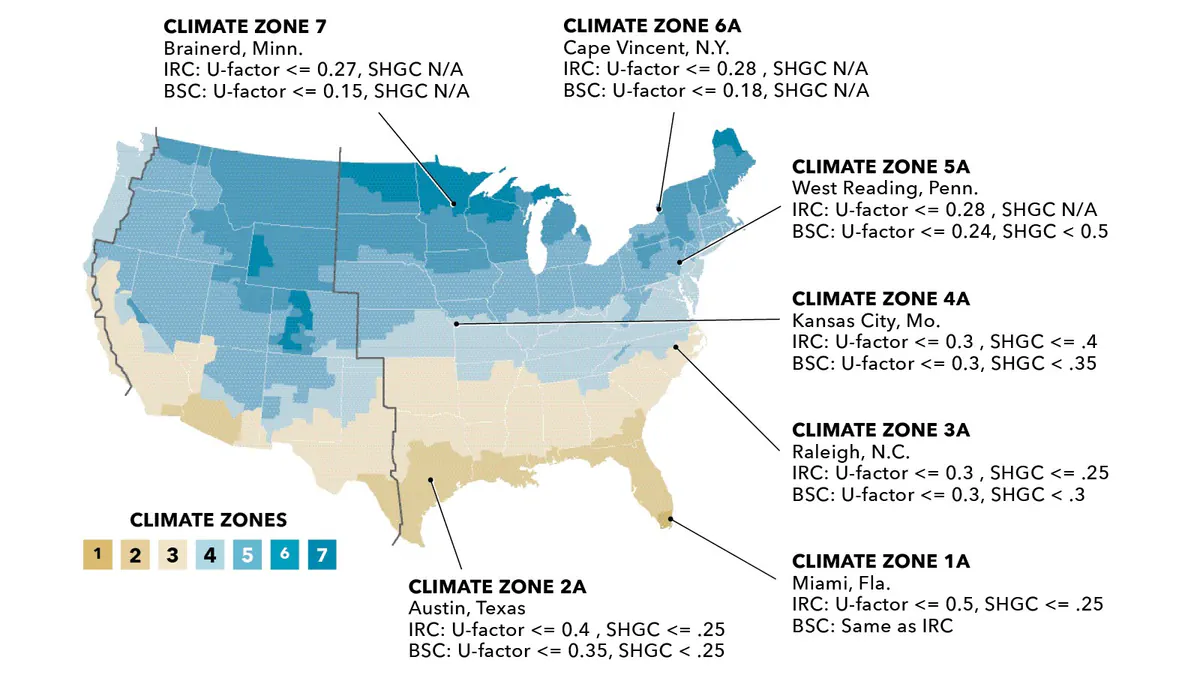
U‑factor: The whole‑window heat loss rate. Lower is better—aim for 0.30 or less in cold climates, 0.40 or less in mild ones. (U‑factor is the inverse of R‑value; a U‑factor of 0.25 equals R‑4.)
Solar Heat Gain Coefficient (SHGC): The fraction of solar heat that passes through the glass. In hot climates, go low (0.25 or under); in cold climates, a higher SHGC (0.40 or above) can help with passive heating.
Condensation Resistance (CR): A 0–100 scale; higher is better. Aim for at least 50 to reduce interior moisture and frame rot, especially in cold or humid regions.
Air Leakage: Shown as pass/fail on the label (≤0.3 cfm/ft²). For high‑performance projects, ask manufacturers for detailed testing data—look for units that test at 0.1 cfm/ft² or lower.
Visible Transmittance (VT): Tells you how much daylight enters. Balance VT with SHGC so you don’t bring in unwanted heat along with the light.
The NFRC label is your most reliable tool for comparing window performance across manufacturers. Always request the full NFRC data sheet for exact U‑factor, SHGC, and condensation resistance values.
Durability features that protect your investment
Performance specs are only half the story. The material and construction of the frame determine how long the window will function and look good. Here’s how the most common options stack up.
Frame material comparison
Material
Typical U‑factor range
Durability & maintenance
Relative cost
Vinyl
0.30–0.40
Good; very low maintenance, never needs paint. Look for heat‑welded joints.
Low
Wood
0.30–0.50
High natural beauty but requires regular painting/staining. Clad‑wood (aluminum or vinyl exterior) offers low‑maintenance exterior with wood interior.
High (clad‑wood is highest)
Aluminum
1.0–2.0 (without thermal break)
Structurally strong, minimal maintenance. Must have a thermal break to reduce heat conductivity; without it, energy performance is poor.
Low
Fiberglass / Composite
0.25–0.35
Excellent strength and stability; minimal expansion/contraction. Very low maintenance and can be painted. The most popular replacement material among homeowners.
Medium
Balancing budget and long‑term value
Initial price is just one part of the equation. Architect Emily Mottram sums it up: “Window selection is a design and comfort choice as much as a technical one. It’s about how they shape the look of your home, how they feel to sit beside on a sunny winter day, and how they contribute to your energy bills for the next 30 years.” Even if the energy payback seems modest, a window that eliminates drafts and condensation can dramatically improve daily comfort.
Builder Josh Salinger often reminds homeowners that windows impact quality of life beyond energy savings—noise reduction, resilience, and safety matter too. And the data backs up the shift toward durability: in a recent survey, 39% of homeowners who replaced their windows chose fiberglass, outpacing vinyl (28%) and wood (19%).
Operation type: more than just style
The way a window opens directly affects air leakage, ease of use, and even emergency egress. Casement windows, which seal against the frame when closed, typically have lower air leakage than double‑hung or sliding windows. That makes them a favorite in high‑performance and cold‑climate homes.
Operation type quick‑pick checklist
✓
Casement
Best seal, good ventilation, but can’t be used with window air conditioners.
✓
Double‑hung
Classic look, easy to clean, but generally leakier than casements.
✓
Sliding
Simple and low‑profile, but friction‑based seals can lose efficiency over time.
✓
Picture / fixed
Zero air leakage, maximum light and view—just no ventilation.
SUMMARY
The bottom line
Start with a climate‑appropriate U‑factor and SHGC (Energy Star is the easiest benchmark), then insist on a condensation resistance rating above 50 and a frame material that matches your maintenance tolerance and durability needs. For most homes, a mid‑range fiberglass or quality vinyl window with a low‑E coating and argon fill will deliver excellent performance without breaking the bank. Whatever you choose, don’t skimp on installation—even the best window will fail if it isn’t properly flashed and sealed.
Common questions
Before you move on
What’s the most important spec for cold climates?+
U‑factor is the top priority. You want a low U‑factor (0.30 or below) to minimize heat loss. Condensation resistance (CR) is also critical—aim for 50+ to prevent interior moisture and potential frame damage.
Are triple‑pane windows worth the extra cost?+
In very cold climates (zones 7‑8) or for noise‑sensitive urban sites, triple‑pane can be a good investment. For most other locations, a high‑quality double‑pane with low‑E coating and argon fill provides a better balance of performance and cost.
How do I know if a window is durable?+
Look for frame materials with a proven track record—fiberglass, clad‑wood, and vinyl with heat‑welded joints all perform well. Check the NFRC label for condensation resistance (higher is better) and ask for the Performance Grade (PG) rating if you live in an area with high winds or driving rain.