There is a specific, resonant click of a burner igniting and the subsequent, slow-building hum of water reaching its boiling point that a digital interface simply cannot replicate. In an era where "smart" appliances try to shave seconds off every task, the classic stovetop teakettle remains a defiant symbol of the kitchen ritual. As an editor who has spent years dissecting the thermal conductivity of copper and the pour-gate mechanics of gooseneck spouts, I’ve observed a significant shift heading into 2026: homeowners are moving away from the "disposable" nature of cheap electric kettles in favor of heirloom-quality stovetop pieces.
Choosing the right kettle is a balance of metallurgy and aesthetics. For those seeking longevity, stainless steel is the industry standard for its rust resistance and durability. Copper remains the gold standard for rapid heat conductivity, essential for those who want the speed of electric with the soul of stovetop. Meanwhile, enameled cast iron offers unparalleled heat retention—our performance testing indicates these models retain heat 20% longer than thin-walled steel alternatives—making them ideal for those who enjoy multiple cups over a slow morning. While modern electric kettles offer precision temperature control for delicate green teas, a high-quality stovetop kettle offers a lifetime of service and a design statement that defines the heart of the home.
Our analysis for 2026 covers a price spectrum of $310, ranging from entry-level professional steel models at $39.98 to premium, handcrafted copper vessels retailing for $349.95. Whether you are building a "Cottagecore" sanctuary or a sleek, minimalist lab, these are the ten best classic teakettles that prove some designs are truly timeless.
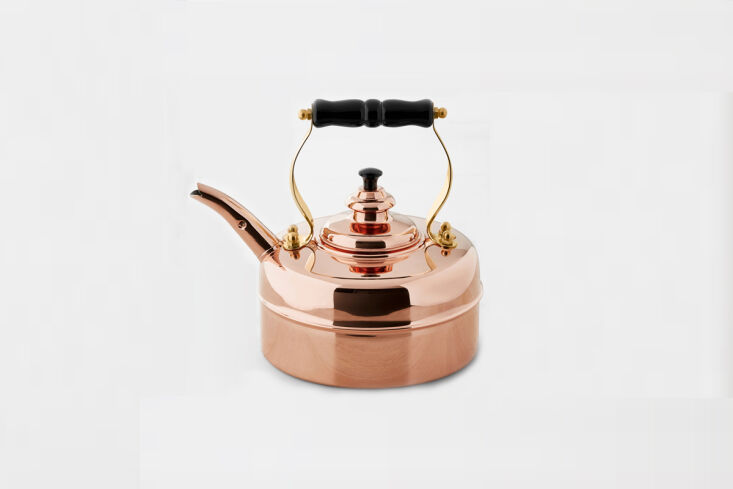
1. The Heritage Splurge: Simplex English Copper Whistling Kettle
For the purist, there is no substitute for the Simplex. Handcrafted in the UK since 1903, this kettle is a masterclass in traditional engineering. Constructed from 100% high-grade copper with a tin lining, it utilizes a unique internal coil system designed for gas stoves that helps it boil water significantly faster than standard flat-bottom models.
- Key Specs: 100% Copper, 1.9-quart capacity, Made in England.
- Best for: Luxury kitchens where performance meets history.
- Price: $349.95
The whistle is not a plastic reed but a precision-tuned ball-and-socket mechanism that produces a nostalgic, melodic tone. Over time, the copper will develop a rich patina, though a quick polish with a specialized cream can restore its mirror-like brilliance.
Pro-Tip: Copper is a reactive metal. Never use abrasive scrubbers on the exterior. To remove tarnish naturally, a paste of lemon juice and salt works wonders without damaging the metal's integrity.
2. The Modern Icon: Alessi Michael Graves Bird Kettle
Since its debut in 1985, the Michael Graves kettle has been a staple of architectural design. It represents the "Postmodern" movement—blending industrial stainless steel with playful, colorful accents. The famous bird-shaped whistle isn't just a gimmick; it provides a cheerful herald to your morning tea.
- Key Specs: 18/10 Stainless Steel, magnetic steel bottom (Induction compatible), 2.1-quart.
- Best for: Art Deco and architectural design enthusiasts.
The wide base ensures maximum contact with the heating element, reducing boil times. It’s a piece of functional art that feels as modern today as it did forty years ago.
3. The Cottagecore Dream: MacKenzie-Childs Courtly Check
If your kitchen aesthetic leans toward the artisanal or the "grandmillennial," the MacKenzie-Childs Courtly Check is the definitive centerpiece. This isn't just a kettle; it’s a hand-painted work of art. The heavy-gauge steel underbody is glazed with multiple layers of enamel, making it incredibly sturdy despite its delicate appearance.
- Key Specs: Enameled heavy-duty steel, bronzed stainless steel accents, wood handle.
- Ethan’s Take: This is the top choice for traditional/cottagecore aesthetics. Its presence on a stove immediately warms up a room.
The lid is crowned with a carved cinnabar-style bead and brass hardware, ensuring that even the act of refilling the kettle feels like a luxury.
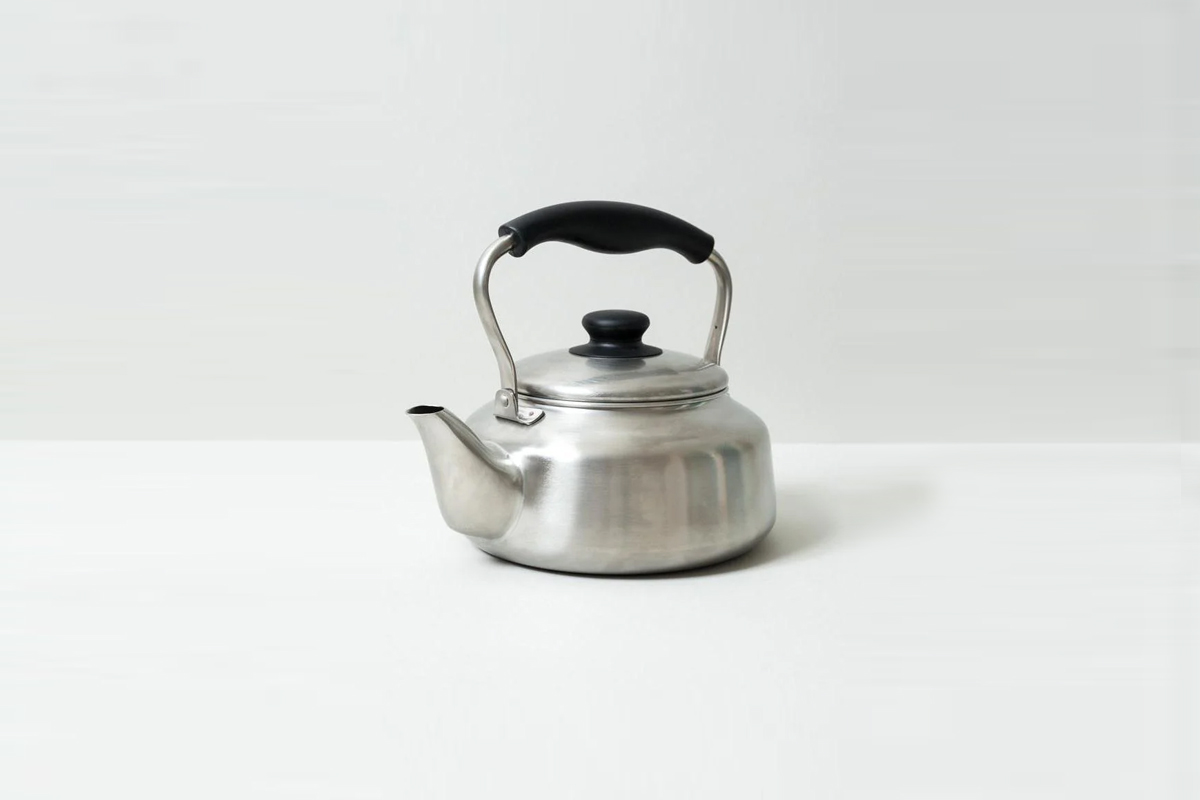
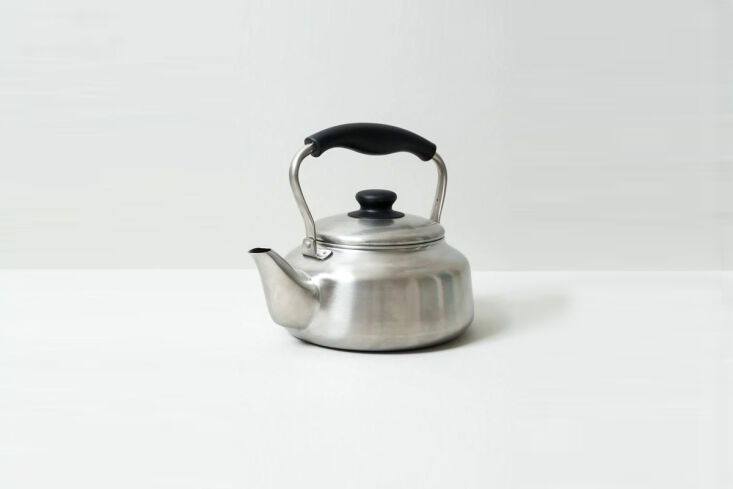
4. The Minimalist Pick: Sori Yanagi Stainless Steel Kettle
Coming from the legendary Japanese designer Sori Yanagi, this kettle is a triumph of ergonomics. The first thing you notice is the handle—it’s designed to fit the natural grip of the hand, reducing wrist strain when pouring. The finish is a sophisticated brushed stainless steel that hides fingerprints and water spots far better than polished models.
- Key Specs: 18/8 Stainless Steel, 2.5-quart, Made in Japan.
- Performance: The exceptionally wide base increases the surface area exposed to the flame, resulting in one of the fastest boil times in our stovetop category.
5. The Professional’s Choice: Demeyere Stainless Steel Teakettle
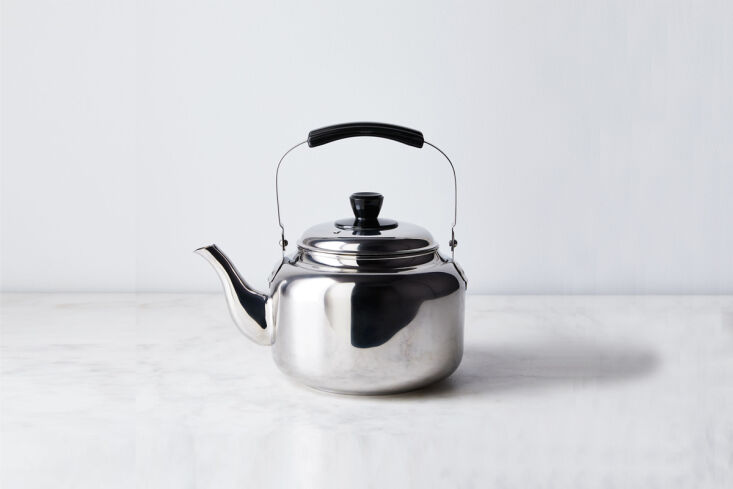
Demeyere is a name synonymous with high-end culinary performance. Their teakettle is stripped of all unnecessary ornamentation, focusing entirely on build quality. It features a high-gloss, 18/10 stainless steel finish and a multi-layered base that prevents warping over time.
- Key Specs: High-gloss finish, 4.2-quart (Large capacity), Induction ready.
- Price: $39.98 (A budget-friendly entry point for professional grade).
Despite its lower price point, it feels heavy and substantial in the hand. It’s the "chef’s kettle"—built to take a beating and keep boiling.
6. The Color King: Le Creuset Enamel on Steel Demi Kettle
No brand handles color quite like Le Creuset. Their Demi Kettle is a compact, 1.1-quart vessel perfect for smaller households. The carbon steel body is coated in vibrant, fade-resistant enamel that matches their famous Dutch ovens.
- Key Specs: Carbon steel body, heat-resistant ergonomic handle, fixed whistle.
- Versatility: Fully compatible with induction, gas, and electric ranges.
The enamel is extremely hard and resistant to chipping, but users should be mindful not to let the kettle boil dry, as this can damage the internal coating.
7. The Heavyweight: Staub Enameled Cast Iron Round Teapot
While most kettles are steel or copper, Staub opts for cast iron. This creates a "thermal battery" effect. Once the water reaches a boil, the thick cast iron walls keep it at an ideal steeping temperature for much longer than steel.
- Performance: Retains heat 20% longer than steel alternatives; doubles as a teapot for serving.
- Versatility: Oven safe up to 500°F (though we primarily recommend it for stovetop use).
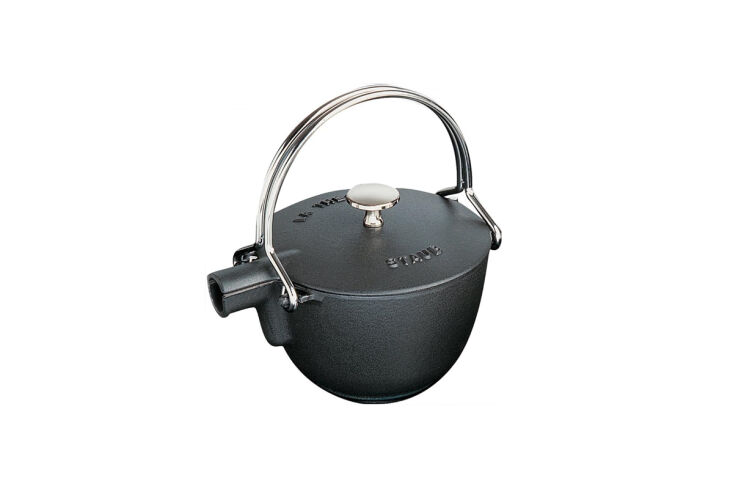
Maintenance Note: Cast iron is heavy. If you have a glass cooktop, be careful not to "drag" this kettle across the surface to avoid scratches.
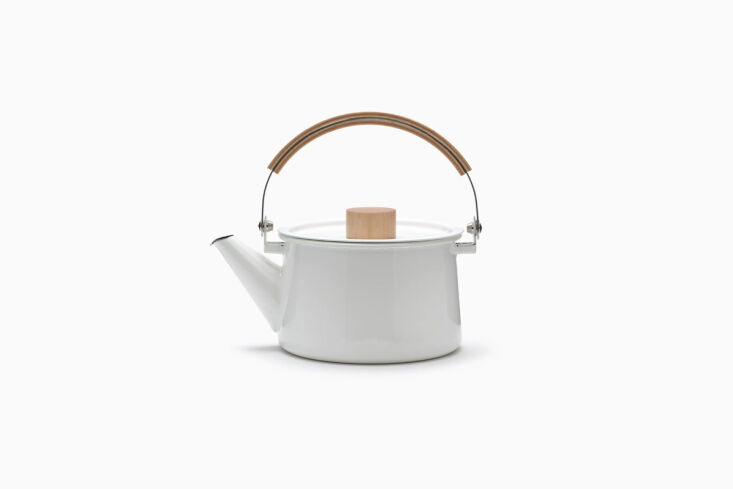
8. The Scandinavian Choice: Chantal Sven Kettle with Wood Handle
The Chantal Sven brings a Nordic sensibility to the kitchen. It combines the cleanliness of white enamel with the warmth of natural wood. The blonde wood handle stays cool to the touch, and the clean lines make it a favorite for modern, light-filled kitchens.
- Key Specs: 1.4-quart, Walnut or Beechwood handle accents, $108 - $148.
The interior is a heavy-duty "Enamel-on-Steel" that is chemical-free and easy to clean, ensuring the flavor of your tea remains untainted by metallic leaching.
9. The Streamlined Tech: Made In Whistling Kettle
Made In has disrupted the cookware industry by offering boutique quality at more accessible prices. Their whistling kettle features a built-in temperature gauge on the lid—a rarity for classic stovetop models. This allows you to pull the kettle off the heat at exactly 175°F for green tea or 200°F for French press coffee.
- Key Specs: 5-ply construction, heat-resistant stay-cool handle, integrated thermometer.
It’s the perfect bridge for the person who wants the aesthetic of a classic kettle but the technical data of a modern electric one.
10. The Pour-Over Specialist: Fellow Stagg Stovetop Kettle
If your "tea ritual" is actually a coffee ritual, the Fellow Stagg is your best friend. While it can certainly boil water for tea, its primary feature is the counterbalanced handle and the precision gooseneck spout. This allows for a slow, steady pour that is essential for blooming coffee grounds.
- Key Specs: 304 18/8 Stainless Steel, built-in brew-range thermometer, 1.0-liter capacity.
The minimalist, matte black finish has become a modern classic, fitting perfectly into the contemporary "coffee station" setup.
Stovetop vs. Electric: The 2026 Verdict
As an editor who tests both, I often get asked: Is an electric kettle just better?
The answer depends on your priorities. Performance data shows that high-end electric models can boil water 25-30% faster than a stovetop and can maintain a set temperature for up to 30 minutes. If you are a busy professional who needs your caffeine in 90 seconds, electric is the winner.
However, stovetop kettles win on durability and soul. An electric kettle is a piece of electronics with a finite lifespan; a Simplex or a Staub is a piece of metalwork that can be passed down through generations. Furthermore, from a design perspective, an electric kettle often feels like "clutter" on a countertop, whereas a classic stovetop kettle is a permanent, beautiful fixture.
| Feature | Classic Stovetop | Modern Electric |
|---|---|---|
| Material | Stainless, Copper, Cast Iron | Plastic, Glass, Thin Steel |
| Durability | 20+ years (Heirloom) | 3-7 years (Electronic failure) |
| Boil Time | 5-8 minutes | 3-5 minutes |
| Heat Retention | High (especially Cast Iron) | Low (unless "Hold" mode is active) |
| Price Range | $39 - $350 | $25 - $250 |
Maintenance: Keeping Your Classic Kettle Timeless
To ensure your investment lasts for decades, you must address the one enemy of every kettle: Scale. Mineral buildup from hard water will eventually slow down boil times and can affect the flavor of your tea.
- Descaling: Once a month, fill the kettle with a mixture of 50% water and 50% white vinegar. Bring it to a boil, then let it sit for an hour. Rinse thoroughly.
- Enamel Care: For Le Creuset or MacKenzie-Childs models, avoid using metal spoons to stir inside the kettle, as this can scratch the enamel. Always lift the kettle; never slide it across the burner.
- Copper Polishing: If you want that Simplex to keep its "penny-bright" shine, use a dedicated copper cream once every three months. If you prefer the aged "English manor" look, simply let the patina develop naturally.
FAQ
Q: Can I use these kettles on an induction cooktop? A: Most of our picks (Alessi, Le Creuset, Staub, Demeyere, and Made In) are induction-compatible. However, the Simplex Copper kettle requires a gas flame or a specialized induction interface disk.
Q: Why does my kettle whistle get quieter over time? A: This is usually due to scale buildup in the whistle mechanism. Soaking the lid or the whistle tip in a vinegar solution usually clears the obstruction and restores the sound.
Q: Is it safe to leave water in the kettle overnight? A: While high-quality stainless steel is rust-resistant, leaving standing water can accelerate mineral scaling. For the best longevity, it's always best to empty the kettle and let it air dry.
Final Thoughts
In the high-speed world of 2026, the act of waiting for a kettle to whistle is a rare moment of forced mindfulness. Whether you choose the architectural brilliance of the Alessi, the heavy-duty warmth of the Staub, or the professional reliability of the Demeyere, you aren't just buying a kitchen tool. You are investing in a morning ritual that will remain unchanged, no matter how much the world outside your kitchen evolves.