For most of us, the morning coffee ritual is sacred. We meticulously source organic, shade-grown beans and use triple-filtered water to ensure the purest cup possible. Yet, there is a silent contributor to our daily brew that often goes overlooked: the machine itself. As an editor focused on sustainable living, I’ve spent years investigating the intersection of home appliances and human health. The reality of modern coffee brewing is sobering—most automatic machines are a labyrinth of plastic tubing, reservoirs, and baskets.
When exposed to boiling water, these plastic components don't just hold your coffee; they interact with it. Research from the University of Cincinnati has shown that polycarbonate plastics can leach Bisphenol A (BPA) into liquids up to 55 times faster when exposed to boiling water compared to room temperature. While "BPA-Free" has become a ubiquitous marketing term, it often signifies the replacement of one chemical with another, like BPS or BPF, which may carry similar endocrine-disrupting risks.
Our 2025 market analysis found that while 90% of premium coffee makers now claim to be 'BPA-Free,' only 10% achieve a completely plastic-free internal water path using glass or medical-grade metal. Transitioning to a plastic-free brewer isn't just a win for the environment; it’s a vital step for your long-term wellness.
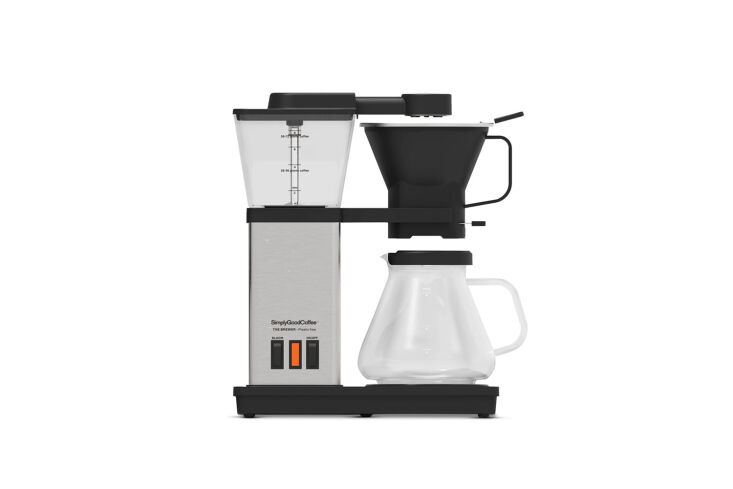
The Health Verdict: Why avoid plastic in coffee makers? Research indicates that hot water causes plastic components to leach endocrine-disrupting chemicals like BPA and phthalates into your brew. These chemicals can mimic hormones in the body, potentially leading to metabolic and reproductive health issues. By choosing materials like glass and stainless steel, you eliminate the primary source of chemical leaching during the extraction process.
2025 Comparison: Top Non-Toxic Coffee Brewers
| Model | Primary Material | Capacity | Best For |
|---|---|---|---|
| Aarke Drip | 304 Stainless Steel | 40 oz | Hands-free convenience |
| Ratio Eight | Borosilicate Glass | 40 oz | Design enthusiasts |
| Chemex Classic | Borosilicate Glass | 3-10 cups | Purest flavor profile |
| Espro P7 | 18/10 Stainless Steel | 32 oz | Durability & heat retention |
| Technivorm | Copper/Metal/Glass | 40 oz | Longevity and repairability |
The Gold Standard: How to Identify a Truly Non-Toxic Brewer
When shopping for a healthy kitchen, the term "plastic-free" can be elusive. Many "stainless steel" coffee makers still use plastic lids or internal silicone gaskets. To find the gold standard, you must look for specific materials:
- Borosilicate Glass: Unlike standard soda-lime glass, borosilicate is engineered for extreme thermal shock resistance. It is non-porous and chemically inert, meaning it won't absorb odors or leach chemicals.
- 304 (18/8) Stainless Steel: This food-grade metal is highly resistant to corrosion from coffee’s natural acidity. It is the preferred material for high-end boilers and carafes.
- Food-Grade Silicone: While technically a polymer, high-quality silicone is stable at high temperatures and is generally considered a safer alternative to plastic for seals and gaskets.
What are the safest materials for a coffee maker? High-grade 304 stainless steel and borosilicate glass are considered the gold standard for non-toxic brewing. These materials are chemically stable and do not release BPA, BPS, or phthalates even when exposed to boiling water (212°F).
1. Best Overall Automatic: Aarke Drip Coffee Maker
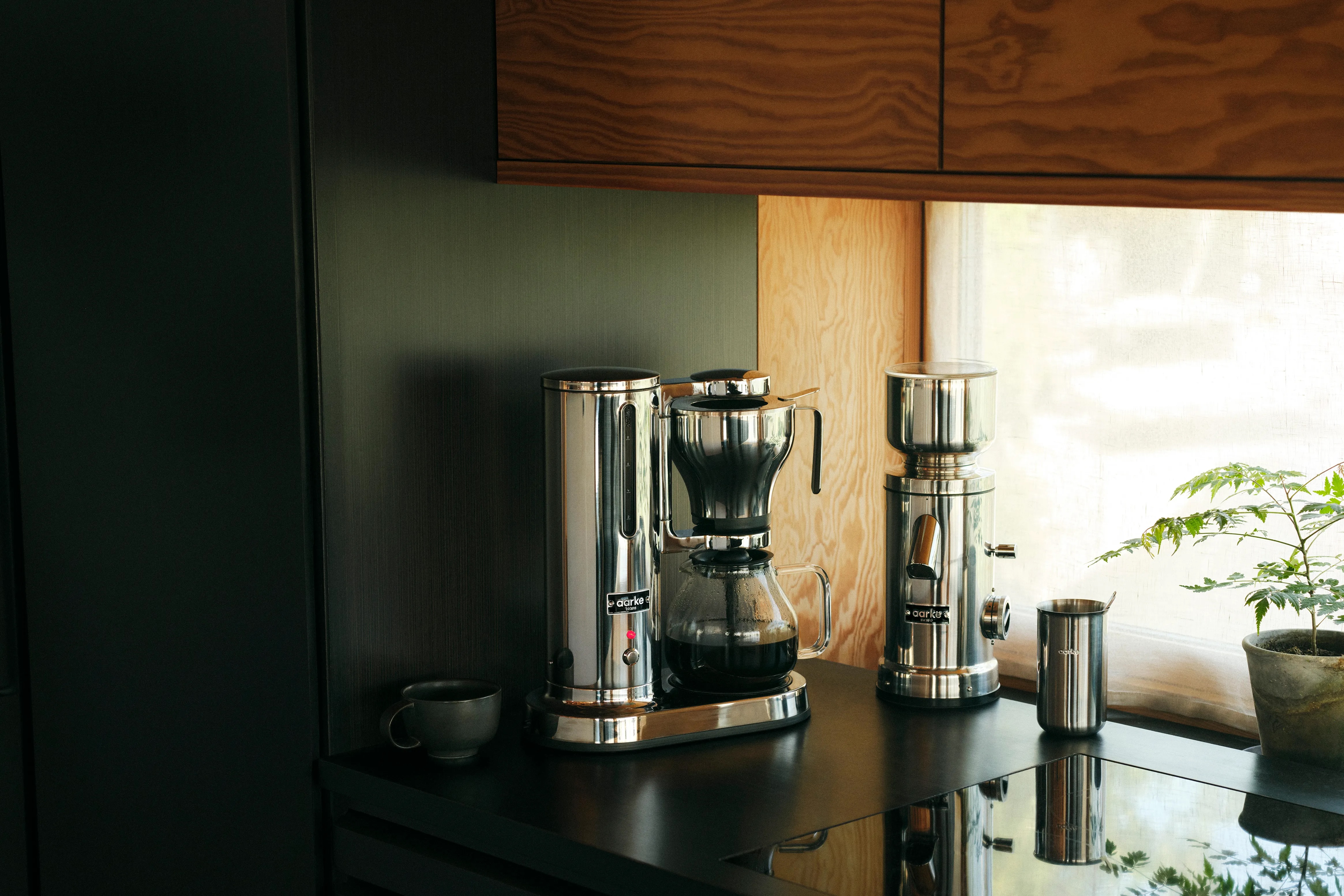
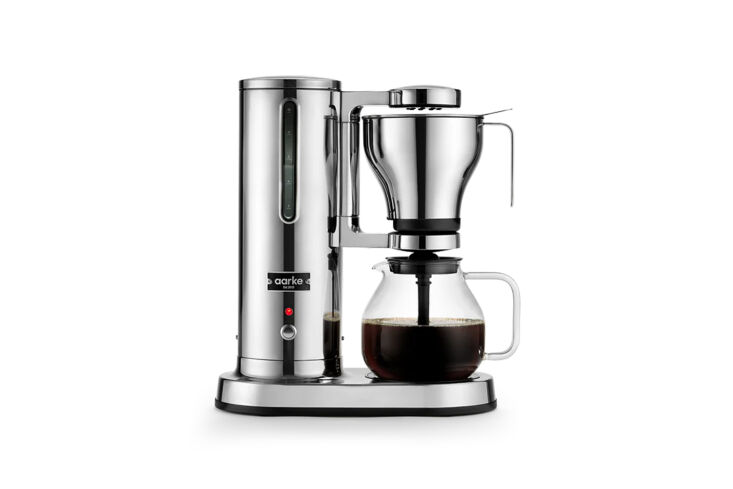
The Aarke Drip represents a rare feat in engineering: an automatic brewer that prioritizes a metal water path. Most automatic machines use plastic pumps and tubing, but Aarke utilizes a SUS304 stainless steel boiler and a glass carafe. This machine doesn't just look like a piece of industrial art; it adheres to the SCA Golden Cup standard, ensuring your coffee is brewed at the precise temperature of 197-204°F.
- Pros:
- Stunning all-metal exterior and internal boiler.
- Precise temperature control for optimal extraction.
- Quiet operation and rapid brew time.
- Cons:
- High price point (~$400).
- Requires specific Aarke filters for the best fit.
2. The Design Icon: Ratio Eight Thermal Set
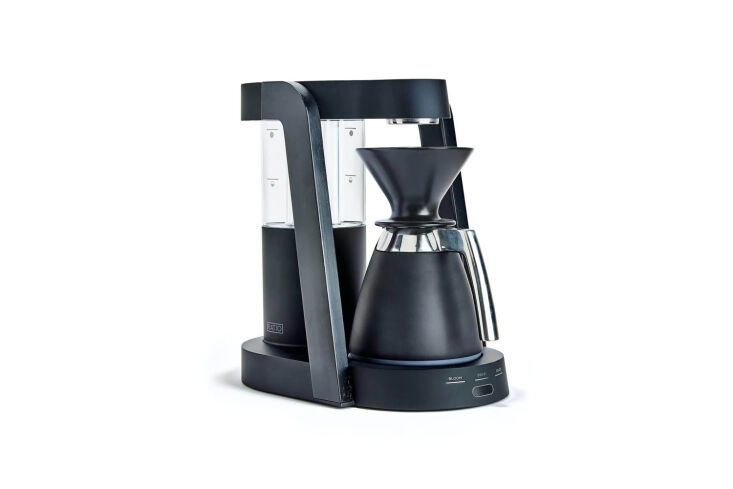
The Ratio Eight is often cited as the world’s most beautiful coffee maker, but its beauty is more than skin deep. It features hand-blown borosilicate glass supply lines that move hot water from the die-cast aluminum heating element to the brew head. This means the water never touches plastic during the critical heating and brewing phases.
- Pros:
- Zero plastic contact in the hot-water path.
- Automated "bloom" cycle for better flavor.
- Assembled by hand in Portland, Oregon.
- Cons:
- Significant countertop footprint.
- Carafe can be difficult to pour when full.
3. Best for Longevity: Technivorm Moccamaster KBGV Select
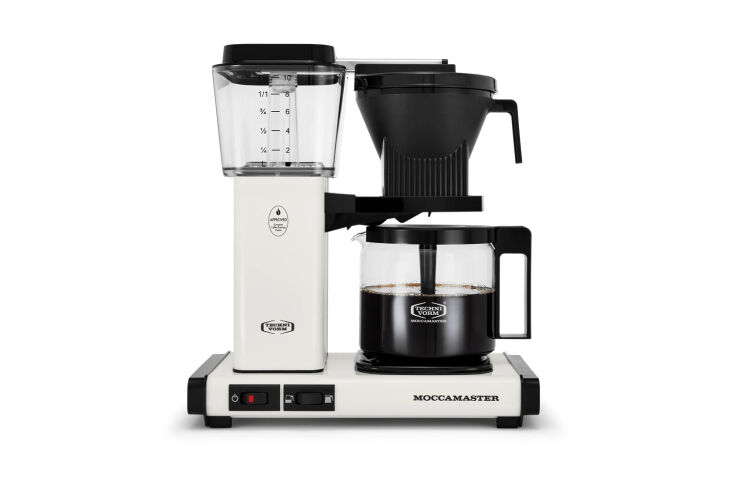
If sustainability is defined by how long a product stays out of a landfill, the Moccamaster is the winner. These machines are handmade in the Netherlands and are designed to be repaired rather than replaced. While the Moccamaster does use some BPA-free plastic in its reservoir and basket, the heating element is copper, and the carafe is glass. Its modular design allows every single part to be replaced.
- Pros:
- Legendary 5-year warranty and lifetime repairability.
- Consistently brews at the perfect SCA-certified temperature.
- Iconic mid-century modern aesthetic.
- Cons:
- The water reservoir is plastic (though BPA-free).
- Manual adjustment needed for smaller brew sizes.
4. Best Plastic-Free Pour-Over: Pure Over XL Brew Kit
The Pure Over XL is a purist’s dream. It is constructed entirely of borosilicate glass. The most innovative feature is the glass filter; unlike paper filters which can contain trace amounts of PFAS or bleaching chemicals, the glass filter uses precise perforations to allow oils through while keeping sediment out.
- Pros:
- 100% glass construction (no plastic, no metal).
- Eco-friendly (no paper filters needed).
- Dishwasher safe and easy to clean.
- Cons:
- Glass is fragile and requires careful handling.
- The brew time is slightly slower than paper-based pour-overs.
5. Best Budget-Friendly Manual: CHEMEX Classic Series
The Chemex has remained unchanged since 1941 for a reason. It is a single piece of non-porous borosilicate glass with a wood collar and leather tie. It is the definition of a plastic-free kitchen essential. Because the glass is inert, it adds no flavor of its own, allowing the nuances of your coffee beans to shine.
Can you find a 100% plastic-free coffee maker? Yes, but they are almost exclusively manual brewers. Options like the Chemex, glass French presses, or stainless steel Moka pots offer a 100% plastic-free experience. Automatic machines usually require small amounts of food-grade silicone or BPA-free plastic for seals and external housings.
- Pros:
- Affordable and timeless design.
- Produces an exceptionally clean, sediment-free cup.
- Doubles as a beautiful carafe for serving.
- Cons:
- Requires specialized thick paper filters.
- Glass can break if dropped on stone countertops.
6. Best Stainless Steel Option: Espro P7 French Press
For those who want a brewer that can survive a move or a camping trip, the Espro P7 is the gold standard of French presses. It uses double-walled 18/10 stainless steel which provides vacuum insulation, keeping your coffee hot for hours. Unlike cheap French presses, the Espro features a patented double-micro filter that eliminates the "sludge" usually associated with this brewing method.
- Pros:
- Virtually indestructible stainless steel construction.
- Stops extraction the moment you press the plunger.
- Keeps coffee hot without the "burnt" taste of a warming plate.
- Cons:
- More expensive than standard glass French presses.
- The double filter requires a bit more effort to deep-clean.
7. Best Stovetop (Moka Pot): Bialetti Venus
While the classic Bialetti Moka Express is made of aluminum, the Venus model is crafted from high-quality 18/10 stainless steel. This makes it compatible with induction cooktops and eliminates concerns about aluminum leaching into acidic coffee. It’s a simple, elegant way to make espresso-style coffee without a plastic-heavy machine.
- Pros:
- Stainless steel construction is healthier and more durable than aluminum.
- Produces a rich, concentrated brew.
- Small footprint is perfect for minimalists.
- Cons:
- The handle is plastic (though it never touches the water).
- Requires a bit of a learning curve to avoid burning the coffee.
8. Best for Precision: Fellow Aiden Precision Coffee Maker
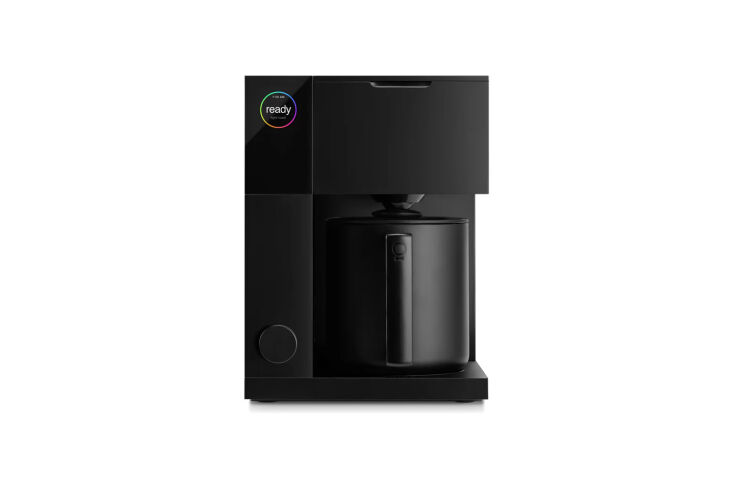
The Fellow Aiden is the newcomer disrupting the market. It’s designed for the coffee geek who wants digital precision—think smartphone integration and temperature control down to the degree. While it does use high-quality BPA-free plastic for its external housing and reservoir, Fellow has worked extensively to ensure the internal brewing chamber and carafe prioritize glass and metal.
- Pros:
- Unrivaled control over every brewing variable.
- Built-in profiles for light, medium, and dark roasts.
- Sleek, modern aesthetic.
- Cons:
- Higher plastic content in the exterior compared to Aarke or Ratio.
- Complex interface may be overkill for some users.
9. Best for Espresso Purists: La Pavoni Professional
If you are ready to remove electronics and plastic from your life entirely, the La Pavoni lever machine is the ultimate choice. Constructed of solid brass and stainless steel, this machine uses manual pressure to pull espresso shots. It is a lifetime investment that relies on physics rather than plastic pumps.
- Pros:
- Museum-quality design.
- Zero automated plastic parts.
- Makes world-class espresso once mastered.
- Cons:
- Extremely steep learning curve.
- Very expensive (~$1,500).
10. Best Travel Option: AeroPress Premium (Glass & Metal)
The AeroPress has long been a favorite for travelers, but its plastic construction was a dealbreaker for many health-conscious users. In late 2024, AeroPress finally released the Premium model, crafted from double-walled borosilicate glass and stainless steel. It offers the same iconic brewing method without the plastic contact.
- Pros:
- Compact and portable.
- Eliminates the "plastic taste" some noted in the original model.
- Quick and easy cleanup.
- Cons:
- Heavier than the plastic version (less ideal for ultra-light backpacking).
- Metal components can get hot to the touch.
Maintenance: How to Clean Your Non-Toxic Coffee Maker
Choosing a plastic-free brewer is the first step; maintaining it is the second. Because glass and stainless steel are non-porous, they are easier to keep hygienic, but they are also prone to mineral buildup (limescale).
Why Descaling Matters When calcium and magnesium from your water build up on stainless steel heating elements, the machine has to work harder, which can lead to premature failure. Furthermore, scale can trap coffee oils, which eventually go rancid and ruin the flavor of your brew.
The Safe Cleaning Routine:
- Daily: Rinse glass carafes and stainless steel baskets with warm water.
- Weekly: Use a mixture of one part white vinegar to two parts distilled water to run a cleaning cycle through your automatic machine.
- Monthly: For deep cleaning, use citric acid powder. It is more effective than vinegar at breaking down tough limescale and is completely non-toxic and odorless.
- The "No-Go" Zone: Never use abrasive steel wool on your stainless steel brewers, as it can create micro-scratches where bacteria can hide. Stick to soft microfiber cloths or silicone brushes.
Frequently Asked Questions
Is "BPA-Free" plastic safe for hot coffee? While BPA-free plastics do not contain Bisphenol A, they often contain BPS or other plasticizers that may still leach chemicals when exposed to high heat. For the highest safety margin, glass and stainless steel are always preferable for the hot-water path.
Does stainless steel affect the taste of coffee? High-grade 304 or 316 stainless steel is non-reactive and does not impart a metallic taste. However, if a stainless steel carafe is not cleaned properly, coffee oils can build up and oxidize, creating an "off" flavor. Regular descaling prevents this.
Can I find a plastic-free automatic machine under $100? It is very difficult to find a 100% plastic-free automatic machine at a budget price point because metal and glass components are significantly more expensive to manufacture than molded plastic. If your budget is under $100, a high-quality manual brewer like a Chemex or a Stainless Steel French Press is your best non-toxic option.
Final Thoughts
The transition to a plastic-free coffee maker is one of those rare home improvements that pays dividends in both health and flavor. By removing synthetic materials from the heat-and-extraction process, you’re ensuring that the only thing in your cup is the pure essence of the bean. Whether you choose the heirloom-quality of a Moccamaster or the minimalist elegance of a Chemex, your body—and your palate—will thank you.