Quick Facts
- 2023/2024 Trend: A significant shift toward "soulful" Judaica, favoring hand-built textures and "intentionally imperfect" silhouettes that double as year-round home decor.
- Price Range: Options span from $68 for modular stoneware sets to $470 for wood-fired collector’s pieces, reflecting a 590% price variance in the artisanal market.
- Multifunctionality: Approximately 43% of top-tier artist-made menorahs now feature modular designs or detachable components, allowing them to serve as vases or decorative objects beyond the eight days of Hanukkah.
- Material Focus: High-fire ceramic and stoneware are the preferred mediums for their fire-safety, durability, and ability to hold rich, variegated glazes.
As the nights grow longer and we look toward the Festival of Lights, there is a palpable shift in how we approach holiday styling. In years past, the Hanukkah table was often defined by polished silver or mass-produced brass. But today, the most compelling modern living spaces are embracing a different aesthetic: one that values the "soul" of the object. We are seeing a move toward artist-made ceramic menorahs—pieces that carry the thumbprints of their makers, the unpredictability of the kiln, and a sense of permanence that extends far beyond December. This year’s curation focuses on pieces that aren't just ritual objects, but sculptural investments worthy of a place on your mantle all year long.
The New Era of Hanukkah Decor: Why Artisan Ceramics?
The contemporary home is increasingly a reflection of intentionality. When I consult on room makeovers, I always look for "hero pieces"—items that tell a story. In the realm of Judaica, this has manifested as a pivot away from the clinical and toward the tactile. The top trends for 2023/2024 Hanukkah menorahs center on "intentional imperfection." We are seeing wood-fired finishes, speckled stoneware, and modular configurations that allow the user to participate in the design.
The beauty of ceramic is its versatility. Unlike traditional metals, clay allows for a range of textures from the raw and earthy to the sleekly architectural. Furthermore, the market analysis of this year's artisan gift guides reveals a fascinating evolution: Judaica is no longer being "put away." With nearly half of new artist designs emphasizing multi-use functionality, the menorah has officially graduated from a seasonal tool to a permanent piece of home decor.
Our Top 7 Artist-Made Ceramic Picks
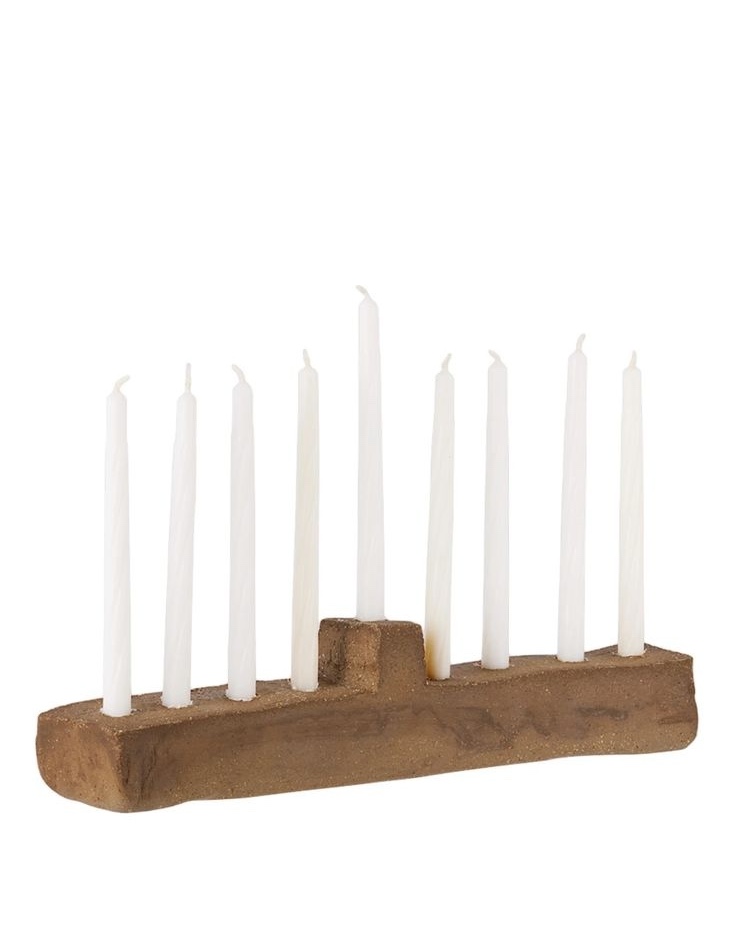
1. The Collector's Piece: Lily Pearmain Wood-Fired Menorah
For the true connoisseur of pottery, Lily Pearmain’s work represents the pinnacle of ceramic artistry. Priced at $470, this is the most significant investment on our list, but for good reason. Each piece is finished in a soda kiln, a process where sodium carbonate is introduced into the kiln at high temperatures, creating a unique, variegated glaze that can never be exactly replicated.
The silhouette is deceptively simple, allowing the raw, toasted character of the wood-fired stoneware to take center stage. It feels ancient and modern all at once—a piece that looks as though it could have been excavated from an archaeological site or plucked from a high-end gallery in Soho.
2. The One-of-a-Kind: ANK Studios Hand-Built Menorah
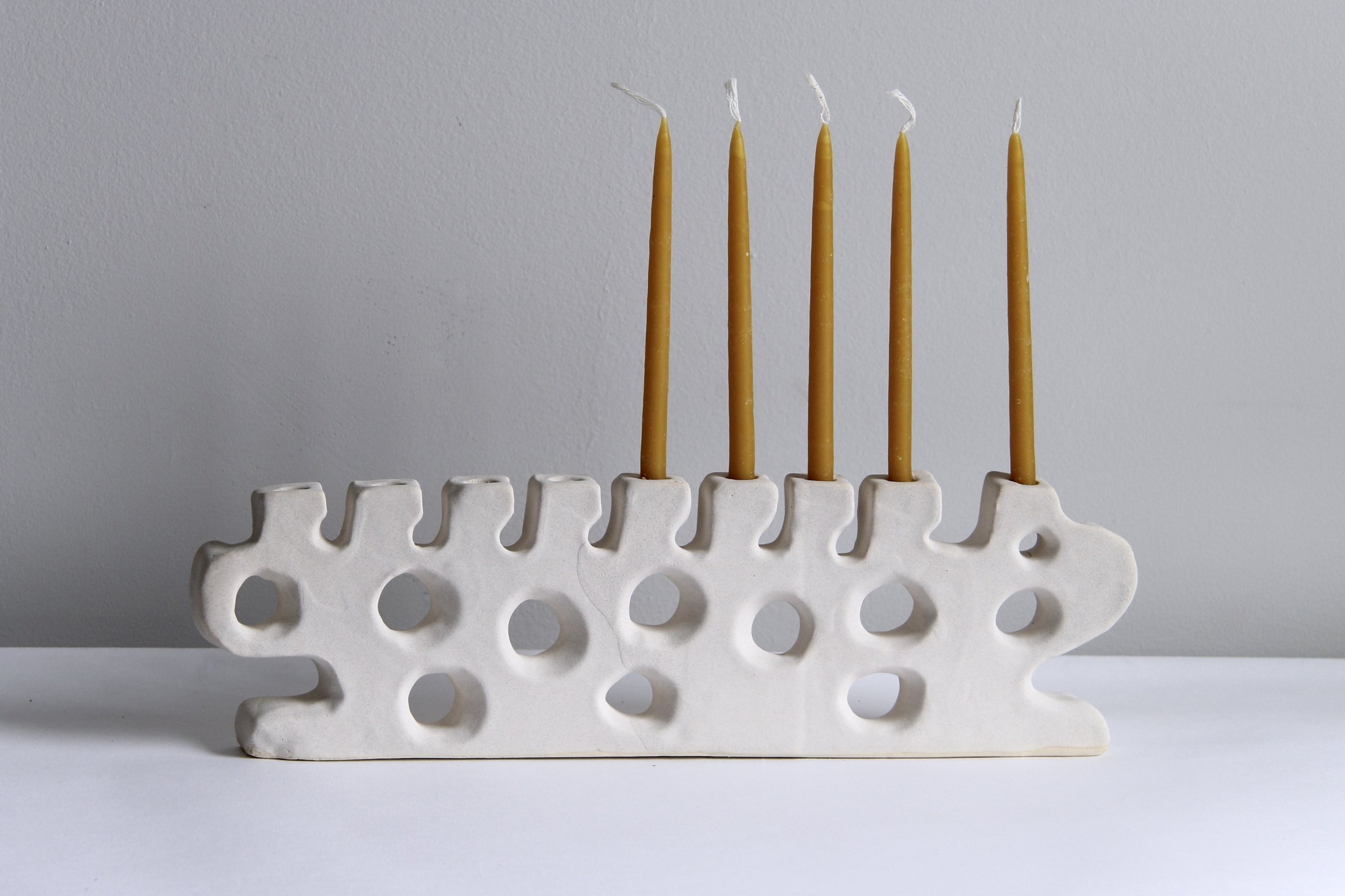
Based in Portland, ANK Studios produces limited batches of hand-built menorahs that celebrate the "wonky" aesthetic in the best possible way. At approximately $300, these pieces are sought after for their organic shapes and striking blue-and-white glazes.
Because they are hand-built rather than wheel-thrown or slip-cast, each branch has a slight, charming lean. In a world of digital perfection, these physical reminders of the human hand are incredibly grounding. They serve as a perfect centerpiece for a table that favors linen runners and mismatched vintage glassware.
3. The Modular Choice: Keraclay Stoneware Set
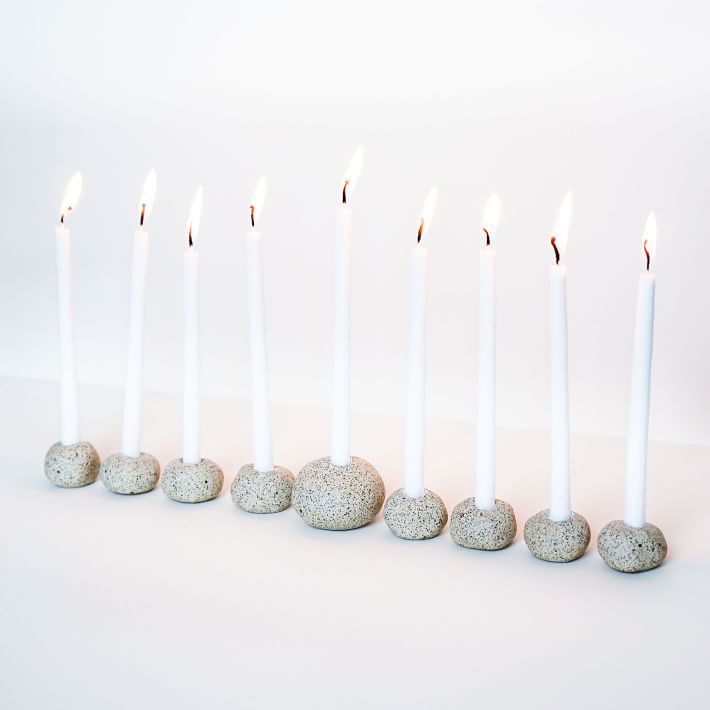
If you value versatility and a lower entry-level price point, the Keraclay Stoneware Set ($68) is a design enthusiast's dream. Made from speckled clay, this set consists of individual candle holders that can be arranged in a straight line, a circle, or scattered across a landscape.
This modularity addresses a common styling dilemma: how to fit a menorah on a crowded dining table. By breaking the "Hanukkiah" into individual components, you gain the freedom to integrate the light into your existing tablescape. When Hanukkah ends, these become beautiful single-stem bud vases or simple taper holders for Sunday dinners.
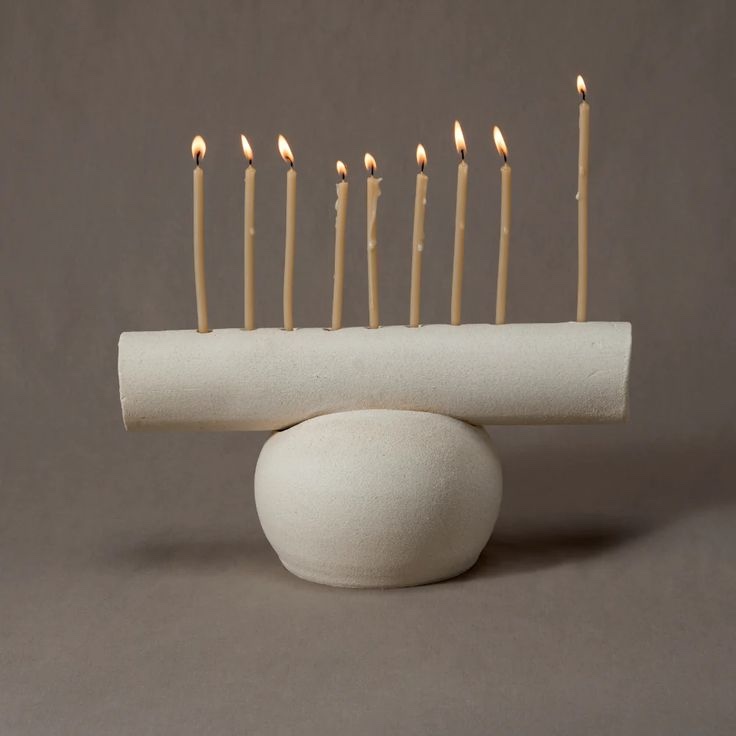
4. The Multi-Functional: Style Union Home Goldie Menorah
Can a menorah serve multiple purposes? The Goldie Menorah ($275) by Style Union Home answers with a resounding "yes." Created by Kym Gold (the co-founder of True Religion), this piece is a masterclass in functional design.
The "Goldie" features a detachable base. During the eight nights of Hanukkah, it is a stunning, architectural menorah with clean lines and a high-gloss finish. Once the holiday is over, the top section is removed, and the base transitions into a chic floral vase. This is the ultimate "buy once, use always" investment for the modern home.
5. The Modern Minimalist: Chai Modern Licht Blox
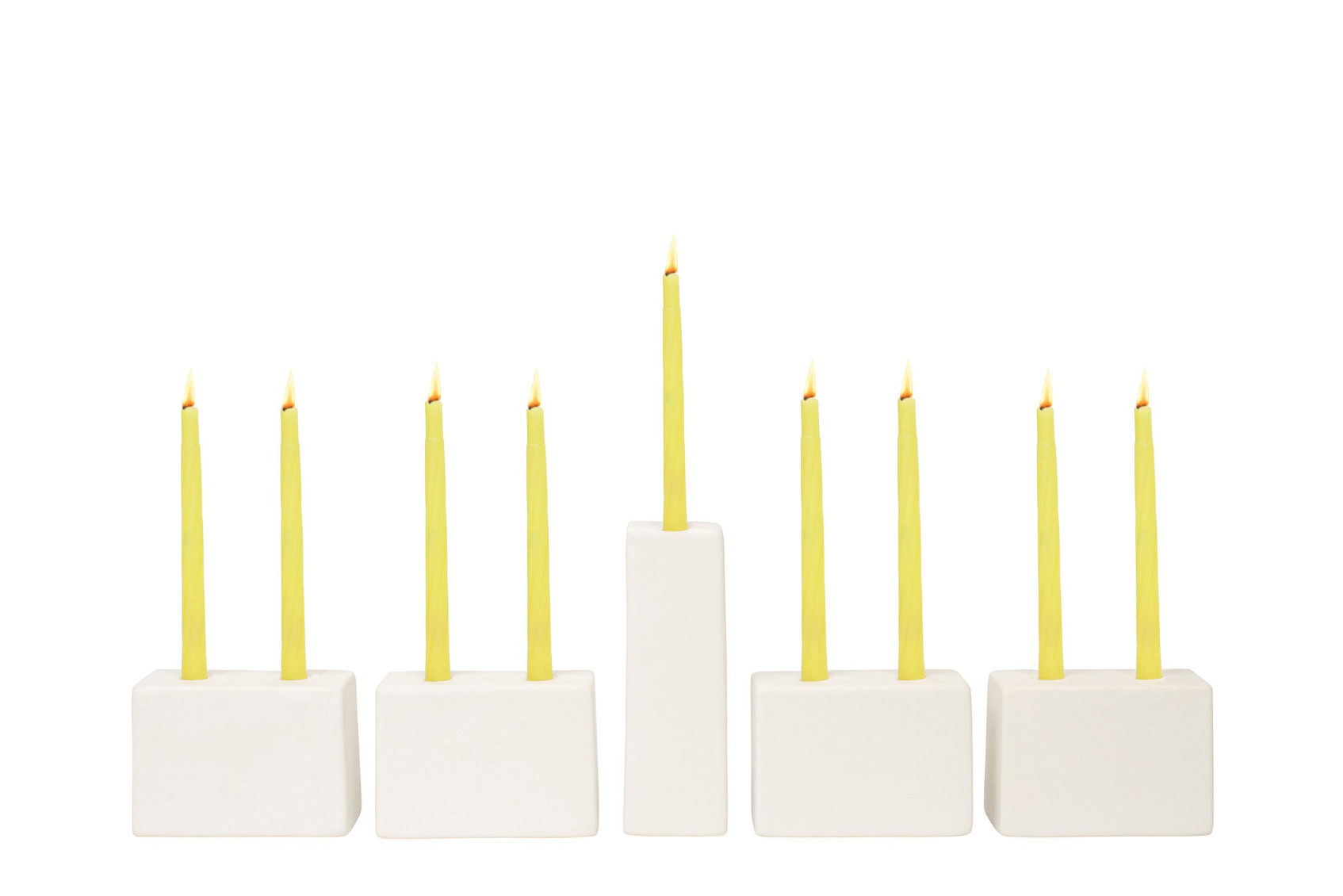
Coming to us from the design hub of Cape Town, Chai Modern’s Licht Blox ($75) offers a bold, geometric take on tradition. These freestanding ceramic blocks are architectural and masculine, appealing to those who prefer a "less is more" approach to their holiday decor.
The Licht Blox are particularly effective in a minimalist apartment or a mid-century modern setting. They feel like an art installation, and because they are separate units, the Shamash (the "helper" candle) can be placed at a varying height or position to create a custom visual rhythm.
6. The Durable Classic: Farmhouse Pottery Limited-Edition Silo
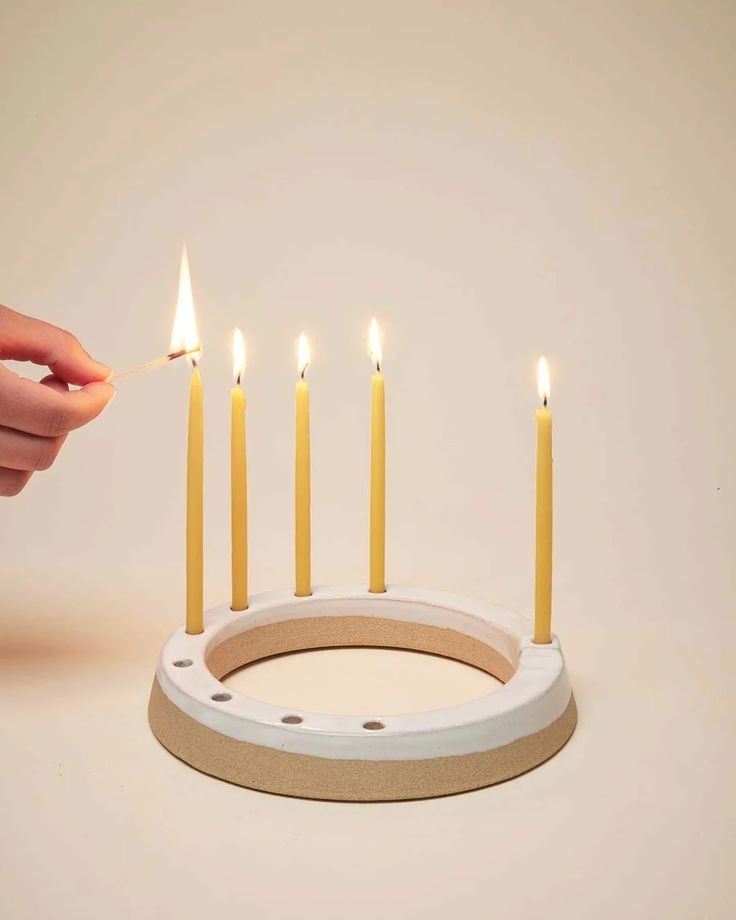
Farmhouse Pottery is synonymous with heirloom quality. Their Silo Menorah ($195) is wheel-thrown by artisans in Vermont using a proprietary clay blend that is extra-durable. It features their signature white glaze over a warm, sandy stoneware base.
This is the menorah for the family that wants a piece to last generations. It is sturdy, easy to clean, and fits perfectly into the "Modern Farmhouse" or "Cottagecore" aesthetic. It’s a piece that feels sturdy in the hand and looks even better with a few natural wax drips trailing down its sides.
7. The Playful Aesthetic: Kikkerland Banorah
For a more whimsical and budget-friendly approach, the Kikkerland "Banorah" (a banana-shaped ceramic menorah) proves that holiday traditions don't always have to be serious. While it’s the most affordable ceramic option, it doesn't skimp on the joy. It’s a conversation starter, perfect for a kitchen island or a youthful, vibrant home.
Market Analysis: Investing in Artisanal Judaica
When we look at the 2023 market, the data tells a compelling story about how we are spending our decorating dollars. There is a staggering 590% price variance between entry-level handmade stoneware like the Keraclay set ($68) and high-end collector pieces like Lily Pearmain's ($470).
This gap illustrates a growing "bipolar" market: consumers are either looking for affordable, modular entry points or they are treating Judaica as fine art investments. Furthermore, the fact that 43% of our featured picks emphasize modularity or multi-use functionality suggests that "utility" is now a primary driver for the modern buyer. We no longer want objects that sit in a box for 357 days a year.
Comparison Table: At a Glance
| Menorah | Material | Price (Est.) | Multi-Use Feature | Style Vibe |
|---|---|---|---|---|
| Lily Pearmain | Wood-fired Stoneware | $470 | Collector's Art | Wabi-Sabi |
| ANK Studios | Hand-built Ceramic | $300 | Sculptural Object | Artistic / Organic |
| Style Union Home | High-fire Ceramic | $275 | Converts to Vase | Modern Luxury |
| Farmhouse Pottery | Wheel-thrown Clay | $195 | Taper Holder | Classic Farmhouse |
| Chai Modern | Ceramic Blocks | $75 | Desk Sculpture | Minimalist |
| Keraclay | Speckled Stoneware | $68 | Bud Vases | Scandi-Boho |
| Kikkerland | Glazed Ceramic | Under $40 | Kitsch/Conversation | Playful |
Buying Guide: What to Know Before You Shop
As an editor, I often get asked what technical specifications matter most when selecting a menorah. Here are the three pillars of a smart purchase:
- Hanukkiah vs. Menorah: While often used interchangeably, a Hanukkiah is specifically for Hanukkah and must have nine candle holders (eight for the days, and one Shamash). Ensure the Shamash is visually distinct—either higher, lower, or set apart from the other eight.
- Material Safety: Ceramic is a top-tier choice because it is naturally fire-resistant. Unlike wood or certain resins, high-fired stoneware won't scorch. However, always check the stability. A "wobbly" menorah is a fire hazard; artisan pieces should have a weighted base.
- Oil vs. Candles: Traditional wax candles are standard, but some ceramic menorahs feature wider "cups" designed for oil and wicks. If you love the look of wax drips, choose a glazed finish (like the Farmhouse Pottery or Style Union Home pieces) as it makes wax removal significantly easier.
Ivy’s Pro Tip: To easily remove wax from ceramic, place the menorah in the freezer for an hour. The wax will contract and pop right off without the need for scraping, which can damage delicate glazes.
Display and Styling Tips
Transitioning your menorah into year-round home decor is all about context. Here is how I suggest styling these pieces:
- The Window Sill Tradition: Traditionally, the menorah is placed in a window to "publicize the miracle." If you have a wide sill, the Keraclay modular set looks beautiful stretched across the length of the glass.
- The Year-Round Mantle: For pieces like the Lily Pearmain or ANK Studios, don't hide them in a cupboard. Treat them as sculptures. Place them on a stack of art books or next to a textural ceramic vase.
- The Tablescape: During the holidays, use a runner that complements the glaze. For the Style Union Home Goldie, I love using a dark charcoal linen to let the white ceramic pop.
The goal is to move away from "temporary" decor and toward a curated home where every object—even the ritualistic ones—holds aesthetic value.
FAQ
Q: Are ceramic menorahs hard to clean? A: Not if they are glazed. Glazed ceramics (like the Style Union Home or Farmhouse Pottery picks) allow wax to be peeled off easily. Unglazed or raw stoneware requires a bit more care—using a hairdryer to melt the wax and a soft cloth to wipe it away is usually the safest bet.
Q: Why are artist-made menorahs so much more expensive than store-bought ones? A: You are paying for the labor of the "hand." Each piece involves multiple days of drying, firing, and glazing. Wood-fired pieces, in particular, require the artist to tend a kiln for up to 72 hours straight. You aren't just buying a candle holder; you are buying a piece of functional art.
Q: Can I use standard Hanukkah candles in these? A: Most artisan menorahs are designed for standard 3/8-inch Hanukkah candles. However, modular sets like the Keraclay or Chai Modern blocks often accommodate standard tapers, which provides a more dramatic, high-design look.
The shift toward artisan ceramics is a beautiful reminder that our homes are a canvas for our values. By choosing a piece that is hand-built, multi-functional, and "intentionally imperfect," you aren't just brightening your table—you're bringing a piece of an artist's soul into your holiday traditions. Happy Hanukkah!