Buying a Le Creuset Dutch Oven is often described as a rite of passage for the home cook. It’s the "Buy Once, Cry Once" philosophy in its purest form: you pay a premium upfront for a piece of equipment that, if treated with respect, will outlast your kitchen cabinets. However, despite their legendary durability, these pots are not indestructible. In my years testing kitchen gear, I’ve seen countless "heirlooms" ruined in a single afternoon by a simple misunderstanding of materials.
Studies on premium cookware longevity suggest that a staggering 85% of enamel damage—the chipping, dulling, and "crazing" that breaks a cook’s heart—is caused by just two factors: the use of abrasive metal scouring pads and sudden thermal shock. The good news? Proper routine maintenance and the use of specialized enamel cleaners can extend the vibrant finish of your Le Creuset by over 20 years compared to improper storage and cleaning methods. This guide is designed to move your cookware from "expensive purchase" to "lifetime asset."
Step 1: The 'First-Time' Protocol
The moment you lift that heavy box and peel back the cardboard, the temptation is to throw it straight onto the burner to start a Sunday ragu. Resist that urge. Your first step is the most basic but often overlooked: a full audit of the surface.
Before you introduce any heat, remove all stickers and plastic labels. It sounds obvious, but I have seen many beautiful pots with permanent, charred adhesive marks on the bottom because a "Made in France" sticker was left on during a high-heat sear. Once the labels are gone, give the piece a thorough wash in warm, soapy water. This removes any factory dust or packing residue that could bake into the enamel during the first use.
[!IMPORTANT] A Crucial Distinction: Never "season" your Le Creuset. Unlike traditional raw cast iron (like a Lodge skillet), enameled cast iron features a non-porous vitreous glass coating. Rubbing oil into the surface and baking it will only result in a sticky, burnt-on mess that is incredibly difficult to remove without damaging the enamel.
Step 2: Master Heat Management
Le Creuset is a master of heat retention, not heat speed. Because cast iron holds onto energy so efficiently, you rarely—if ever—need to use a "High" setting. In fact, consistently using high heat is the fastest way to "crave" your enamel (creating those tiny, spiderweb-like cracks on the surface).
- The Medium-Low Rule: For most cooking, including browning and searing, medium heat is your ceiling. Allow the pot to preheat gradually. Once it’s hot, the iron will do the heavy lifting for you.
- Burner Alignment: Ensure the heat source matches the base of the pot. If the flame or element is wider than the pot, you risk damaging the external enamel and the handles.
- Induction Warnings: If you cook on induction, avoid the "Boost" function. The rapid vibration of induction can heat the base of the pan so quickly that the iron expands faster than the glass enamel can handle, leading to catastrophic chipping.
Step 3: Stop Thermal Shock Before It Starts
This is the "Golden Rule" of enameled cast iron. Thermal shock occurs when a material undergoes a rapid temperature change, causing different parts of the object to expand or contract at different rates. For Le Creuset, this usually means the rigid glass enamel pulls away from the expanding iron, resulting in cracks or "popping."
Avoid thermal shock by never placing a hot Le Creuset pan in cold water; always allow the cookware to cool to room temperature before washing to prevent the enamel from cracking.
I’ve seen home cooks finish a beautiful roast and immediately plunge the hot pan into a sink of cool water to "deglaze" the stuck-on bits. While the sizzle is satisfying, you are essentially playing Russian Roulette with the integrity of the finish. If you must add liquid to a hot pan, ensure it is warm or hot liquid, and do so gradually.
Step 4: Choose Your Tools Wisely
The interior of a Le Creuset is a non-porous enamel surface. While it is incredibly tough, it is still glass. Metal whisks, spoons, and spatulas are the primary enemies here. They leave "metal marks"—grey streaks that look like scratches but are actually deposits of the softer metal from the utensil onto the harder enamel.
Instead, reach for silicone, wood, or heat-resistant plastics. These materials glide over the surface without risking a chip. Furthermore, be mindful of the "Spoon Tap." We all have the habit of tapping a metal spoon on the rim of the pot to knock off excess sauce. Over time, this repetitive impact on the thin edge of the rim is the leading cause of "rim chipping." Use a spoon rest instead.
| Tool Material | Safety Rating | Reason |
|---|---|---|
| Silicone | Excellent | Heat resistant, soft, will never scratch or chip enamel. |
| Wood | Great | Traditional and safe, though can harbor bacteria if not dried. |
| Nylon/Plastic | Good | Safe for the surface, but check heat ratings to avoid melting. |
| Stainless Steel | Dangerous | Causes metal transfer marks and increases risk of surface chipping. |
Step 5: Routine Cleaning for Stubborn Residue
After a long braise, you’re often left with a "fond" or burnt-on residue. Your instinct might be to grab the steel wool or a green abrasive scouring pad. Stop. These abrasives create microscopic scratches in the enamel, which eventually lead to a dull, matte finish that food sticks to even more easily.
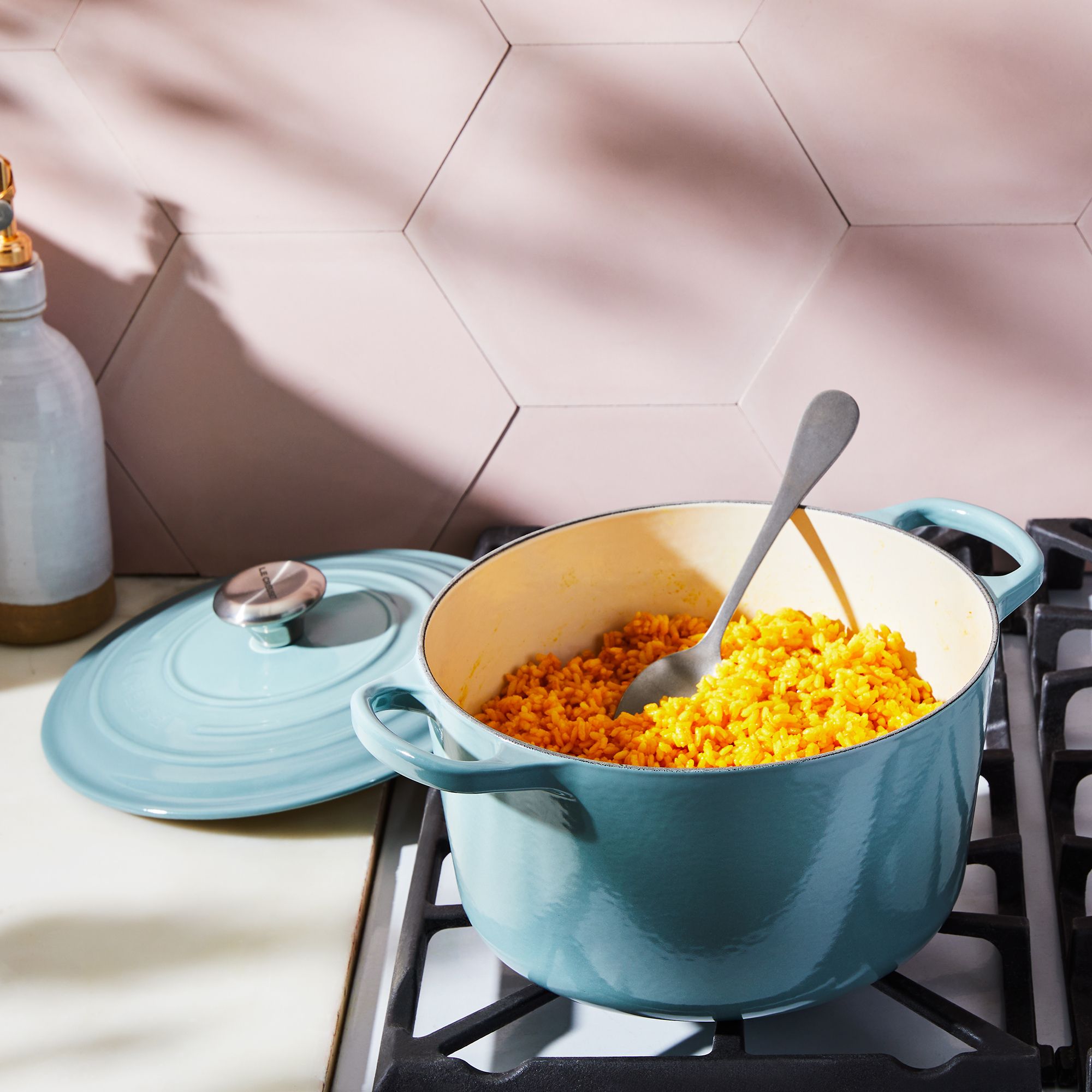
To remove stubborn food from Le Creuset, soak the pot in warm soapy water for 15 minutes or boil water with 1-2 tablespoons of baking soda for 10 minutes before scrubbing with a soft sponge.
This "Baking Soda Boil" is the industry secret to a clean pot. The alkaline nature of the baking soda breaks down the proteins and carbonized fats without any mechanical abrasion required.
[!WARNING] Chemical Safety: Never mix bleach and vinegar when cleaning your cookware. This creates toxic chlorine gas. If you use a bleach solution to lighten stains, ensure the pot is thoroughly rinsed and dried before it ever comes into contact with acidic cleaners or foods.
Step 6: Deep Cleaning & Stain Removal
Over years of use, especially if you cook a lot of turmeric-heavy curries or red wine reductions, the light-colored interior may begin to darken or stain. This doesn't affect the cooking performance, but it does affect the "pride of ownership."
For deep cleaning, I recommend a specialized enamel cleaner or a mild abrasive like "Bar Keepers Friend" (the liquid soft cleanser version is safer than the powder for beginners). Apply it with a soft cloth in circular motions to lift surface stains and restore the original luster.
While Le Creuset advertises many of its products as "dishwasher safe," as a pro editor, I advise against it. The harsh detergents and the high-pressure spray of a dishwasher will eventually dull the exterior polish. If you want that "forever young" shine, hand-washing is the only way.
Step 7: Strategic Storage Solutions
The way you store your Le Creuset is just as important as how you cook with it. Moisture is the enemy of the rim. While the interior and exterior are enameled, the very top rim where the lid sits is often "raw" or has a very thin "primer" coat. If you store the pot while it's still damp, you may find small spots of rust forming on that rim.
When storing Le Creuset cookware, ensure it is completely dry and avoid stacking pots directly on top of each other; use pan protectors or kitchen towels to prevent surface chipping.
If you must stack your pots to save cabinet space, don't let the cast iron bottoms touch the enamel interiors. The weight and friction will eventually cause scratches. Those little plastic "pot protectors" that come in the original box? Keep them. If you’ve already thrown them away, a simple felt pad or a folded kitchen towel placed between the pot and the lid (or the next pot) works perfectly.
Understanding Your Warranty
Le Creuset offers a Limited Lifetime Warranty, but it’s important to read the fine print. The warranty covers "defects in material and workmanship" under normal household use. It does not cover:
- Damage from overheating (crazing).
- Damage from dropping or hitting the pot.
- Staining or dulling of the enamel (considered normal wear and tear).
- Damage caused by using metal scouring pads or harsh chemicals.
Think of your Le Creuset as a performance vehicle. If you redline the engine and never change the oil, the manufacturer won't give you a new one when it breaks. Respect the tool, and the tool will respect your food.
FAQ
Q: Can I use my Le Creuset in the oven? A: Absolutely. Most Le Creuset pieces are oven-safe up to 500°F. However, check the knob on your lid. Older "Classic" phenolic (black) knobs are only rated to 390°F. If you have the newer "Signature" stainless steel or high-heat phenolic knobs, they are safe for higher temperatures.
Q: Why is my enamel turning dull and matte? A: This is usually the result of three things: frequent dishwasher use, using abrasive cleaners like steel wool, or consistently cooking on heat that is too high. Once the enamel is dulled, it becomes more porous and "sticky." You can't truly "restore" the shine if it's been physically abraded, but a deep clean with a specialized enamel cleaner can help.
Q: Is it safe to use a pot that has a small chip on the inside? A: If the chip is on the inside cooking surface, I recommend caution. Chipped enamel is essentially glass, and further pieces could flake off into your food. If the chip is on the outside or the handle, it is purely cosmetic and safe to continue using—just keep an eye on it to ensure rust doesn't form on the exposed iron.
Invest in Longevity
Protecting your Le Creuset isn't about being precious; it’s about being practical. By following these seven steps, you aren't just cleaning a pot—you are maintaining a piece of culinary history that will likely be used by your children and grandchildren. Treat it with the same care you'd give a fine knife or a vintage watch, and it will reward you with a lifetime of perfect braises and beautiful kitchen memories.