In the world of interior design, we often speak of "materiality"—the tactile and visual essence of the substances that fill our homes. We generally expect a clear division: metal is cold, hard, and reflective; fabric is warm, soft, and absorbing. But what happens when these two worlds collide? In a groundbreaking move that has redefined the boundaries of textile engineering, legendary designer Tom Dixon, in collaboration with Designtex and Coalesse, has unveiled a "secret camouflage" textile that challenges our very perception of surfaces.
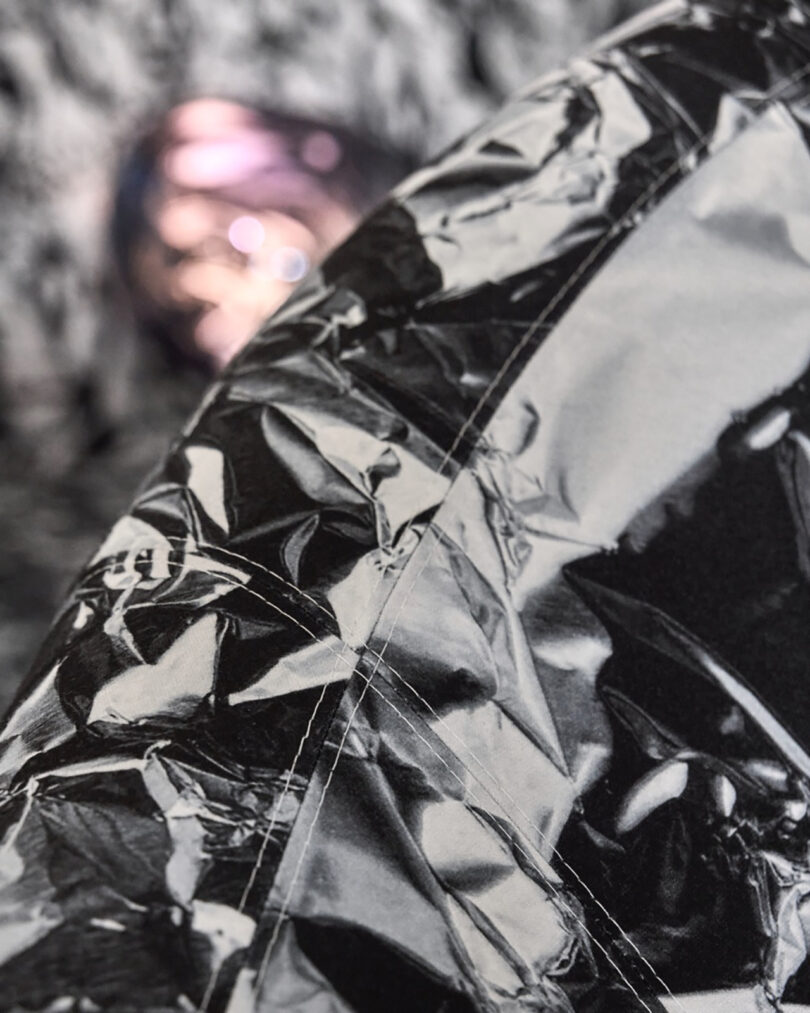
By digitally printing high-contrast, randomized patterns inspired by the erratic facets of crumpled aluminum foil, Dixon has created a fabric that mimics the way light dances off metallic surfaces. This isn't just an aesthetic whim; it is a masterclass in functional illusion. This "crumpled aluminum" textile pattern serves a dual purpose: it provides a high-fashion, liquid-metal aesthetic while performing the technical heavy lifting of camouflaging seams on the most challenging furniture silhouettes.
The Illusion of Materiality: When Soft Surfaces Turn Metallic
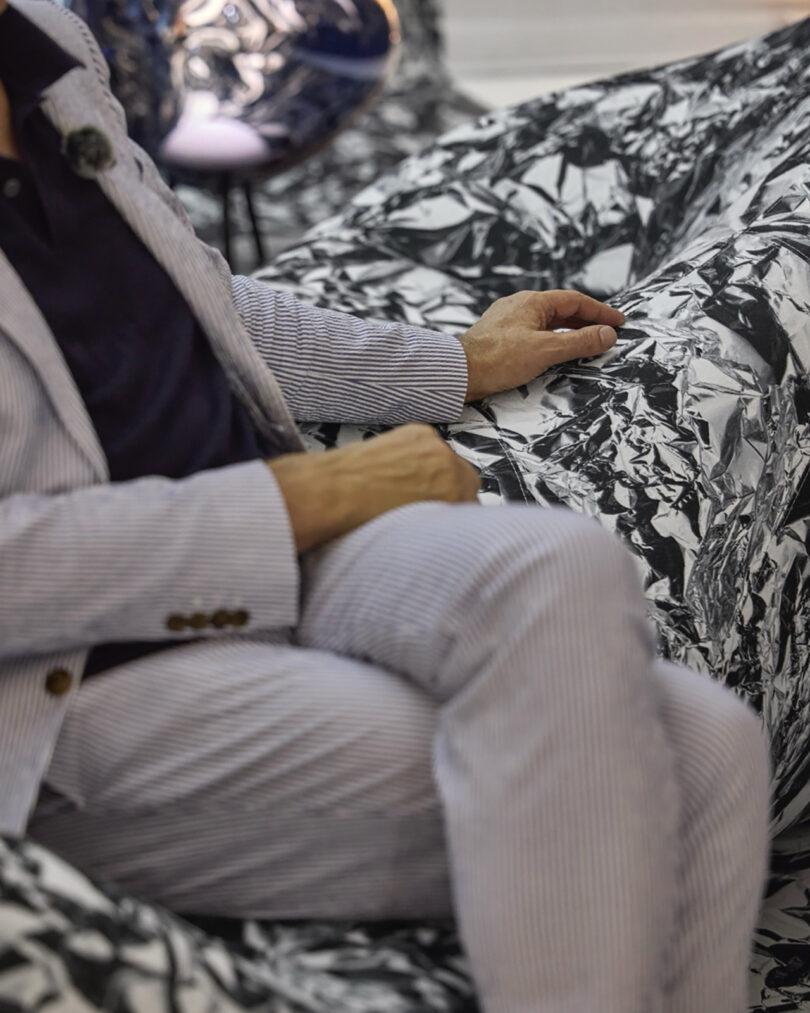
The fascination with contrast—the dichotomy of softness versus sharpness—is at the heart of modern interior styling. We crave the edge of industrialism but demand the comfort of residential living. This is the tension that the Tom Dixon x Designtex collaboration for Coalesse Design Group perfectly captures. At first glance, the furniture appears to be carved from solid blocks of polished, battered silver or gold. It is only upon sitting that the "trick" is revealed: the surface is actually a high-performance woven textile.
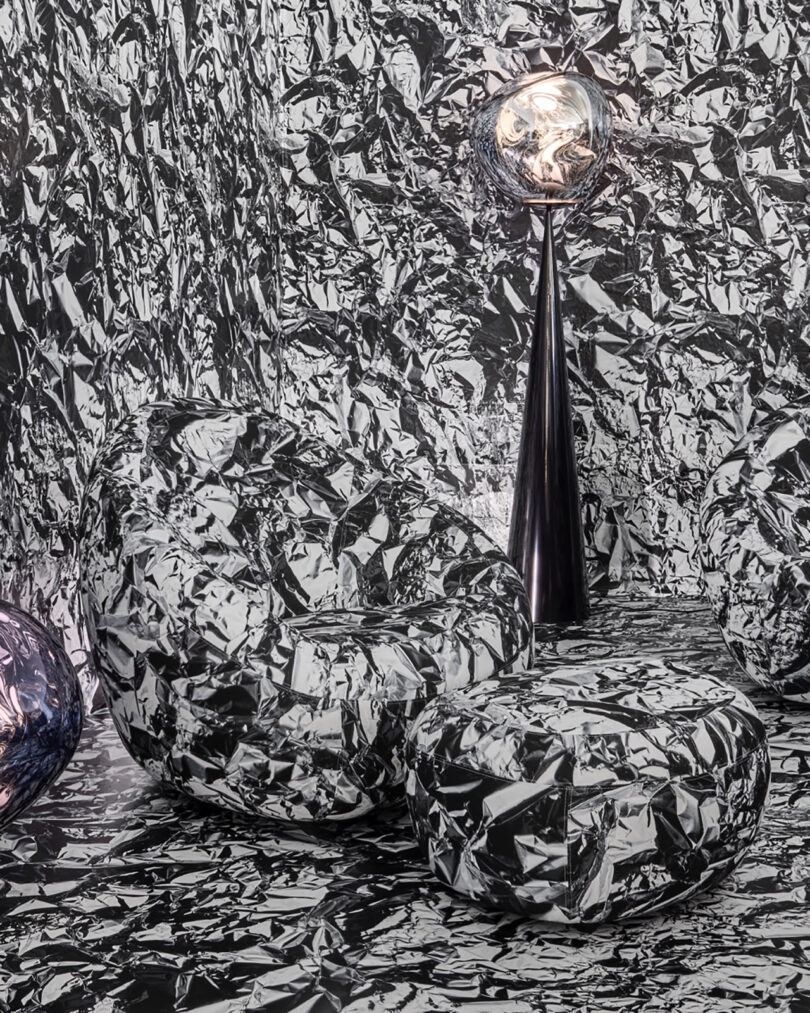
The magic lies in the digital printing process. Unlike traditional metallic fabrics that rely on stiff foil coatings or scratchy Lurex threads, this method uses high-resolution imagery to create a three-dimensional illusion on a two-dimensional surface. The randomized nature of the pattern ensures that no two sections of the fabric look identical, much like a sheet of hand-crushed foil. This lack of a repeating "grid" is what tricks the human eye into seeing depth where there is only a flat weave.
The 'Crumpled Foil' Technique: Decoding the Pattern
The inspiration for this collection didn't come from a laboratory, but from the simple, crunchy texture of aluminum foil. Tom Dixon’s team spent hours experimenting with physical foil—crumpling it, flattening it, and observing how light fractured across its ridges. These physical experiments were then brought to a specialized digital studio in Portland, Maine, where they were translated into high-contrast digital files.
The resulting pattern renders light similarly to reflections off shattered glass or ripples on a dark lake. Because the print captures the exact highlights and shadows of a three-dimensional object, the fabric retains its metallic "sheen" even in low-light environments. It’s a "hyper-texture" that feels evocative and sensory, moving beyond the flat, one-dimensional shimmer of the disco-era metallics we’ve seen in the past.
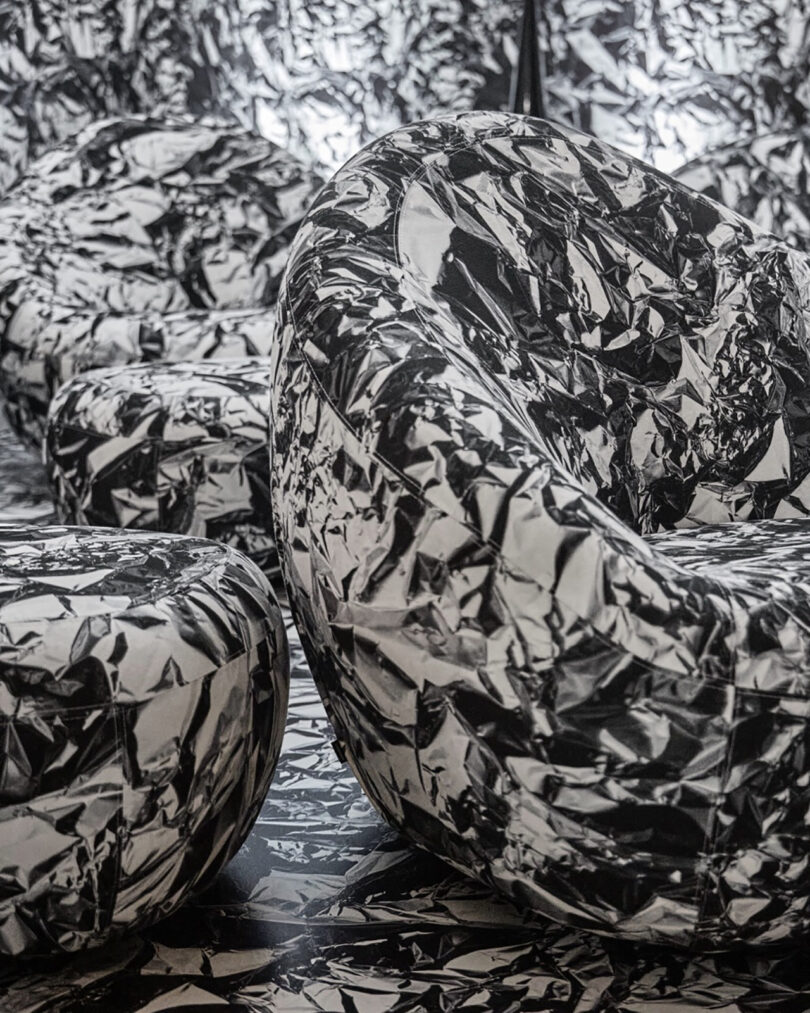
This digital studio process allows for a level of precision that traditional weaving cannot achieve. By manipulating the "levels" of the print—the intensity of the whites and the depth of the blacks—the designers can control exactly how "shiny" the fabric appears to be. The result is a textile that looks like it’s in a constant state of flux, changing its appearance as you walk around the room.
Why 'Camouflage' is the Secret to Perfect Upholstery
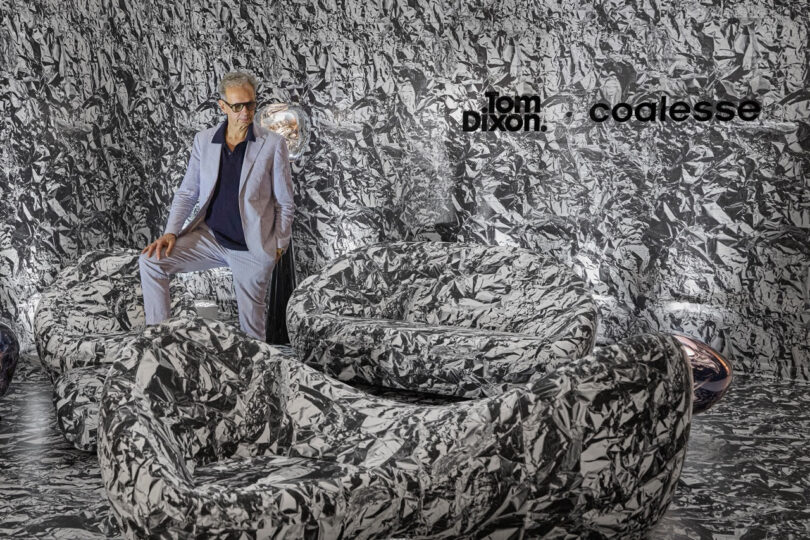
While the visual impact is undeniable, the true genius of this Tom Dixon metallic fabric is its role as a "camouflage." In high-end furniture design, one of the greatest technical hurdles is upholstering organic, sinewy shapes. Think of the Jean Nouvel seating collection for Coalesse: its curves are complex, rounded, and continuous. When you use a traditional patterned fabric—like a stripe or a floral—the seams where two pieces of fabric meet become glaringly obvious, breaking the flow of the design.
"The objective is camouflage. We wanted a pattern that was so chaotic and randomized that the eye couldn't find the seam. By mimicking the way light breaks over a crumpled surface, we hide the structural reality of the chair." — Tom Dixon
Through this randomized digital printing, the collaboration achieved 100% concealment of visible upholstery seams. Because the "crumpled" pattern has no discernible direction or repeat, the transition from the back of a chair to the seat appears seamless. It allows the furniture to look like a singular, poured object rather than a collection of upholstered panels. This technical breakthrough allows designers to push the boundaries of furniture geometry without being limited by the constraints of traditional textile seams.
The 2025/2026 Metallic Shift: From High-Shine to Hyper-Texture
As we look toward the design trends of 2025 and 2026, we are seeing a significant shift in how metallics are utilized in the home. The era of the "flat" metallic finish—think brushed nickel or mirrored gold—is giving way to "hyper-texture" and "liquid metal" effects. We are moving away from the harsh glare of traditional sequins and toward surfaces where light breaks softly over ridges and folds.
Market analysis of the "Daytime Shine" trend suggests that hyper-textured metallics provide 40% more visual versatility than flat metallic finishes. This is because the variation in the pattern allows the piece to harmonize with both professional, minimalist environments and high-fashion, maximalist spaces.
To understand where your project fits, consider this comparison of modern metallic finishes:
| Finish Type | Visual Characteristic | Best Use Case |
|---|---|---|
| Matte Metallic | Subtle, diffused glow; looks like sandblasted metal. | Large architectural surfaces, wall coverings. |
| Liquid Micro-sequin | Intense, directional shine; moves like water. | Statement pillows, evening wear, small accents. |
| Hyper-textured | Randomized shadows and highlights; mimics crumpled foil. | Complex upholstery, statement furniture, "Camouflage" needs. |
This shift toward "liquid metal" is about depth. When a fabric has "hyper-texture," it doesn't just sit on top of the design; it integrates with the shadows of the room, creating a more sophisticated and less "flashy" atmosphere.
How to Style Metallic Textiles Without the 'Gala' Overload
For many of my readers, the idea of a metallic sofa can feel a bit... daunting. How do you integrate such a high-impact material into a livable home without it feeling like a ballroom or a nightclub? The secret lies in treating metallics as the "New Neutrals."
- Balance Shine with Grounded Textures: If you have a chair in the Tom Dixon crumpled foil fabric, pair it with "honest" materials. Think a chunky wool rug, raw denim accents, or a matte oak coffee table. The organic warmth of these materials balances the industrial "coldness" of the metallic print.
- The Color Swap: Think of silver as a replacement for gray, and soft gold or bronze as a replacement for camel and tan. By using metallics in the same places you would use a neutral tone, the shine becomes a texture rather than a "color."
- The Layered Approach: If you aren't ready for a Jean Nouvel-scale statement, start with accessories. A metallic cardigan draped over a linen chair, or bronze-toned picture frames against a matte navy wall, introduces the "liquid ripple" effect on a smaller, more manageable scale.
The Technical Side: Caring for Foil and Metallic Textiles
When investing in high-performance metallic fabrics, maintenance is key to preserving that "liquid" look. While the Tom Dixon x Designtex collection is engineered for high-traffic commercial use, home care still requires a gentle touch.
- Avoid High Heat: Most digitally printed metallic effects use specialized inks or thin foil transfers that can be damaged by high-heat steaming or ironing. Always use a cool setting and a pressing cloth.
- Gentle Handling: To prevent the "crumpled" look from becoming actually "cracked," avoid using harsh chemical cleaners. A simple damp micro-fiber cloth is usually enough to restore the luster.
- Mind the Lining: Because these fabrics are often denser due to the printing process, ensure they are paired with high-quality cushions that provide enough structure so the fabric doesn't sag, which can distort the "metal" illusion.
The transition toward these hyper-textured surfaces represents a new era of interior design—one where the boundaries between hard and soft are permanently blurred. Whether you're looking to hide the seams on a custom-curved banquette or simply want to bring a bit of "liquid metal" into your living room, Tom Dixon's textile secret proves that with enough creative engineering, fabric really can look—and feel—like metal.
FAQ
Can this fabric be used for outdoor furniture? While the Tom Dixon x Designtex collaboration is highly durable, it is primarily designed for indoor high-traffic environments. For outdoor use, you would need a specific UV-rated metallic textile to prevent the digital print from fading under direct sunlight.
Does the 'crumpled' pattern make the fabric feel rough? Not at all. The "crumple" is a visual illusion created through digital printing. The base fabric remains smooth and soft to the touch, providing the comfort of standard upholstery with the visual impact of hammered metal.
Is it more expensive than traditional patterned fabric? Generally, yes. Due to the high-resolution digital printing process and the randomized nature of the pattern (which requires more advanced manufacturing than a standard repeat), these textiles are considered a premium investment.